Artwork
Saint Jerome
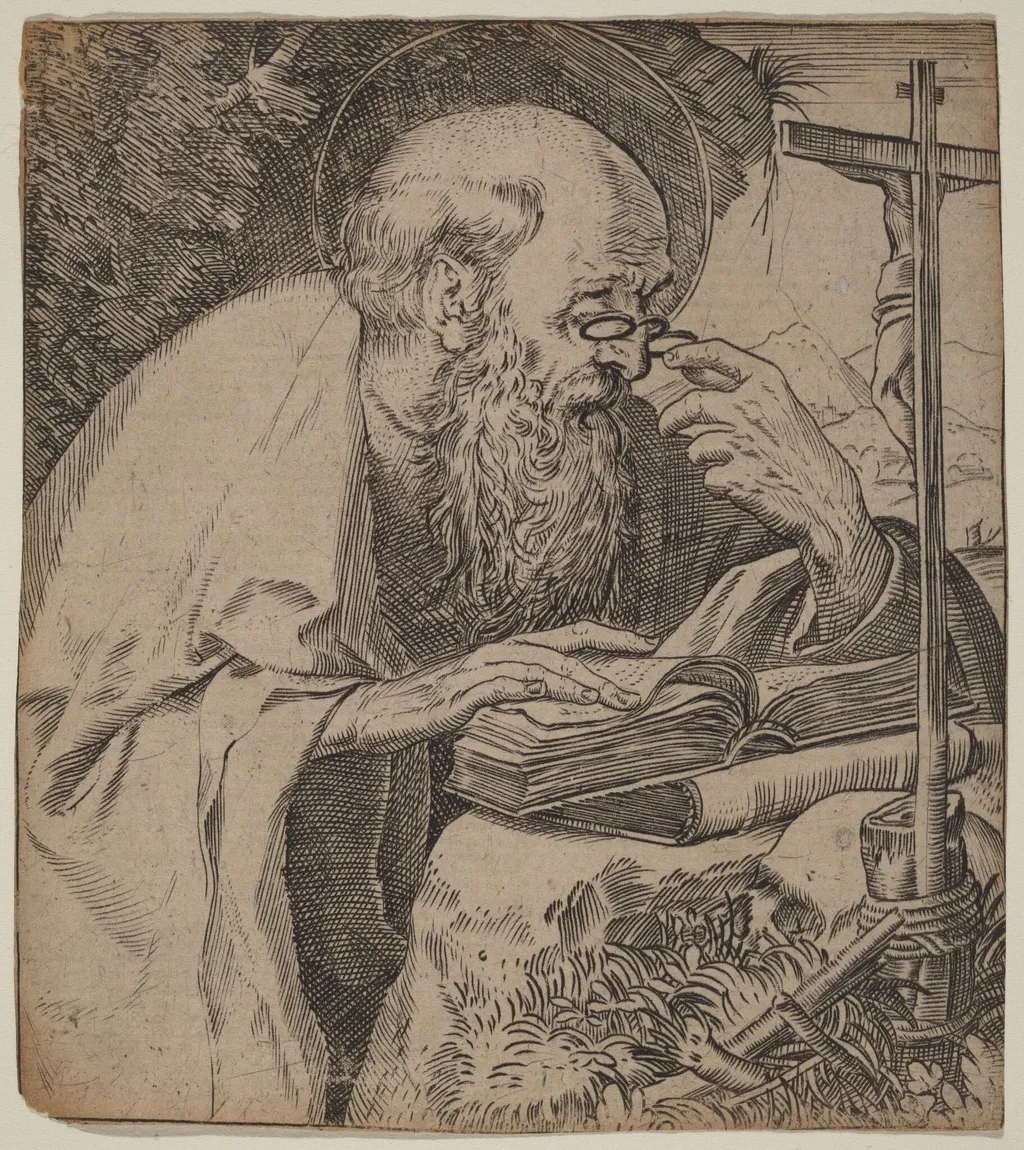
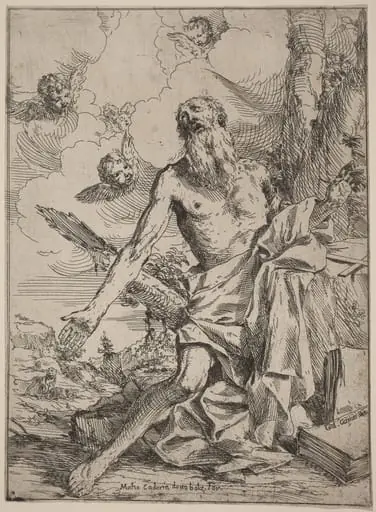
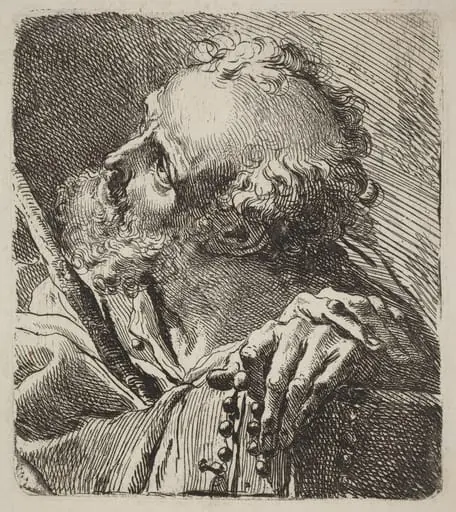
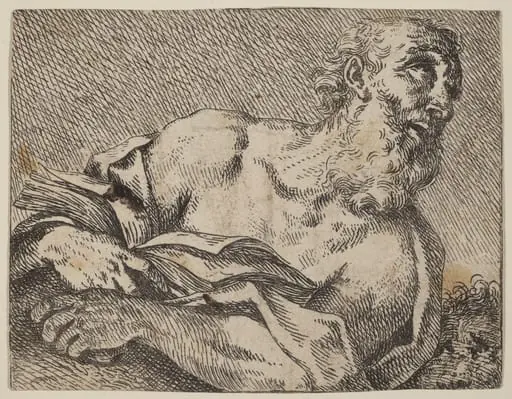
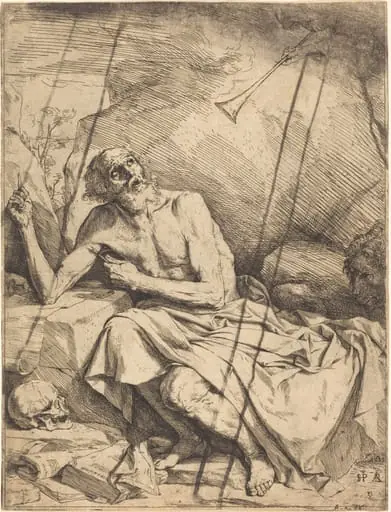
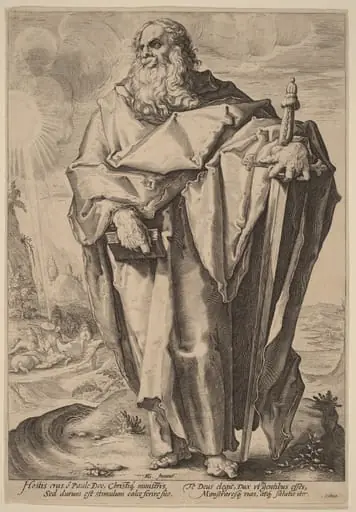
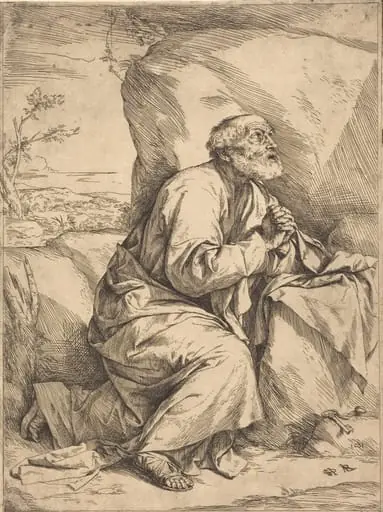
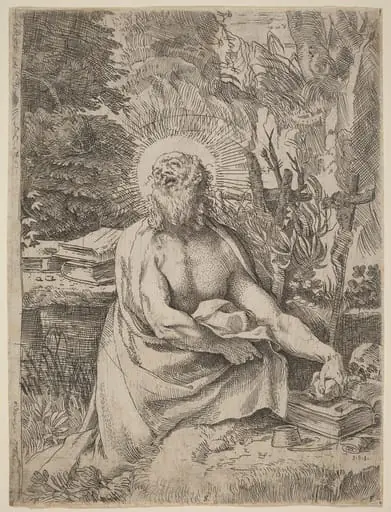
Saint Jerome is an ink print by the Renaissance artist Annibale Carracci. It dates from 1584 and is held in the collection of the National Gallery of Art.
About this work
Overview
Though better known for painting, Carracci used engraving to study form and light, refining his approach before larger commissions.
Created in 1584, this engraving by Annibale Carracci is a small-scale print on laid paper, part of his early exploration of religious themes through printmaking. Though better known for painting, Carracci used engraving to study form and light, refining his approach before larger commissions. The work reflects his training in Bologna and his interest in combining naturalism with classical restraint.
Subject & Meaning
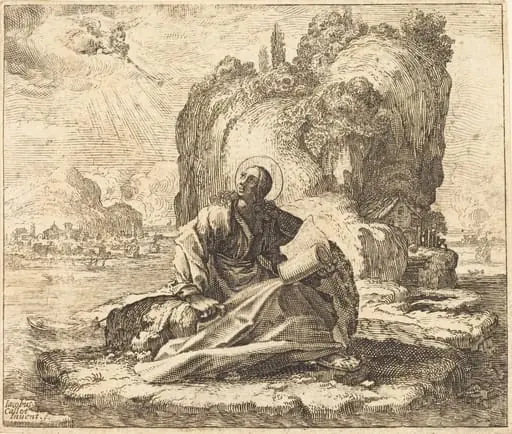
The figure is Saint Jerome, the fourth-century scholar and translator of the Bible into Latin. Depicted in quiet contemplation, he is shown in a rugged landscape, his posture and expression conveying devotion and intellectual solitude. The distant cross and modest structure suggest a hermit’s retreat, reinforcing his role as a penitent ascetic and devoted theologian, common in Counter-Reformation imagery.
Technique & Style
Carracci employed fine, precise cross-hatching to model volume and texture, particularly in the saint’s thick beard and the uneven rock surface. The lines build gradations of tone without wash or tone, relying solely on the density of incised strokes. This method reveals his attention to tactile detail and his ability to translate painterly effects into the linear language of engraving.
History & Provenance
The print was made during Carracci’s formative years in Bologna, before his move to Rome. It likely circulated among collectors and artists familiar with his emerging reputation. No definitive early ownership records survive, but its technical quality suggests it was produced for a discerning audience interested in the new naturalistic style emerging in northern Italy.
Context
In the 1580s, religious imagery remained central to Italian art, especially as the Church sought to reaffirm spiritual values after the Reformation. Carracci’s depiction of Jerome aligns with contemporary efforts to portray saints as human, introspective figures rather than idealized icons. His use of landscape and texture reflects a broader shift toward observational realism in Bolognese art.
Legacy
Though less known than his paintings, this engraving demonstrates Carracci’s early mastery of graphic media and his influence on later printmakers. His integration of naturalistic detail and emotional restraint became a model for artists seeking to balance classical ideals with lived experience, contributing to the evolution of Baroque graphic art in Italy.
Artist & collection
Artist
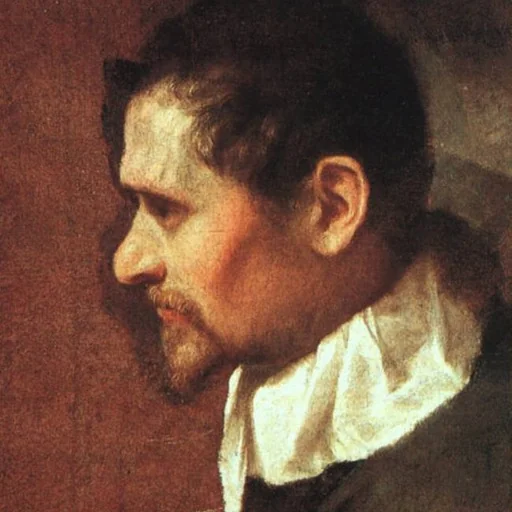
Annibale Carracci ( kə-RAH-chee, UK also kə-RATCH-ee, Italian: ; November 3, 1560 – July 15, 1609) was an Italian painter and instructor, active in Bologna and later in Rome.