Artwork
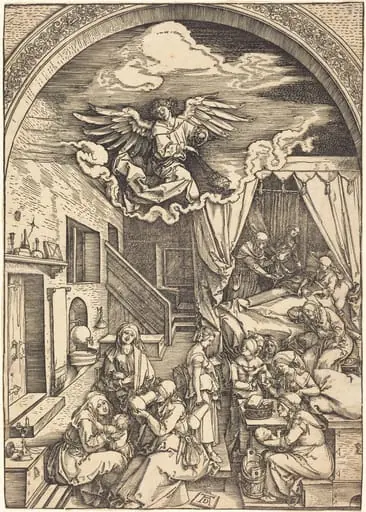
The Birth of the Virgin
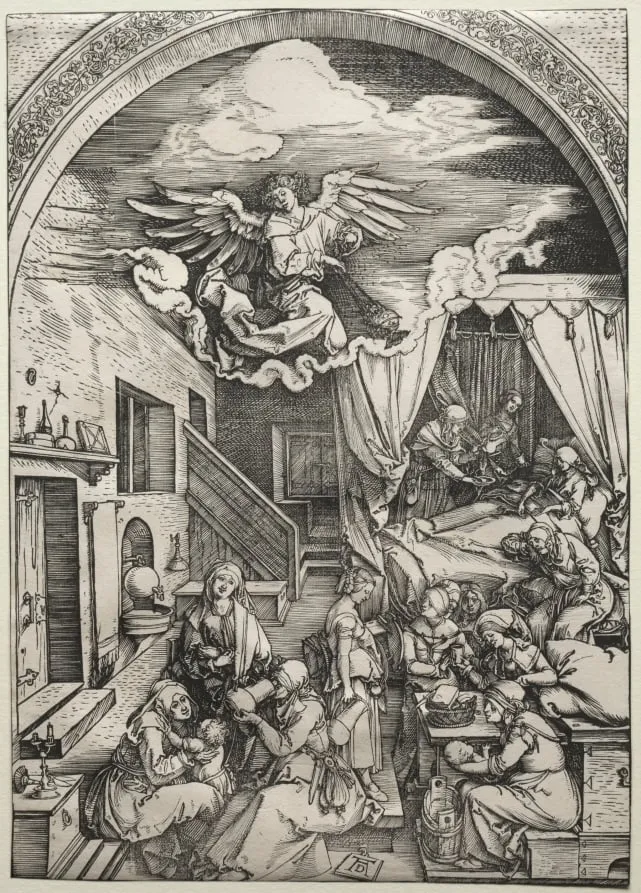
The Birth of the Virgin is a print by the Renaissance artist Albrecht Dürer. It dates from 1504 and is held in the collection of the Cleveland Museum of Art.
About this work
A mother lies tired in the background while another woman bathes the baby in a tub.
This painting shows a cozy, candlelit room where women gather around a newborn. A mother lies tired in the background while another woman bathes the baby in a tub. An angel hovers above, marking the holy moment.
Dürer paints this like a normal German home in 1503. The scene feels real, not stiff or fancy. You can almost hear the quiet chatter of the women.
Look up Albrecht Dürer (German, 1471–1528) for his other religious prints.
Overview
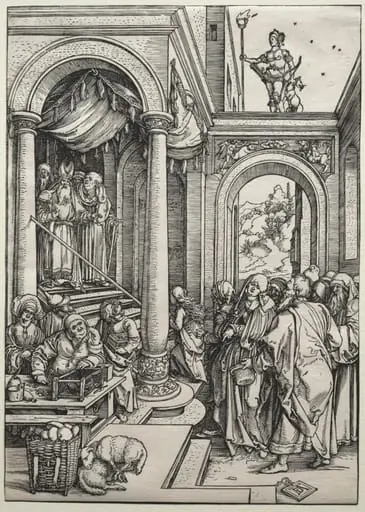
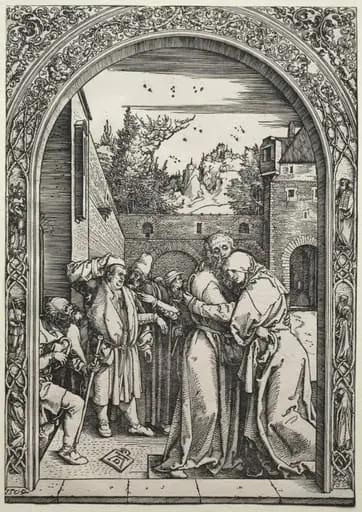
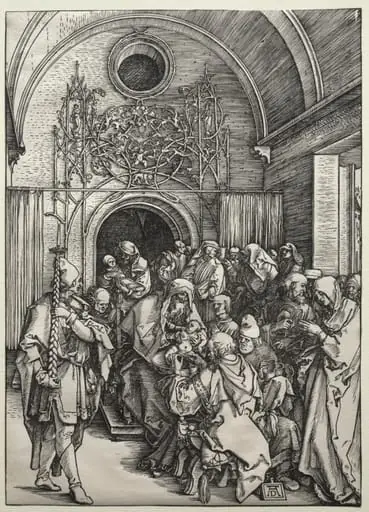
Albrecht Dürer’s woodcut series (catalogued as 1959.99.5‑7) portrays three pivotal moments from the early life of the Virgin Mary. The first print illustrates her birth, the second shows her as a child ascending the steps of a temple, and the third depicts her betrothal to the widower Joseph. Together they form a narrative of Mary’s formative years before her role in Christian salvation.
Subject & Meaning
In the birth scene, Dürer gathers a group of women—midwives, relatives, and friends—around the newborn. An attendant gently washes the infant in a basin while a tired mother rests nearby. An angel hovering above signals the event’s divine significance, linking the ordinary domestic setting to its theological import.
Technique & Style
Executed as woodcuts in 1503, the images employ fine line work to render a modest German interior with remarkable realism. Dürer’s handling of light and shadow suggests a candlelit room, and the figures are depicted with natural postures and expressions, avoiding the idealised poses common in earlier devotional art.
History & Provenance
The three prints were produced early in Dürer’s career, reflecting his interest in combining religious narrative with contemporary life. They have been catalogued in major collections of his prints and are frequently cited as examples of his early mastery of the woodcut medium.
Context
Dürer created these works at a time when Northern European artists were increasingly integrating everyday domestic scenes into sacred subjects. By situating the Virgin’s birth in a familiar household, he aligned the holy with the lived experience of his German audience.
Legacy
The series influenced later artists who sought to humanise biblical events, and it remains a key reference for scholars studying the intersection of devotional imagery and genre representation in the early sixteenth century.
Artist & collection
Artist
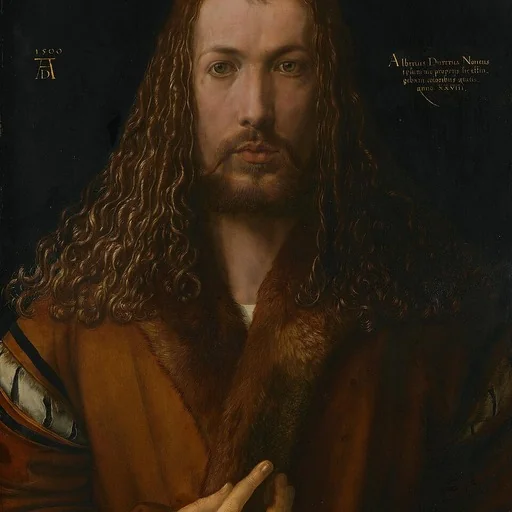
Albrecht Dürer spent his life in Nuremberg, a busy German city where artists traded prints like currency.

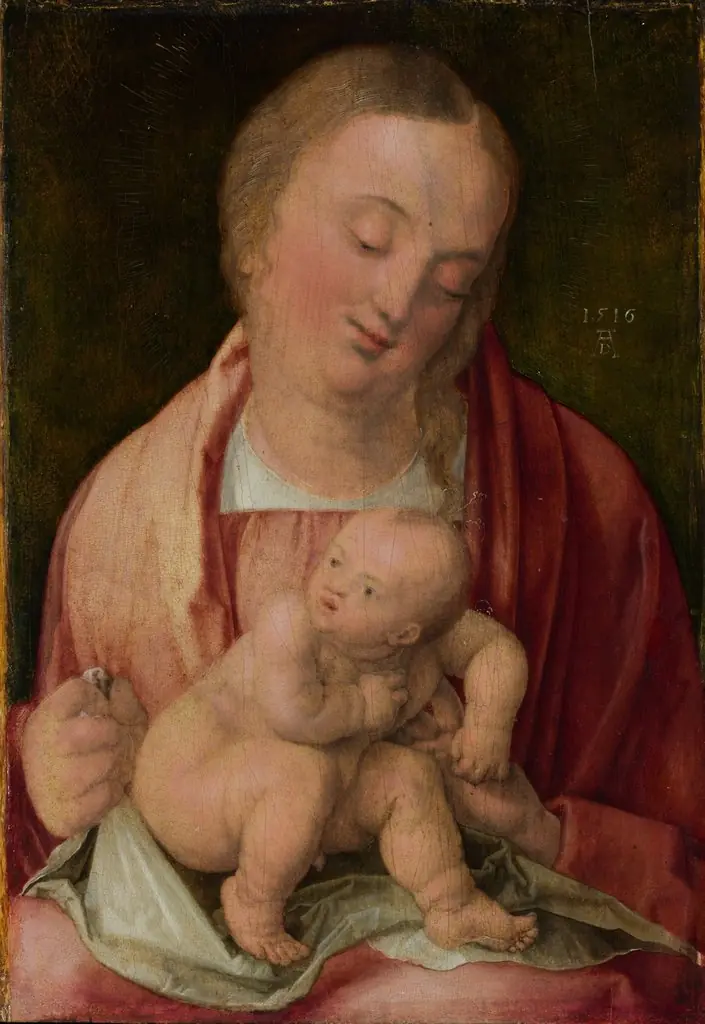
![Madonna and Child [obverse], by Albrecht Dürer](https://artifactworldgallery.com/img/albrecht-durer--madonna-and-child-obverse--d7b8ebf05d22ebe5-w320.webp)
![Lot and His Daughters [reverse], by Albrecht Dürer](https://artifactworldgallery.com/img/albrecht-durer--lot-and-his-daughters-reverse--b4ebf9b282faa17a-w320.webp)