Artwork
The Passion: Christ Taken Captive
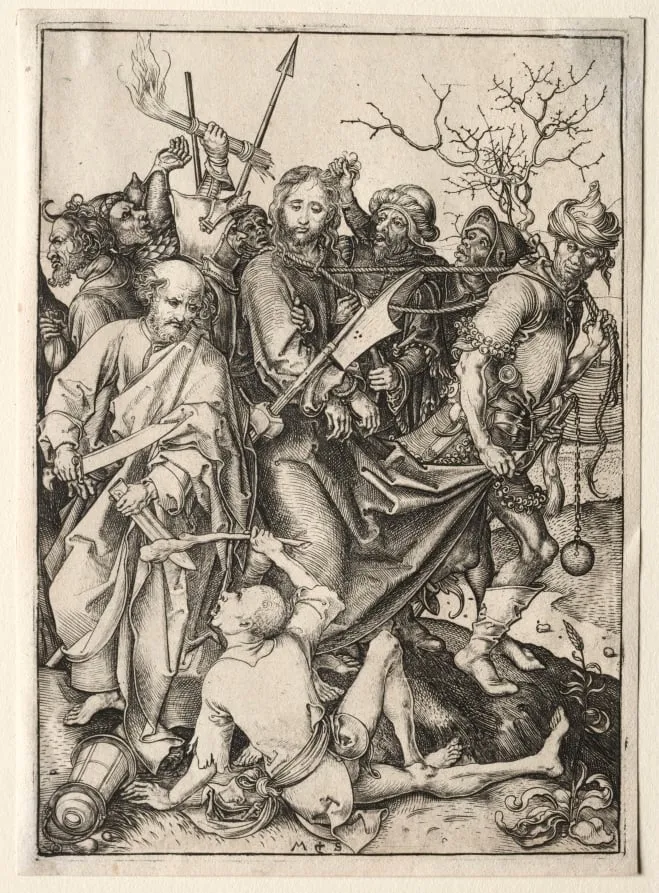
The Passion: Christ Taken Captive is a print by the Renaissance artist Martin Schongauer. It dates from 1480 and is held in the collection of the Cleveland Museum of Art.
About this work
Overview
These works, notable for their dense compositions and emotional intensity, were widely reproduced across Europe due to the accessibility of print technology.
Martin Schongauer created a series of twelve engravings depicting the Passion of Christ around 1480, his most extensive print cycle. These works, notable for their dense compositions and emotional intensity, were widely reproduced across Europe due to the accessibility of print technology. Each plate captures a moment from Christ’s final hours, rendered with meticulous detail and a focus on human suffering and moral tension.
Subject & Meaning
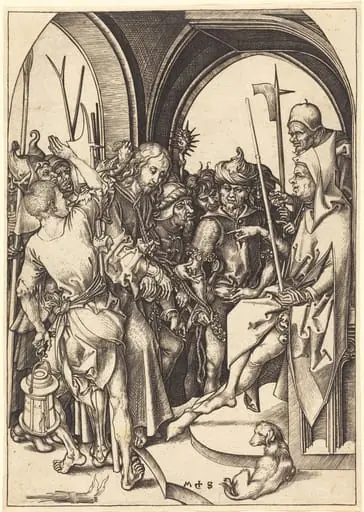
This print illustrates Christ’s arrest, a pivotal moment in the Passion narrative. Bound and physically overwhelmed, Christ is dragged by multiple soldiers, each exerting force with brutal intimacy—pulling his hair, gripping his arm, tightening the rope around his neck. In the foreground, Peter’s violent act of resistance contrasts with Judas’s retreat, symbolizing betrayal and misguided loyalty. The scene underscores Christ’s passive endurance amid human cruelty.
Technique & Style
Schongauer employed fine, controlled lines to build texture and volume, emphasizing the contorted expressions of the tormentors through exaggerated, almost caricatured features. The use of cross-hatching and dense patterning creates dramatic contrasts of light and shadow, enhancing the emotional weight of the scene. Despite the lack of color, the engraving achieves a sense of depth and movement through precise line work and compositional density.
History & Provenance
Produced in the late 15th century, Schongauer’s Passion series was among the earliest and most influential devotional print cycles in Northern Europe. Its popularity stemmed from affordability and portability, allowing it to circulate widely beyond ecclesiastical circles. Copies appear in private collections across Germany, the Low Countries, and Italy, attesting to its role in domestic piety and artistic education.
Context
In the decades before the Reformation, devotional imagery played a central role in personal religious practice. Schongauer’s prints responded to a growing demand for accessible, emotionally resonant representations of sacred stories. His work bridged the late Gothic tradition and emerging Renaissance naturalism, offering viewers a visceral encounter with Christ’s suffering that aligned with contemporary spiritual ideals of empathy and penitence.
Legacy
Schongauer’s Passion engravings influenced generations of printmakers, including Albrecht Dürer, who admired his technical precision and expressive power. The series helped establish engraving as a serious medium for religious narrative, shifting its role from mere illustration to a vehicle for spiritual contemplation. Its widespread dissemination contributed to the standardization of Passion iconography in early modern Europe.
Artist & collection

Artist
Martin Schongauer, also known as Martin Schön or Hübsch Martin by his contemporaries, was an Alsatian engraver and painter.

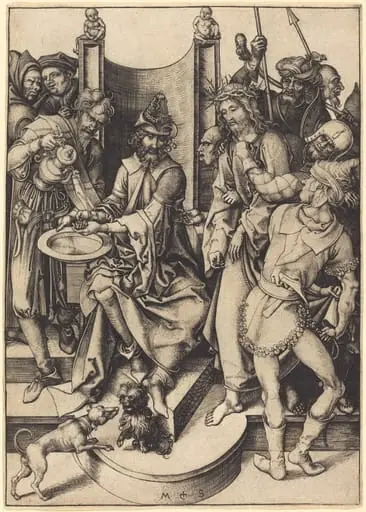
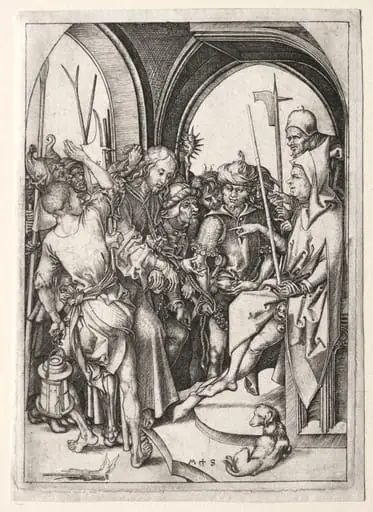 The Passion: Christ Before Annas
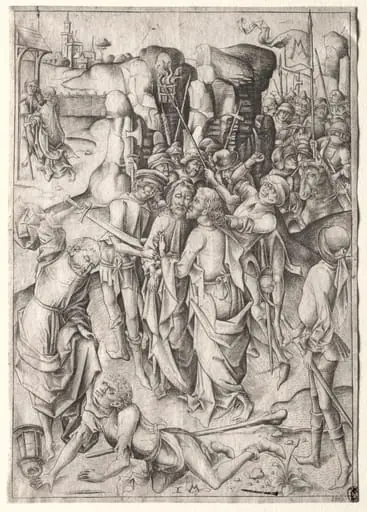 The Passion: Christ Taken Captive
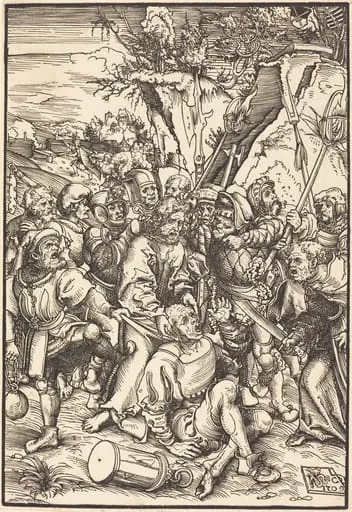 Christ Taken Captive
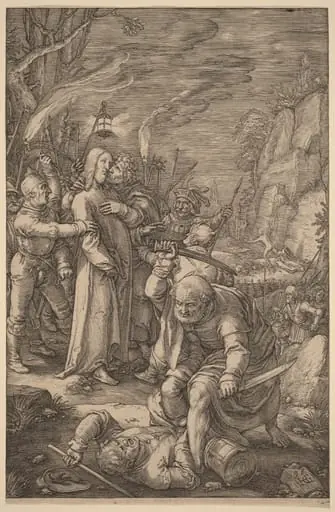 Christ Taken Captive
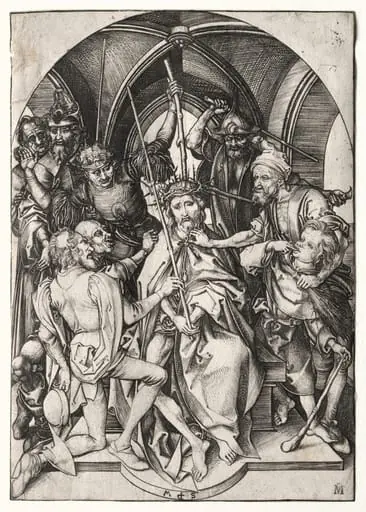 Christ Crowned with Thorns
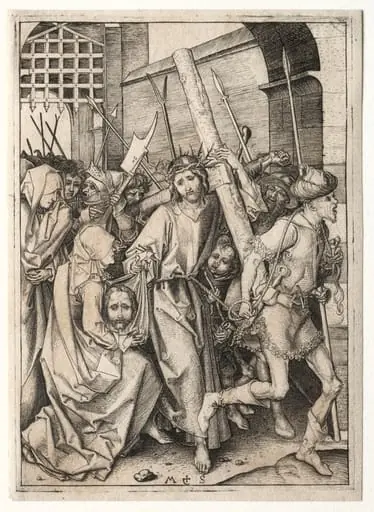 The Passion: Christ Bearing the Cross
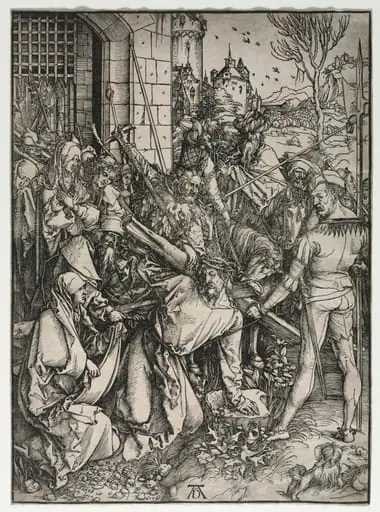 The Great Passion: Christ Bearing the Cross
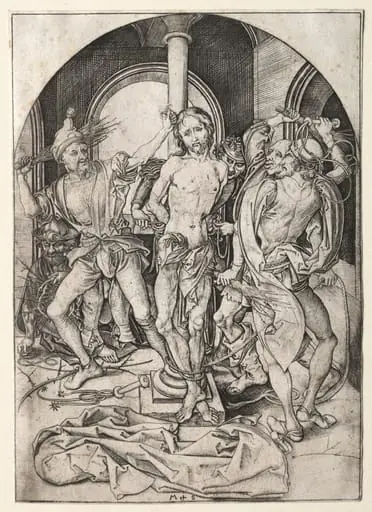 The Passion: The Flagellation
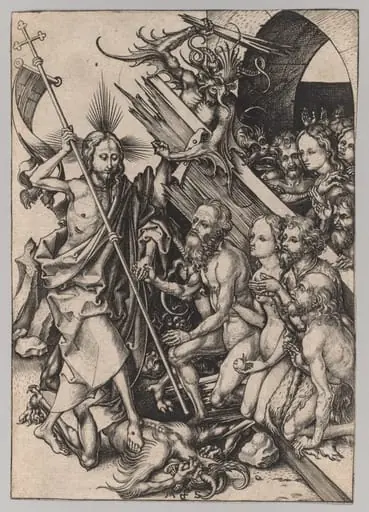 The Passion: Christ in Limbo
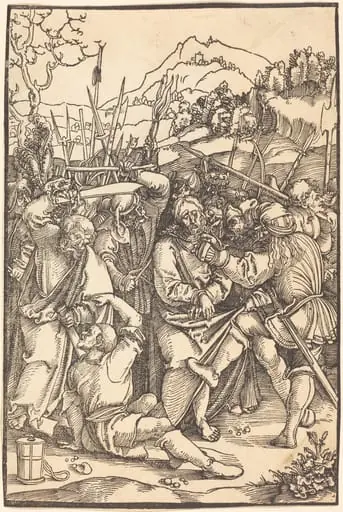 Christ Taken Prisoner
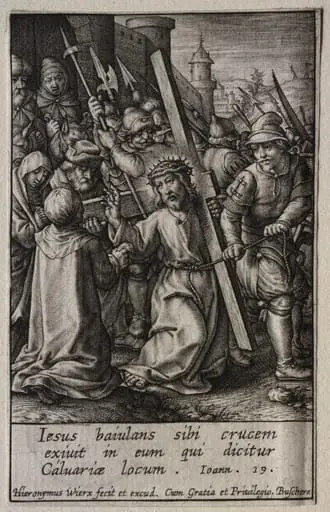 The Passion: Christ Carrying the Cross