Artwork
The Betrayal of Christ
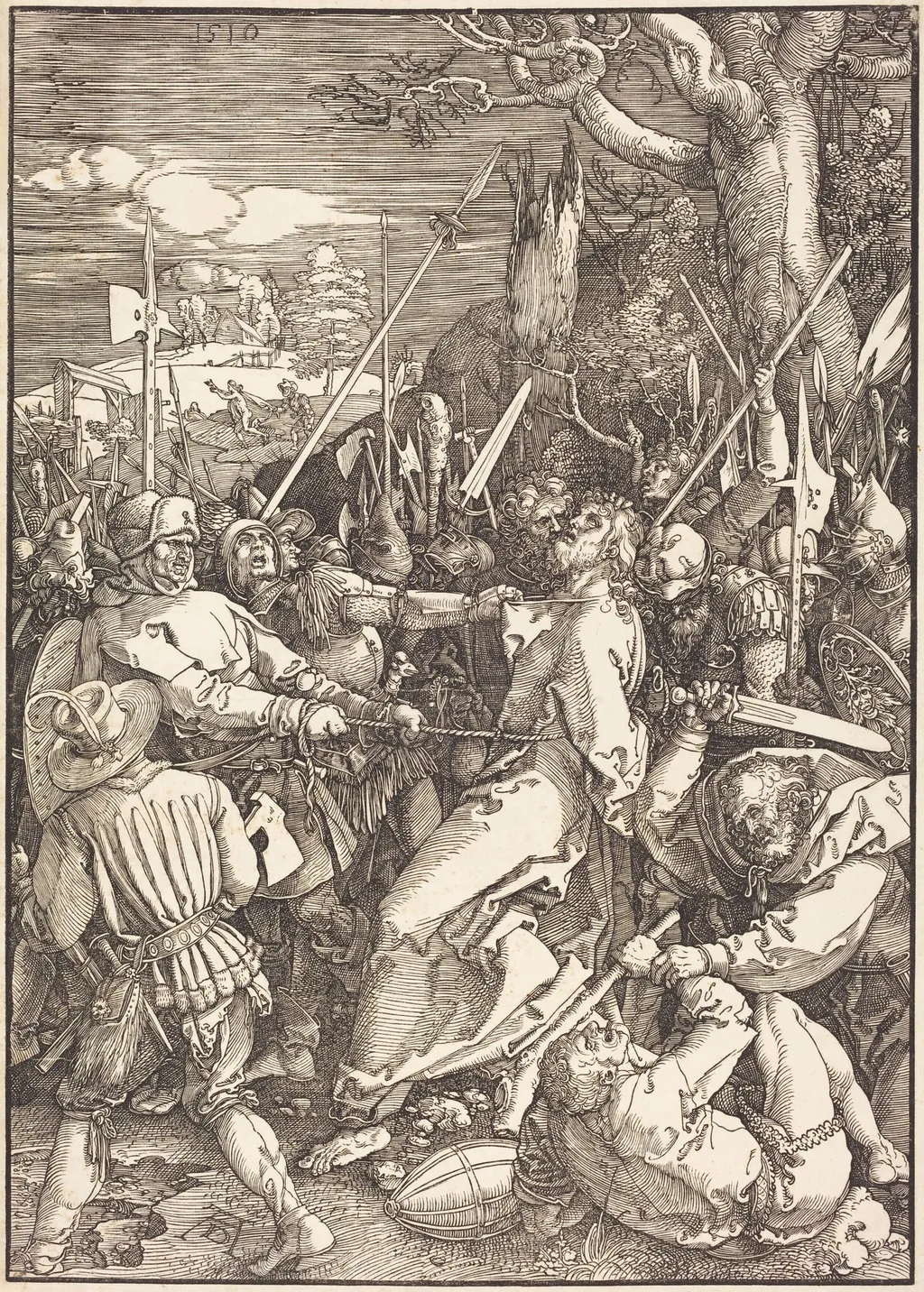
The Betrayal of Christ is an ink print by the Northern Renaissance artist Albrecht Dürer. It dates from 1510 and is held in the collection of the Metropolitan Museum of Art.
About this work
Overview
Albrecht Dürer’s woodcut entitled *The Betrayal of Christ* was produced in 1510. Executed on laid paper, the print belongs to the artist’s series of religious works and captures the moment when Judas identifies Jesus to the soldiers. The composition is dense, populated by several figures, yet the design directs attention toward the central figure of Christ.
Subject & Meaning
The scene illustrates the biblical episode in which Judas signals Jesus to the arresting party, a pivotal point in the Passion narrative. By placing Christ at the visual core, Dürer emphasizes the theological significance of betrayal and the ensuing sacrifice, inviting contemplation of loyalty, treachery, and divine destiny within the Christian tradition.
Technique & Style
Rendered as a woodcut, the image relies on bold, unmodulated lines cut into a wood block, then printed onto paper. Dürer’s economy of line creates a stark, almost graphic tension, despite the complexity of the crowd. The stark contrasts and careful arrangement of figures generate a dramatic rhythm that guides the viewer’s eye toward the focal point.
History & Provenance
Created during Dürer’s mature period, the print reflects his engagement with Northern Renaissance religious iconography. Original impressions were likely distributed among patrons and collectors interested in devotional imagery. Surviving copies are held in several European and American institutions, attesting to the work’s continued relevance in the study of early printmaking.
Artist & collection
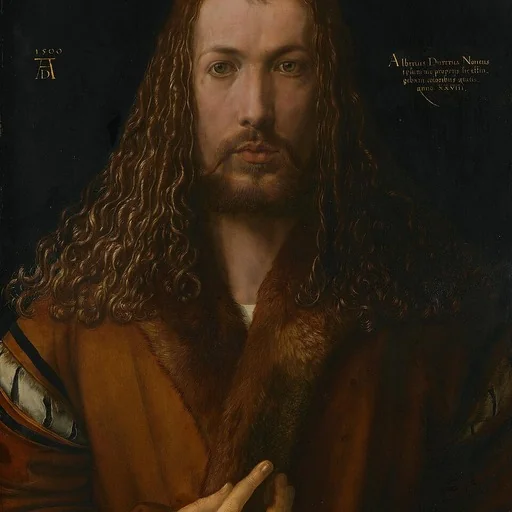
Artist
Albrecht Dürer spent his life in Nuremberg, a busy German city where artists traded prints like currency.

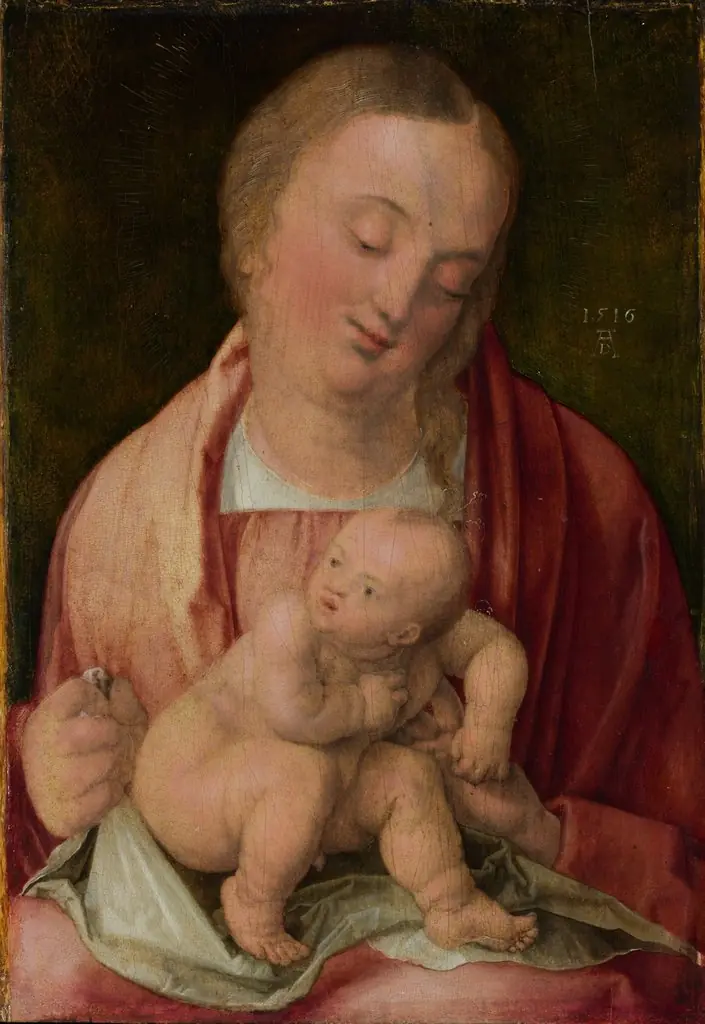
![Madonna and Child [obverse], by Albrecht Dürer](https://artifactworldgallery.com/img/albrecht-durer--madonna-and-child-obverse--d7b8ebf05d22ebe5-w320.webp)
![Lot and His Daughters [reverse], by Albrecht Dürer](https://artifactworldgallery.com/img/albrecht-durer--lot-and-his-daughters-reverse--b4ebf9b282faa17a-w320.webp)
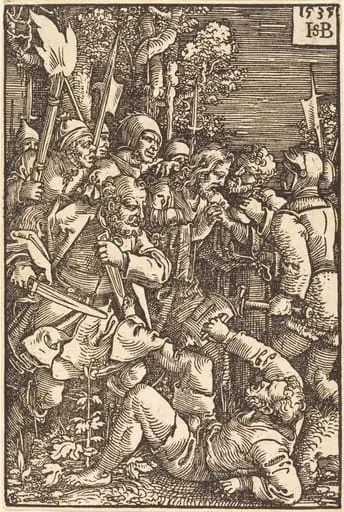 The Betrayal of Christ
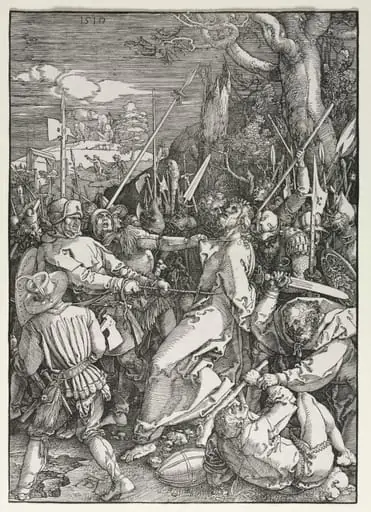 The Large Passion: The Betrayal of Christ
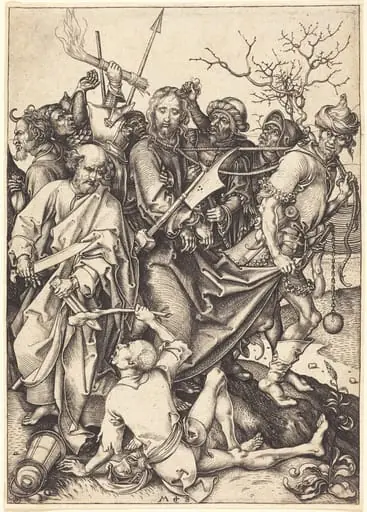 The Betrayal and Capture of Christ
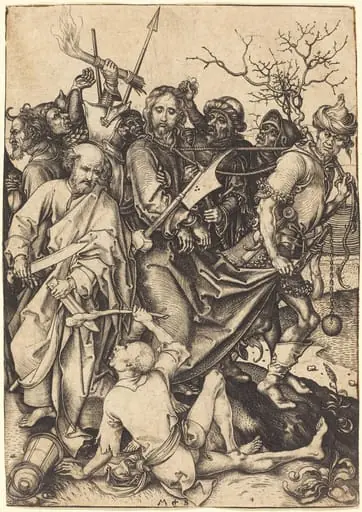 The Betrayal and Capture of Christ
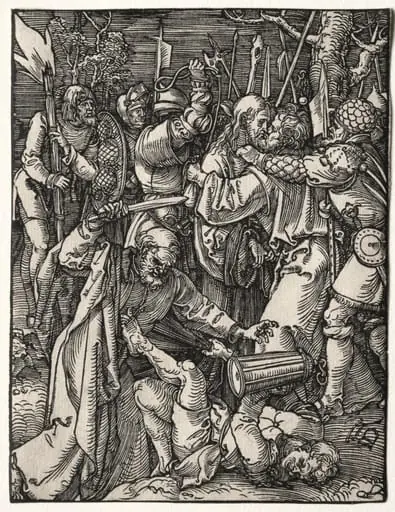 The Small Passion: The Betrayal of Christ
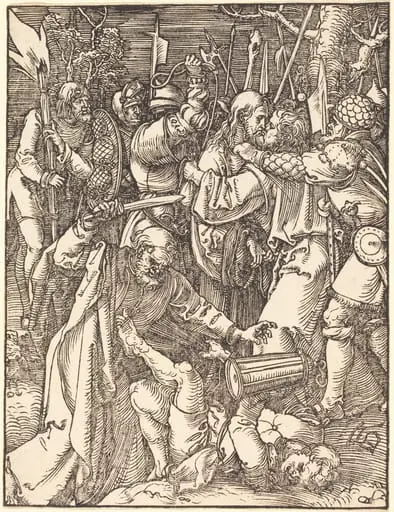 The Betrayal of Christ
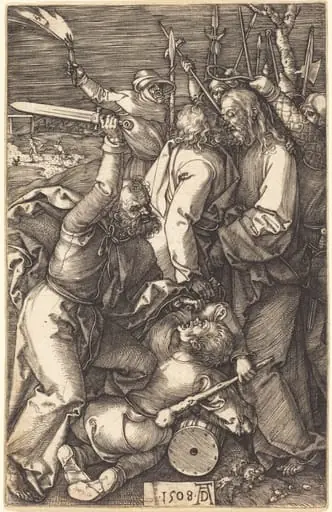 The Betrayal of Christ
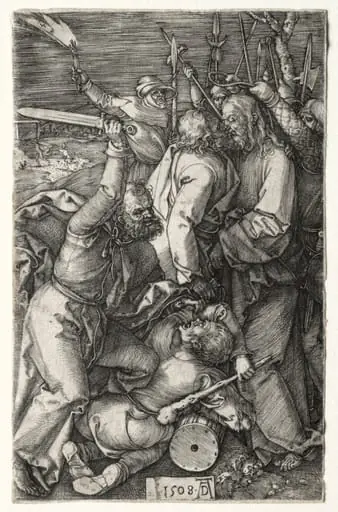 The Betrayal of Christ by Judas
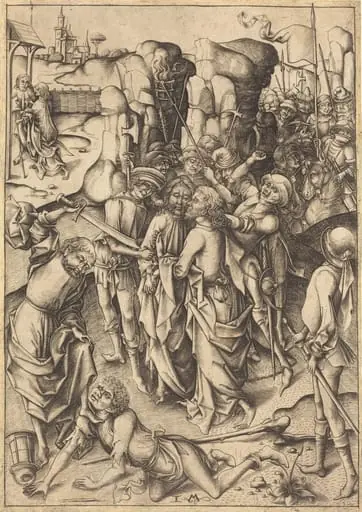 The Betrayal
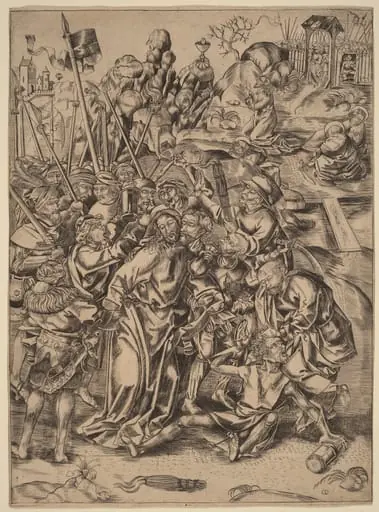 The Betrayal
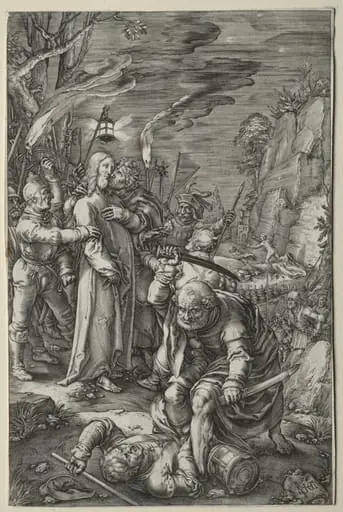 The Passion: The Betrayal of Christ