Artwork
The Holy Trinity
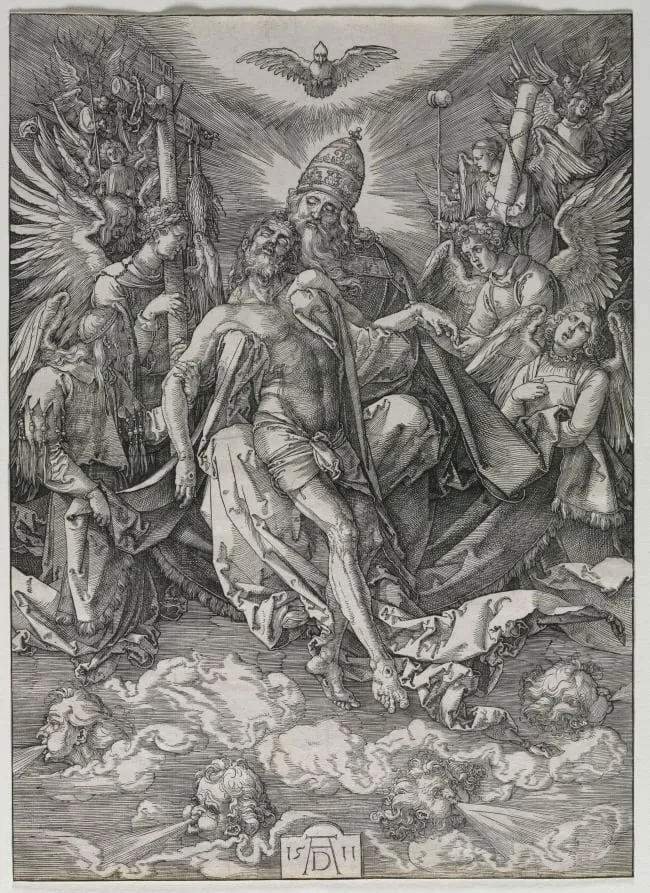
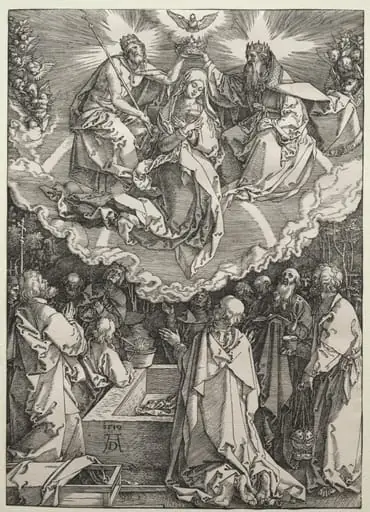
The Holy Trinity is a print by the Renaissance artist Albrecht Dürer. It dates from 1511 and is held in the collection of the Cleveland Museum of Art.
About this work
Overview
The Holy Trinity is a seminal woodcut by Albrecht Dürer, exemplifying the artist's technical prowess in the medium. This intricate print depicts a poignant scene of divine interaction, characterized by nuanced spatial depth and dramatic lighting.
Subject & Meaning
The composition centers on God the Father cradling the deceased Christ, with the Holy Spirit manifest as a dove between them. Surrounding figures include angels and saints, populating the heavenly realm. The work conveys a moment of profound theological significance.
Technique & Style
Dürer employed an innovative system of parallel lines, crosshatching, and varied line densities to achieve a remarkable range of tonal values. Strategic use of the paper's white space enhances the dramatic impact, while the interplay of light and dark (chiaroscuro) defines forms and expresses emotional depth.
History & Provenance
Carved directly into wood by Dürer himself, the exact date and original commission context are not specified in the provided facts, highlighting the focus on the work's artistic aspects over its historical provenance.
Context
Within Dürer's oeuvre, The Holy Trinity stands as a pinnacle of woodcut technique, showcasing his mastery of capturing three-dimensional illusion and emotional resonance through line and light.
Legacy
As a landmark in woodcut history, The Holy Trinity has influenced subsequent generations of printmakers with its technical innovations and expressive depth, though specific legacy details are not provided in the source material.
Artist & collection
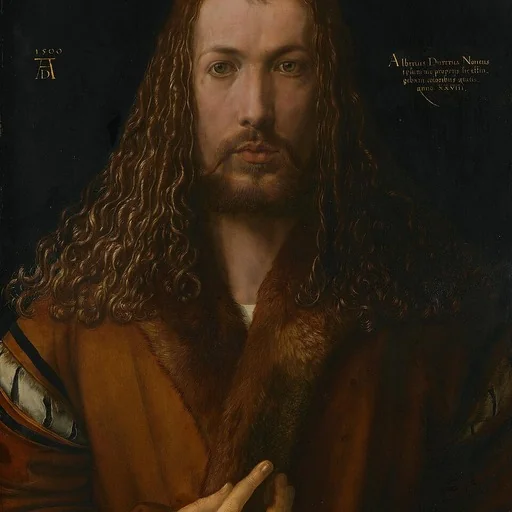
Artist
Albrecht Dürer spent his life in Nuremberg, a busy German city where artists traded prints like currency.

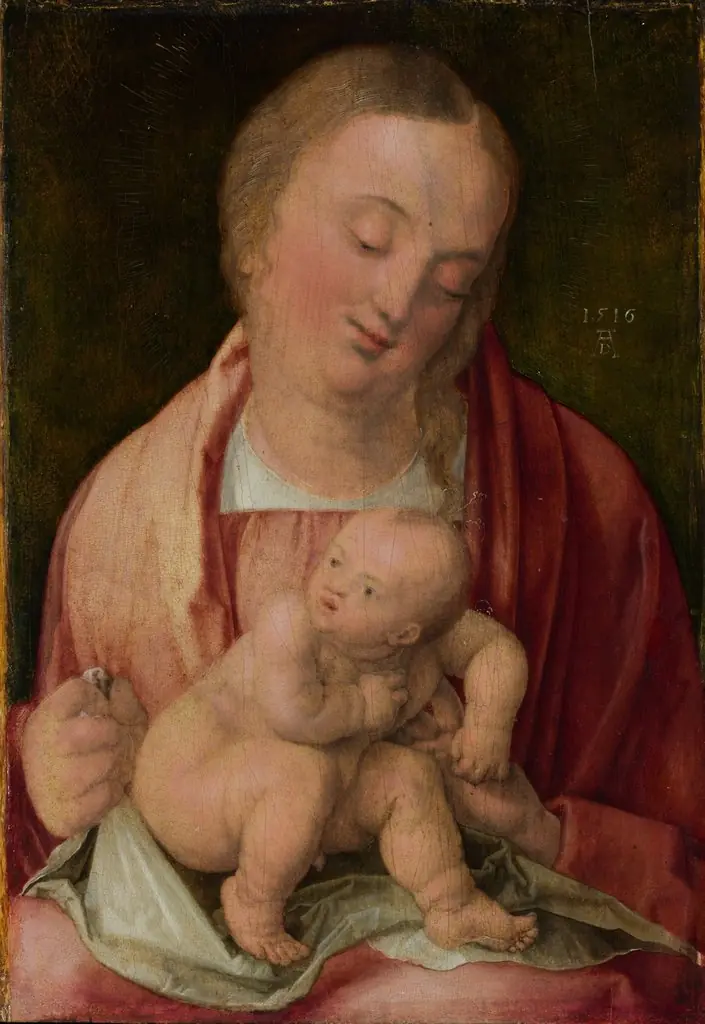
![Madonna and Child [obverse], by Albrecht Dürer](https://artifactworldgallery.com/img/albrecht-durer--madonna-and-child-obverse--d7b8ebf05d22ebe5-w320.webp)
![Lot and His Daughters [reverse], by Albrecht Dürer](https://artifactworldgallery.com/img/albrecht-durer--lot-and-his-daughters-reverse--b4ebf9b282faa17a-w320.webp)