Artwork
The Large Horse
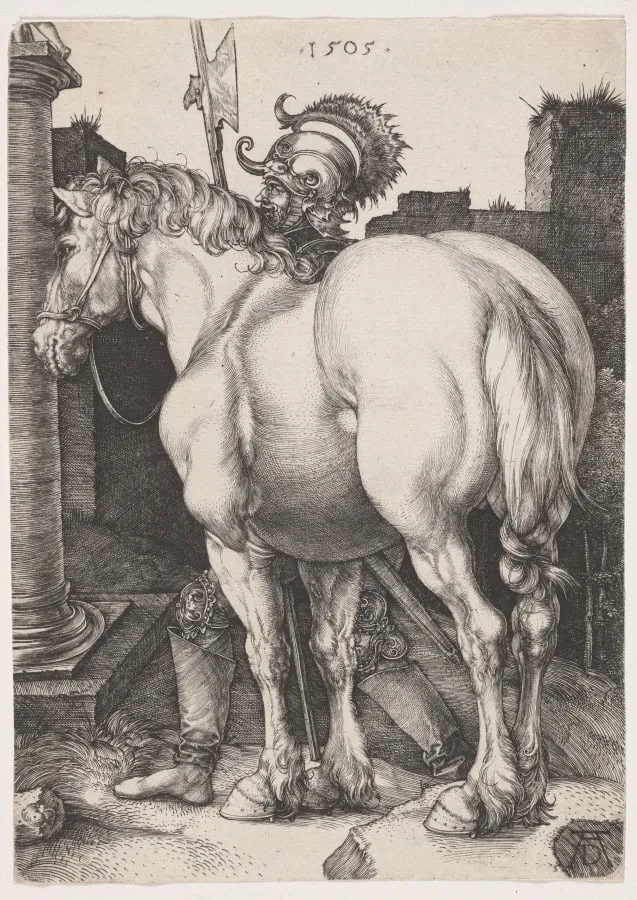
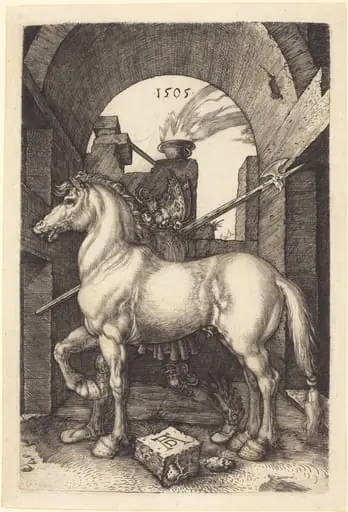
The Large Horse is a print by the Renaissance artist Albrecht Dürer. It dates from 1505 and is held in the collection of the Cleveland Museum of Art.
About this work
Overview
A central figure in the German Renaissance, Dürer was renowned for his mastery of woodcuts and engravings.
Created in 1505, *The Large Horse* is a print by Albrecht Dürer, not a painting as sometimes misstated. A central figure in the German Renaissance, Dürer was renowned for his mastery of woodcuts and engravings. This work emerged during a period when he was integrating Italian artistic principles into his Northern European style, reflecting both technical precision and a growing interest in classical form and naturalism.
Subject & Meaning
The image depicts a white stallion standing before a stone column, accompanied by a armored figure holding a spear and banner. The horse, rendered with meticulous attention to musculature and anatomy, dominates the composition. The figure behind appears more symbolic than narrative—perhaps a herald or knight—intended to frame the animal as a symbol of strength, nobility, or imperial authority, consistent with Dürer’s patronage under Emperor Maximilian I.
Technique & Style
Dürer employed fine linear engraving to achieve extraordinary detail in the horse’s coat, tendons, and shadowed contours. The use of cross-hatching and controlled ink density creates a sculptural volume, emphasizing the animal’s physical presence. The background remains sparse, focusing attention on the horse’s form. This approach reflects Dürer’s training in printmaking and his commitment to anatomical accuracy, influenced by his study of classical sculpture and Italian art.
History & Provenance
The print was produced in Nuremberg during Dürer’s mature period, following his second trip to Italy. It was likely made for a private or aristocratic audience, given its subject and quality. The work entered the Cleveland Museum of Art’s collection in the 20th century, where it remains part of the museum’s significant holdings of Northern Renaissance prints, preserved as an example of early modern printmaking excellence.
Context
In early 16th-century Germany, prints like this served as vehicles for disseminating artistic ideas beyond elite circles. Dürer’s engagement with Italian humanism and anatomy, combined with his technical innovation, positioned him as a bridge between Northern and Southern European traditions. The horse, a recurring motif in imperial iconography, aligned with Maximilian I’s efforts to project dynastic power through visual culture.
Legacy
Dürer’s *The Large Horse* exemplifies the potential of printmaking as a serious artistic medium, elevating it beyond mere reproduction. Its influence extended to later generations of Northern artists who adopted his attention to detail and anatomical rigor. The work remains a touchstone in the study of Renaissance print culture, illustrating how technical mastery could convey both naturalism and symbolic weight.
Artist & collection
Artist
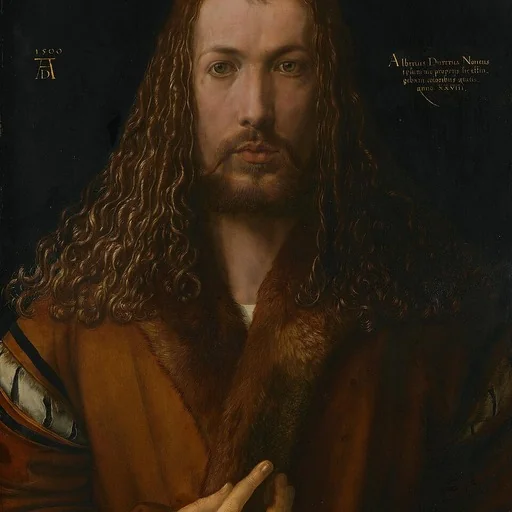
Albrecht Dürer spent his life in Nuremberg, a busy German city where artists traded prints like currency.

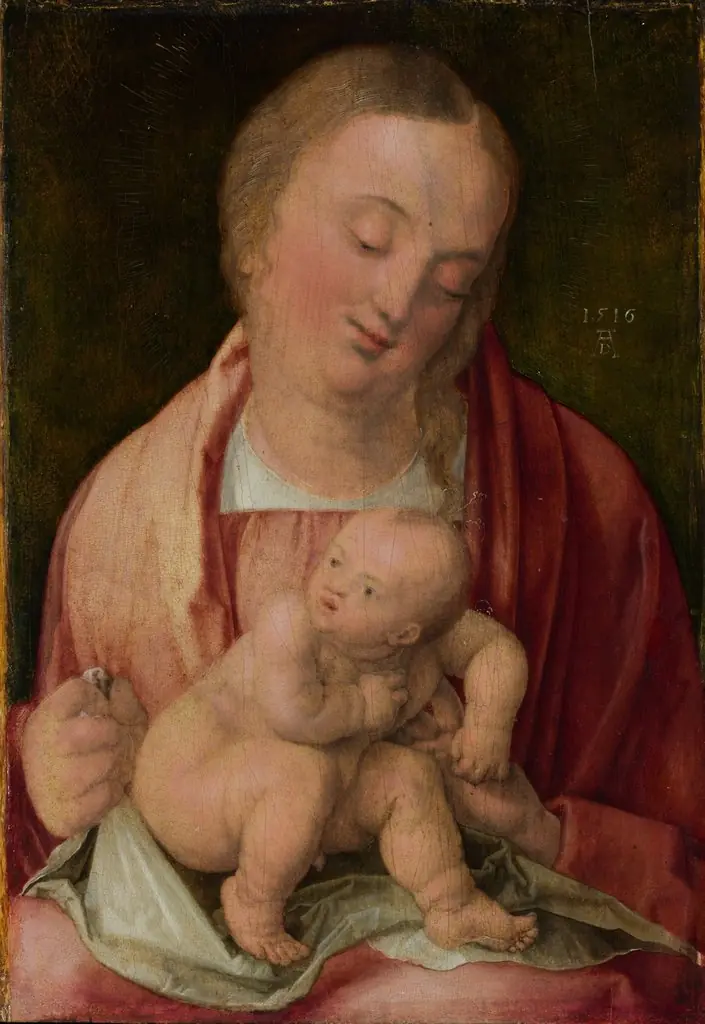
![Madonna and Child [obverse], by Albrecht Dürer](https://artifactworldgallery.com/img/albrecht-durer--madonna-and-child-obverse--d7b8ebf05d22ebe5-w320.webp)
![Lot and His Daughters [reverse], by Albrecht Dürer](https://artifactworldgallery.com/img/albrecht-durer--lot-and-his-daughters-reverse--b4ebf9b282faa17a-w320.webp)