Artwork
The Rape of Proserpina
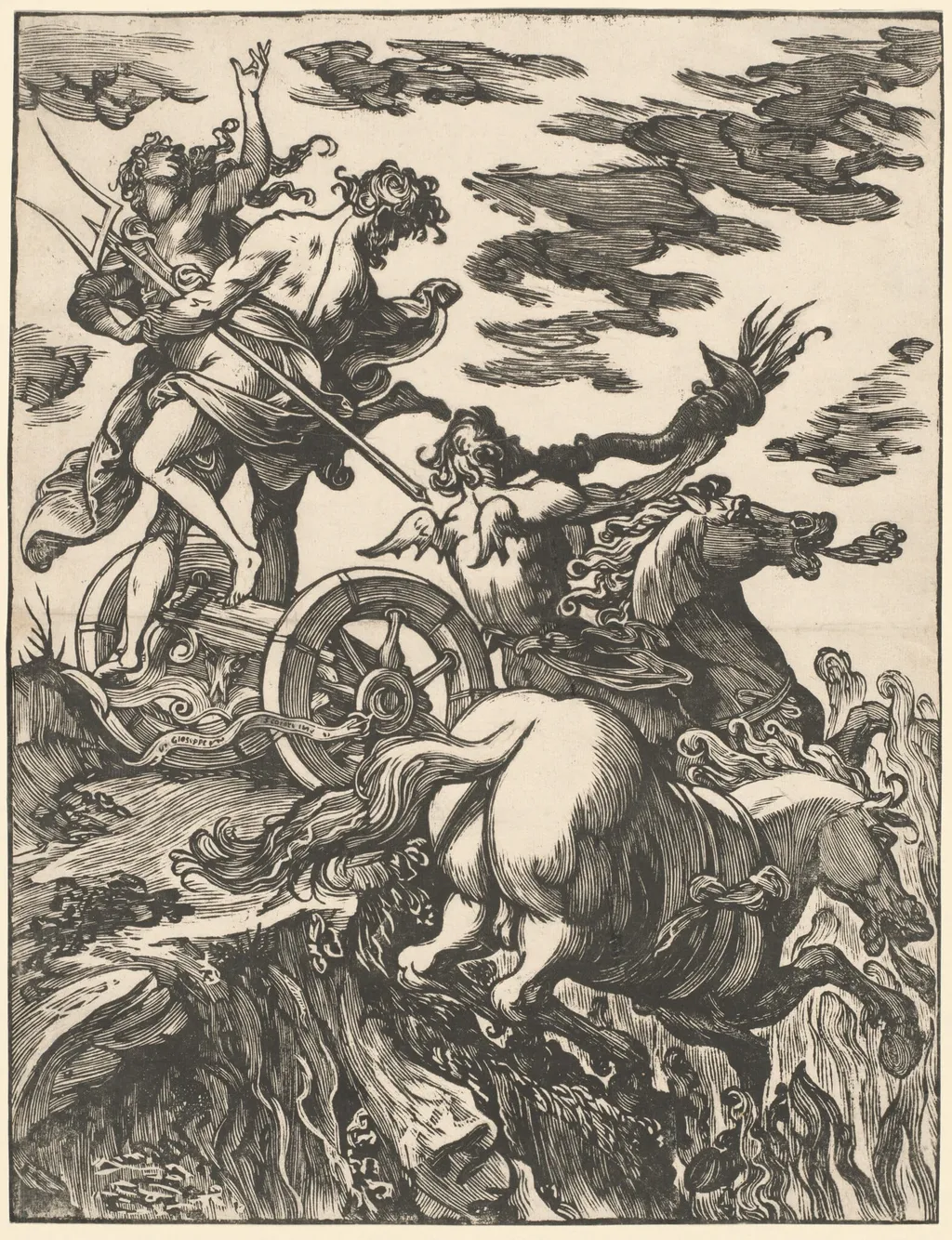
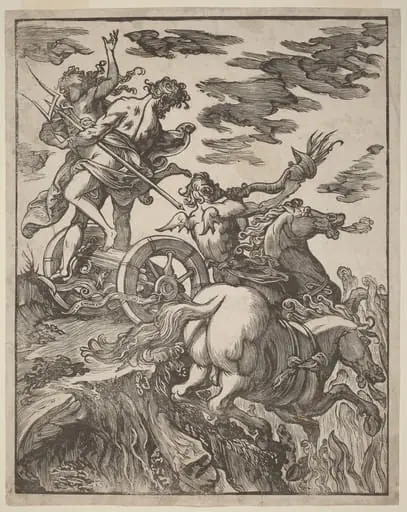
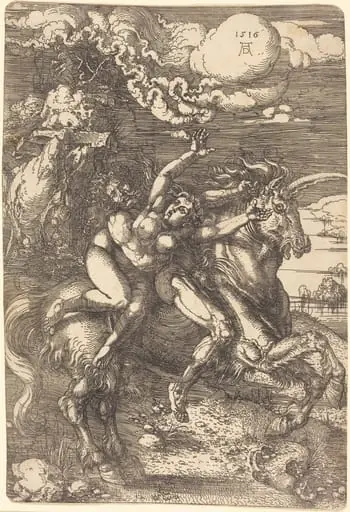
The Rape of Proserpina is an ink print by the Renaissance artist Giuseppe Scolari. It dates from 1600 and is held in the collection of the National Gallery of Art.
About this work
Overview
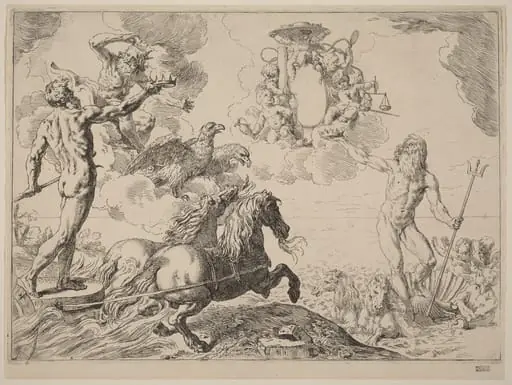
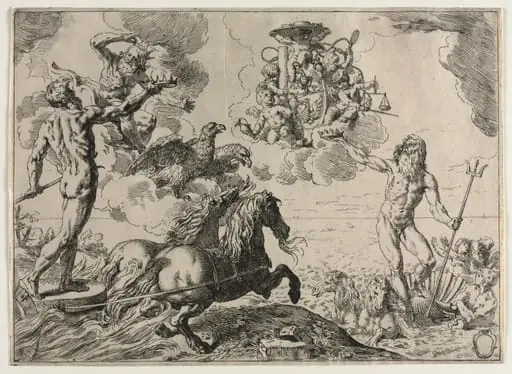
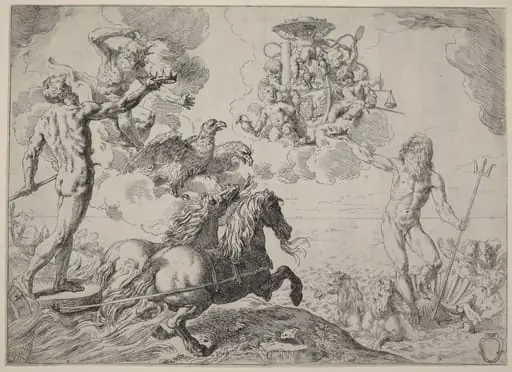
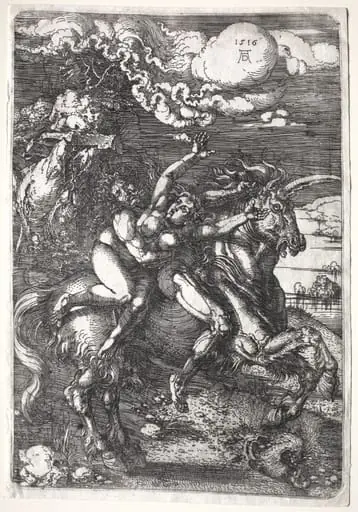
Created in 1600 by Giuseppe Scolari, this print depicts the mythological abduction of Proserpina by Pluto. Executed in woodcut and wood engraving on laid paper, it belongs to the late Renaissance tradition of narrative printmaking. The composition centers on a violent encounter between two figures, rendered with strong linear contrasts and tonal depth to emphasize drama and movement.
Subject & Meaning
The scene illustrates the myth in which Pluto, god of the underworld, seizes Proserpina, daughter of Ceres, to make her his queen. Her struggle is palpable as she twists away from his grip, while he holds a spear and pulls her toward his chariot. The imagery reflects classical themes of power, divine force, and the inevitability of fate, common in Renaissance interpretations of Ovidian tales.
Technique & Style
Scolari employed woodcut and wood engraving to achieve sharp, incised lines and dense shading. The figures are defined by bold contours, while the background recedes into hatched clouds and indistinct figures, directing focus to the central struggle. The technique allows for high contrast between light and dark, enhancing the emotional intensity without relying on color.
History & Provenance
The print was produced in Italy around 1600, during a period when mythological subjects were widely circulated in print form for scholarly and aristocratic audiences. While specific early ownership records are sparse, its style aligns with other prints from northern Italian workshops that adapted classical themes for the growing market of illustrated books and single-sheet prints.
Context
Scolari’s approach reflects the influence of earlier engravers such as Marcantonio Raimondi, who translated Renaissance compositions into reproducible formats.
This work emerged during the late Renaissance, when artists increasingly turned to printmaking to disseminate narrative imagery beyond painting. Mythological scenes like this one were popular among educated patrons who valued classical literature. Scolari’s approach reflects the influence of earlier engravers such as Marcantonio Raimondi, who translated Renaissance compositions into reproducible formats.
Legacy
Though not widely attributed to major artistic figures, Scolari’s print contributes to the broader tradition of Italian printmaking that preserved and reinterpreted classical myths. Its survival offers insight into how narrative visual culture reached wider audiences before the rise of mass reproduction, maintaining the visual language of antiquity through the early 17th century.
Artist & collection