Artwork
Combats and Triumphs No. 5: The Triumph of Bacchus
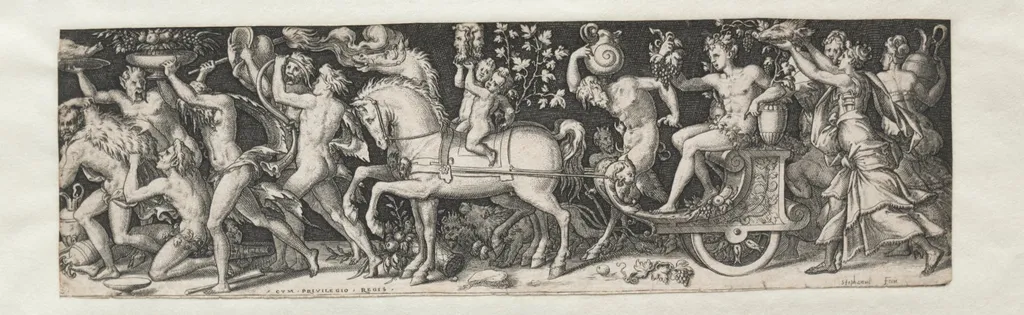
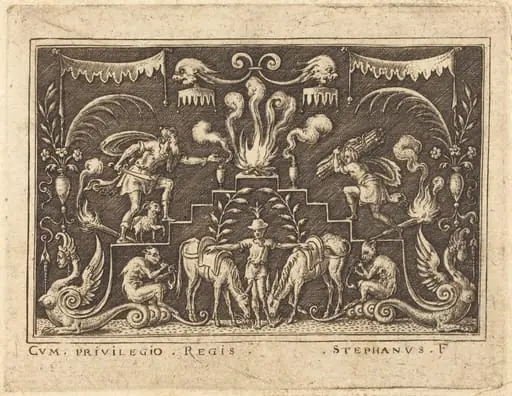
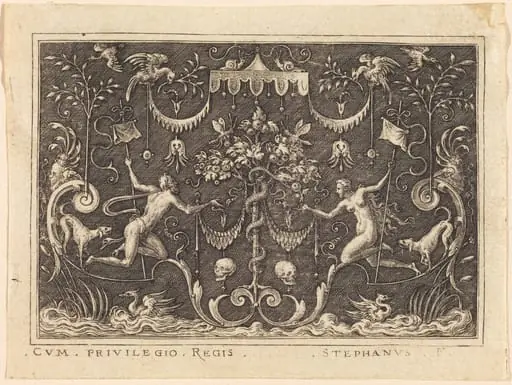
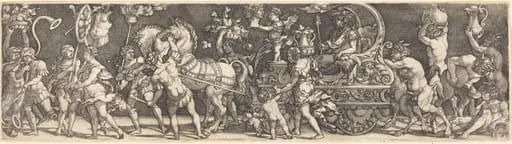
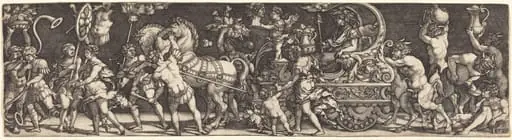
Combats and Triumphs No. 5: The Triumph of Bacchus is a print by the Renaissance artist Etienne Delaune. It dates from 1561 and is held in the collection of the Cleveland Museum of Art. Combats and Triumphs No.
About this work
Overview
Combats and Triumphs No. 5: The Triumph of Bacchus is a mid‑sixteenth‑century print executed by the French engraver Etienne Delaune around 1561. The work belongs to a series that dramatizes mythological confrontations, and it is presently part of the collection of the Cleveland Museum of Art.
Subject & Meaning
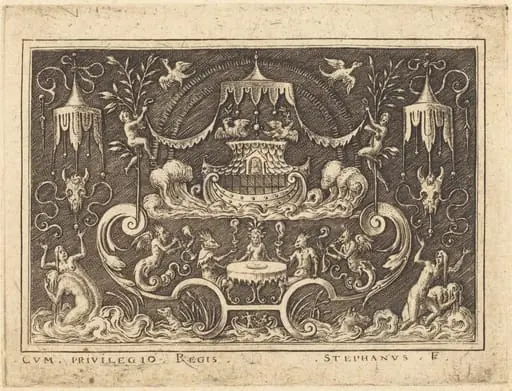
The image depicts the chaotic revelry of Bacchus’s procession. A partially clothed rider commands a chariot drawn by two horses, while surrounding figures dance, clash, and play music amid a tangle of vines and grapes. Hybrid creatures—part human, part animal—populate the scene, underscoring the god’s association with wild, ecstatic celebration.
Technique & Style
Executed as an intaglio print, Delaune relies on precise line work and stark chiaroscuro to model the figures. Deep shadows carve the forms from a dark background, creating a sense of depth and drama. The composition balances frenetic movement with a controlled, linear clarity characteristic of French Renaissance engraving.
History & Provenance
Created circa 1561, the print entered the Cleveland Museum of Art’s holdings through a mid‑20th‑century acquisition, though earlier ownership records are sparse. Its survival in good condition testifies to the durability of Delaune’s copper‑plate technique.
Context
The piece reflects the Renaissance fascination with classical mythology and the moralizing potential of Bacchus’s dual nature—both joyous and destructive. Delaune, known for his work on decorative plates and book illustrations, often merged ornamental motifs with narrative content, as seen in the intertwining vines and grotesque figures.
Artist & collection