Artwork
Allegory of Fortune
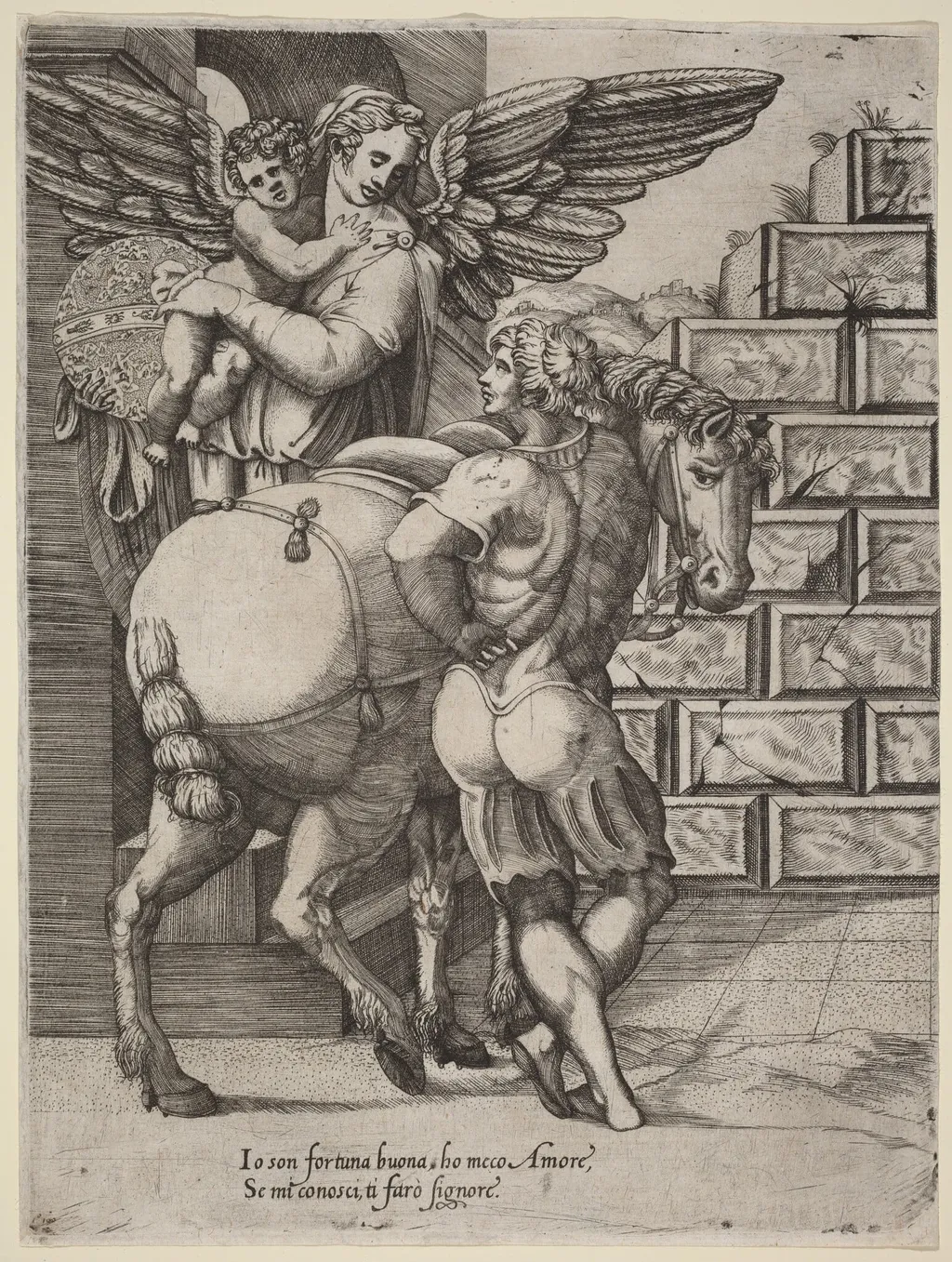
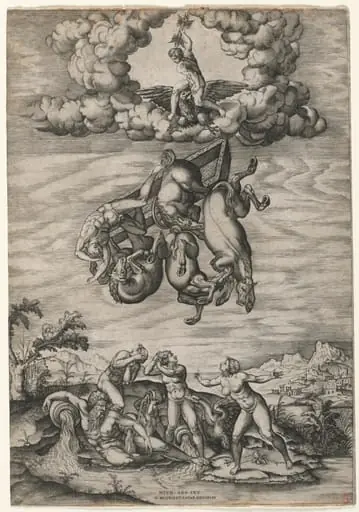
Allegory of Fortune is an ink print by the Renaissance artist Italian 16th Century. It dates from 1550 and is held in the collection of the National Gallery of Art.
About this work
Overview
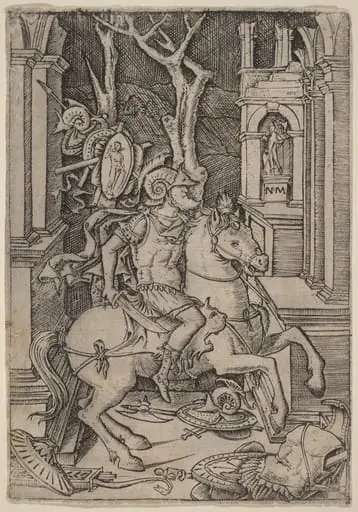
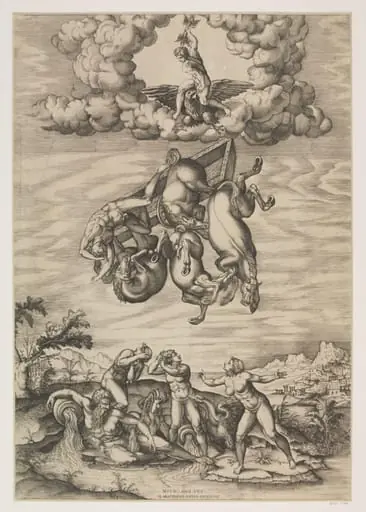
Allegory of Fortune is an engraving by an Italian artist, depicting a dynamic scene of a muscular man on a rearing horse, holding a large wheel, accompanied by a winged angel with a scroll, set against a textured brick wall background.
Subject & Meaning
The central motif of the man holding a wheel is commonly associated with luck or fate in art historical contexts, suggesting the engraving explores themes of destiny and possibly the transience of fortune.
Technique & Style
The artist employed fine lines and shading techniques characteristic of engraving to achieve depth, creating a pronounced visual contrast that makes the figures stand out against the detailed, chaotic background.
History & Provenance
Limited information is provided about the engraving's historical context or ownership history, focusing instead on its visual and thematic elements.
Context
Understanding the piece within the broader context of Italian art and the symbolism of the wheel (often linked to Fortune or Fate in European art) could further illuminate its meaning, though specific contextual details are not given.
Legacy
The engraving's impact or influence on subsequent art is not detailed in the provided information, emphasizing instead its immediate visual and symbolic attributes.
Artist & collection

Artist
A 16th-century Italian sculptor left us small bronze works in dark brown and gold.