Artwork
The Martyrdom of Saint Catherine of Alexandria
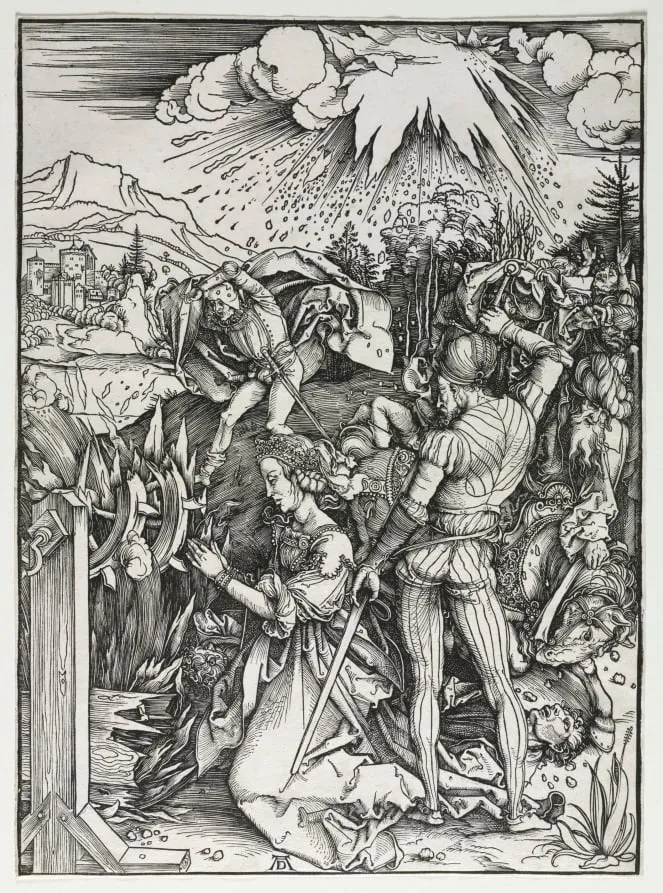
The Martyrdom of Saint Catherine of Alexandria is a print by the Renaissance artist Albrecht Dürer. It dates from 1497 and is held in the collection of the Cleveland Museum of Art.
About this work
Overview
This print by Albrecht Dürer depicts the moment of Saint Catherine’s martyrdom, following her failed execution on a spiked wheel. Created shortly after his return from Italy, the work reflects a synthesis of Northern European precision and Italianate compositional drama. Dürer captures the transition from violence to divine intervention, emphasizing Catherine’s serene resolve amid chaos.
Subject & Meaning
Saint Catherine, a Christian princess of Alexandria, was sentenced to death by Emperor Maxentius for refusing to renounce her faith.
Saint Catherine, a Christian princess of Alexandria, was sentenced to death by Emperor Maxentius for refusing to renounce her faith. According to legend, divine intervention shattered her execution wheel, killing thousands of onlookers. Dürer portrays her calm acceptance of imminent decapitation, underscoring her spiritual strength and purity as a model of steadfast devotion for contemporary viewers.
Technique & Style
Dürer employs fine, controlled lines and dramatic chiaroscuro to heighten emotional tension. The shattered wheel smolders with detailed texture, while the figures’ drapery reveals sharp, angular folds influenced by Italian art. Angels descend dynamically, contrasting with Catherine’s stillness. The interplay of light and shadow animates the scene, merging Northern attention to detail with Italian theatricality.
History & Provenance
Dürer produced this print in 1498, shortly after returning to Nuremberg from his first trip to Italy. The subject held particular resonance in his hometown, where Catherine was venerated as a powerful intercessor. The work was likely intended for private devotion or scholarly circulation, reflecting both religious devotion and artistic ambition in post-Italian Renaissance Germany.
Context
In late 15th-century Northern Europe, virgin martyrs like Catherine were widely venerated as symbols of moral purity and divine favor. Her story offered a model of female piety and resilience. Dürer’s depiction aligns with broader devotional trends, while his stylistic fusion signals a shift in Northern art toward embracing Italian ideals of form and movement without abandoning local traditions.
Legacy
This print became a key example of how Northern artists absorbed and transformed Italian Renaissance innovations. Dürer’s treatment of martyrdom—calm, composed, and spiritually charged—influenced later depictions of sacred suffering. Its technical mastery and emotional restraint ensured its enduring presence in collections and artistic discourse across Europe.
Artist & collection
Artist
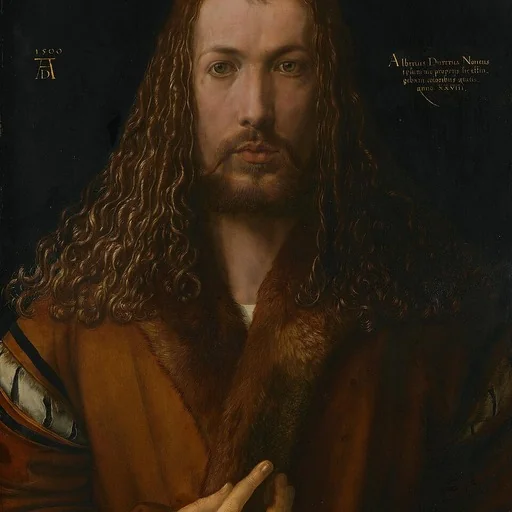
Albrecht Dürer spent his life in Nuremberg, a busy German city where artists traded prints like currency.

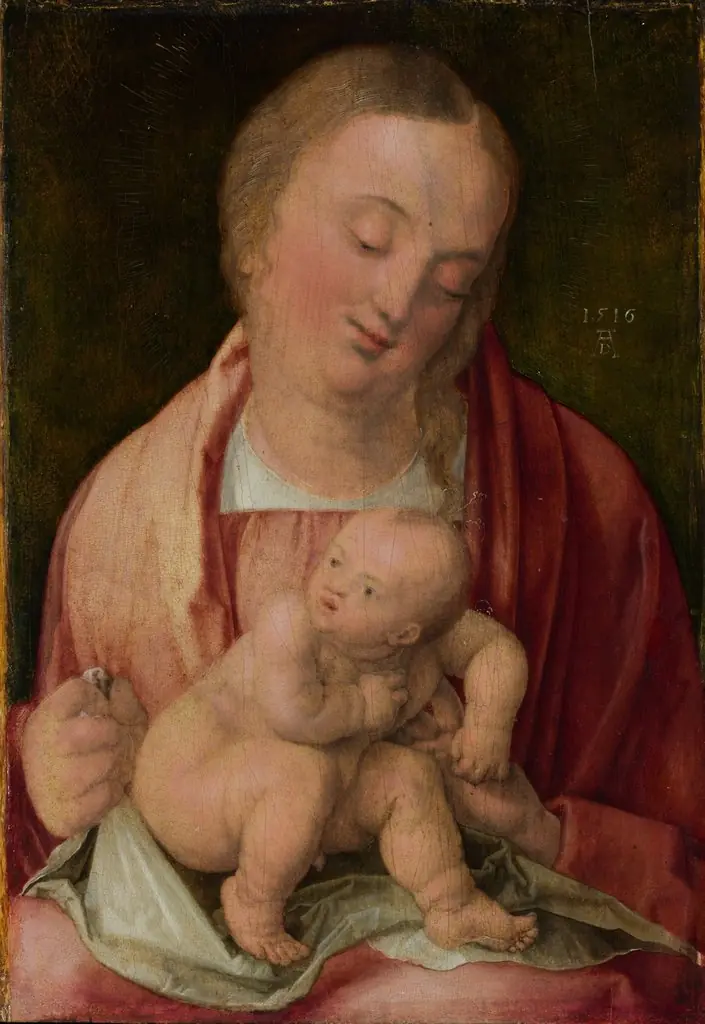
![Madonna and Child [obverse], by Albrecht Dürer](https://artifactworldgallery.com/img/albrecht-durer--madonna-and-child-obverse--d7b8ebf05d22ebe5-w320.webp)
![Lot and His Daughters [reverse], by Albrecht Dürer](https://artifactworldgallery.com/img/albrecht-durer--lot-and-his-daughters-reverse--b4ebf9b282faa17a-w320.webp)