Artwork
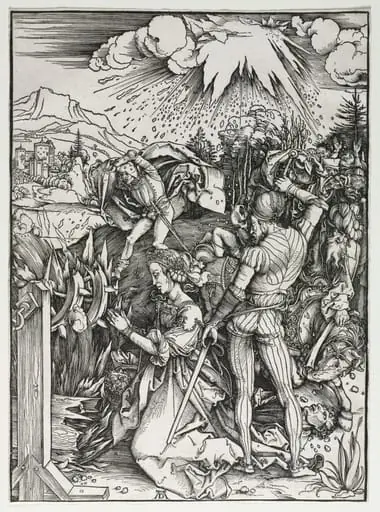
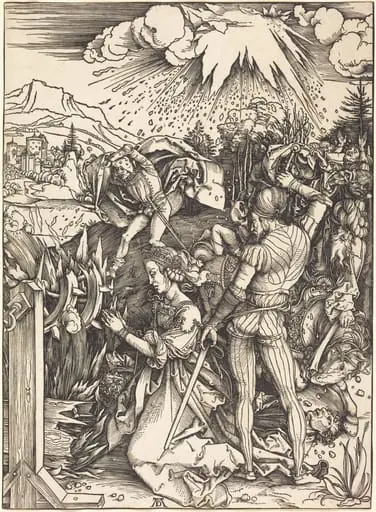
The Martyrdom of St. Catherine
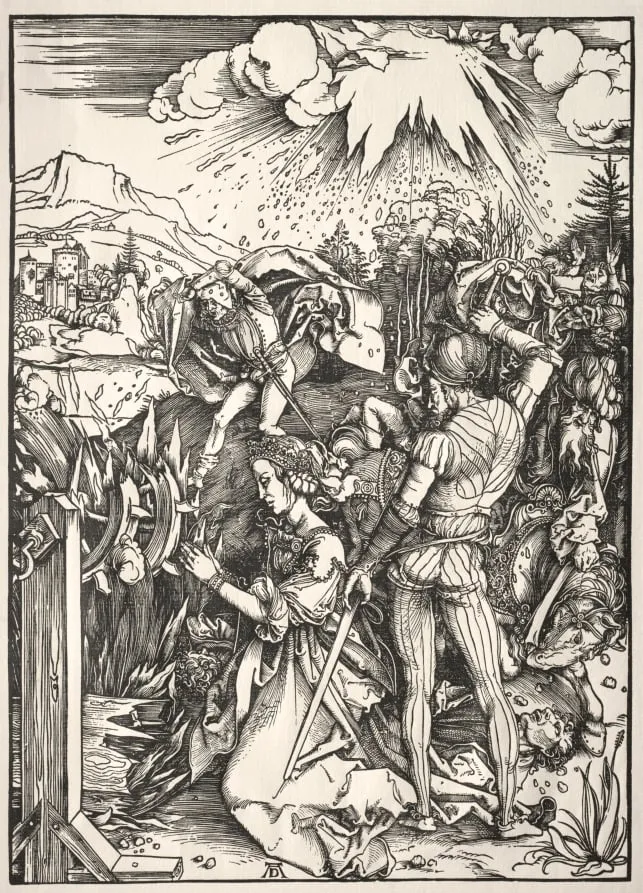
The Martyrdom of St. Catherine is a print by the Renaissance artist Albrecht Dürer. It dates from 1498 and is held in the collection of the Cleveland Museum of Art.
About this work
Overview
The scene captures a moment of violent climax, rendered with precise linework and emotional intensity characteristic of his early career.
Created around 1498, this print by Albrecht Dürer illustrates the execution of Saint Catherine, a Christian martyr whose legend describes her being condemned to death on a spiked wheel. Though often associated with painting, Dürer was primarily a printmaker, and this work reflects his mastery of the woodcut medium. The scene captures a moment of violent climax, rendered with precise linework and emotional intensity characteristic of his early career.
Subject & Meaning
The image portrays Saint Catherine at the center of her martyrdom, bound and surrounded by executioners and onlookers. According to tradition, the wheel meant to kill her shattered miraculously, leading to her beheading. Dürer emphasizes her composure amid chaos, contrasting her stillness with the aggression of those around her. The scene functions as both devotional imagery and a meditation on faith under persecution.
Technique & Style
Dürer employed woodcut technique with exceptional control, using fine, intersecting lines to model form and suggest depth. He manipulated contrast through dense black areas and delicate white spaces, creating a chiaroscuro effect uncommon in prints of the time. The figures are rendered with anatomical precision, and the background landscape, though simplified, adds spatial context without distracting from the central drama.
History & Provenance
This print was produced during Dürer’s formative years, shortly after his first trip to Italy, where he encountered Renaissance ideals of human form and narrative clarity. It was widely distributed across Europe through print networks, contributing to his reputation beyond Germany. Surviving impressions are held in major collections, including the British Museum and the Albertina, attesting to its early circulation and enduring interest.
Context
In late 15th-century Europe, images of saints’ martyrdoms served as both religious instruction and moral exemplars. Dürer’s depiction aligns with broader Northern Renaissance trends that fused emotional realism with devotional intensity. His engagement with Italian composition and anatomy, combined with Germanic attention to detail, positioned this work at the intersection of regional and continental artistic currents.
Legacy
The print helped establish Dürer as a leading figure in Northern printmaking, influencing generations of artists through its technical innovation and emotional depth. Its widespread reproduction made the imagery of Saint Catherine’s martyrdom accessible beyond ecclesiastical circles. The work remains a benchmark for how printmaking could convey complex narratives with the same gravity as painting.
Artist & collection
Artist
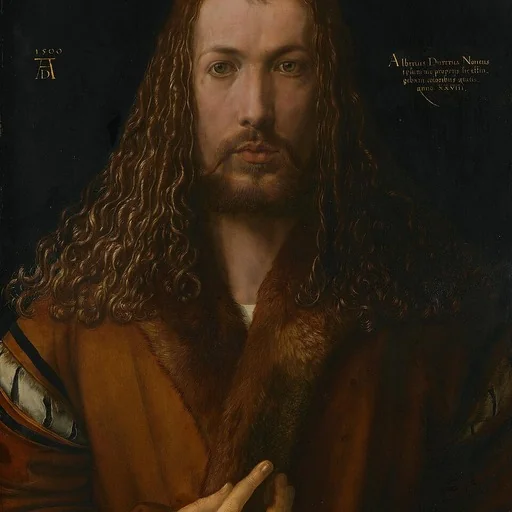
Albrecht Dürer spent his life in Nuremberg, a busy German city where artists traded prints like currency.

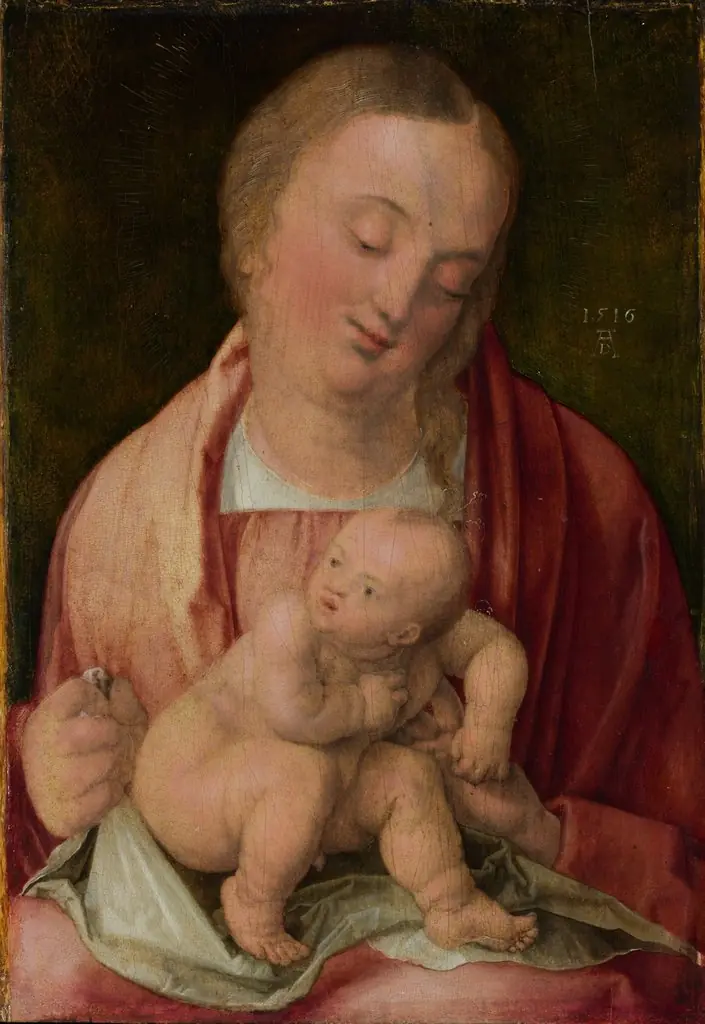
![Madonna and Child [obverse], by Albrecht Dürer](https://artifactworldgallery.com/img/albrecht-durer--madonna-and-child-obverse--d7b8ebf05d22ebe5-w320.webp)
![Lot and His Daughters [reverse], by Albrecht Dürer](https://artifactworldgallery.com/img/albrecht-durer--lot-and-his-daughters-reverse--b4ebf9b282faa17a-w320.webp)

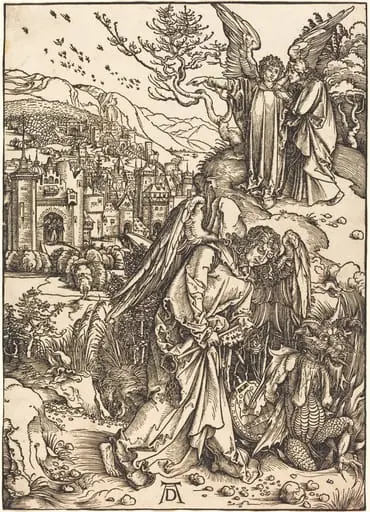 The Angel with the Key to the Bottomless Pit
 The Martyrdom of Saint Catherine of Alexandria
 Ein Briester wardt gefanngen ...
 Christ Carrying the Cross
 The Great Passion: Christ Bearing the Cross
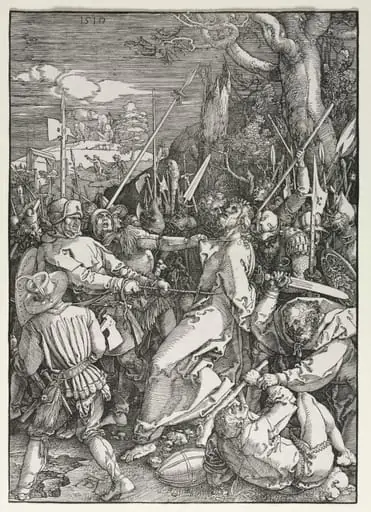 The Large Passion: The Betrayal of Christ
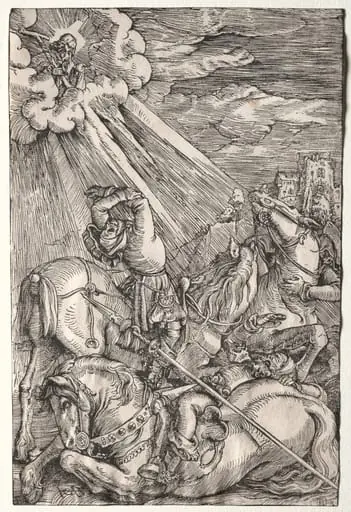 The Conversion of St. Paul
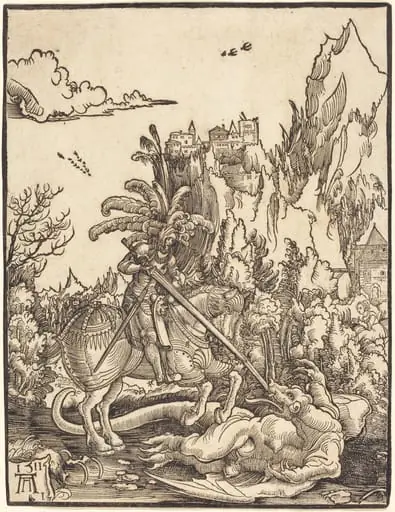 Saint George Slaying the Dragon
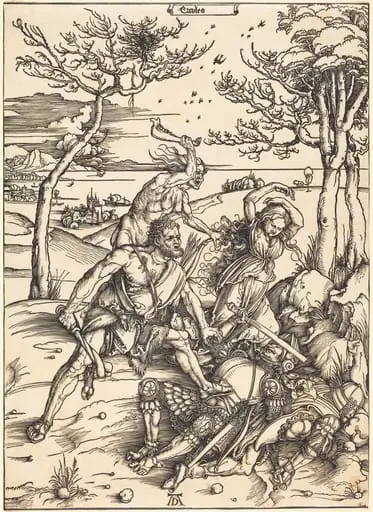 Hercules Conquering Cacus ("Ercules")
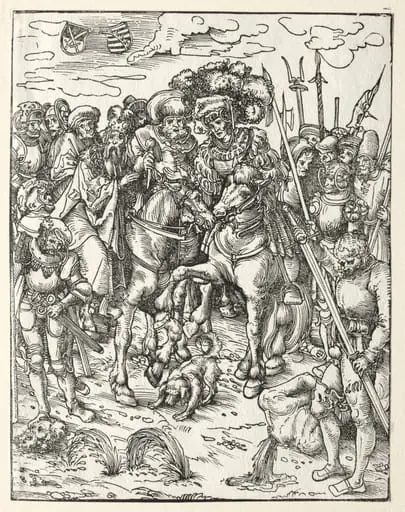 Martyrdom of St. Matthew
 The Martyrdom of Saint Catherine
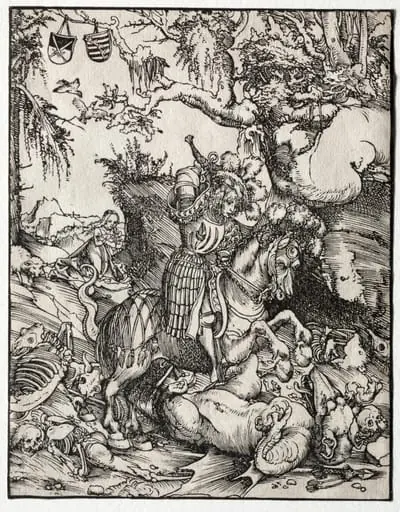 St. George Slaying the Dragon