Artwork
The Sea Monster
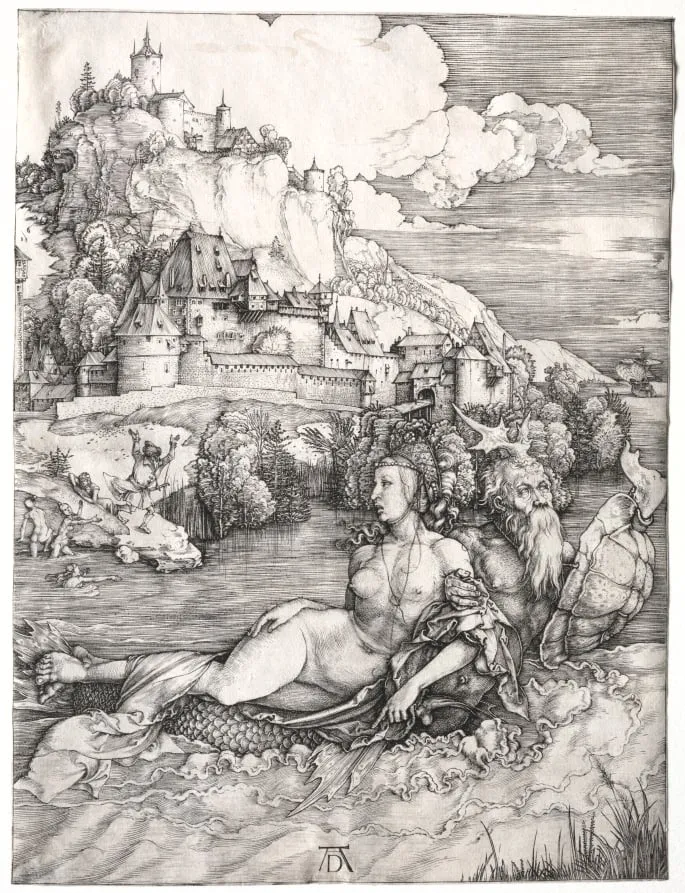
The Sea Monster is a print by the Renaissance artist Albrecht Dürer. It dates from 1501 and is held in the collection of the Cleveland Museum of Art.
About this work
A woman is being carried off by a sea monster—half man, half fish—while her friends scream from the riverbank.
A woman is being carried off by a sea monster—half man, half fish—while her friends scream from the riverbank. The monster’s horns curl like a goat’s, and the woman clutches her hair in fear.
No one knows for sure what story Dürer was telling. The castle in the background is Nuremberg, his hometown, but the myth behind the scene is lost. Some think it’s a warning, others a joke. The details are sharp, almost like a woodcut, even though no one’s sure what medium he used.
To see more of Dürer’s strange creatures, look up Albrecht Dürer (German, 1471–1528).
Overview
The Sea Monster is a print by Albrecht Dürer depicting a fantastical scene of a woman's abduction by a hybrid creature, set against a detailed coastal landscape featuring Nuremberg castle.
Subject & Meaning
The engraving shows a horned, merman-like creature kidnapping a woman, while her companions react in distress across a river. The woman's calm demeanor contrasts with the chaotic scene. The specific mythological or narrative source remains unidentified, leading to interpretive debates among scholars.
Technique & Style
The print exhibits sharp, detailed rendering, reminiscent of woodcuts, although the exact medium used by Dürer is uncertain. The work showcases Dürer's skill in depicting a reclining female nude, albeit with an unusual lack of struggle.
History & Provenance
Created by Albrecht Dürer, a German artist (1471–1528), the work features Nuremberg castle, his hometown, in the background. The original narrative inspiration, however, remains unclear due to its elusive roots in classical or German mythology.
Context
The Sea Monster reflects Dürer's exploration of mythical themes and his technical proficiency in printmaking. Its ambiguity has spurred various interpretations, ranging from cautionary tale to humorous allegory.
Legacy
Despite the uncertainty surrounding its narrative, The Sea Monster remains a notable example of Dürer's inventive and intricate printmaking style, encouraging continued scholarly interest and interpretation.
Artist & collection
Artist
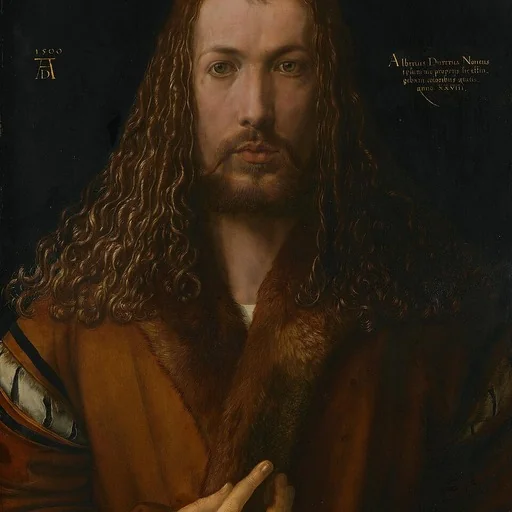
Albrecht Dürer spent his life in Nuremberg, a busy German city where artists traded prints like currency.

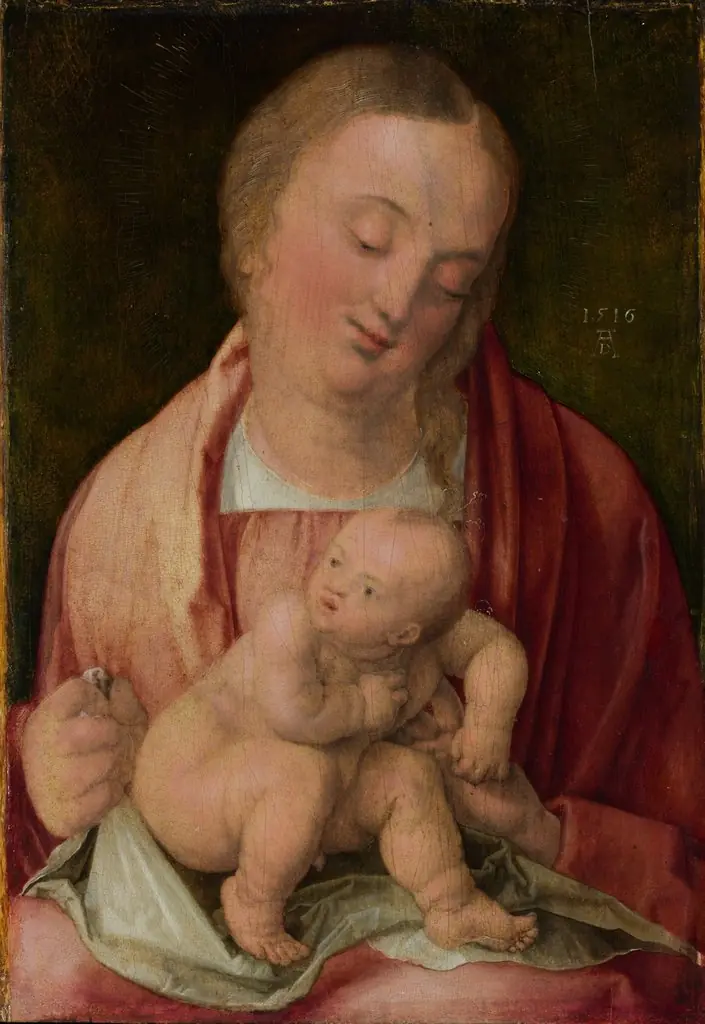
![Madonna and Child [obverse], by Albrecht Dürer](https://artifactworldgallery.com/img/albrecht-durer--madonna-and-child-obverse--d7b8ebf05d22ebe5-w320.webp)
![Lot and His Daughters [reverse], by Albrecht Dürer](https://artifactworldgallery.com/img/albrecht-durer--lot-and-his-daughters-reverse--b4ebf9b282faa17a-w320.webp)