Artwork
Adam and Eve in Paradise
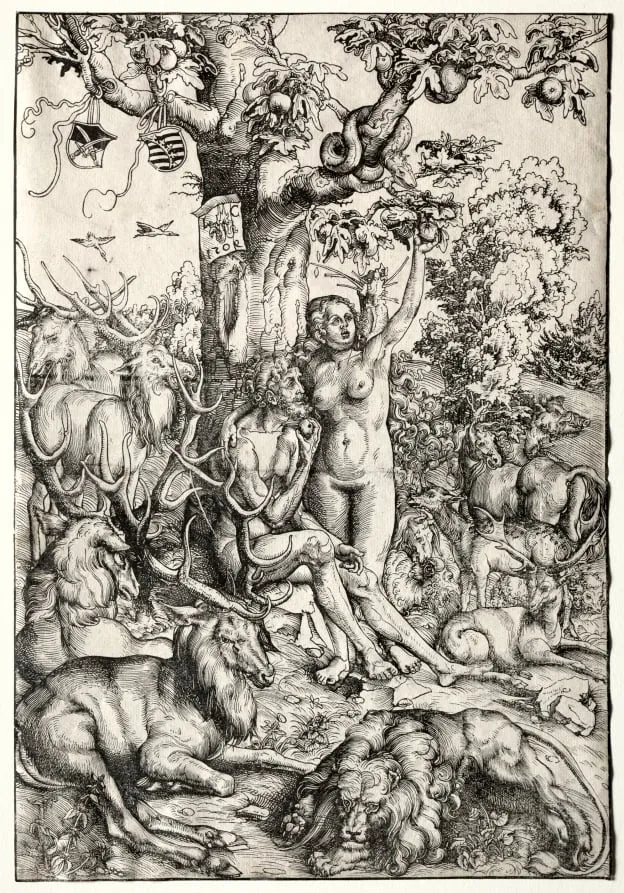
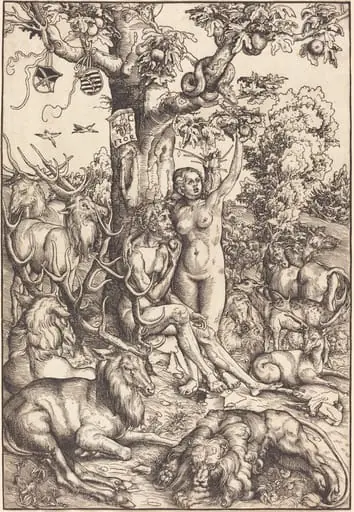
Adam and Eve in Paradise is a print by the Renaissance artist Lucas Cranach the Elder. It dates from 1509 and is held in the collection of the Cleveland Museum of Art.
About this work
The coats of arms hanging from the tree belong to Frederick the Wise, the artist’s boss and a powerful German prince.
You see Adam and Eve in a leafy garden, a snake coiled around the tree between them. Eve holds a fruit; Adam reaches for another. Deer, horses, sheep, and wild boars fill the background—more like a forest than a quiet paradise.
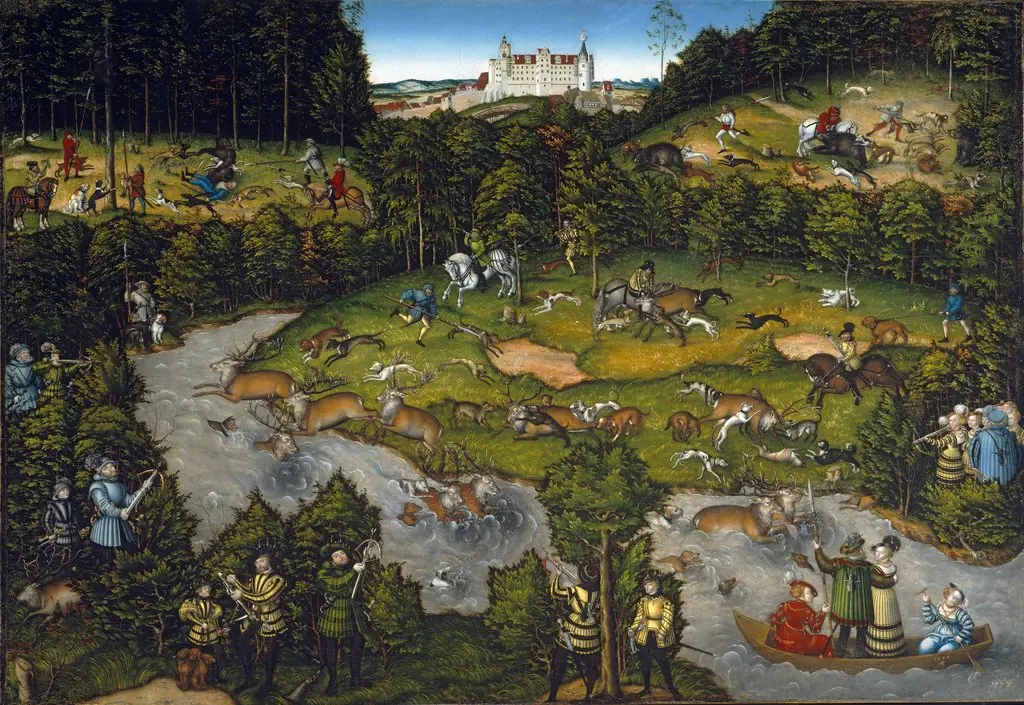
The coats of arms hanging from the tree belong to Frederick the Wise, the artist’s boss and a powerful German prince. He loved hunting, so Cranach packed the scene with animals he’d chase. The painting feels like a mix of Bible story and royal flex.
For more paintings like this, look up *Lucas Cranach (German, 1472–1553)*.
Overview
This woodcut by Lucas Cranach the Elder depicts Adam and Eve in the Garden of Eden moments before the Fall. The scene is dense with wildlife—deer, horses, sheep, boars, a lion, and a ram—arranged not as symbolic allegories but as naturalistic elements of a forested landscape. The serpent coils around the Tree of Knowledge, while the figures reach for fruit, capturing the tension of impending transgression.
Subject & Meaning
The narrative centers on the biblical moment of temptation, with Eve plucking fruit and Adam reaching for another. The presence of the serpent and the tree anchors the scene in theological tradition. Yet the emphasis on abundant fauna and the absence of divine judgment suggest a focus less on sin than on the natural world as a setting for human origin, subtly shifting the narrative weight toward earthly abundance rather than moral consequence.
Technique & Style
Cranach employs crisp, linear engraving typical of Northern Renaissance printmaking. Figures are stylized with elongated forms and minimal modeling, while the animals are rendered with precise, almost decorative detail. The composition is tightly packed, filling the frame with overlapping creatures and foliage, creating a sense of claustrophobic abundance that contrasts with the serene stillness of the central figures.
History & Provenance
Commissioned by Frederick III, Elector of Saxony, the work bears his heraldic arms悬挂于树上, linking the biblical scene to his personal domain. As a passionate hunter, Frederick’s affinity for the natural world likely influenced the scene’s emphasis on wildlife. The print was produced in Cranach’s Wittenberg workshop, where religious imagery was often tailored to the tastes and interests of Protestant patrons during the Reformation.
Context
In early 16th-century Germany, biblical subjects were frequently reimagined through contemporary lenses. Cranach’s depiction reflects a cultural blending of sacred narrative and aristocratic life—hunting grounds as earthly paradises. The proliferation of animals may echo the Elector’s private reserves, where nature was both a source of sport and a symbol of dominion, aligning divine creation with secular power.
Legacy
Cranach’s version of Adam and Eve became a widely circulated model in Protestant Europe, influencing how the Fall was visually interpreted outside Catholic iconography. Its focus on naturalism and patronage over moralizing symbolism marked a shift in religious art, prioritizing the human and terrestrial over the divine and transcendent, a trend that resonated in Reformation-era visual culture.
Artist & collection
Artist
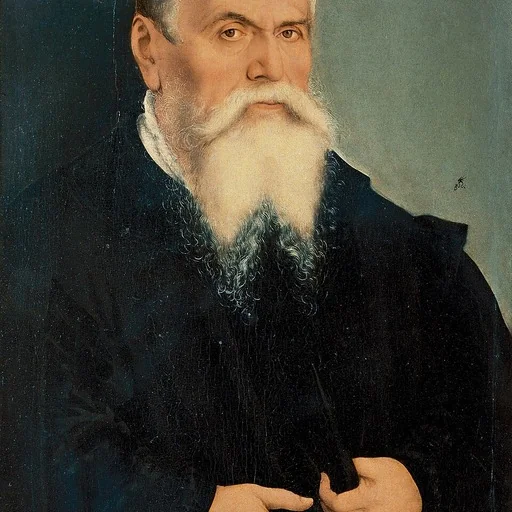
Lucas Cranach the Elder was a German Renaissance painter and printmaker in woodcut and engraving.