Artwork
The Virgin and Child on a Crescent with a Diadem
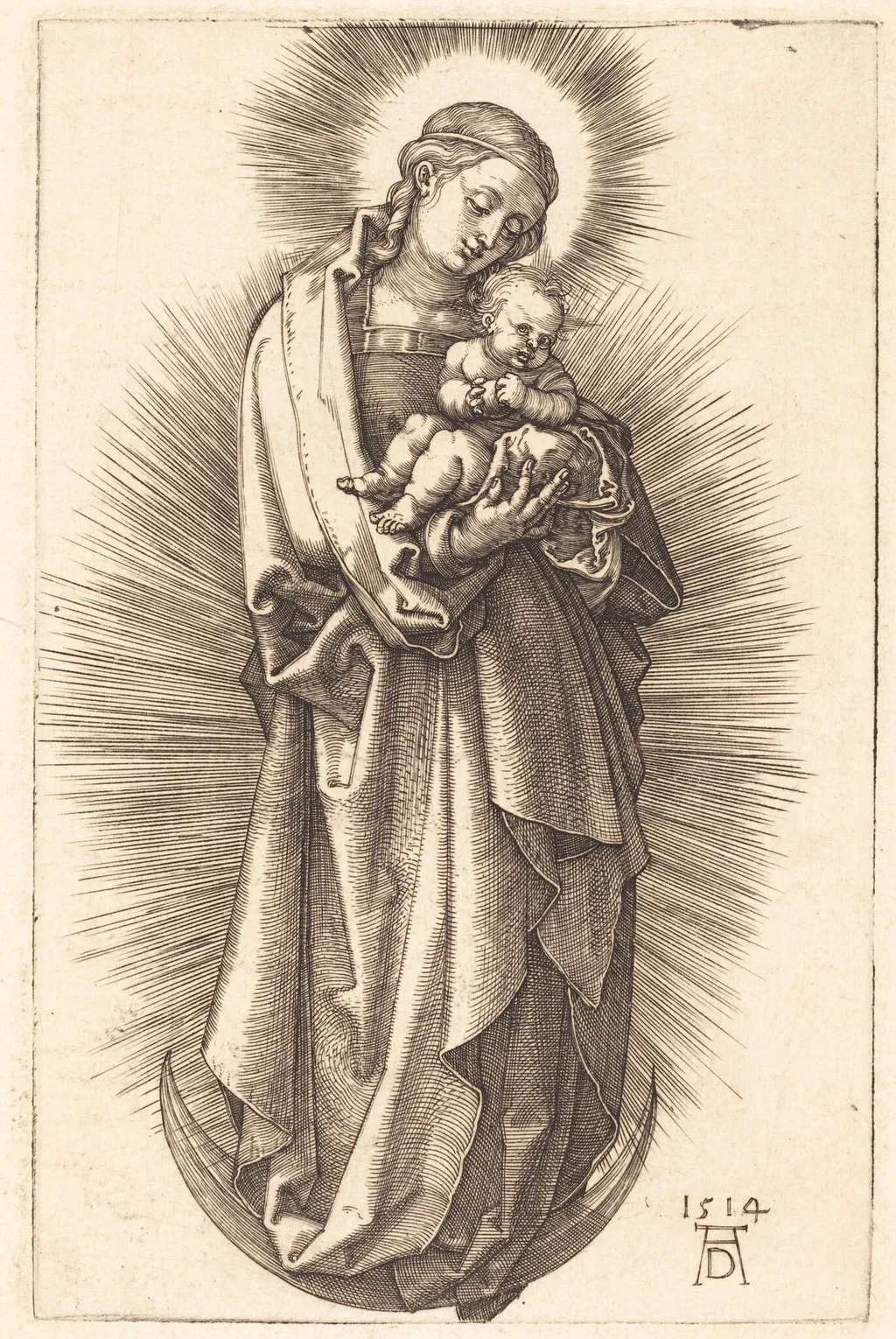
The Virgin and Child on a Crescent with a Diadem is an ink print by the Northern Renaissance artist Albrecht Dürer. It dates from 1514 and is held in the collection of the National Gallery of Art.
About this work
Overview
Albrecht Dürer’s 1514 engraving titled *The Virgin and Child on a Crescent with a Diadem* presents a compact religious scene on laid paper.
Albrecht Dürer’s 1514 engraving titled *The Virgin and Child on a Crescent with a Diadem* presents a compact religious scene on laid paper. The print shows the Virgin Mary seated upon a crescent moon, holding the infant Christ, who wears a small crown, while a floating diadem hovers above Mary’s head. The work exemplifies Dürer’s mature printmaking, combining devotional imagery with precise draftsmanship.
Subject & Meaning
The composition draws on the traditional iconography of the Virgin of the Immaculate Conception, where Mary is associated with the moon as a symbol of purity. The child’s crown alludes to his future kingship, and the diadem suggests divine authority. Together, the elements convey a theological affirmation of Mary’s sanctity and Christ’s incarnation within a compact, meditative tableau.
Technique & Style
Dürer employs sharply defined lines and meticulous cross‑hatching to model volume and generate subtle shadows. The fine gradations of tone give the figures a palpable solidity, while the delicate rendering of the cloak’s folds and the infant’s luminous skin demonstrate his mastery of tonal variation in engraving. The overall effect is one of clarity and controlled elegance.
Context
Created during the later phase of Dürer’s career, the print reflects the Northern Renaissance’s interest in integrating detailed naturalism with symbolic content. The crescent moon motif echoes earlier medieval depictions of the Virgin, while Dürer’s precise handling of line situates the work within the evolving tradition of print as a vehicle for devotional imagery.
Legacy
The engraving has been reproduced in scholarly editions of Dürer’s oeuvre and serves as a reference for the artist’s skill in translating complex iconography into the limited medium of print. Its careful study informs understanding of early 16th‑century approaches to religious narrative and the technical possibilities of engraving.
Artist & collection
Artist
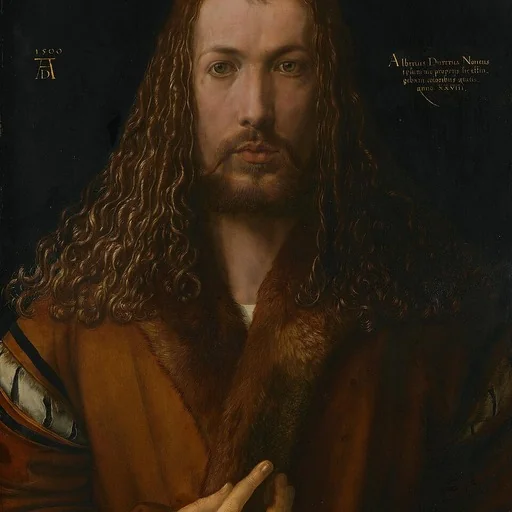
Albrecht Dürer spent his life in Nuremberg, a busy German city where artists traded prints like currency.

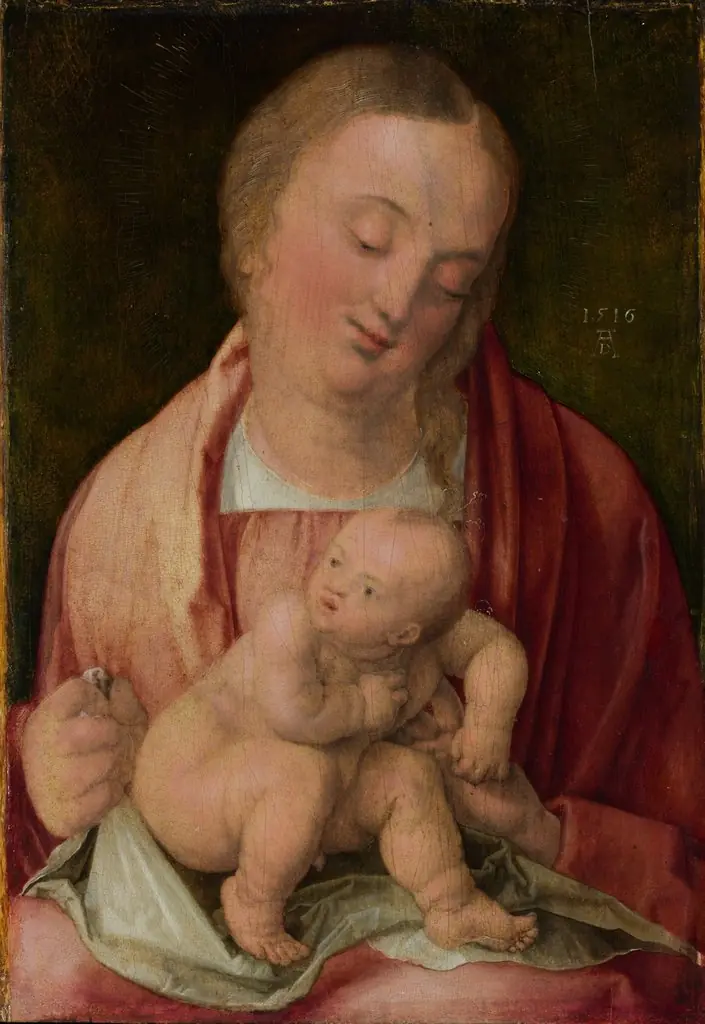
![Madonna and Child [obverse], by Albrecht Dürer](https://artifactworldgallery.com/img/albrecht-durer--madonna-and-child-obverse--d7b8ebf05d22ebe5-w320.webp)
![Lot and His Daughters [reverse], by Albrecht Dürer](https://artifactworldgallery.com/img/albrecht-durer--lot-and-his-daughters-reverse--b4ebf9b282faa17a-w320.webp)
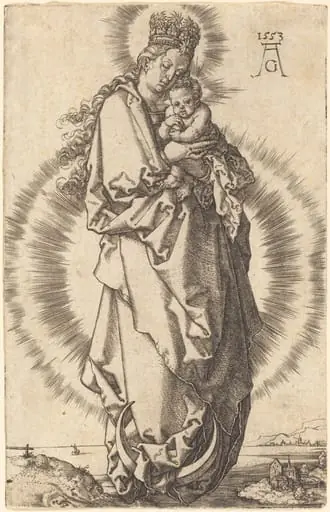 The Virgin with the Child on the Crescent
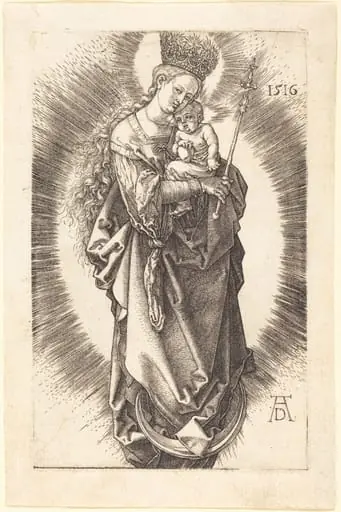 The Virgin and Child on a Crescent with a Sceptre and a Starry Crown
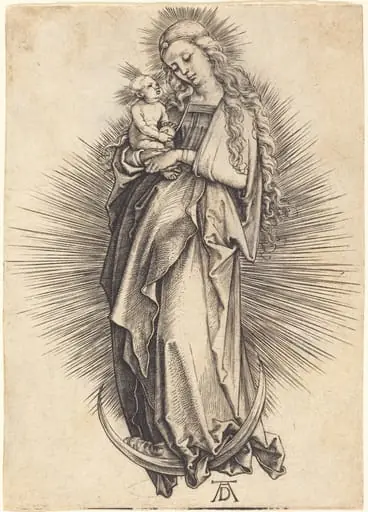 The Virgin on the Crescent
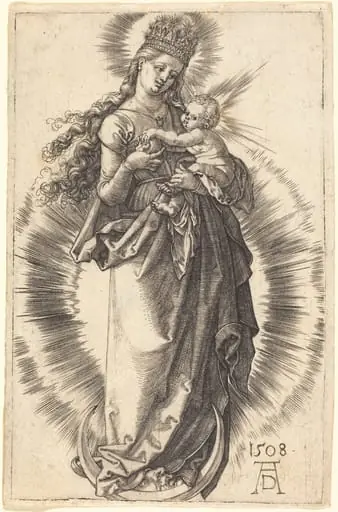 The Virgin and Child on a Crescent with a Starry Crown
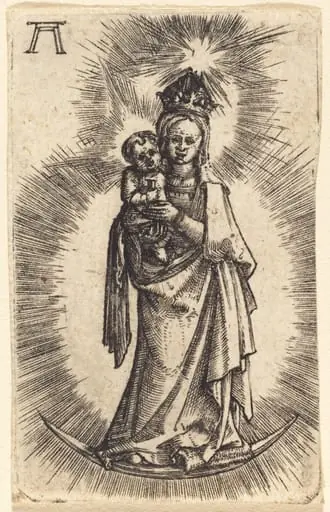 The Virgin on the Crescent
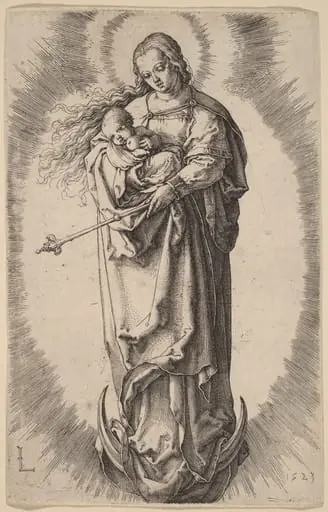 The Virgin and Child on the Crescent
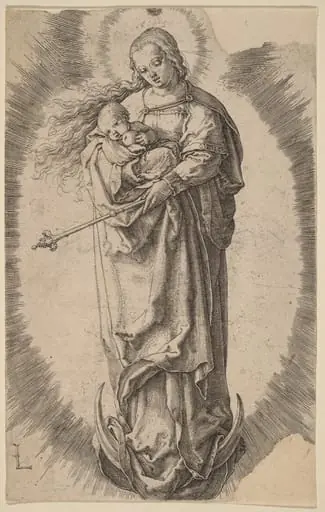 The Virgin and Child on the Crescent
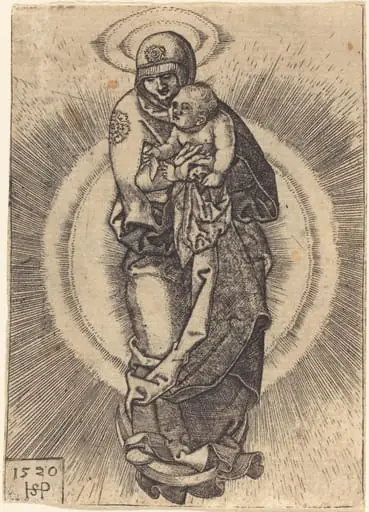 The Virgin and Child on the Crescent
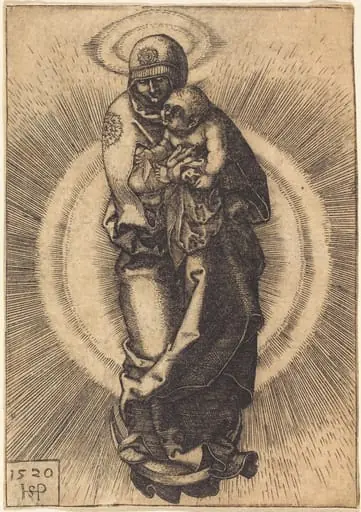 The Virgin and Child on the Crescent
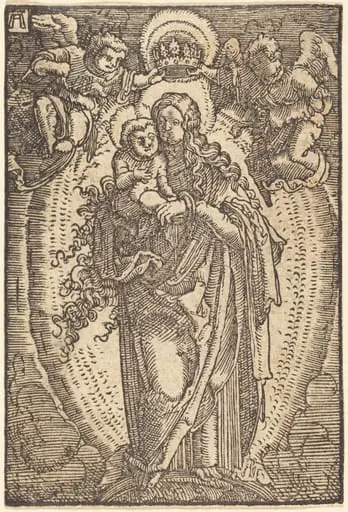 The Virgin and Child on a Crescent