Artwork
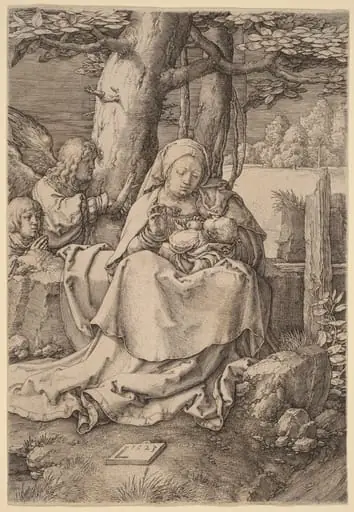
The Virgin and Child Seated by a Tree
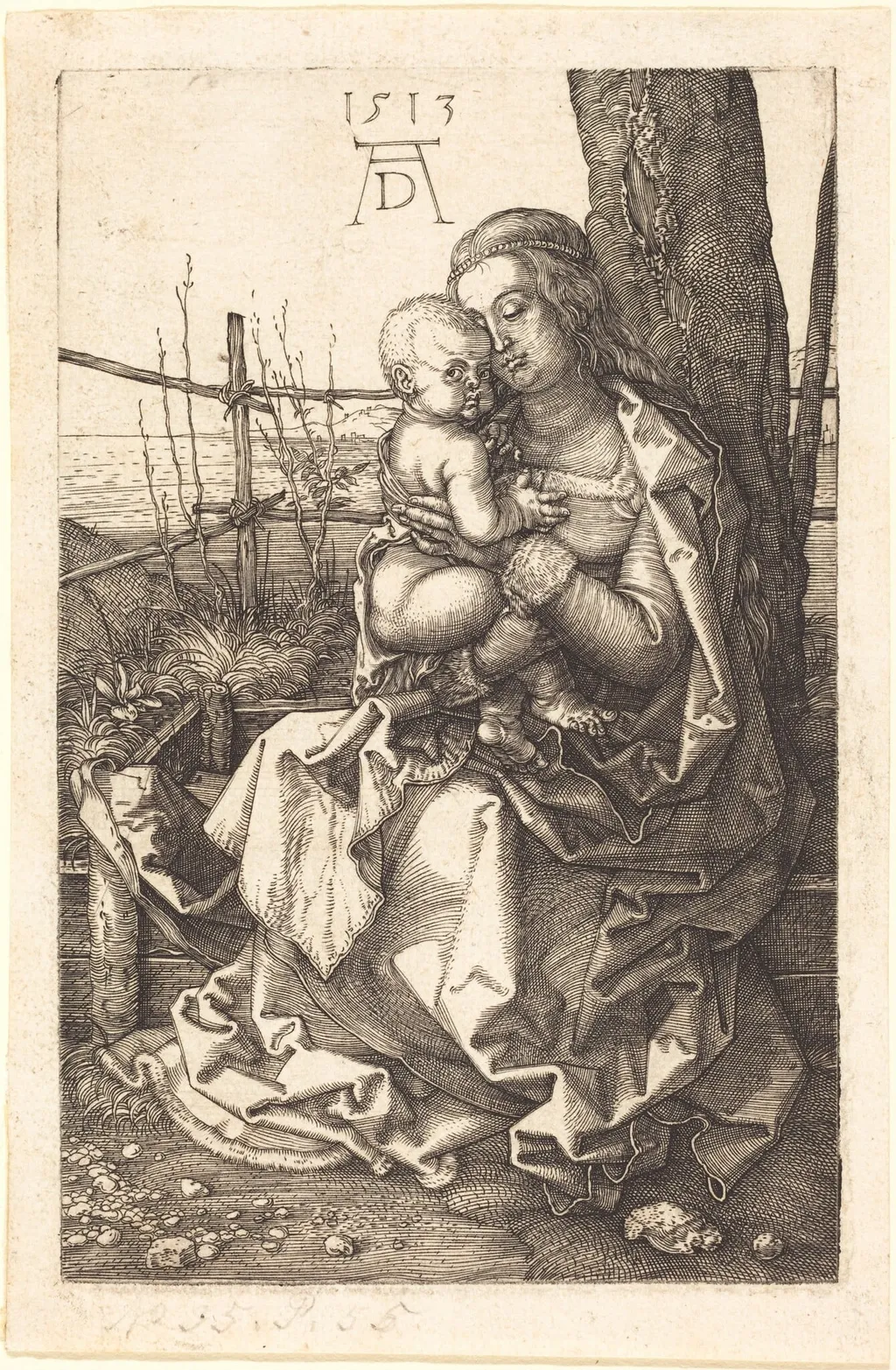
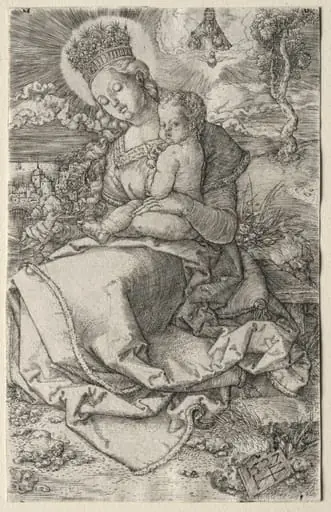
The Virgin and Child Seated by a Tree is an ink print by the Northern Renaissance artist Albrecht Dürer. It dates from 1513 and is held in the collection of the National Gallery of Art.
About this work
Overview
The Virgin is portrayed in a contemplative pose, gazing downward at the Child, who reaches toward her face, establishing an intimate maternal bond.
Albrecht Dürer's 'The Virgin and Child Seated by a Tree' is an engraving executed in 1513 on laid paper. The composition depicts the Virgin Mary seated beneath a leafy tree, holding the Christ Child on her lap. Dürer employs the engraving medium to render a dense, intricate landscape where fine lines and cross-hatching create complex textures in the foliage, the figures' drapery, and the surrounding ground. The Virgin is portrayed in a contemplative pose, gazing downward at the Child, who reaches toward her face, establishing an intimate maternal bond. This work exemplifies the German Renaissance's fusion of Northern European attention to naturalistic detail with Italianate compositional balance. Created during the peak of Dürer's printmaking career, the piece demonstrates his mastery of the burin, allowing for a wide tonal range and precise modeling of form without the aid of color. The work stands as a significant example of Dürer's religious imagery, where theological themes are conveyed through meticulous observation of the natural world and human expression.
Subject & Meaning
The image centers on the intimate interaction between mother and child, a recurrent theme in early sixteenth‑century Christian art. The presence of the tree may allude to the Tree of Life or to themes of growth and salvation, reinforcing the theological significance of the Madonna as a nurturing figure and the Christ Child as the source of spiritual renewal.
Technique & Style
Executed through copper‑plate engraving, Dürer employed a network of fine, intersecting lines to model flesh, drapery, and foliage. The technique allows subtle gradations of tone, creating a sense of depth and texture that was advanced for its period. The meticulous hatching and cross‑hatching demonstrate Dürer’s mastery of line work, achieving a three‑dimensional effect on a flat surface.
History & Provenance
Created in the final decade of Dürer’s career, the print reflects his continued interest in religious subjects after his travels to Italy. While specific ownership records are sparse, the work circulated among collectors of Northern Renaissance prints and appears in several early catalogues of Dürer’s oeuvre, confirming its attribution and dating to 1513.
Artist & collection
Artist
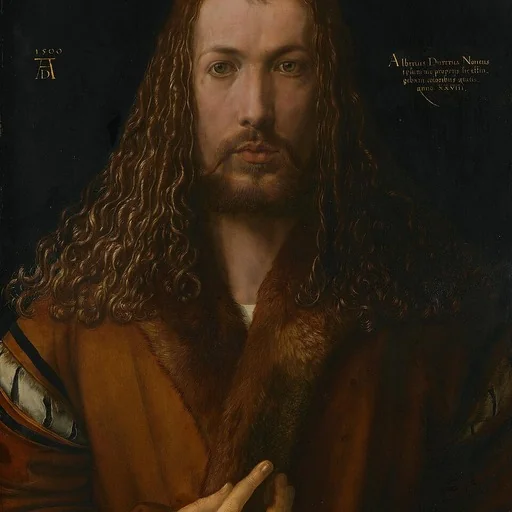
Albrecht Dürer spent his life in Nuremberg, a busy German city where artists traded prints like currency.

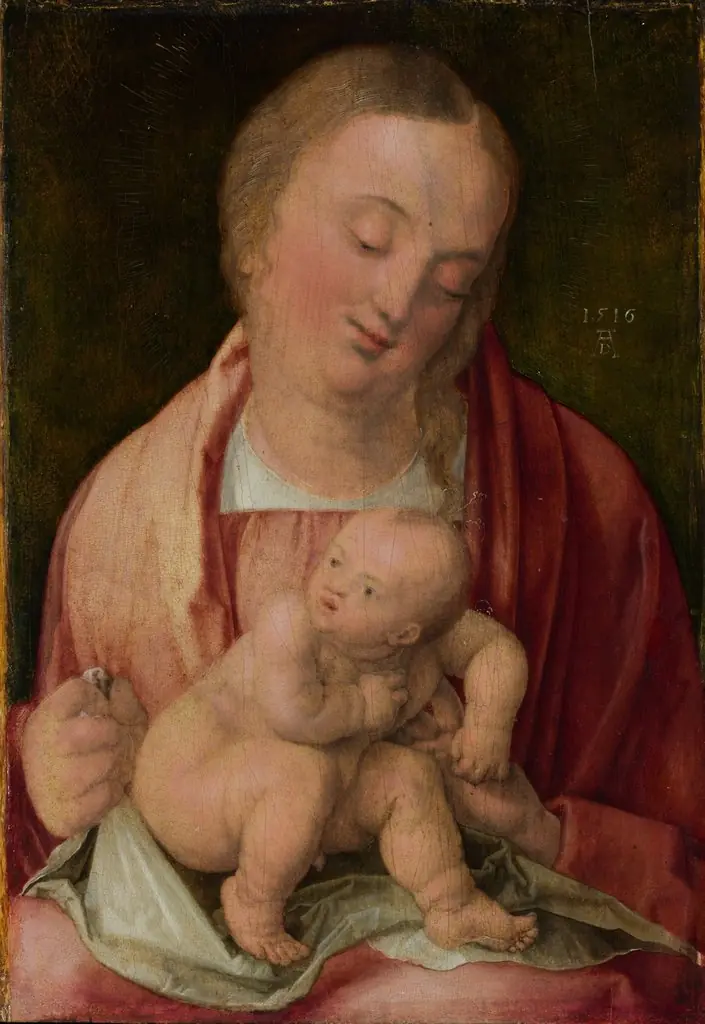
![Madonna and Child [obverse], by Albrecht Dürer](https://artifactworldgallery.com/img/albrecht-durer--madonna-and-child-obverse--d7b8ebf05d22ebe5-w320.webp)
![Lot and His Daughters [reverse], by Albrecht Dürer](https://artifactworldgallery.com/img/albrecht-durer--lot-and-his-daughters-reverse--b4ebf9b282faa17a-w320.webp)