Artwork
Marriage Coat of Arms of the Families Duerer and Holper. Verso of the Albrecht Dürer the Elder portrait
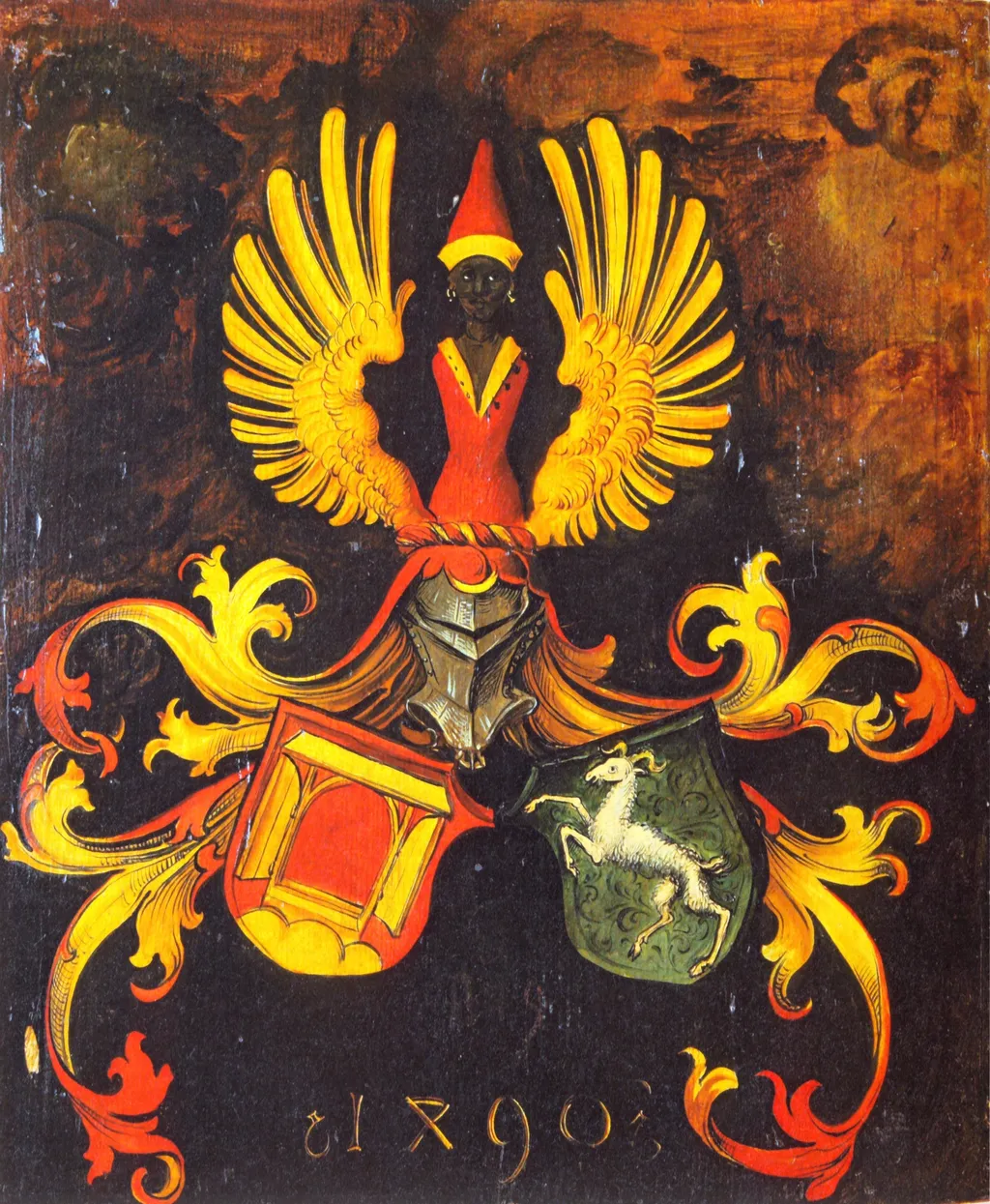
Marriage Coat of Arms of the Families Duerer and Holper. Verso of the Albrecht Dürer the Elder portrait is an oil painting by the Northern Renaissance artist Albrecht Dürer. It dates from 1496 and is held in the collection of the Uffizi Gallery.
About this work
Overview
It functions not as a portrait but as a heraldic emblem commemorating the union of the Dürer and Holper families.
Painted in 1496, this oil work serves as the reverse side of a portrait of Albrecht Dürer the Elder. It functions not as a portrait but as a heraldic emblem commemorating the union of the Dürer and Holper families. Executed in the Northern Renaissance style, it combines symbolic imagery with meticulous detail, reflecting the era’s emphasis on familial lineage and social identity through visual heraldry.
Subject & Meaning
The central figure is a winged woman with dark skin, wearing a red dress and a red hat, her wings outstretched. She holds a shield bearing a white goat on a green field—likely the Dürer family emblem. The figure may represent a personification of virtue or familial honor, common in heraldic traditions. The inclusion of both families’ symbols underscores the union’s significance, embedding social status within a devotional aesthetic.
Technique & Style
The painting employs oil on panel with precise brushwork characteristic of Northern Renaissance detail. Colors are rich but restrained: deep reds, greens, and golds contrast against a dark, uneven background. The figure’s wings and drapery are rendered with subtle gradations, while the shield’s emblem is sharply defined. The composition is frontal and symmetrical, prioritizing symbolic clarity over spatial depth.
History & Provenance
Created as the reverse of a portrait of Albrecht Dürer the Elder, the work remained attached to its original panel until separated in later centuries. It entered the Uffizi Gallery’s collection in the 19th century, where it is now displayed as a standalone heraldic piece. Its survival alongside the portrait suggests it was preserved as a family heirloom before institutional acquisition.
Context
In late 15th-century Nuremberg, heraldic imagery was integral to civic and familial identity. This piece aligns with traditions where marriage alliances were visually codified, often on the backs of portraits or in private devotional objects. The use of allegorical figures alongside coats of arms reflects a broader Northern European trend of blending religious, civic, and familial symbolism in domestic art.
Legacy
Though not widely exhibited, the work remains a rare example of a painted heraldic emblem attached to a portrait. It offers insight into how artisan families like the Dürers asserted status through visual language. Its preservation in the Uffizi underscores its value as a document of social practice, rather than purely aesthetic achievement, within Renaissance Germany.
Own this work as a print
Artist & collection
Artist
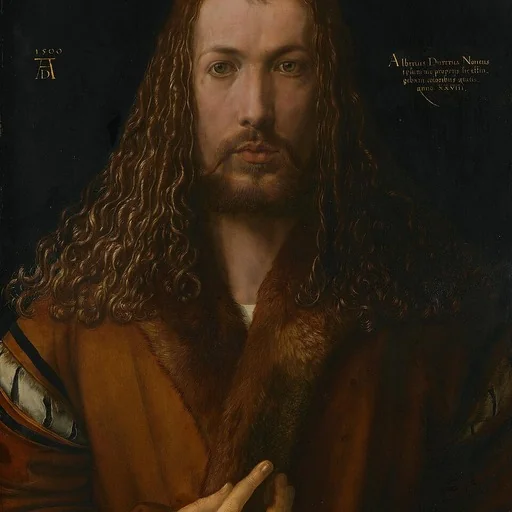
Albrecht Dürer spent his life in Nuremberg, a busy German city where artists traded prints like currency.

![Madonna and Child [obverse], by Albrecht Dürer](https://artifactworldgallery.com/img/albrecht-durer--madonna-and-child-obverse--d7b8ebf05d22ebe5-w320.webp)
![Lot and His Daughters [reverse], by Albrecht Dürer](https://artifactworldgallery.com/img/albrecht-durer--lot-and-his-daughters-reverse--b4ebf9b282faa17a-w320.webp)