Artwork
Coat-of-Arms of the Cervantes Family
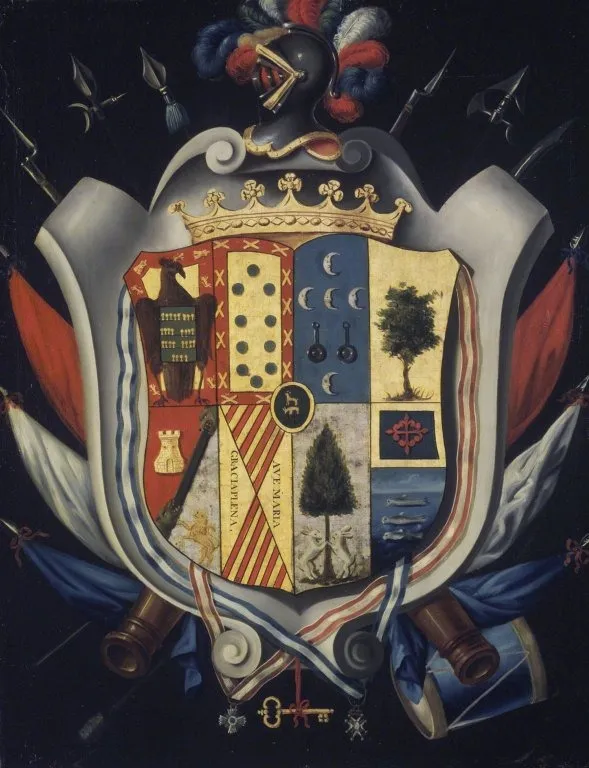
Coat-of-Arms of the Cervantes Family is an oil painting by Unknown. It dates from 1802 and is held in the collection of the Brooklyn Museum.
About this work
Overview
This oil painting depicts the heraldic emblem of the Cervantes family, rendered with meticulous attention to traditional heraldic conventions.
This oil painting depicts the heraldic emblem of the Cervantes family, rendered with meticulous attention to traditional heraldic conventions. The composition centers on a shield divided into multiple fields, each bearing symbolic elements. Above the shield rests a crown, while surrounding banners and flags frame the design. The work emphasizes detail over narrative, functioning as a formal representation of lineage and status rather than a scene of action.
Subject & Meaning
The coat of arms incorporates traditional heraldic symbols: a tree suggesting growth and endurance, a crescent moon possibly indicating divine favor or renewal, and a castle denoting strength or territorial claim. Inscriptions on the shield, though legibility is limited, likely reference family mottos or ancestral titles. These elements collectively assert noble identity, aligning with early modern Spanish conventions where heraldry served as a visual record of lineage and social rank.
Technique & Style
The painting employs oil glazing techniques to achieve depth and luminosity in the metallic and colored elements. Layers of transparent pigment build richness in the crown’s gold tones and the shield’s tinctures, while fine brushwork defines intricate patterns on the banners and shield divisions. The style reflects 16th- or 17th-century Spanish heraldic portraiture, prioritizing symbolic clarity and ornamental precision over naturalism.
History & Provenance
The painting likely originated as a commissioned work for the Cervantes family, possibly during the late Renaissance or early Baroque period. Its survival suggests it was preserved within family holdings or institutional collections, though specific ownership records remain undocumented. It may have once been displayed in a domestic or ecclesiastical setting to affirm familial prestige.
Context
In early modern Spain, heraldic paintings like this were common among noble and gentry families seeking to legitimize status through visual tradition. The use of specific symbols followed strict rules of heraldry, often codified by royal authorities. This piece reflects the broader cultural practice of using heraldry to communicate ancestry, alliances, and social standing in a society where lineage was central to identity.
Legacy
As a preserved example of Spanish familial heraldry, the painting contributes to the study of genealogical symbolism in early modern Europe. While not attributed to a known master, its craftsmanship illustrates the skill of regional artisans who specialized in heraldic commissions. It remains a tangible artifact of how families visually encoded their histories in a pre-photographic era.
Artist & collection

 Domestic Scene
 Giacomo and Cardinal Marco, investing Andrea, Abbot of San Zeno, with his Benefice
 The Nymph of Fontainebleau
 Portrait of a Woman
 Madonna and Child with Saints in the Enclosed Garden
 Venus and Minerva
 Family Group of Four on Sofa
 Wall painting from Room H of the Villa of P. Fannius Synistor at Boscoreale
 Coat of Arms of the Kress von Kressenstein Family
 The Arms of Philippe de Bourgogne
![Crested Coat of Arms [reverse], by Antwerp 16th Century](https://artifactworldgallery.com/img/antwerp-16th-century--crested-coat-of-arms-reverse--635f462b0f763a94-w320.webp) Crested Coat of Arms [reverse]
Crested Coat of Arms [reverse] Coat of Arms of Prince Rupert, Hollar and Evelyn
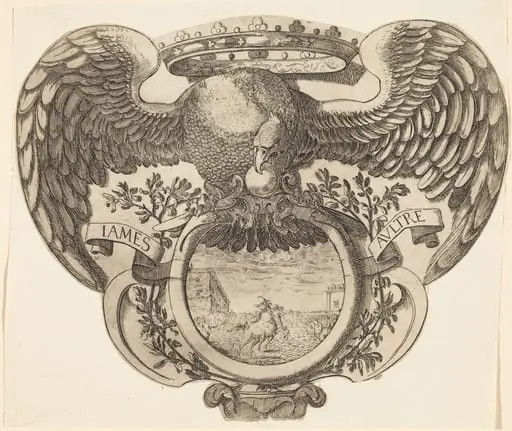 Coat of Arms
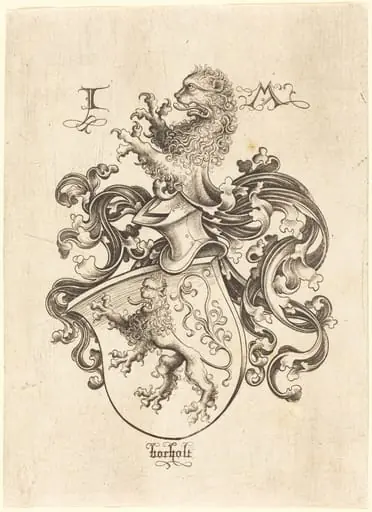 Coat of Arms with Lion
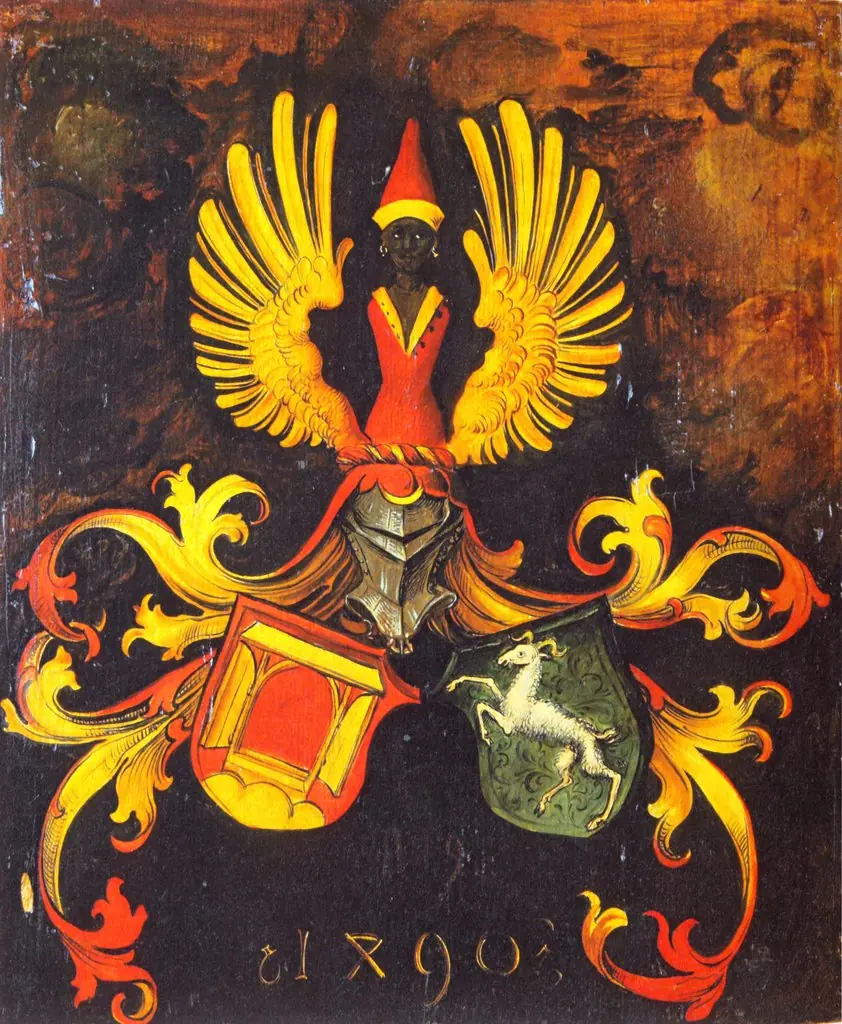 Marriage Coat of Arms of the Families Duerer and Holper. Verso of the Albrecht Dürer the Elder portrait
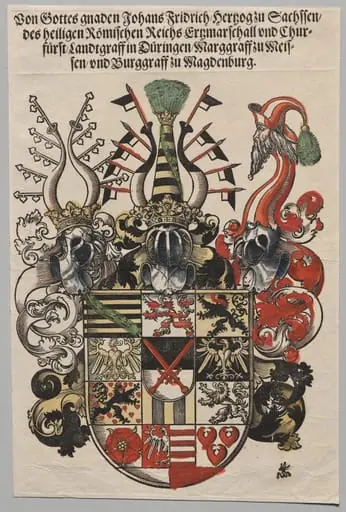 Coat of Arms of John Frederic, Elector of Saxony, called the Magnanimous
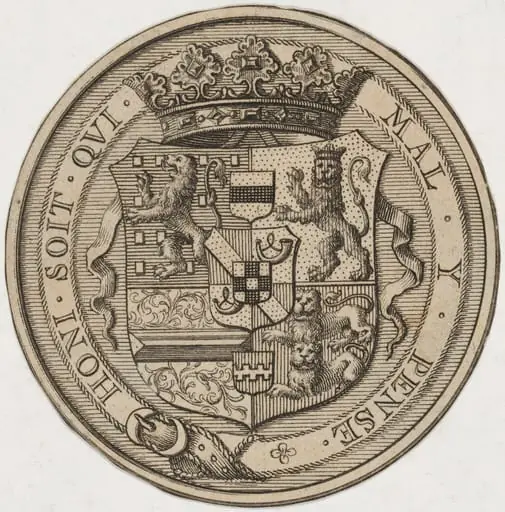 Coat of Arms in a Circle
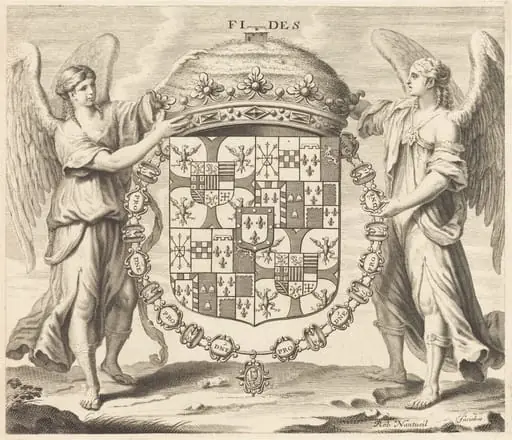 Arms of Charles II, Duc de Mantoue