Artwork
Saint Boniface of Mainz
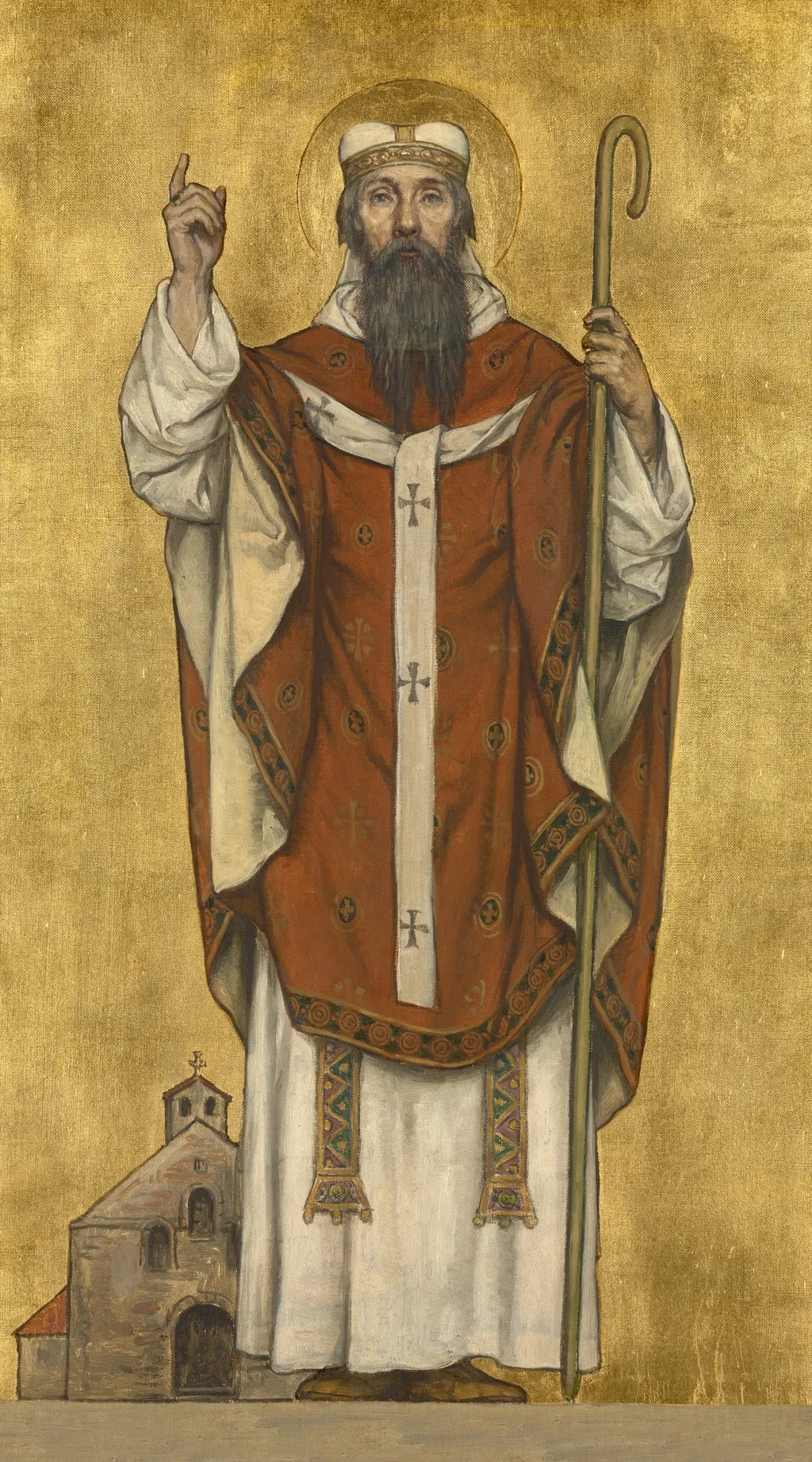
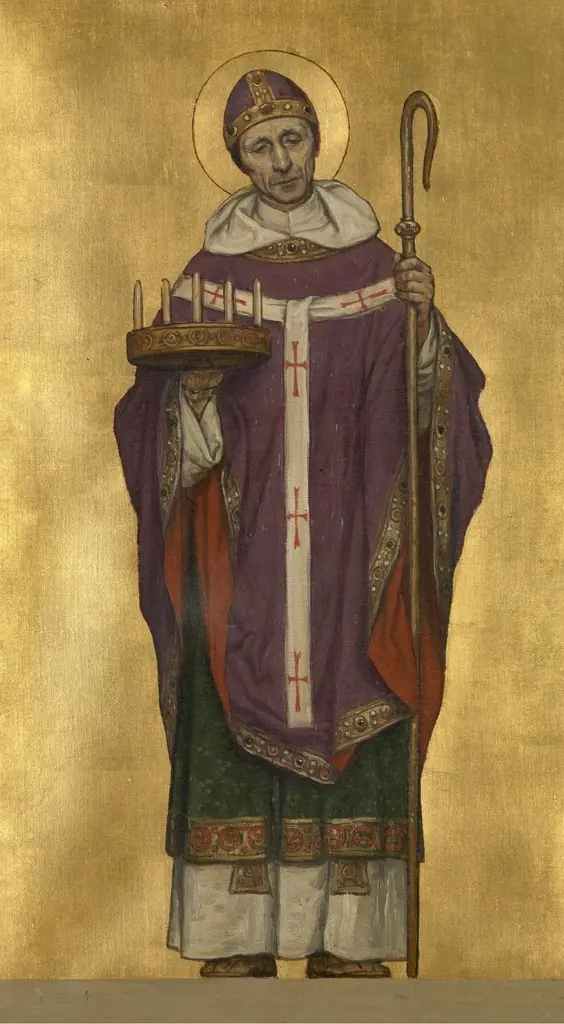
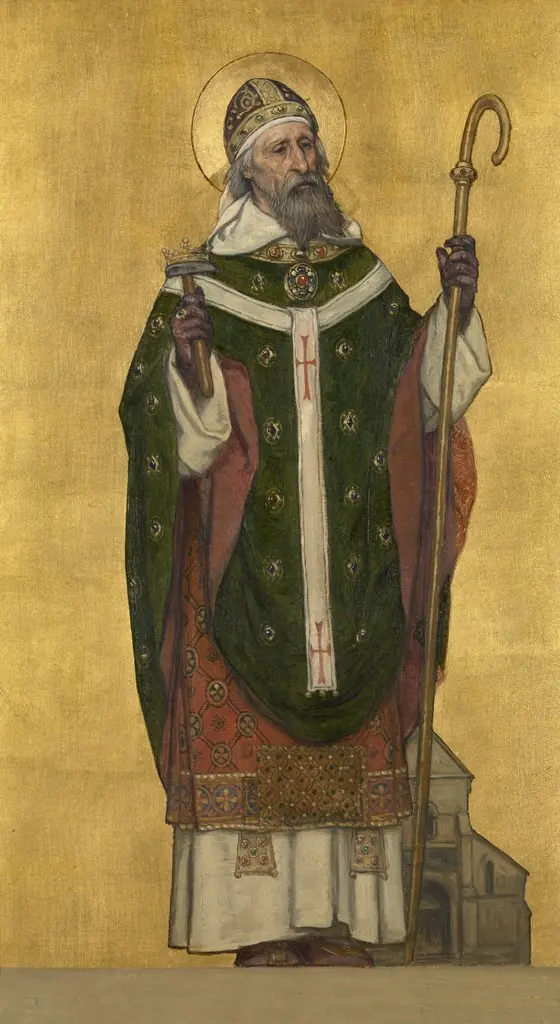
Saint Boniface of Mainz is an oil painting by Albrecht De Vriendt. It dates from 1895 and is held in the collection of the Royal Museum of Fine Arts Antwerp.
About this work
Overview
It resides in the Royal Museum of Fine Arts Antwerp, though its classification as a marine work appears inconsistent with its subject matter.
Painted in 1895 by Belgian artist Albrecht De Vriendt, this oil-on-canvas work portrays Saint Boniface of Mainz, an 8th-century missionary bishop instrumental in Christianizing Germanic regions. De Vriendt, known for historical and genre subjects, executed this piece within the framework of 19th-century Belgian Romantic historicism. It resides in the Royal Museum of Fine Arts Antwerp, though its classification as a marine work appears inconsistent with its subject matter.
Subject & Meaning
The figure depicted is Saint Boniface, identified by his episcopal regalia: a white alb, a red chasuble adorned with ornate patterns, and a mitre-like hat. His raised left hand suggests a blessing, while the staff in his right hand signifies ecclesiastical authority. The composition emphasizes his role as a spiritual leader and reformer, aligning with 19th-century efforts to visually reinforce religious and national historical narratives in Belgium.
Technique & Style
De Vriendt employed rich, saturated pigments to render the saint’s garments with meticulous detail, highlighting woven textures and metallic threads through layered glazes. The warm, golden background lacks spatial depth, focusing attention on the figure’s formal presence. The brushwork is precise yet restrained, reflecting academic training and a preference for clarity over expressive brushiness, typical of Belgian historical painting of the period.
History & Provenance
Commissioned or acquired by the Royal Museum of Fine Arts Antwerp shortly after its completion in 1895, the painting entered the museum’s collection as part of its broader effort to document national artistic contributions. No record of prior ownership or exhibition outside Belgium exists, suggesting it was intended primarily for institutional display rather than private patronage.
Context
In late 19th-century Belgium, historical and religious subjects were revived to reinforce cultural identity amid political and social change. De Vriendt’s work aligned with the monumentalist movement, which favored large-scale, dignified depictions of national heroes and saints. Saint Boniface, as a bridge between Frankish and Germanic Christian traditions, served as a symbol of religious unity and cultural continuity.
Legacy
While not widely reproduced or studied beyond regional art circles, the painting remains a representative example of Belgian academic historicism. It reflects the era’s tendency to elevate religious figures through formal grandeur, contributing to a visual language of sanctity that persisted in institutional collections well into the 20th century.
Artist & collection
Artist
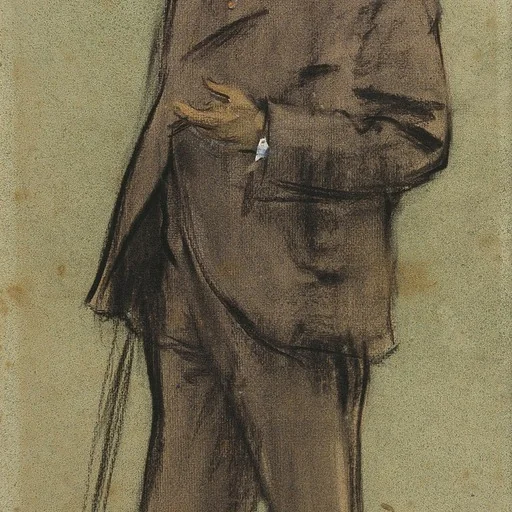
Albrecht Frans Lieven De Vriendt or Albrecht De Vriendt (In French-language publications referred to as Albert De Vriendt or Albert François Lieven De Vriendt) (Ghent, 8 December 1843 – Antwerp, 14 October 1900) was a…

 Saint Nicholas (verso)
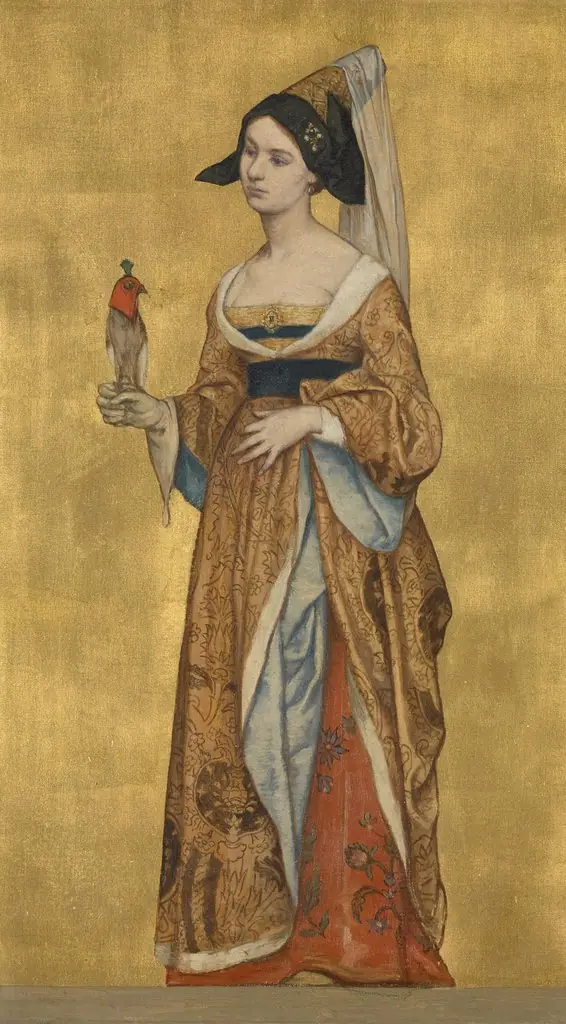
 Maria van Bourgondië
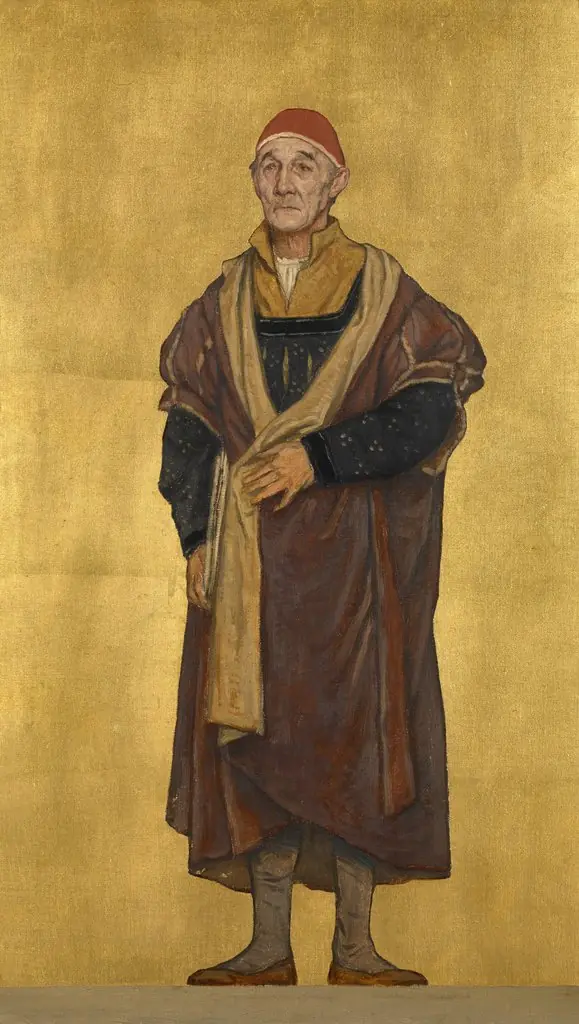
 Saint Eloi Bishop of Noyon
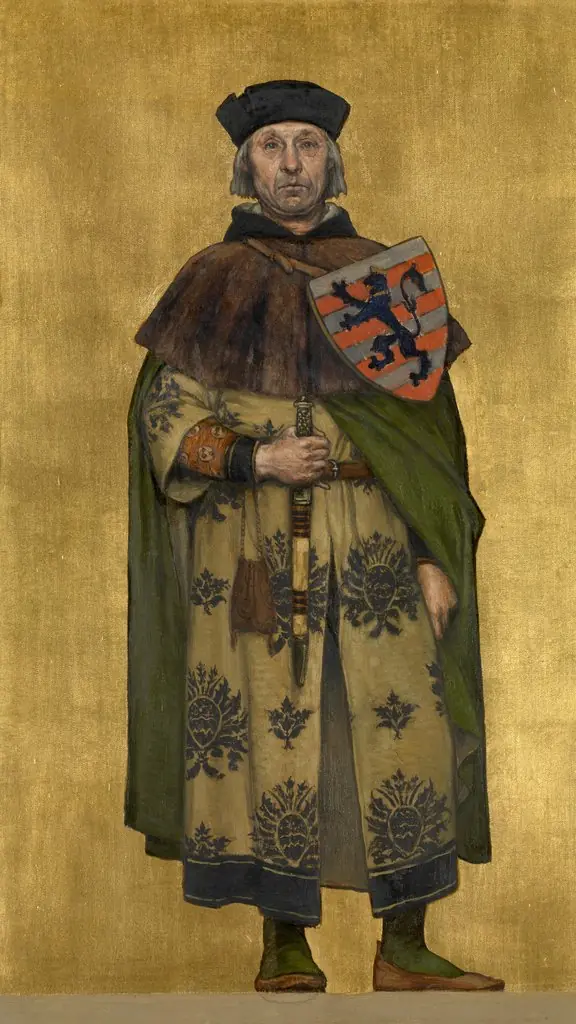
 Baldwin III
 Holy Bishop
 Sf. Er. Nekolai
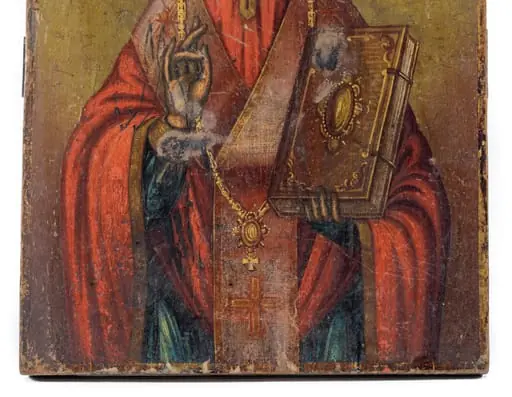
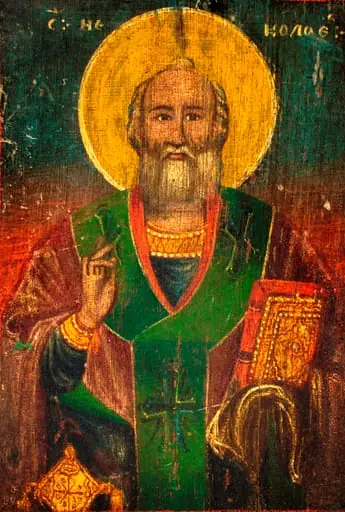 Icoana îl reprezintă pe sfântul Nicolae 3/4, frontal, în ipostaza de mare ierarh, binecuvântînd cu mâna dreaptă, în stânga ținînd Cartea Sfântă. Sfântul este redat cu capul descoperit, barba de lungime medie, fruntea înaltă, ochii căprui. În jurul capului aureolă de culoare deschisă, gălbuie, aplicată peste un strat de bronz auriu, mărginită cu o linie albă. Înveșmântat cu sacos roșu cărămiziu, cu intradosul verde, epitrahil verde, cu o linie subțire pe margine și cruci negre conturate cu alb și raze negre. Stihar bleumarin cu mânecuțe aurii decorate cu perle albe și motiv geometric, la fel galonul de la gât. Mâna cu care ține cartea este acoperită de omofor, în semn de smerenie. De mâna cu care binecuvintează atârnă bedernița de culoare galben aurie, cu franjuri și motive geometrice. Coperta cărții legate în piele bogat decorată. Chenar din linii ondulate de culoare galbenă, dispuse longitudinal, mărginit la interior de o linie subțire roșie și una închisă la exterior. Proporțiile în general respectate, capul este ușor mai mic în comparație cu corpul masiv, ceea ce creează un efect de depărtare, accentuat și de fondul luminat roșiatic în partea de jos, albastru în cea de sus. Maniera picturală, indică un pictor școlit, influențat de pictura academistă. Icoana prezintă un strat de murdărie și mici crăpături.
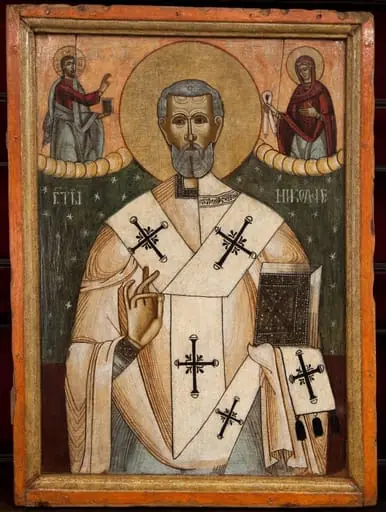 Sf. Ierarh Nicolae; Icoană de catapeteasmă
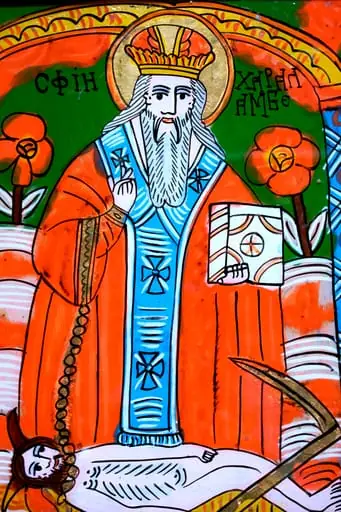 Icoa exf
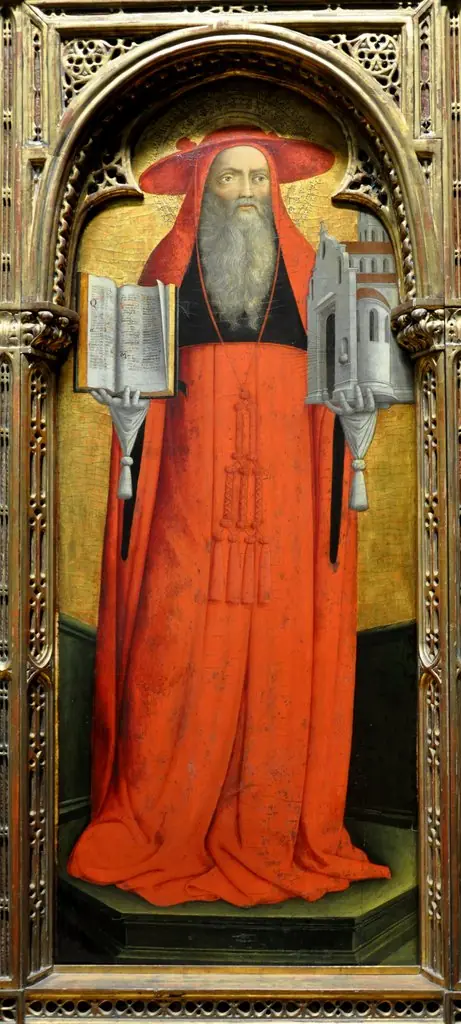 Hieronymusaltar von Santo Stefano in Venedig: Der heilige Hieronymus
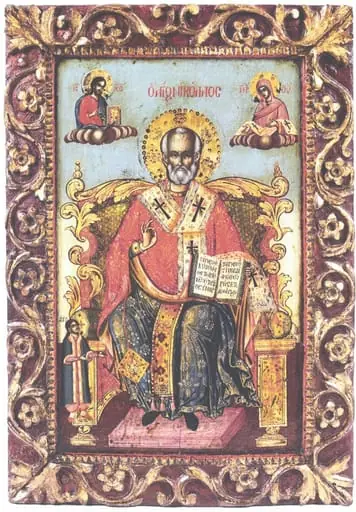 Sfântul Nicolae pe tron
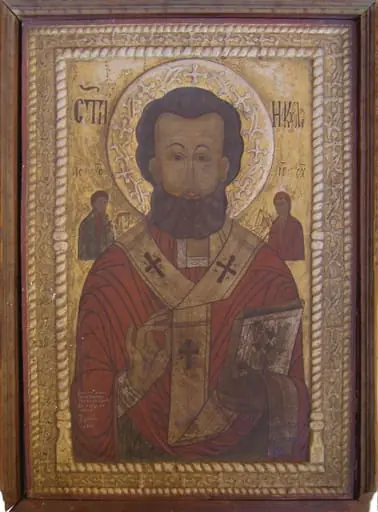 Sf. Nicolae