Artwork
Dancing Couple
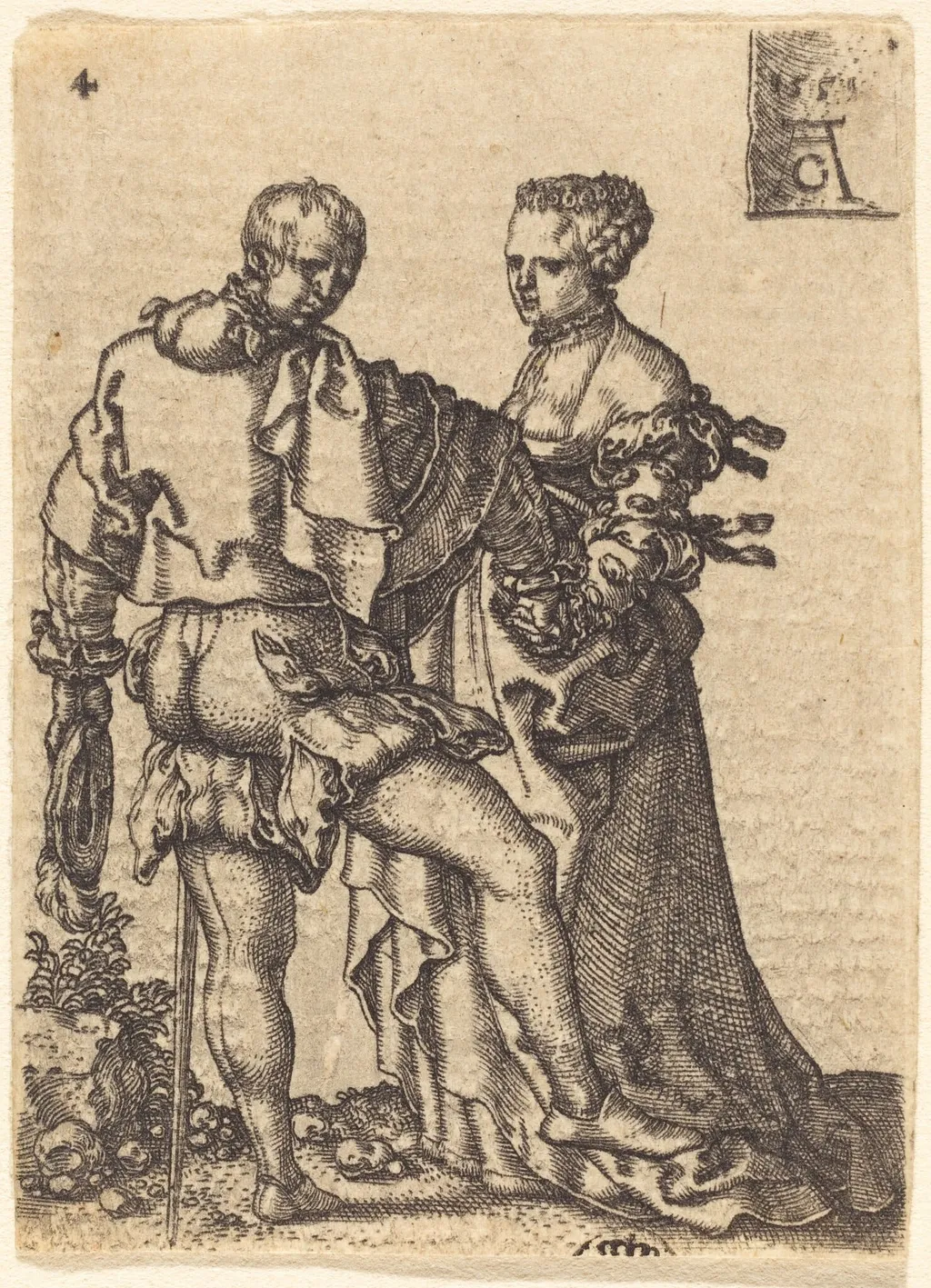
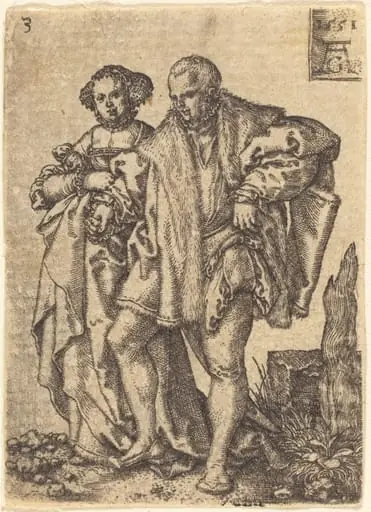
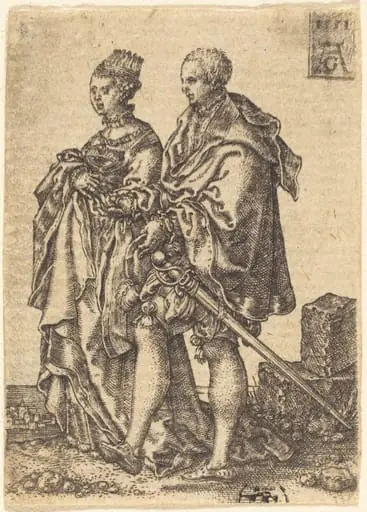
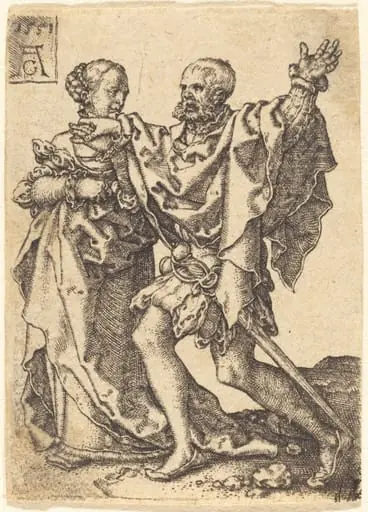
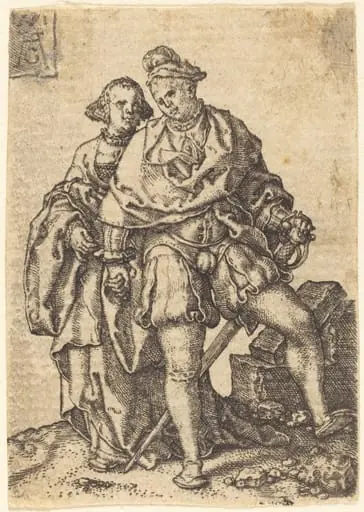
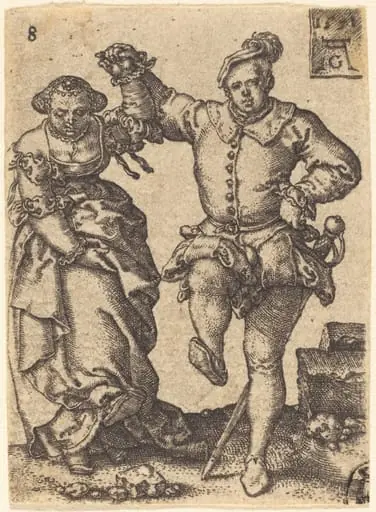
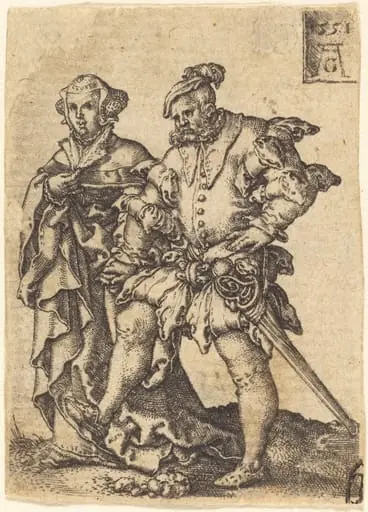
Dancing Couple is an ink print by the Northern Renaissance artist Heinrich Aldegrever. It dates from 1551 and is held in the collection of the National Gallery of Art.
About this work
Overview
Heinrich Aldegrever’s 1551 engraving titled *Dancing Couple* presents a compact, finely detailed scene of two figures in motion. Executed on a small plate, the print exemplifies the meticulous approach of the German “Little Masters,” a group known for producing diminutive yet highly finished works in the wake of Albrecht Dürer’s influence.
Subject & Meaning
The image captures a man and a woman caught mid‑step, their bodies slightly elevated as if caught in a lively dance. The male figure holds the woman’s hand while she rests her other hand on her chest, suggesting a moment of intimate interaction and perhaps a courtly or festive ritual common in 16th‑century social gatherings.
Technique & Style
Aldegrever employed metal etching, incising the design with fine lines that are then inked to produce the print. Shadows and textures—particularly the folds of the clothing—are built up through dense, parallel cross‑hatching, a hallmark of the period’s printmaking that creates a subtle gradation of tone within a limited scale.
History & Provenance
Created during the peak of the “Little Masters” movement, the engraving reflects the generation of German artists who followed Dürer’s legacy. While specific ownership records are scarce, the work has been catalogued in several collections of Northern Renaissance prints, confirming its attribution to Aldegrever and its circulation among connoisseurs of early modern graphic art.
Artist & collection

Artist
Heinrich Aldegrever or Aldegraf was a German painter and engraver. He was one of the "Little Masters", the group of German artists making small old master prints in the generation after Albrecht Dürer.