Artwork
David Casting Off His Robes at the News of the Death of His Son
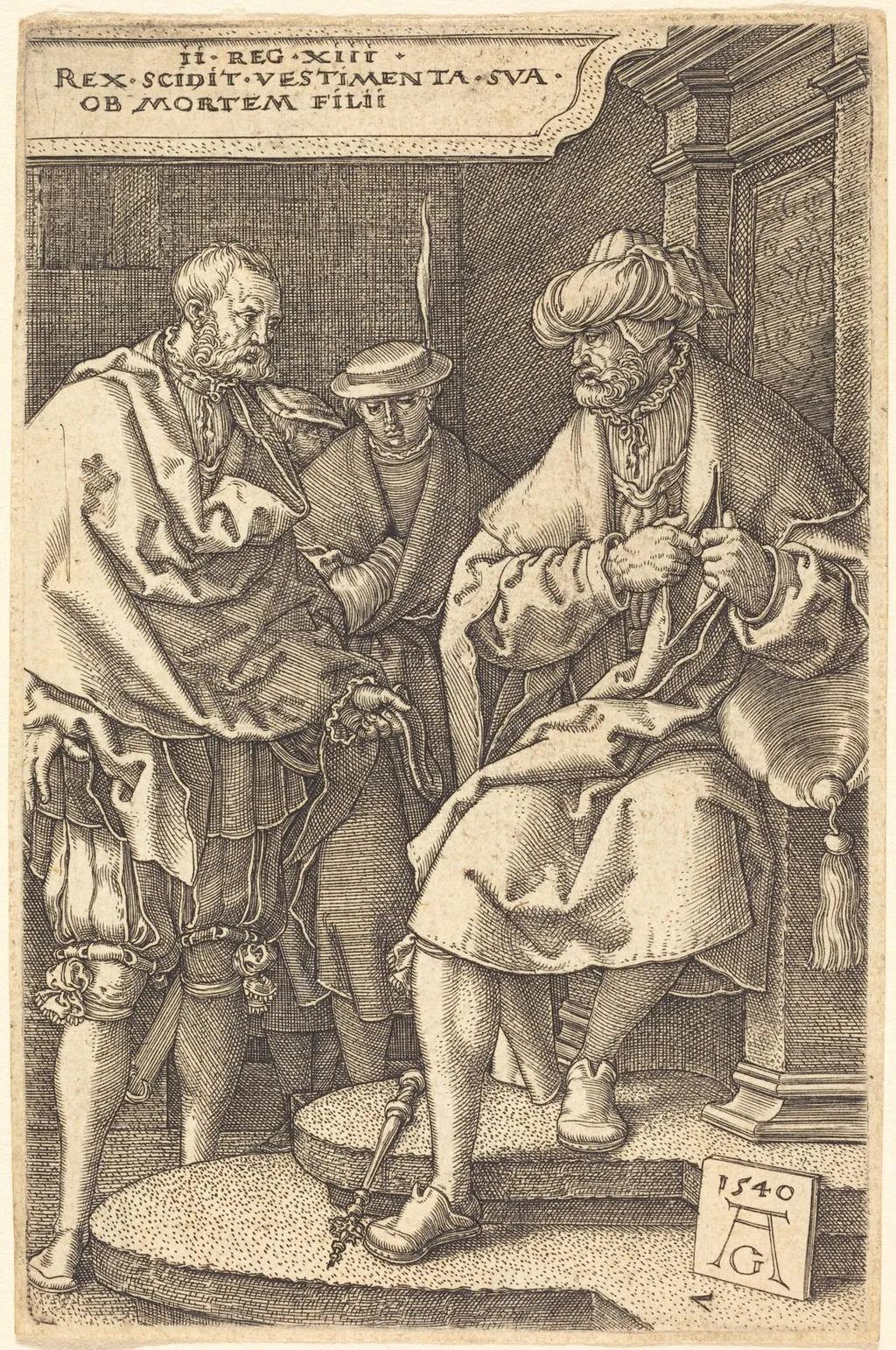
David Casting Off His Robes at the News of the Death of His Son is an ink print by the Northern Renaissance artist Heinrich Aldegrever. It dates from 1540 and is held in the collection of the National Gallery of Art.
About this work
Overview
Created in 1540 by the German artist Heinrich Aldegrever, this etching captures a moment from the biblical story of King David’s mourning.
Created in 1540 by the German artist Heinrich Aldegrever, this etching captures a moment from the biblical story of King David’s mourning. As a member of the Little Masters—a group known for finely detailed, small-format prints—Aldegrever specialized in intimate scenes drawn from religious narratives. The work is one of many prints that reflect his skill in translating emotional intensity into delicate line work, using the etching technique to achieve precision and depth.
Subject & Meaning
The scene illustrates 2 Samuel 18:33, where King David learns of his son Absalom’s death in battle. He is shown collapsing in anguish, tearing at his garments—a traditional sign of mourning in ancient Israel. A companion figure gestures urgently, perhaps conveying the messenger’s report. The composition emphasizes raw grief over narrative clarity, focusing on the psychological weight of loss rather than the battle that caused it.
Technique & Style
Aldegrever employed fine, controlled etching lines to render texture and motion: the folds of heavy robes, the creases of aged faces, and the dynamic swirl of fabric all emerge from incised copper plate work. The contrast between sharp, angular strokes and softer, flowing contours heightens the emotional tension. Unlike broader Renaissance compositions, this print relies on intimate scale and intricate detail to convey drama, characteristic of the Little Masters’ approach.
History & Provenance
The print was produced during Aldegrever’s active years in Paderborn, where he worked alongside other Northern Renaissance printmakers. It circulated among collectors and clergy in Germany and the Low Countries, valued for its devotional resonance and technical refinement. No definitive early ownership records survive, but similar etchings by Aldegrever appear in major European print collections from the late 16th century onward.
Context
In mid-16th century Germany, biblical prints served both devotional and educational purposes amid religious upheaval. Aldegrever’s work responded to a demand for accessible religious imagery that emphasized personal piety and emotional engagement. His small-scale etchings, often distributed widely, offered a quiet alternative to large altarpieces, aligning with Protestant values that favored individual reflection over grand ceremonial art.
Legacy
Aldegrever’s etching contributed to the tradition of narrative printmaking that bridged the gap between Dürer’s monumental style and later, more intimate works. Though less celebrated than his contemporaries, his precise line work and psychological depth influenced regional printmakers well into the 17th century. The image remains a studied example of how emotional storytelling could be conveyed through the restrained medium of etching.
Artist & collection

Artist
Heinrich Aldegrever or Aldegraf was a German painter and engraver. He was one of the "Little Masters", the group of German artists making small old master prints in the generation after Albrecht Dürer.

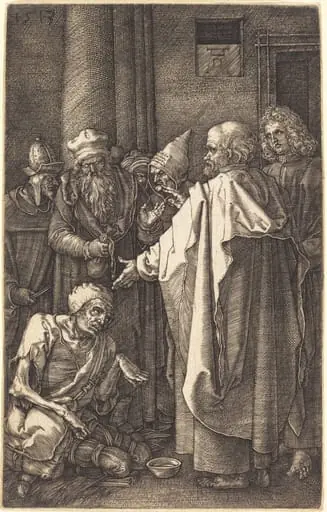 Saint Peter and Saint John Healing a Cripple at the Gate of the Temple
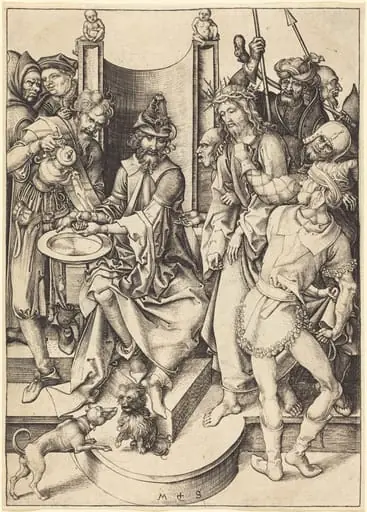 Christ before Pilate
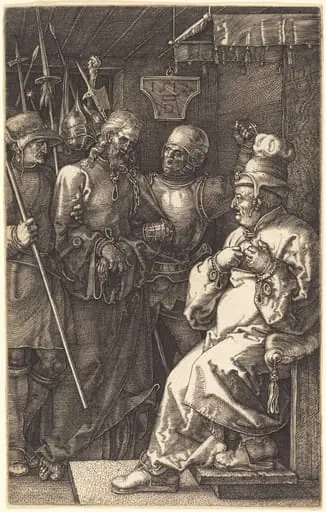 Christ before Caiaphas
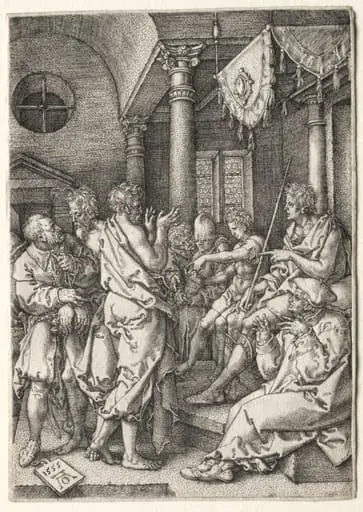 The Story of Susanna: Daniel Cross-Examining the Elders
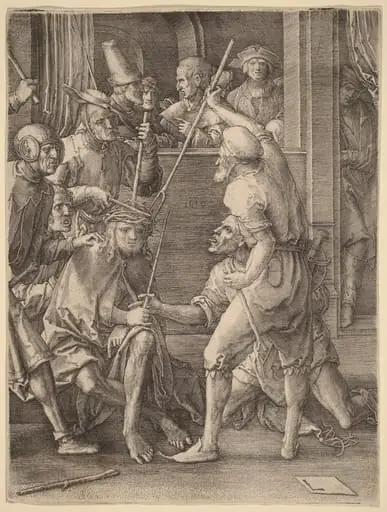 Christ Crowned with Thorns
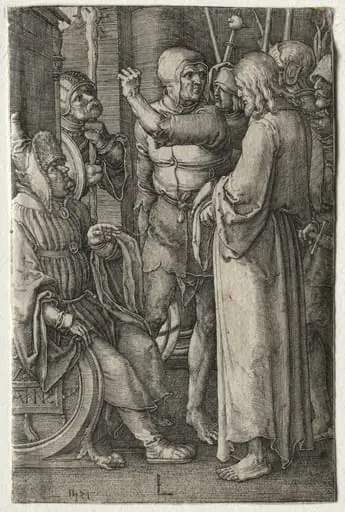 The Passion: Christ Before the High Priest
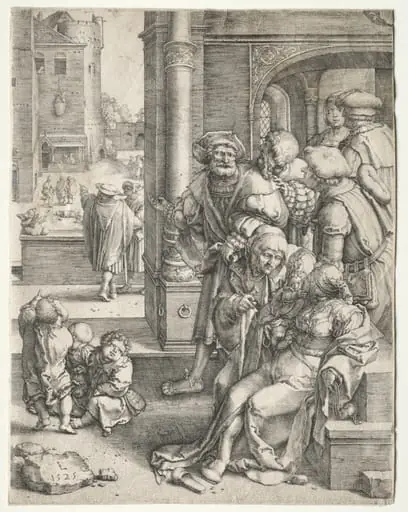 The Poet Virgil Suspended in a Basket
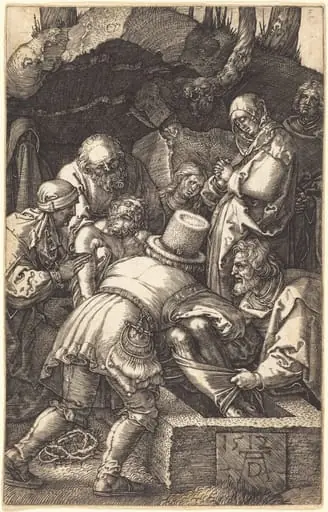 The Entombment
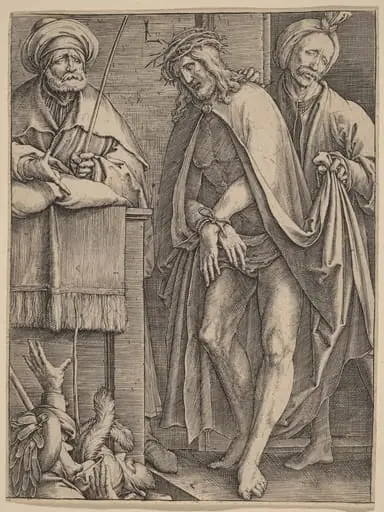 Ecce Homo
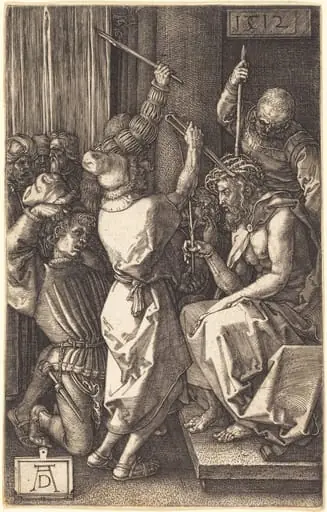 Christ Crowned with Thorns
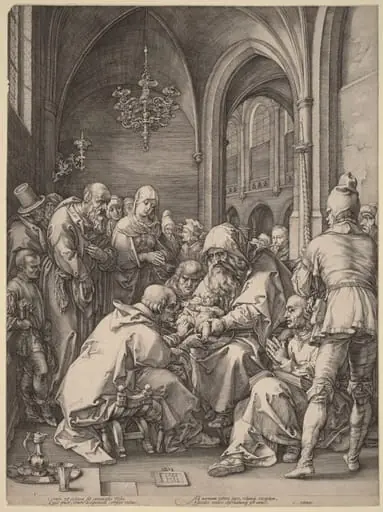 The Circumcision
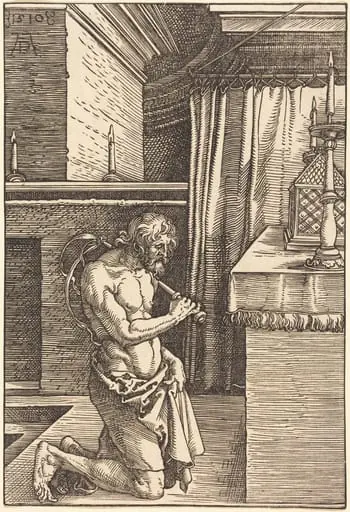 King David Doing Penance