Artwork
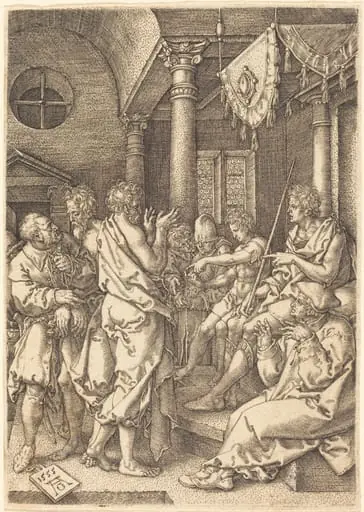
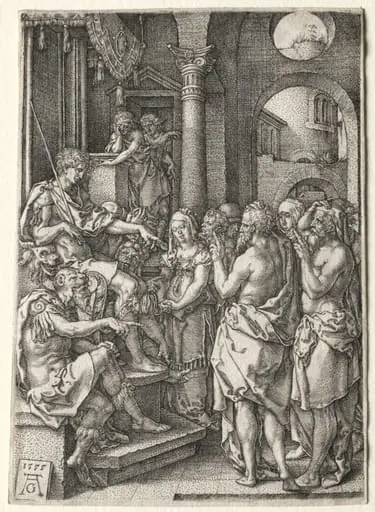
The Story of Susanna: Daniel Cross-Examining the Elders
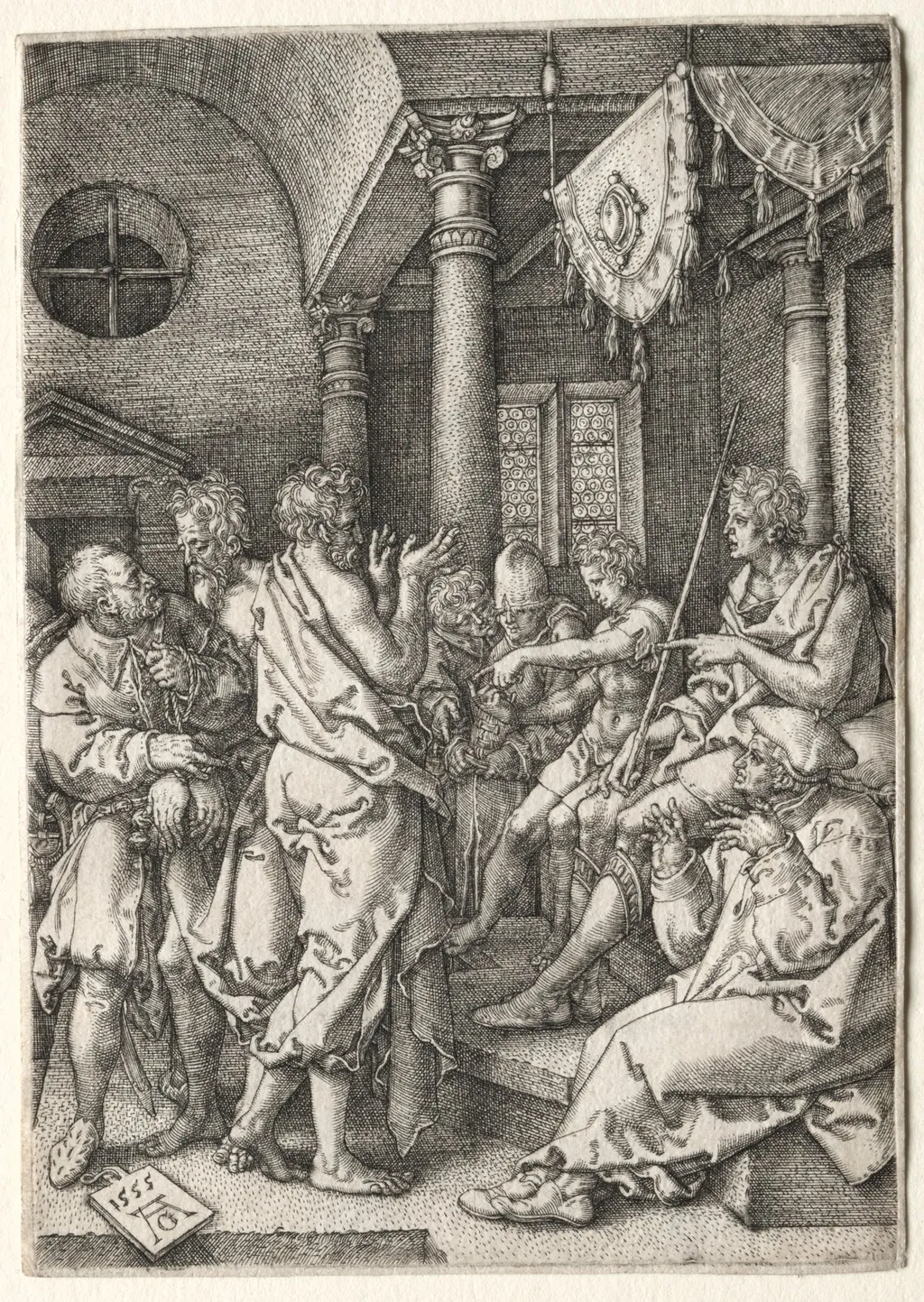
The Story of Susanna: Daniel Cross-Examining the Elders is a print by the Renaissance artist Heinrich Aldegrever. It dates from 1504 and is held in the collection of the Cleveland Museum of Art.
About this work
Overview
Rendered in a small-scale engraving, the scene unfolds within a structured interior, marked by architectural elements like columns and a circular window.
Created around 1504 by Heinrich Aldegrever, this print illustrates a moment from the biblical Book of Daniel, in which the prophet confronts two corrupt elders who falsely accused the virtuous Susanna. Rendered in a small-scale engraving, the scene unfolds within a structured interior, marked by architectural elements like columns and a circular window. The composition emphasizes narrative tension through precise line work and restrained tonal variation.
Subject & Meaning
The scene captures Daniel’s interrogation of the two elders, whose conflicting testimonies expose their deceit. Susanna, though present, is not the focal point; instead, the drama centers on the unraveling of falsehoods. The subject reflects Renaissance moral concerns about justice, truth, and the abuse of power. Aldegrever’s choice to depict the moment of cross-examination underscores the triumph of divine wisdom over corruption.
Technique & Style
Aldegrever employed fine, controlled engraving lines to model form and texture, particularly in the folds of robes and the contours of faces. Subtle gradations of tone, achieved through hatching and cross-hatching, suggest volume and spatial depth. The muted palette of the print, dominated by earth tones, enhances the solemnity of the scene. Light is not depicted as natural illumination but as a structural device to define spatial relationships.
History & Provenance
The print entered the collection of The Cleveland Museum of Art through established acquisition channels, though its earlier ownership history prior to the 20th century remains undocumented. As a work from the early 16th century, it reflects the circulation of religious prints among Northern European collectors and clergy. Its preservation in good condition suggests careful handling over centuries, consistent with its status as a devotional or educational image.
Context
Aldegrever worked in the tradition of Northern Renaissance printmaking, influenced by Dürer and other masters who elevated engraving as a medium for complex narratives. His focus on biblical stories aligned with the Protestant Reformation’s emphasis on scripture and moral instruction. This print would have been accessible to a broader audience than painted altarpieces, serving both spiritual and didactic purposes in private or scholarly settings.
Legacy
Though not widely reproduced in modern scholarship, Aldegrever’s engraving exemplifies the precision and narrative clarity achievable in small-scale printmaking. It contributes to the broader understanding of how religious stories were visually disseminated in early 16th-century Europe. The work remains a quiet but significant example of how print culture supported moral and theological discourse outside ecclesiastical institutions.
Artist & collection

Artist
Heinrich Aldegrever or Aldegraf was a German painter and engraver. He was one of the "Little Masters", the group of German artists making small old master prints in the generation after Albrecht Dürer.

 The Two Elders Convicted by the Testimony of Daniel
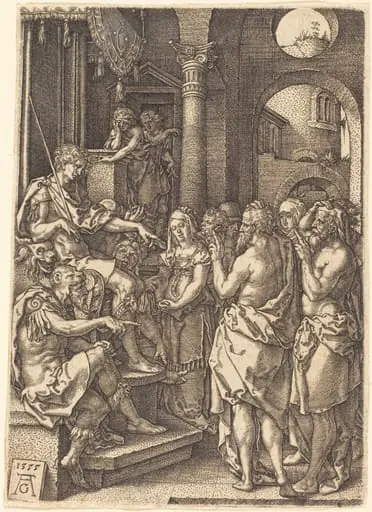 The Two Elders Before the Judge
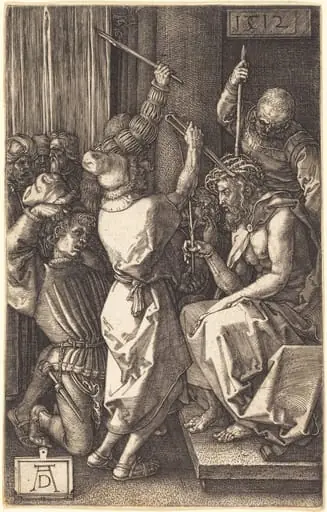 Christ Crowned with Thorns
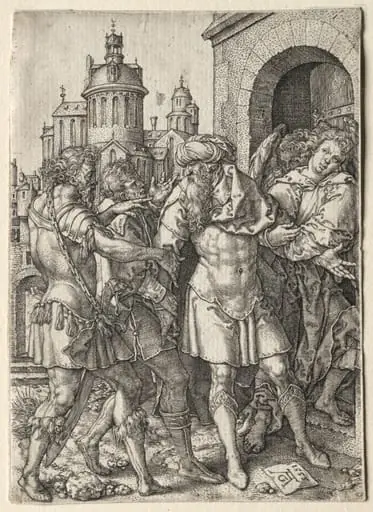 The Story of Lot: Lot Prevents the Sodomites from Violence
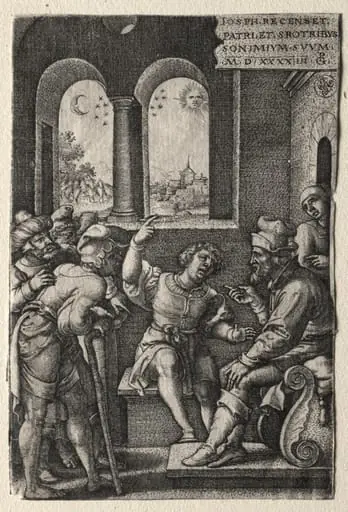 The Story of Joseph: Joseph Recounting his Dreams to his Father
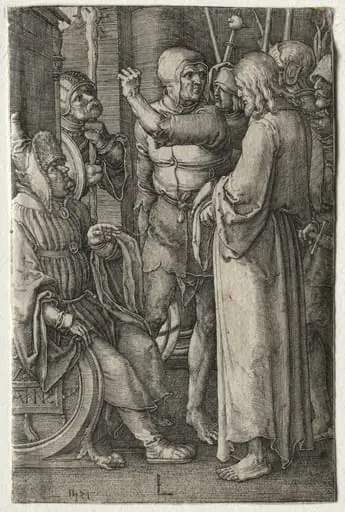 The Passion: Christ Before the High Priest
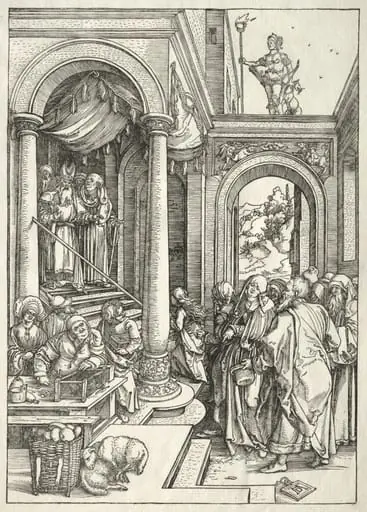 Life of the Virgin: Presentation of the Young Virgin in the Temple
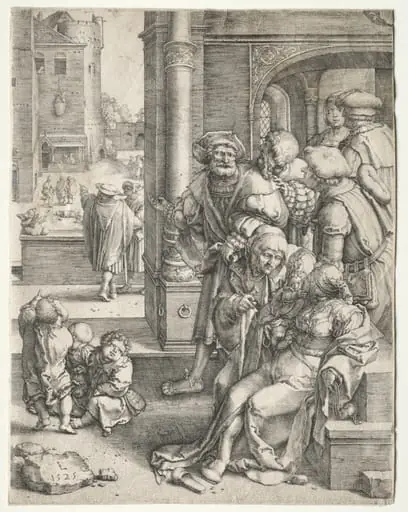 The Poet Virgil Suspended in a Basket
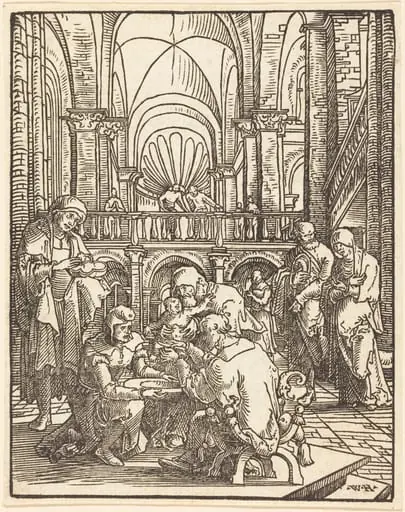 The Circumcision
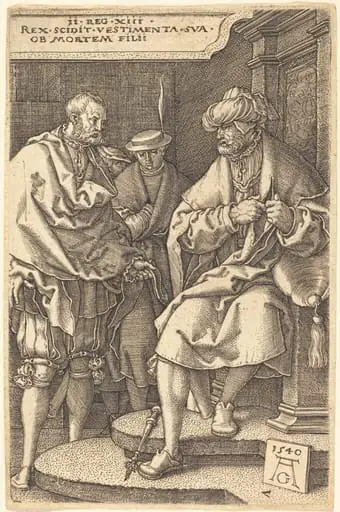 David Casting Off His Robes at the News of the Death of His Son
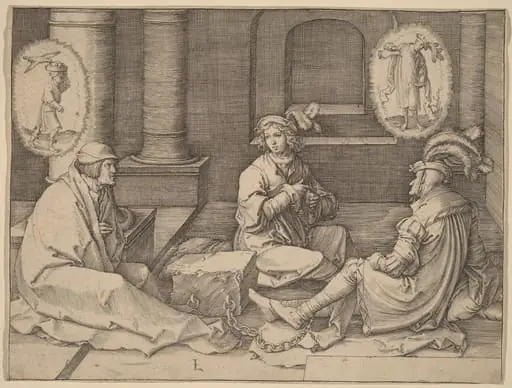 Joseph Interprets the Dreams in Prison
 The Story of Susanna: Susanna Accused of Adultery