Artwork
Landscape with Washerwoman
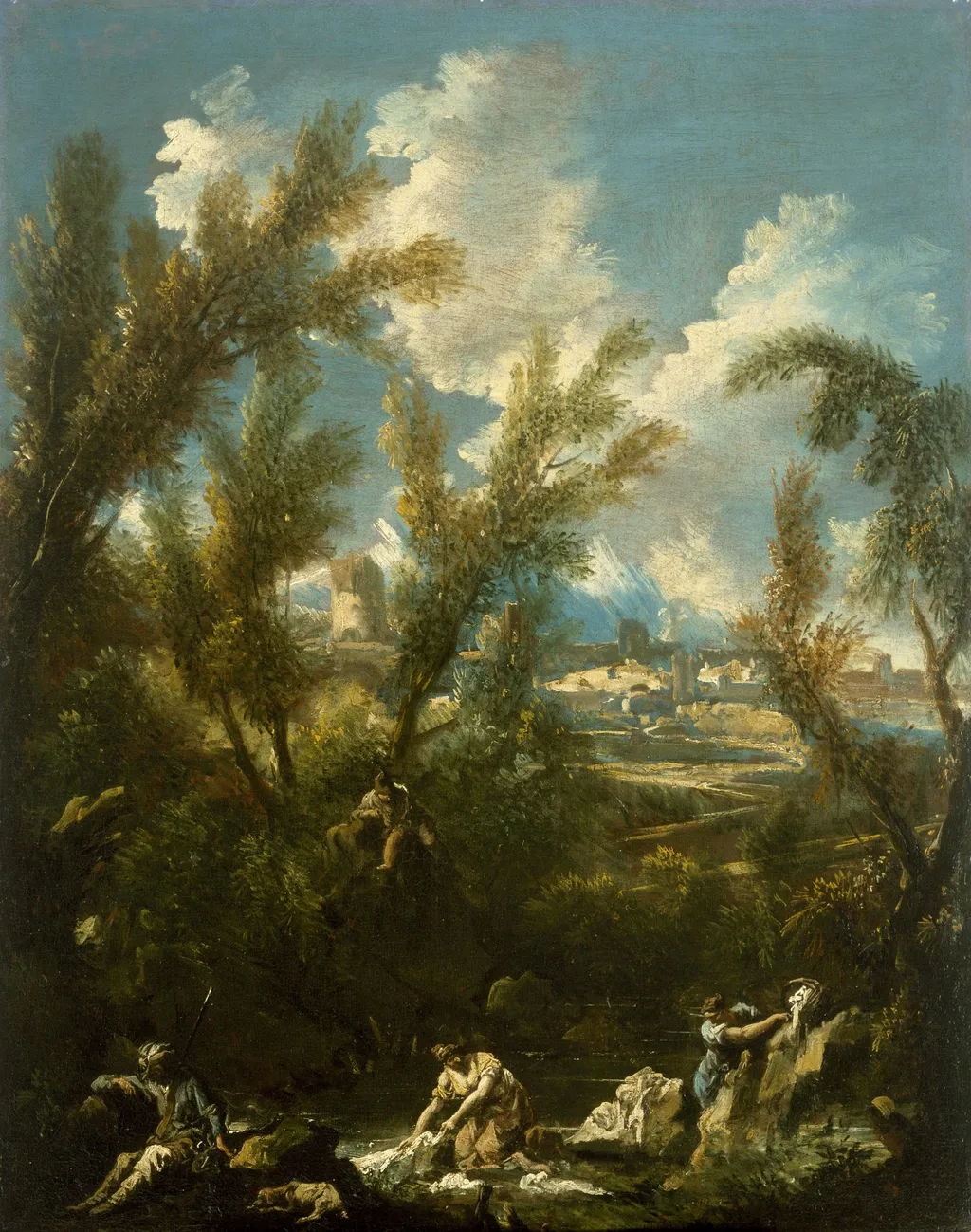
Landscape with Washerwoman is an oil painting by the Mannerist artist Alessandro Magnasco. It dates from 1717 and is held in the collection of the Museum of Fine Arts, Houston.
About this work
Overview
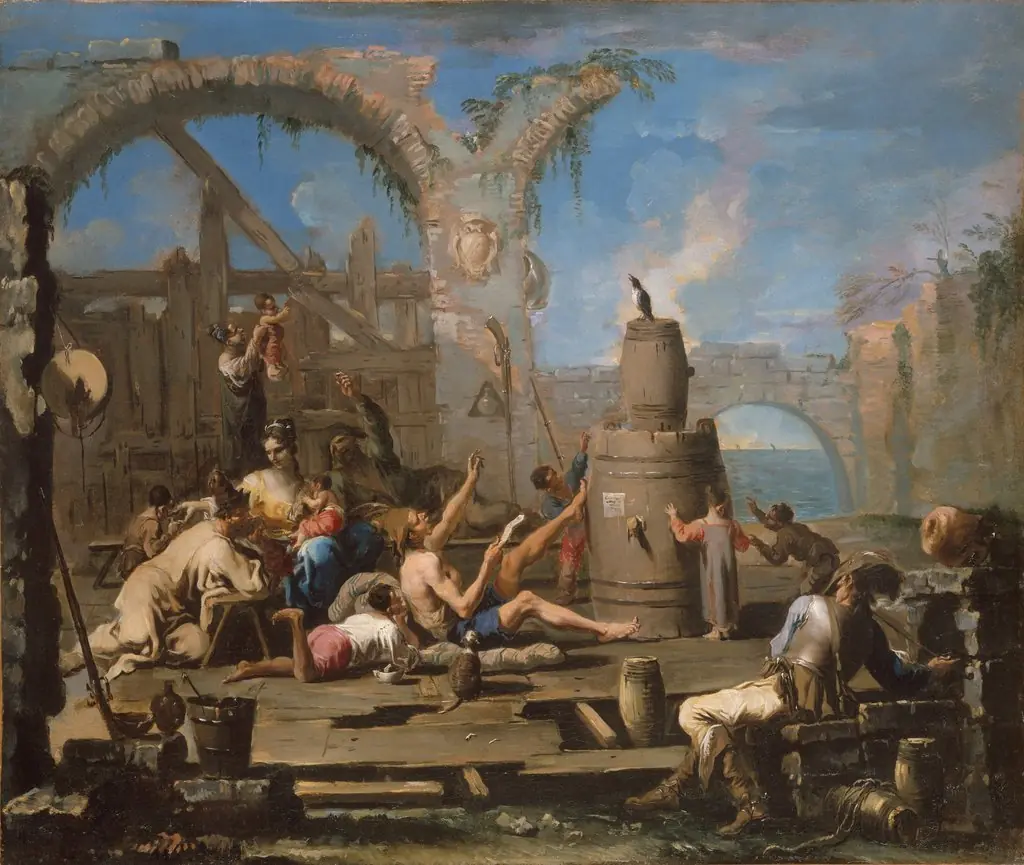
Painted around 1717 by Alessandro Magnasco, known as il Lissandrino, this oil on canvas depicts a quiet rural scene in late-Baroque Italy.
Painted around 1717 by Alessandro Magnasco, known as il Lissandrino, this oil on canvas depicts a quiet rural scene in late-Baroque Italy. Magnasco, active in Milan and Genoa, favored unconventional compositions that blended landscape with genre elements. The washerwoman, though central, is not idealized; her presence is absorbed into the natural environment, reflecting the artist’s interest in transient, unheroic moments of daily life.
Subject & Meaning
The washerwoman, turned away and lost in thought, embodies solitude and routine rather than narrative drama. Her labor is neither glorified nor pitied, but observed with detachment. The surrounding landscape—lush, hazy, and loosely defined—suggests a world indifferent to human toil. The distant village and church steeple hint at social structure, yet remain faint, reinforcing the figure’s isolation within nature’s quiet rhythm.
Technique & Style
Magnasco employed rapid, broken brushwork to suggest movement and atmosphere rather than detail. Forms are softened, edges blurred, and light scattered unevenly across the scene. Chiaroscuro is used subtly, not for dramatic contrast but to model space and guide the eye through layers of foliage and air. The sky, rendered in thin washes of blue and white, dissolves into the landscape, enhancing the painting’s dreamlike, almost ephemeral quality.
History & Provenance
The painting’s early ownership is undocumented, but it aligns with Magnasco’s output during his mature period in northern Italy. Likely commissioned or acquired by a local patron familiar with his distinctive style, it remained within regional collections before entering public hands. Its survival reflects a growing appreciation for his unconventional approach, even as mainstream tastes favored more polished academic works.
Context
In early 18th-century Italy, Baroque grandeur still dominated, yet Magnasco’s work diverged sharply. While others painted theatrical religious scenes or aristocratic portraits, he turned to marginalized figures and ambiguous landscapes. His style, influenced by earlier Mannerist experimentation and the quiet realism of northern European painting, offered an alternative vision—one that valued mood over message, and observation over ornament.
Legacy
Magnasco’s influence extended beyond his lifetime, particularly among 19th-century artists drawn to atmospheric ambiguity and psychological subtlety. Though never widely celebrated in his own era, his rejection of idealization and embrace of fleeting, unpolished moments anticipated modern sensibilities. Today, his work is recognized as a quiet counterpoint to the grand narratives of his time, offering a contemplative vision of ordinary life.
Own this work as a print
Artist & collection
Artist
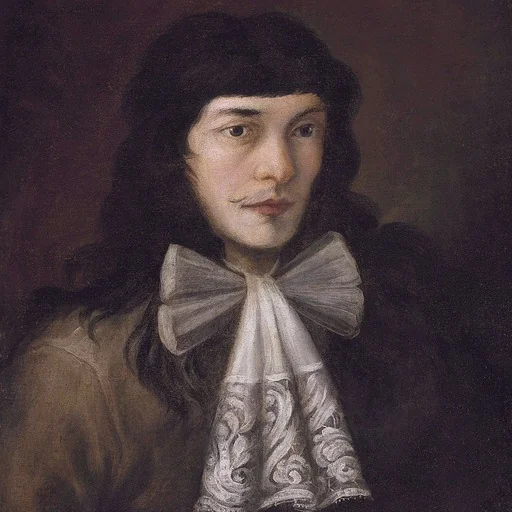
Alessandro Magnasco (February 4, 1667 – March 12, 1749), also known as il Lissandrino, was an Italian late-Baroque painter active mostly in Milan and Genoa.

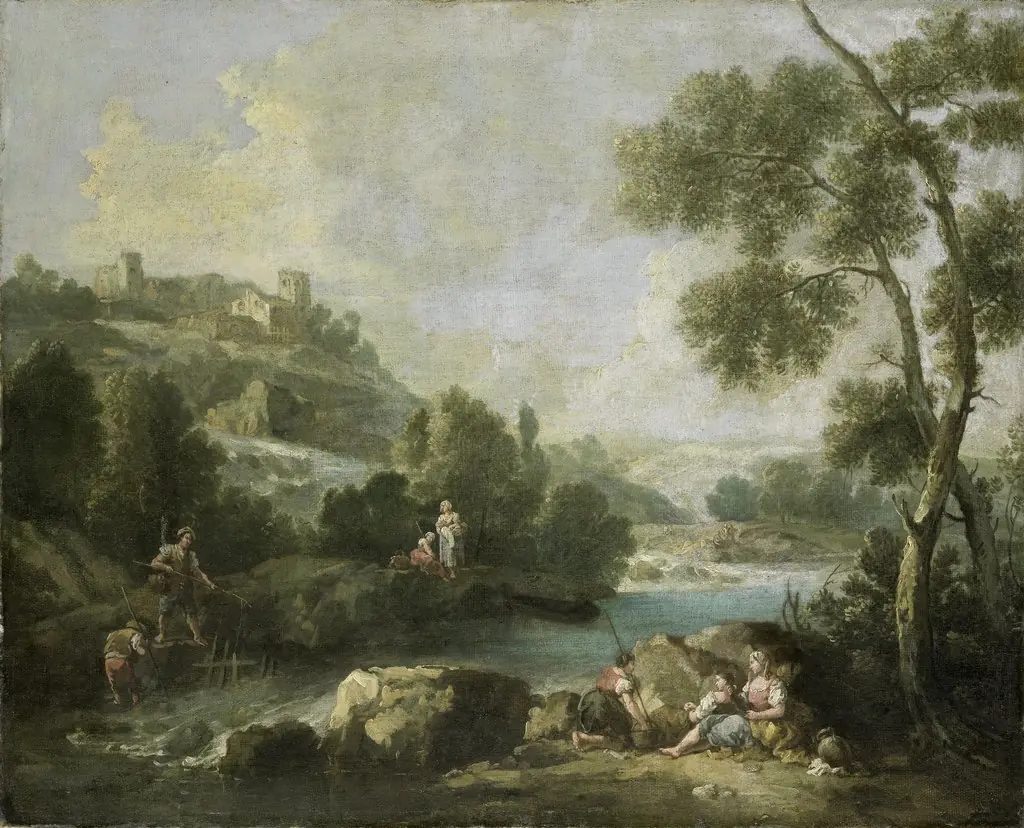 Landscape with Figures
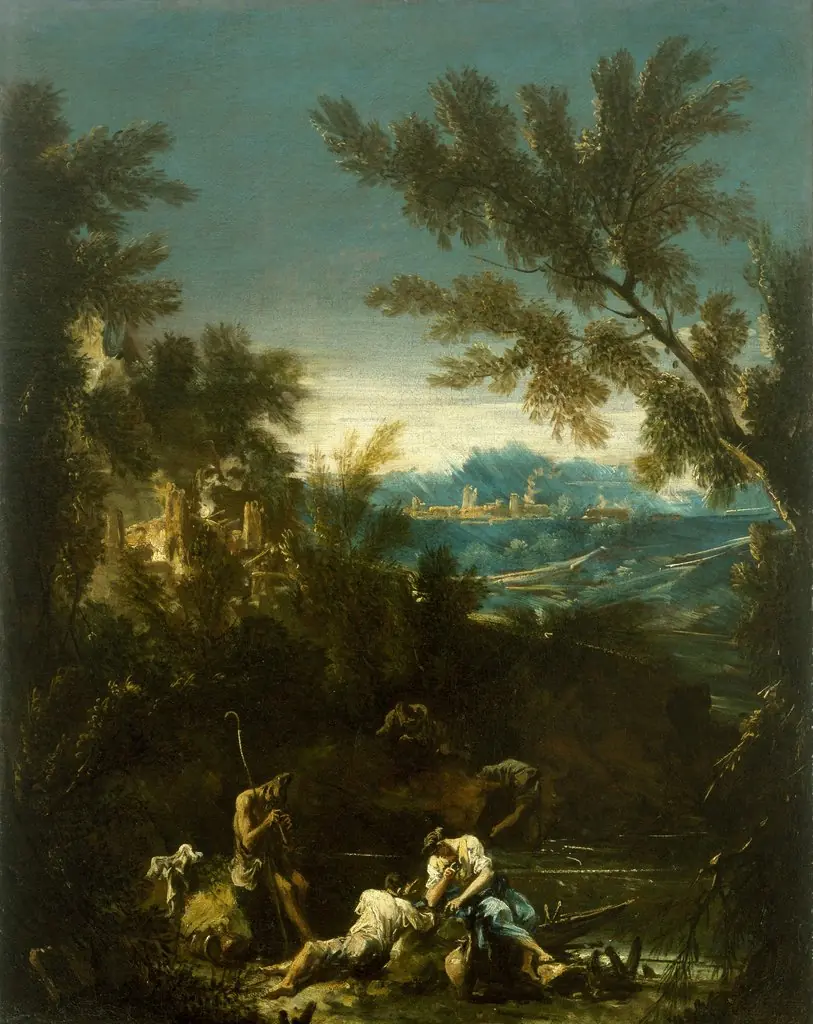 Landscape with Figures
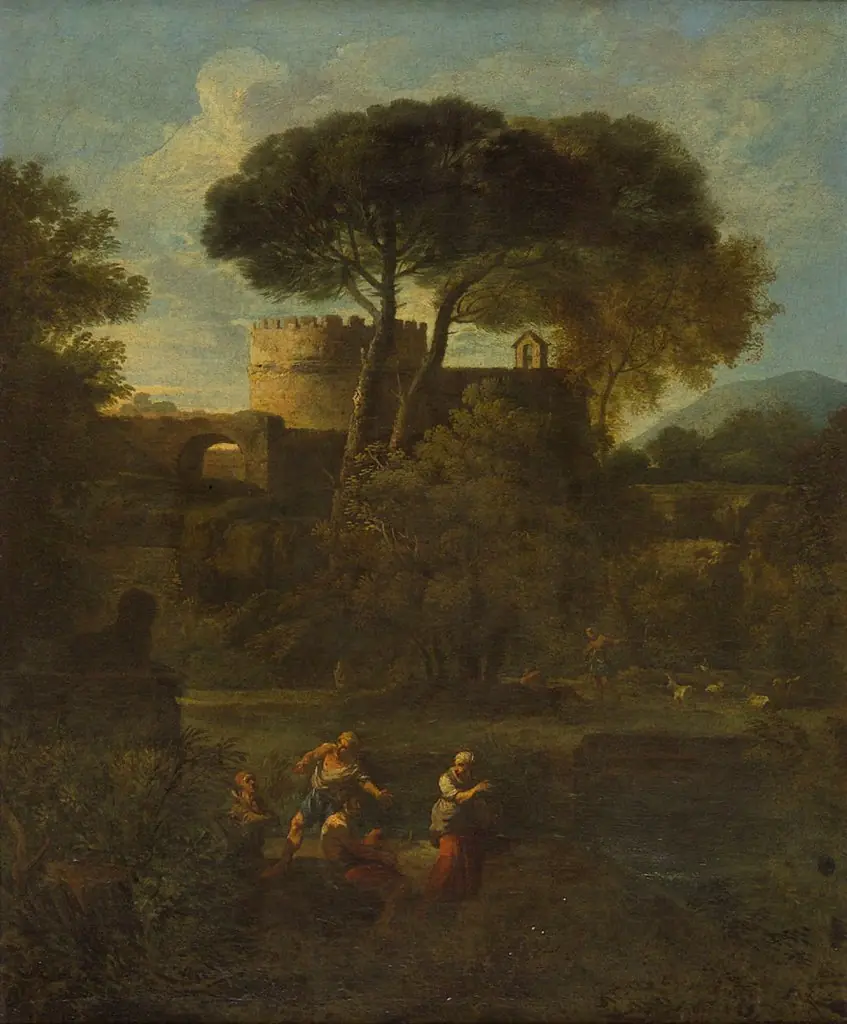 Grabmal der Cecilia Metella
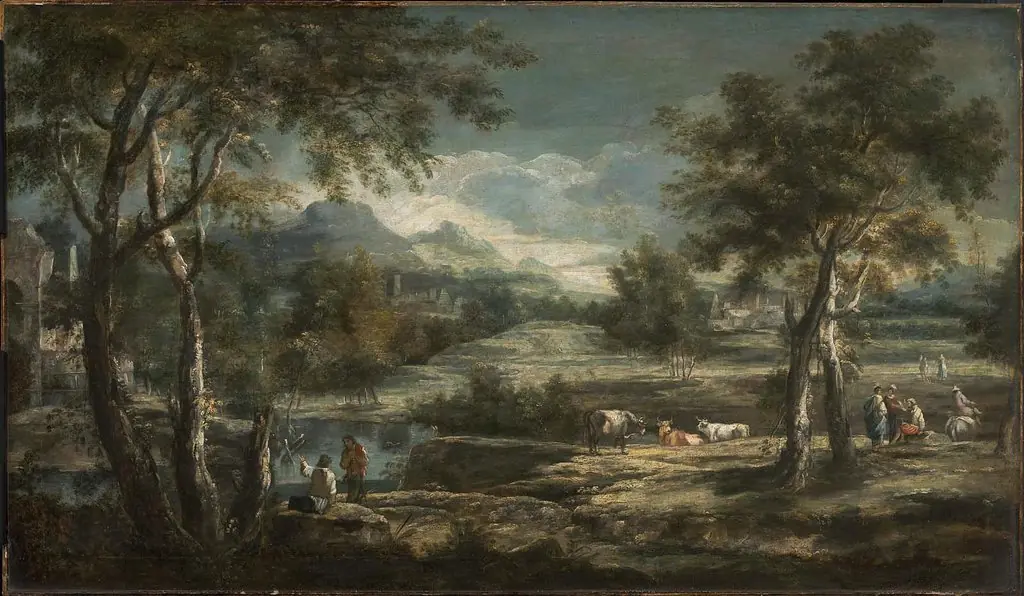 River Landscape with Mountains
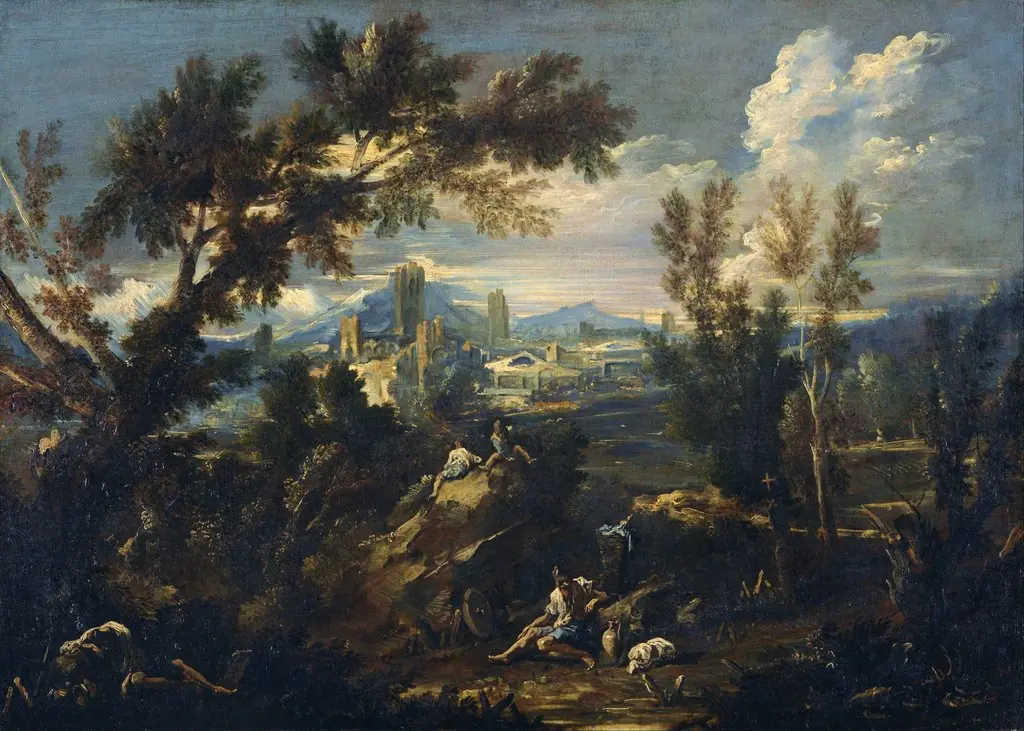 Landscape with Shepherds
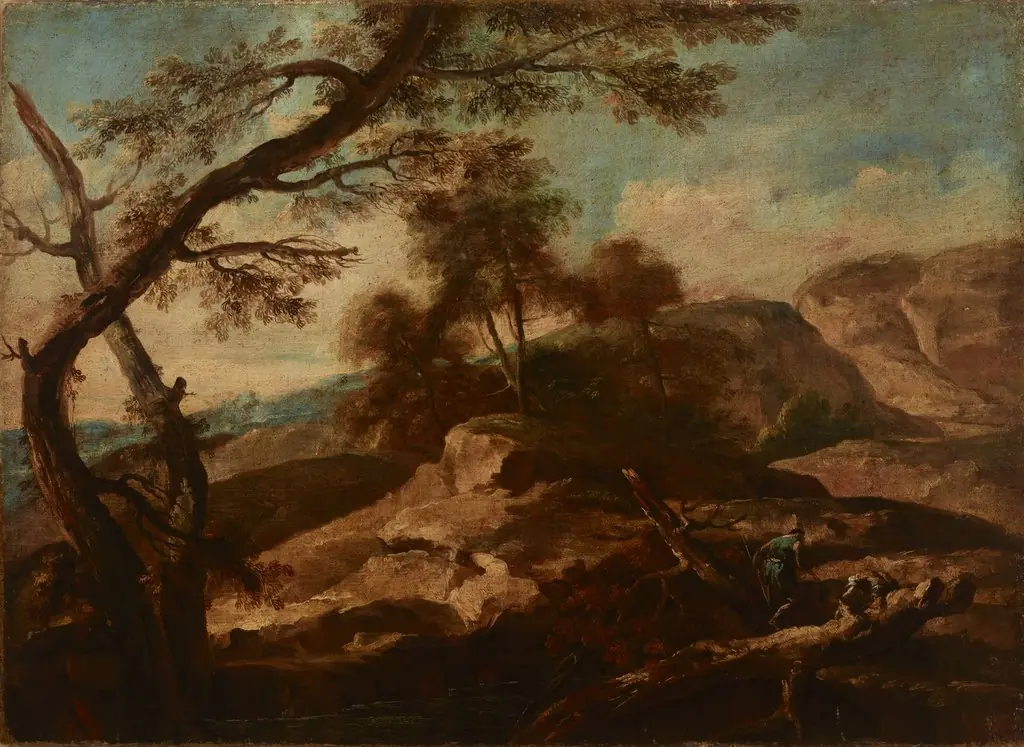 Landscape
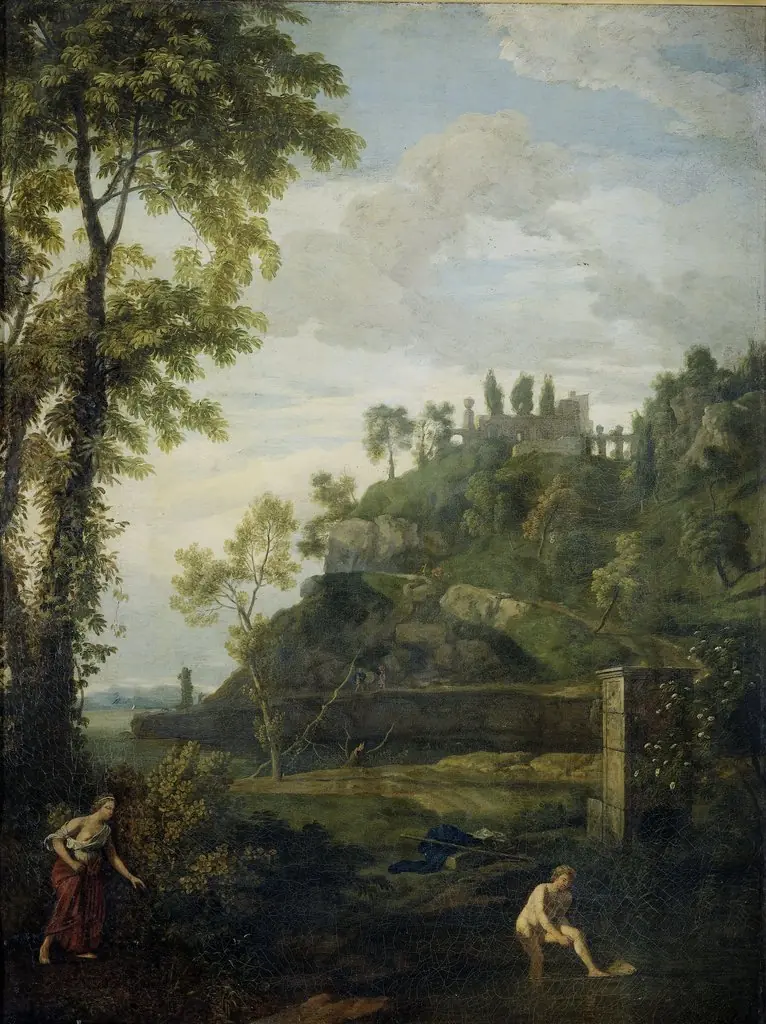 Arcadian landscape with Salmacis and Hermaphroditus
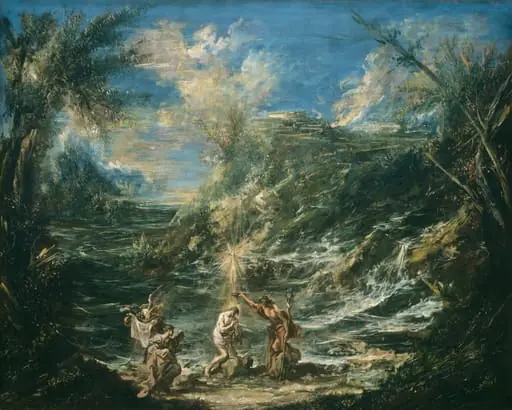
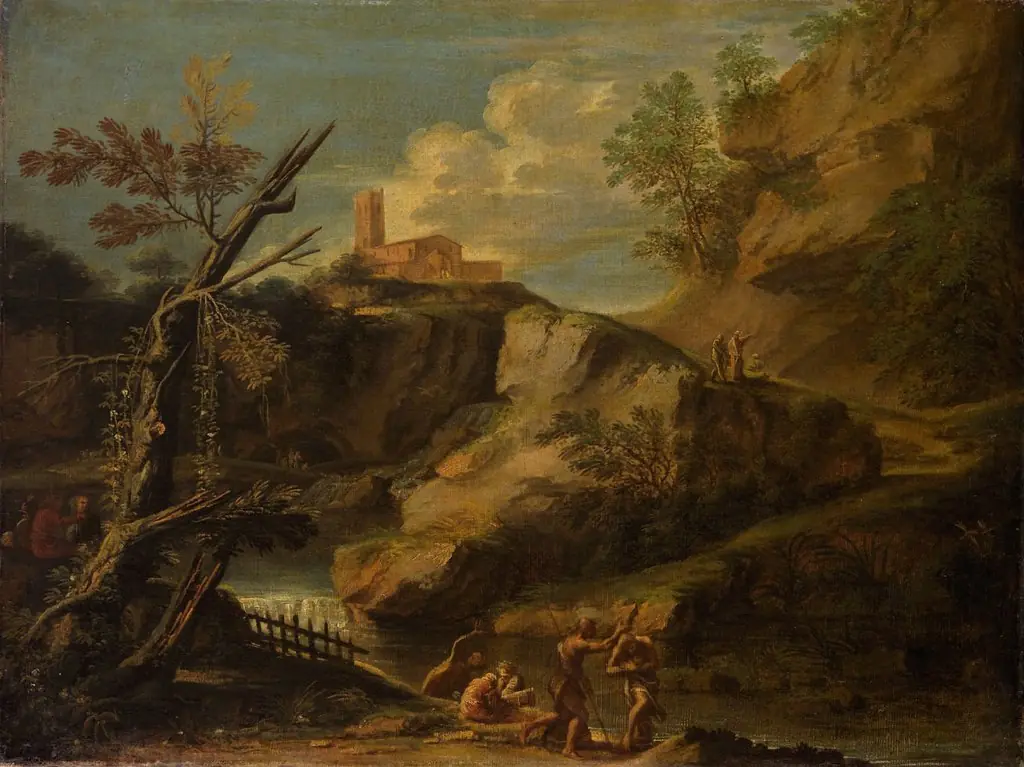 Taufe Christi
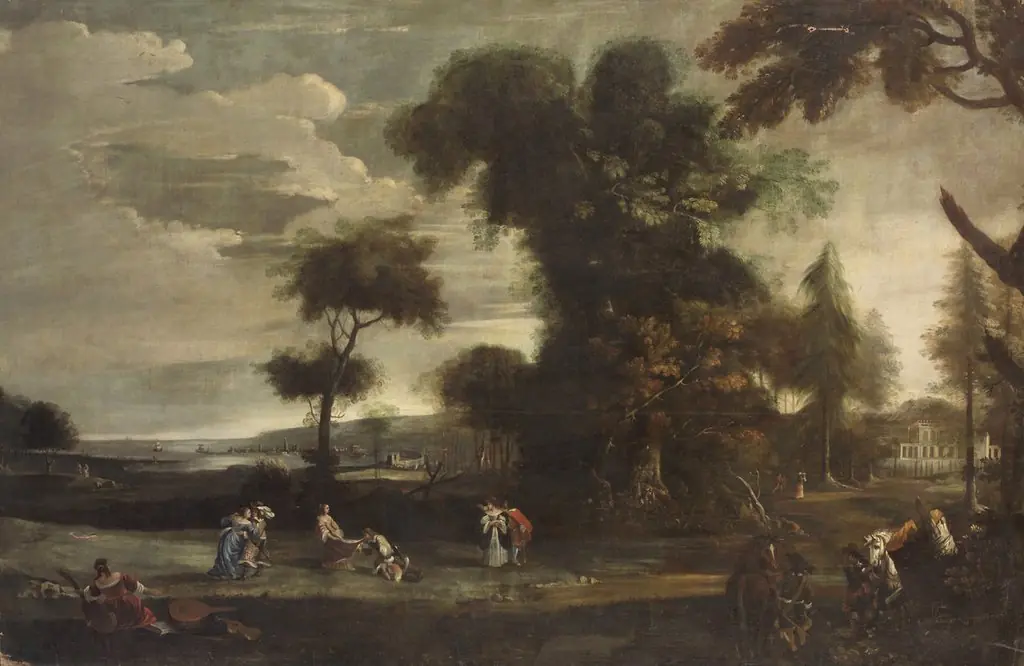 Landscape with love couple
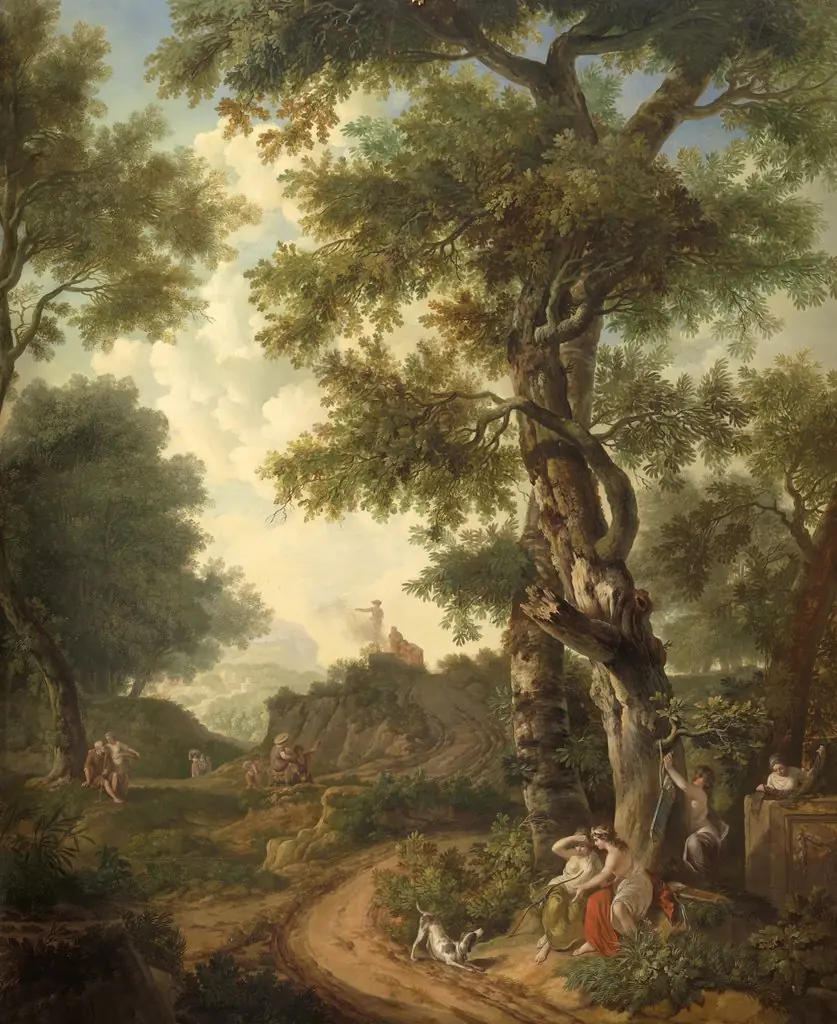 Arcadisch landschap met reizigers
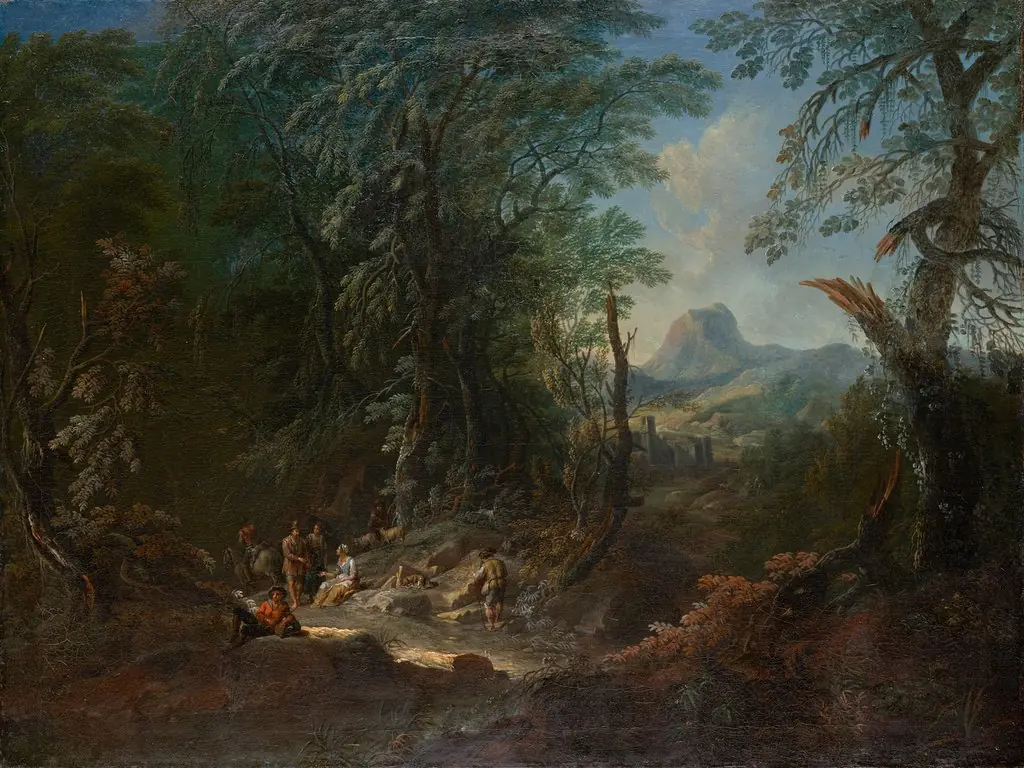 Forest Landscape "Morning"
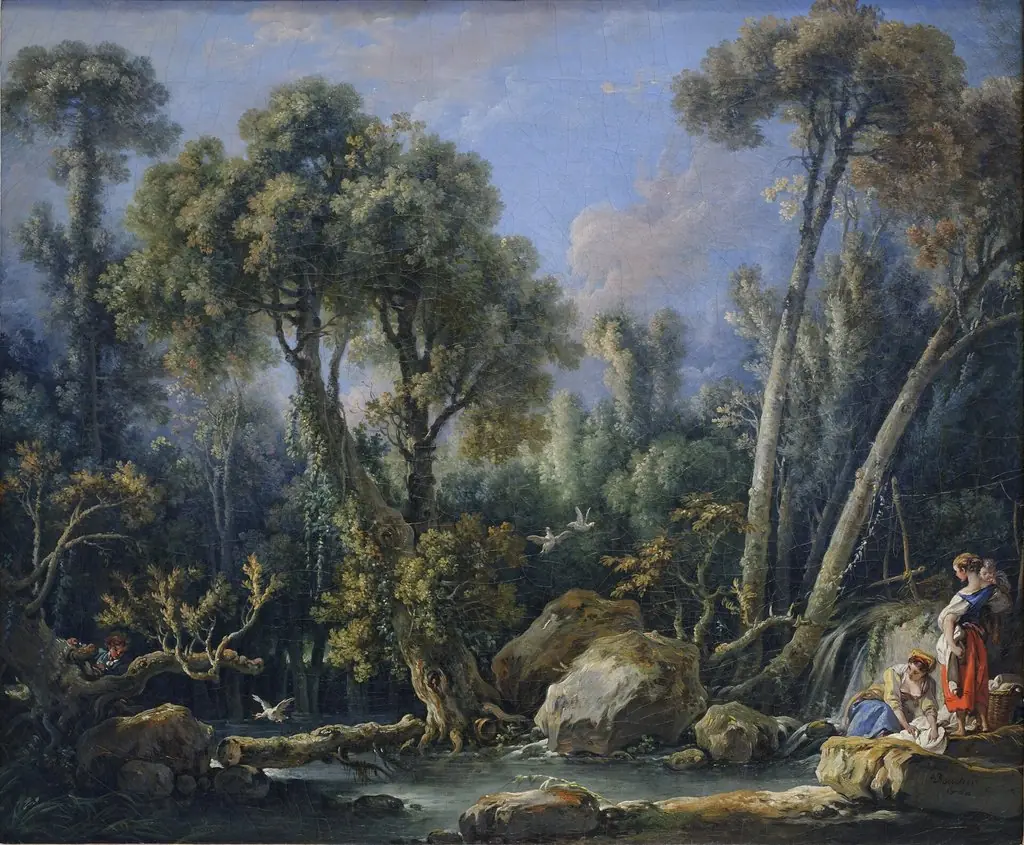 Laundresses in a Landscape