Artwork
Theodosius Repulsed from the Church by Saint Ambrose
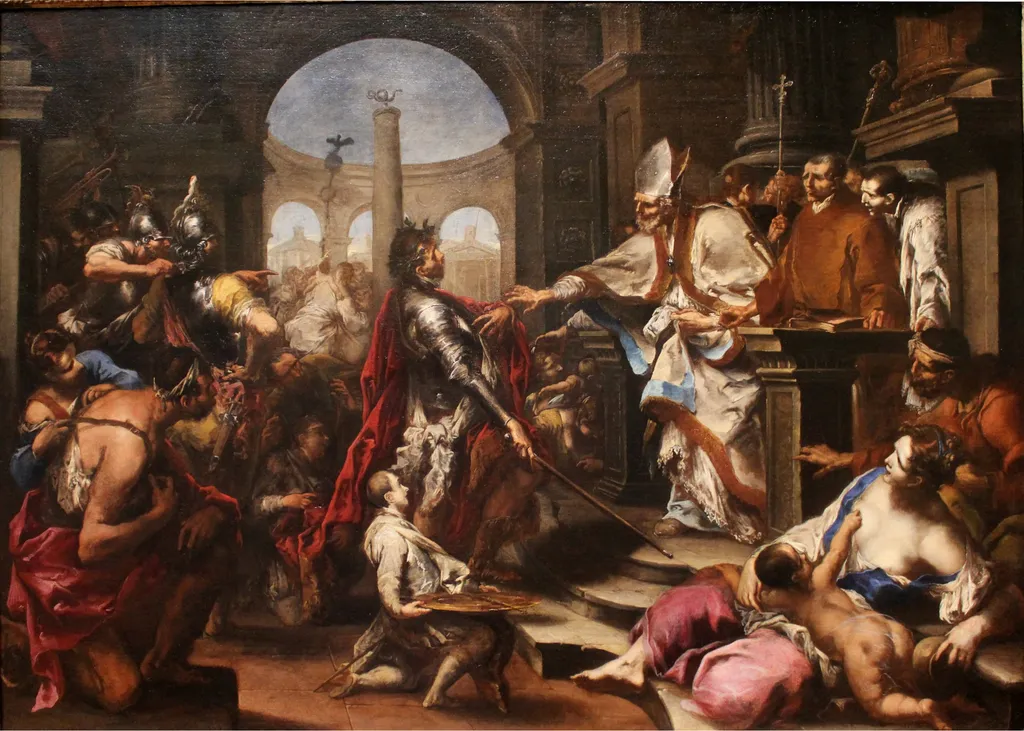
Theodosius Repulsed from the Church by Saint Ambrose is an oil painting by the Early Baroque Italian artist Alessandro Magnasco. It dates from 1705 and is held in the collection of the Art Institute of Chicago.
About this work
Overview
Theodosius Repulsed from the Church by Saint Ambrose is a 1705 oil painting by Alessandro Magnasco, created during the early Baroque period in Italy. The work depicts a pivotal moment of ecclesiastical authority over imperial power.
Subject & Meaning
The painting illustrates the historical event where Saint Ambrose, Bishop of Milan, denied Emperor Theodosius I entry into a church, asserting religious authority over secular rule. The scene conveys the tension between spiritual and temporal power.
Technique & Style
Magnasco executed the painting with characteristic swift brushstrokes and dynamic lighting, resulting in figures that appear somewhat rough yet full of energy and movement. The predominantly muted color palette, with accents of red and blue, enhances the dramatic intensity.
History & Provenance
Created in 1705, the painting is part of the Art Institute of Chicago's collection. Magnasco, active primarily in Milan and Genoa, was known for his late-Baroque stylized and often fantastical compositions.
Context
This work reflects the late-Baroque fascination with dramatic religious narratives and the assertion of ecclesiastical power, common themes in 18th-century Italian art.
Own this work as a print
Artist & collection
Artist
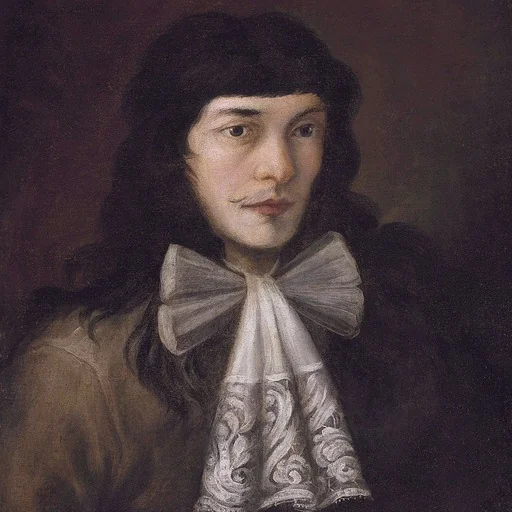
Alessandro Magnasco (February 4, 1667 – March 12, 1749), also known as il Lissandrino, was an Italian late-Baroque painter active mostly in Milan and Genoa.

 Saints Ippolito, Taurino, and Ercolano
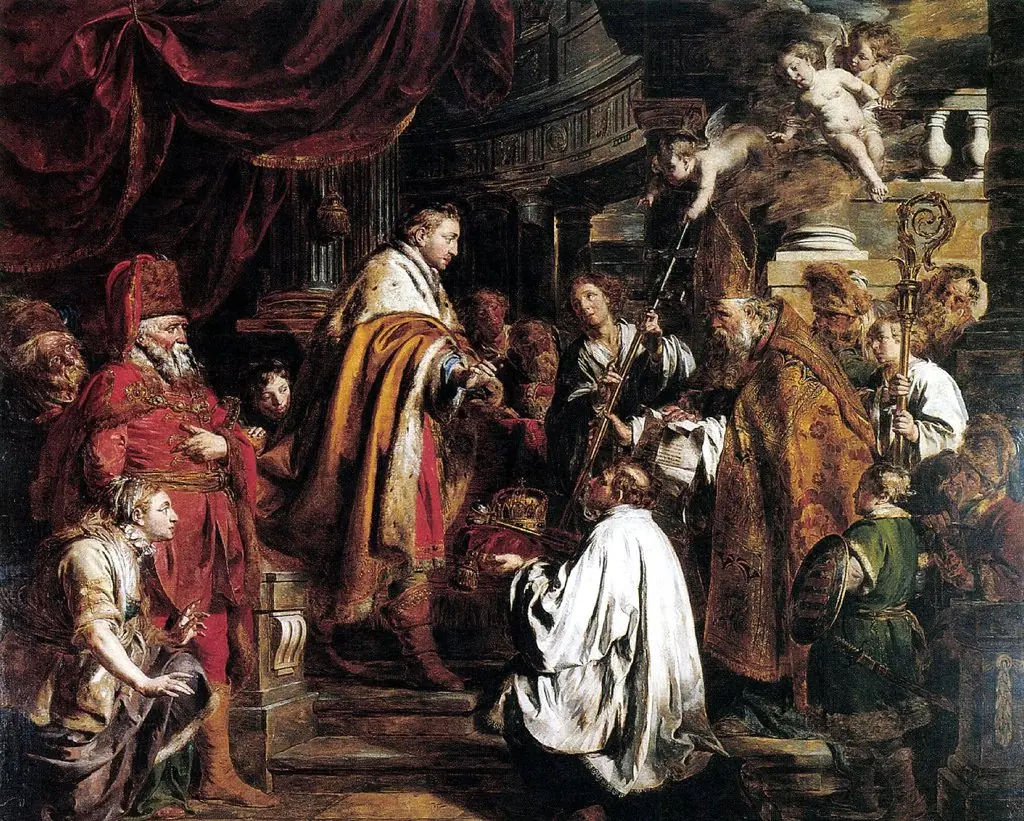 Saint Stephen, king of Hungary Receiving the Legate
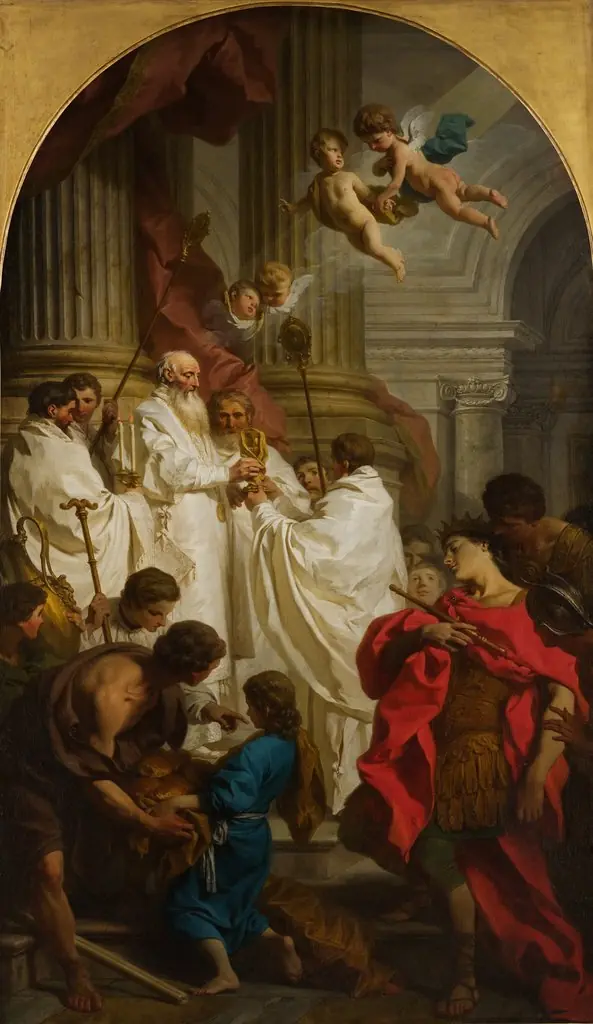 The Mass of Saint Basil
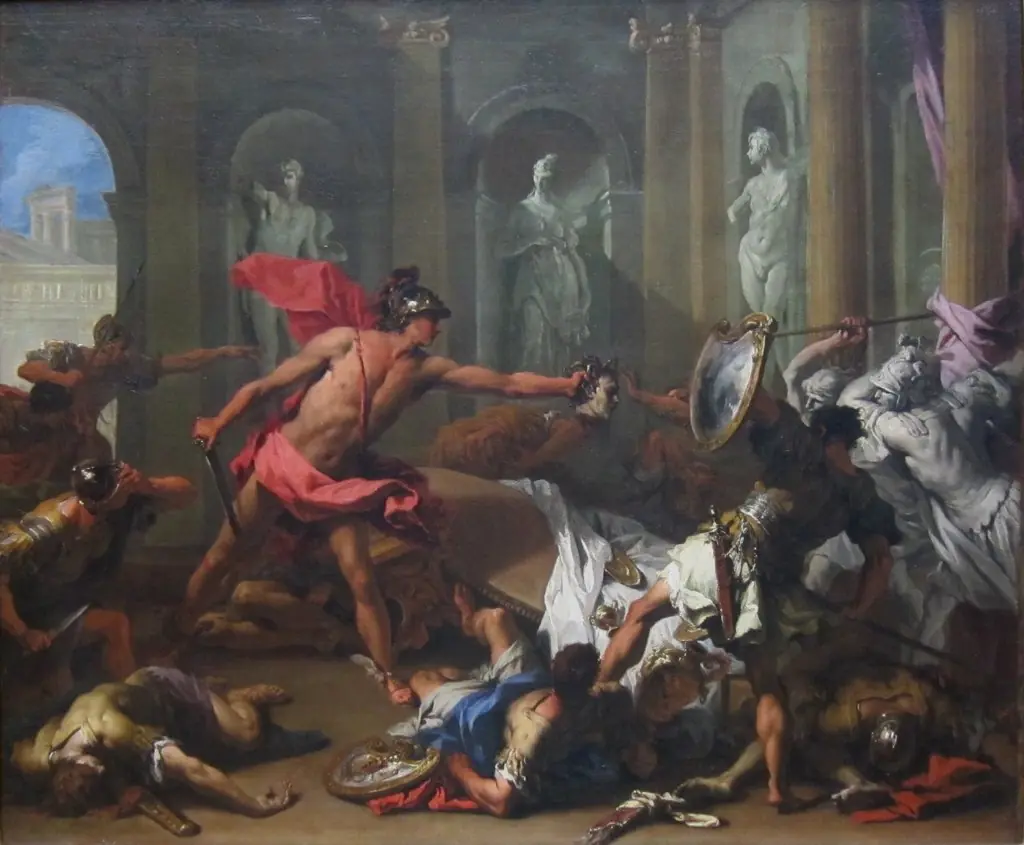 Perseo affronta Fineo con la testa di Medusa
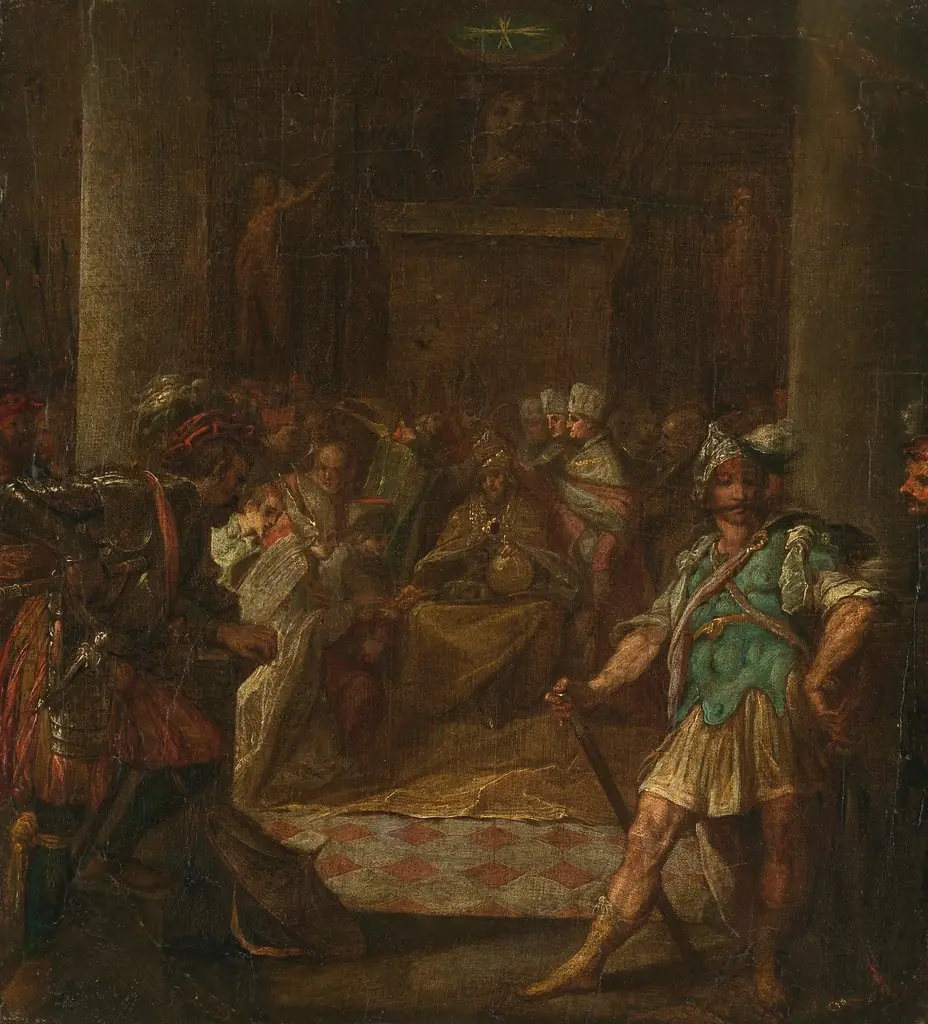 Imperial Coronation
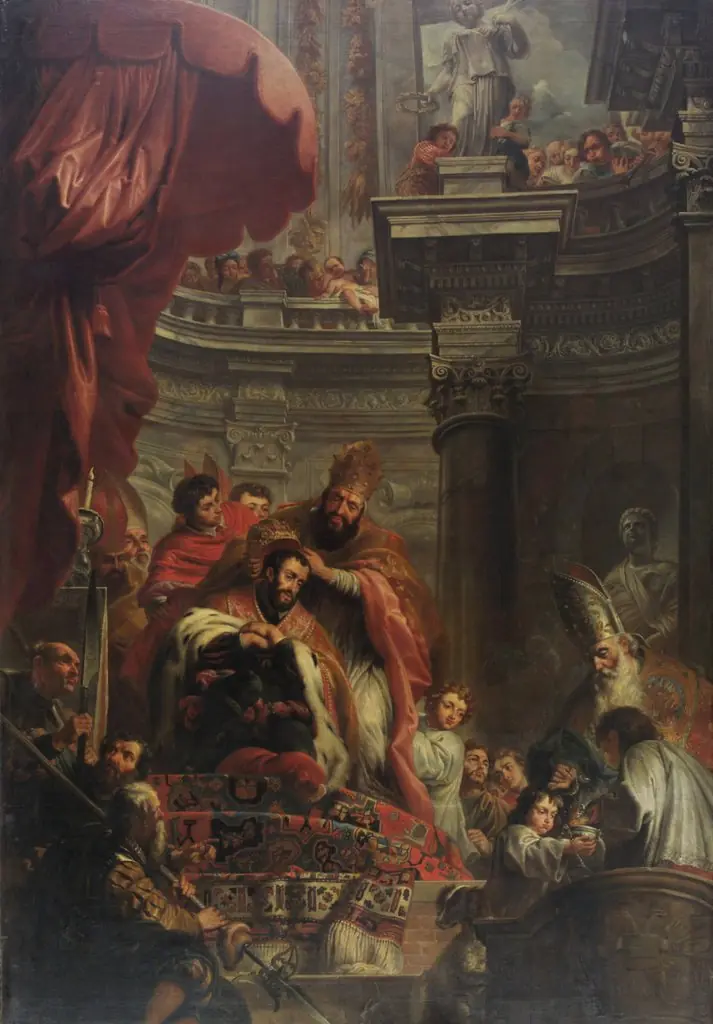 Crowning of Charles V in Bologna
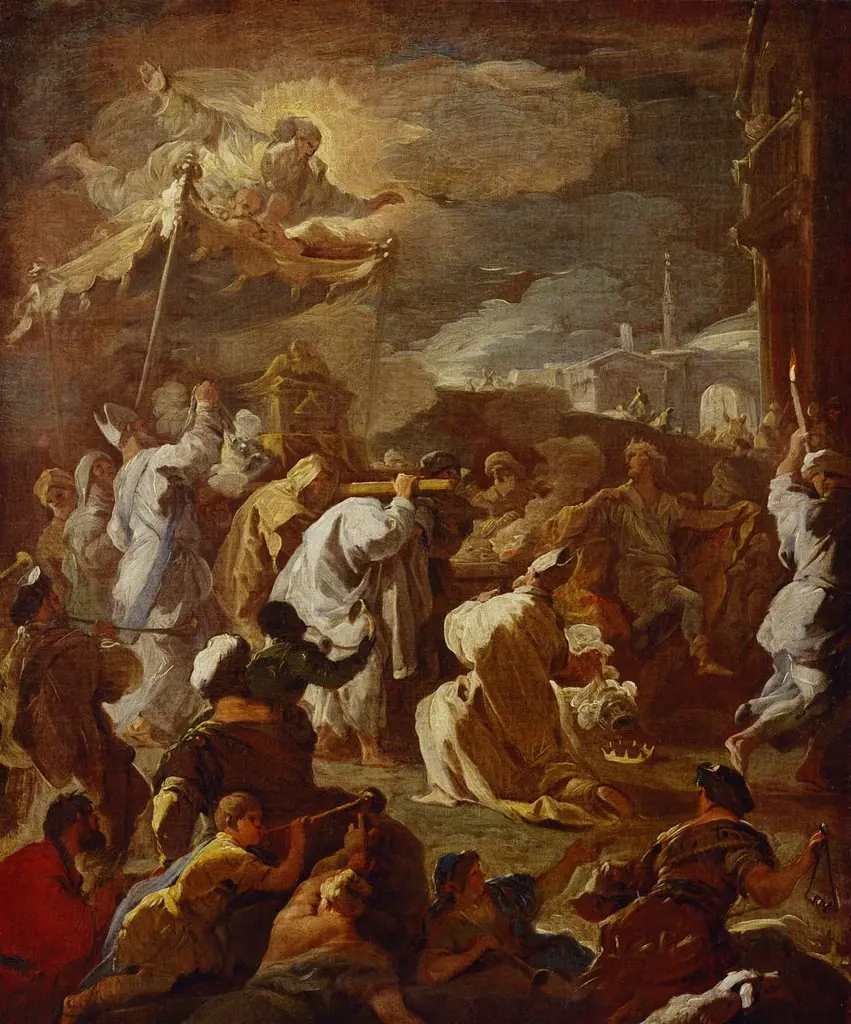 Transfer of the Ark of the Covenant by David
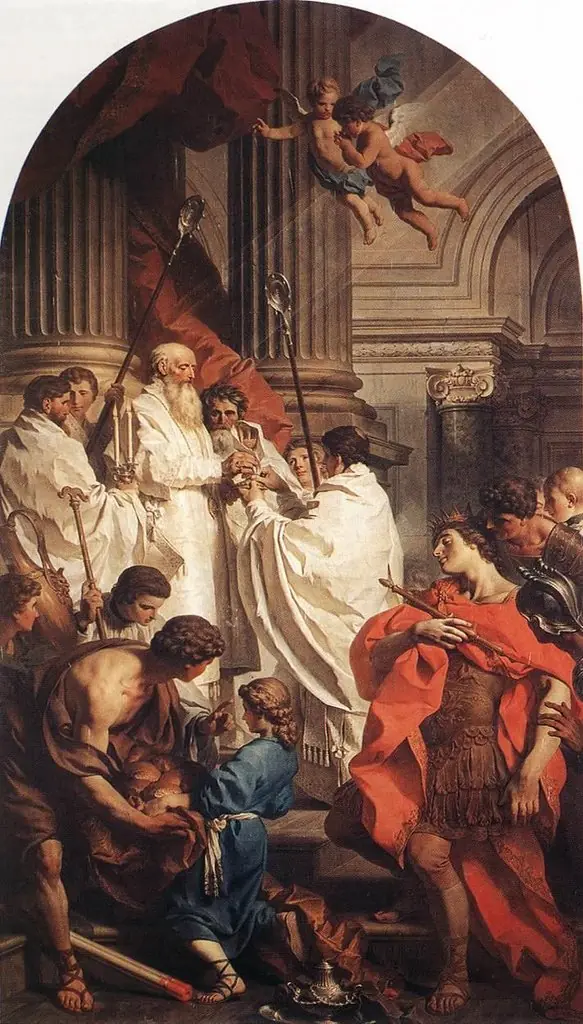 Emperor Valens before Bishop Basil (The Mass of St Basil)