Artwork
Untitled
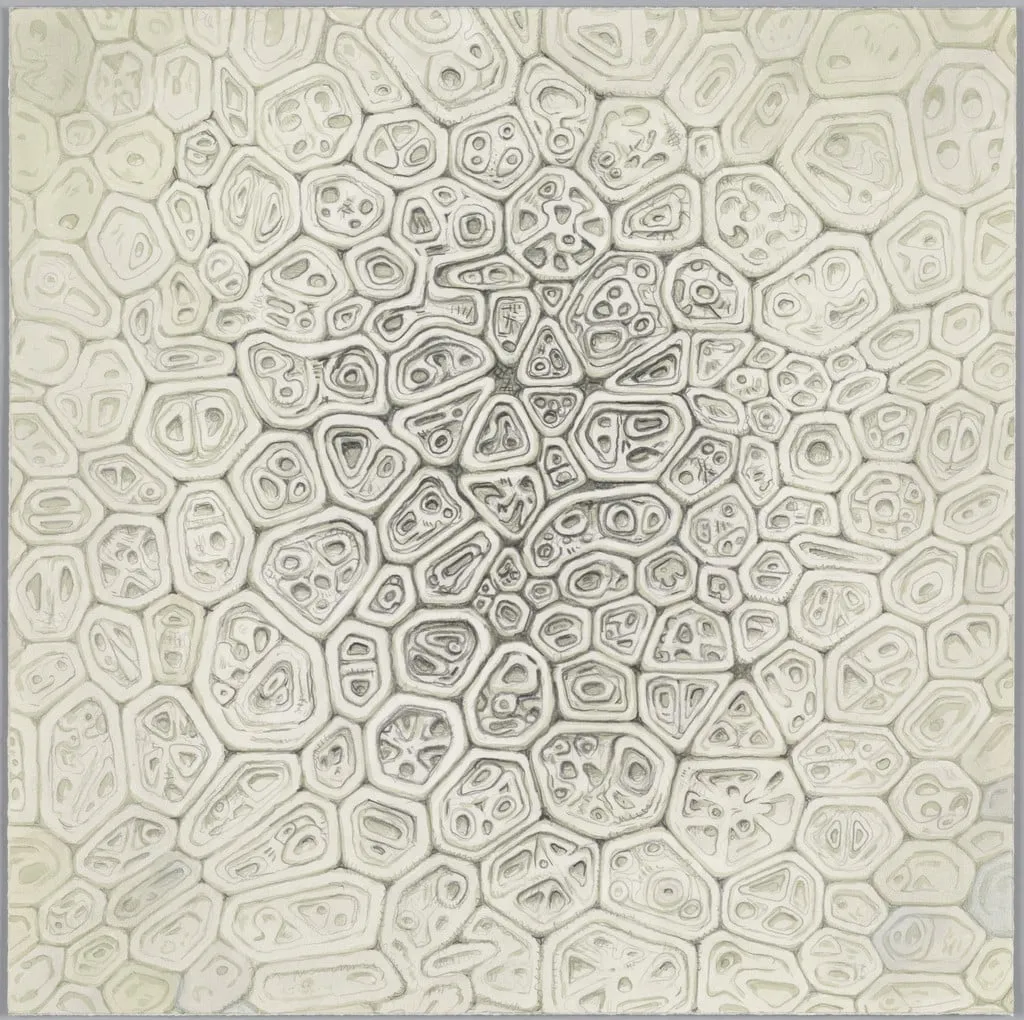
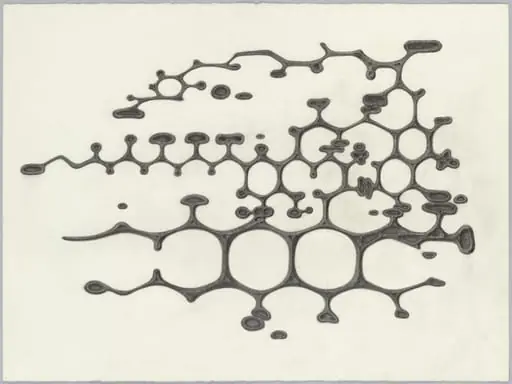
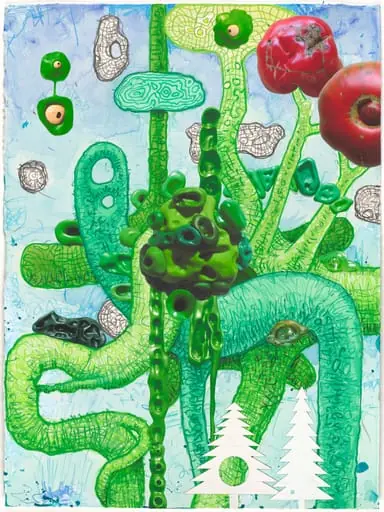
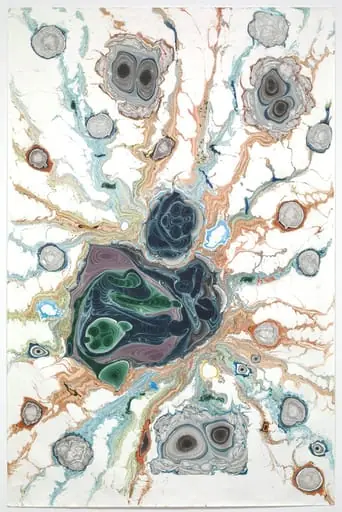
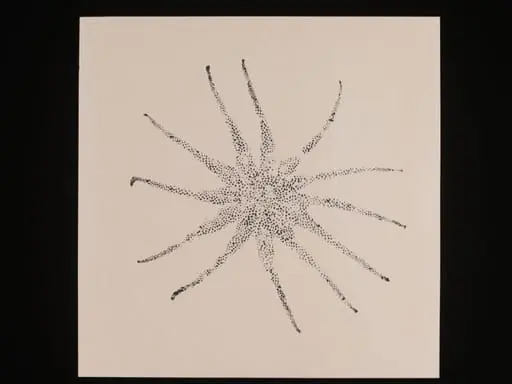
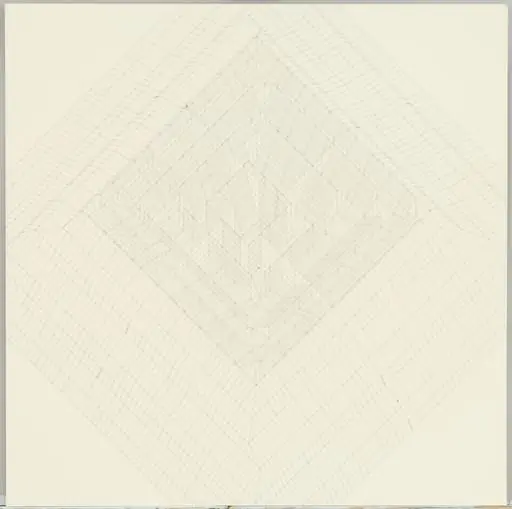
Untitled is a watercolor drawing by Alexander Ross. It dates from 2002 and is held in the collection of the Museum of Modern Art.
About this work
Overview
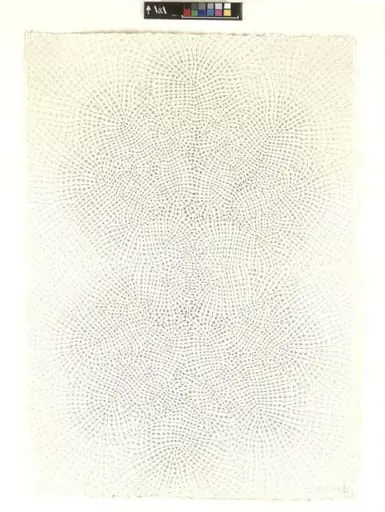
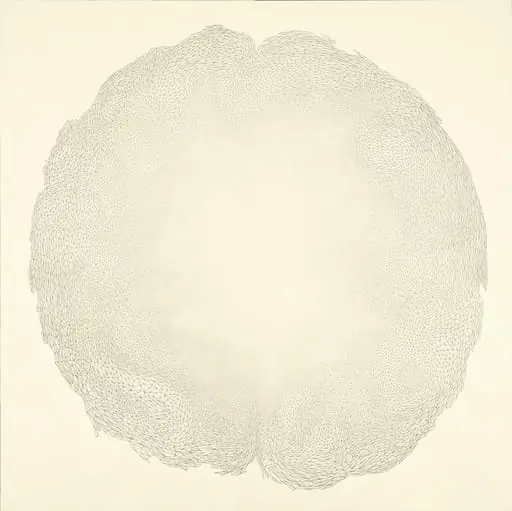
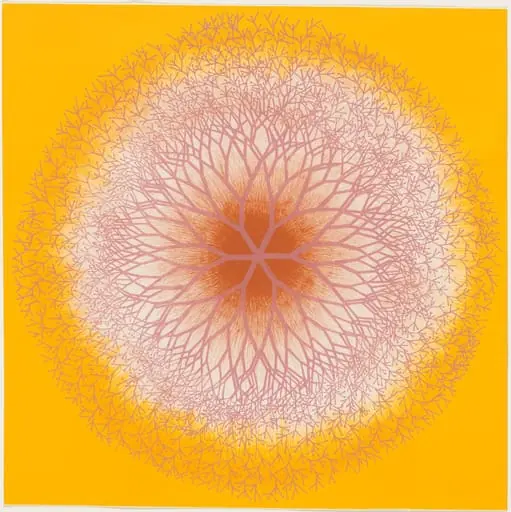
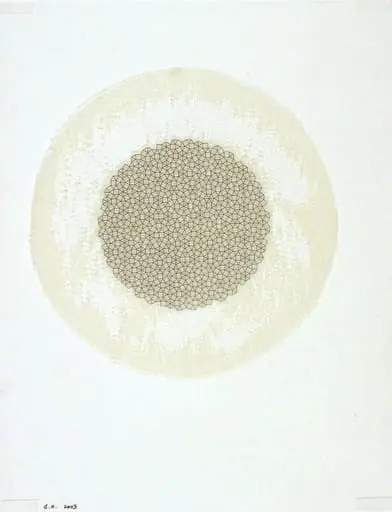
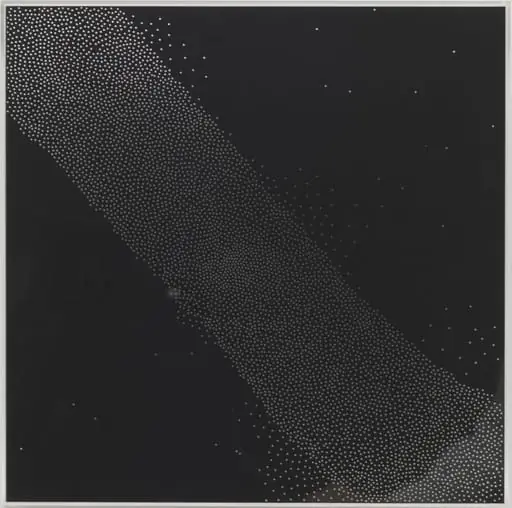
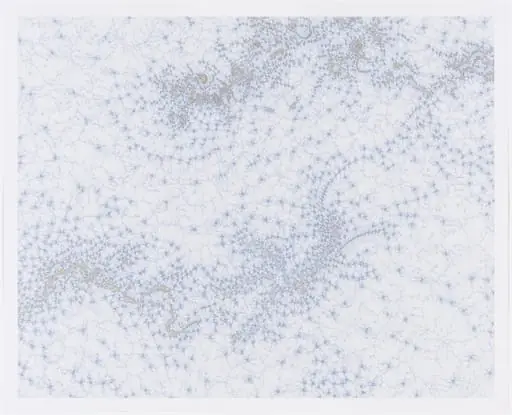
Created in 2002, this drawing by Alexander Ross combines pencil and watercolor on paper to form a tightly packed, grid-like composition. The work is held in the collection of The Museum of Modern Art. Its abstract form suggests a natural structure, rendered with subtle tonal variations and minimal color, emphasizing texture over representation.
Subject & Meaning
The composition resembles a honeycomb, with uniform hexagonal cells filling the entire surface without gaps. While not a literal depiction, the form evokes organic systems—bees’ nests, cellular structures, or geological patterns. The absence of clear narrative invites contemplation of order, repetition, and the quiet beauty of natural geometry.
Technique & Style
Ross employed soft pencil lines and diluted watercolor to create a muted, atmospheric effect. Each cell is defined by faint internal contours, giving the illusion of depth without sharp edges. The tonal range is restrained, using light grays and near-neutral hues to mimic the diffuse light of an overcast day, enhancing the work’s quiet, meditative quality.
History & Provenance
The drawing was completed in 2002 and entered The Museum of Modern Art’s collection shortly thereafter. It is one of several works by Ross in the museum’s holdings, reflecting his consistent engagement with minimal, process-driven mark-making. No prior exhibition or ownership history beyond the artist’s studio and the museum is publicly documented.
Context
Ross’s work from this period aligns with late 20th-century tendencies toward abstraction rooted in natural forms. His approach shares affinities with artists exploring systems, pattern, and material restraint. The drawing emerges from a broader interest in the visual language of biological structures, detached from literal illustration but grounded in observed detail.
Legacy
This piece contributes to Ross’s reputation for quiet, precise investigations of form and surface. It remains a representative example of his ability to transform simple materials into evocative compositions that suggest complexity without overt symbolism. Its presence in MoMA’s collection situates it within ongoing dialogues about abstraction and the perceptual potential of drawing.
Artist & collection