Artwork
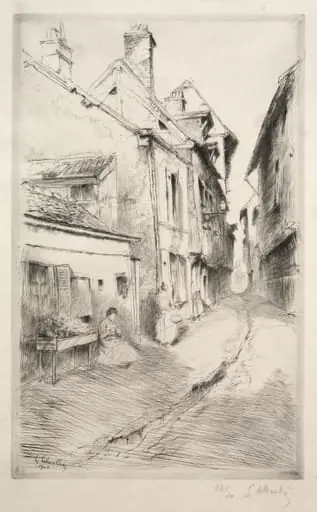
Eaux-Fortes sur le Vieux Paris: Ancienne école de médecine rue de la Bûcherie (Etchings of Old Paris: Former Medical School, rue de la Bucherie)
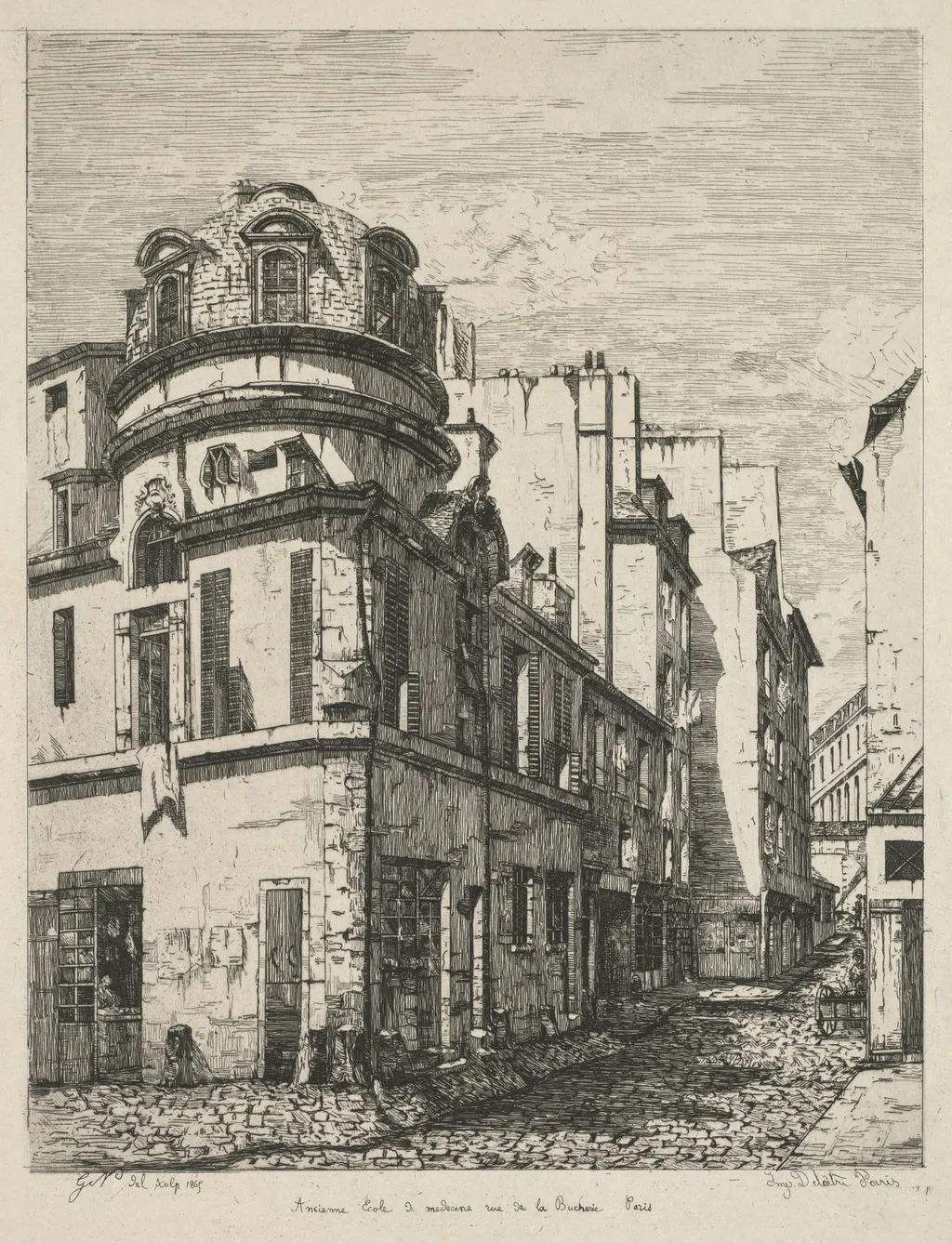
Eaux-Fortes sur le Vieux Paris: Ancienne école de médecine rue de la Bûcherie (Etchings of Old Paris: Former Medical School, rue de la Bucherie) is a print by the Impressionist artist Gabrielle Niel. It dates from 1865 and is held in the collection of the Cleveland Museum of Art.
About this work
This sketch shows an old, crumbling building with tall windows and a dome on top. The street in front is messy, with debris and uneven cobblestones. The lines are sharp, and the whole scene looks like it’s drawn with careful strokes.
The artist focused on how buildings wear down over time. This was made in 1865 as part of a series about Paris.
Look up Realism to see more art like this.
Overview
Gabrielle Niel’s 1865 etching titled *Eaux-Fortes sur le Vieux Paris: Ancienne école de médecine rue de la Bûcherie* records a deteriorating urban façade on the historic rue de la Bûcherie. The work is part of the Cleveland Museum of Art’s collection and belongs to a broader series in which the artist surveyed Parisian architecture.
Subject & Meaning
The image captures the former medical school’s aging structure, emphasizing its tall, mullioned windows and a modest dome that crowns the roof. The foreground street is rendered with uneven cobblestones and scattered debris, suggesting the neglect and wear that urban buildings accumulate over time.
Technique & Style
Executed in etching, the composition relies on precise, incisive lines that delineate architectural details and surface texture. The contrast between the sharp linear rendering of the building and the looser, more irregular strokes of the street creates a visual tension that underscores the theme of decay.
History & Provenance
Created in 1865, the print was produced during a period when Niel documented the changing face of Paris. It entered the Cleveland Museum of Art’s holdings through acquisition, though the exact path of ownership prior to the museum is not recorded in the available sources.
Context
The work aligns with mid‑nineteenth‑century realist tendencies that favored direct observation of everyday environments. By focusing on a specific, deteriorating edifice, Niel contributes to a visual record of Paris before Haussmann’s extensive renovations transformed the city’s streetscape.
Artist & collection

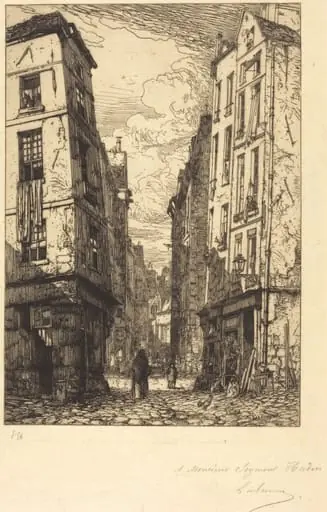 Rue des Marmousets (Quartier de la cite, vieux Paris)
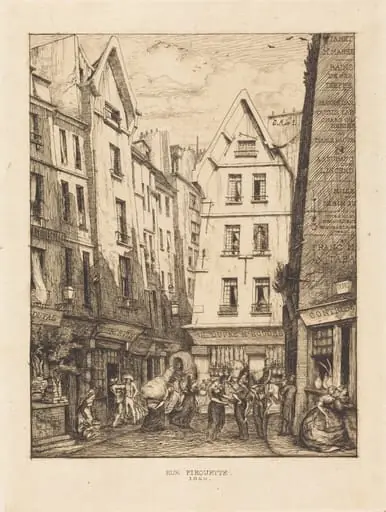 La Rue Pirouette aux halles, Paris (Pirouette Street, Near the Markets, Paris)
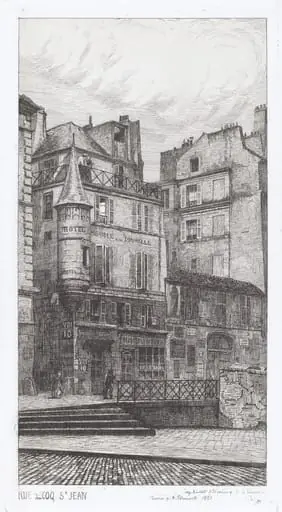 Rue du Coq St. Jean
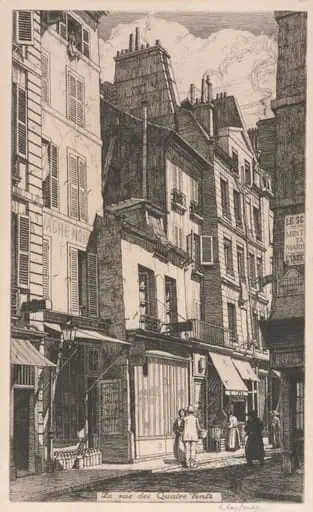 La rue des Quatre Vents
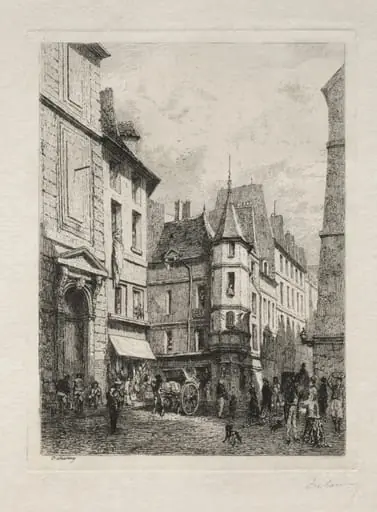 Tourelle en Fontaine Rue d'Ecole de Medicines demolies en 1877
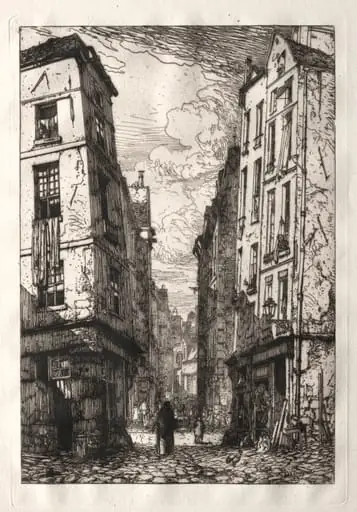 Rue des Marmousets (Old Paris)
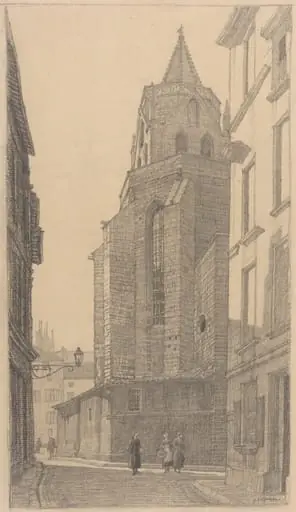 Apse of St.-Didier, Avignon
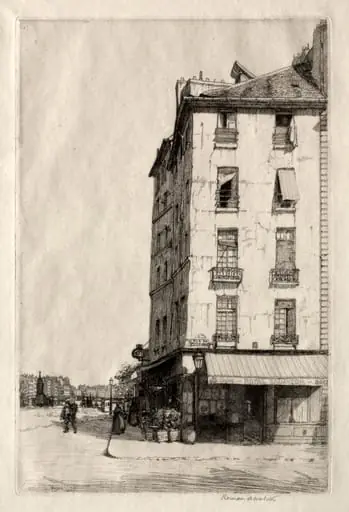 Quay Montebello
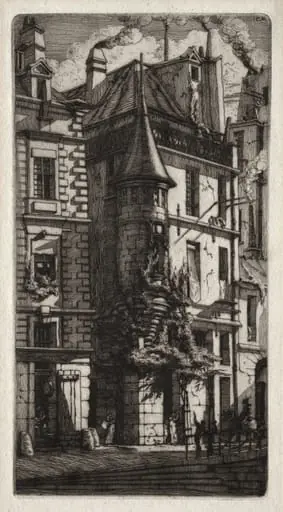 Etchings of Paris: House with a Turret, Weavers' Street
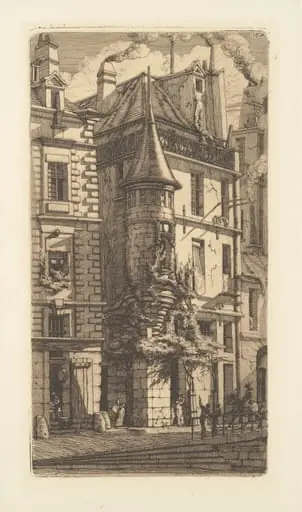 Tourelle, Rue de la Tixeranderie
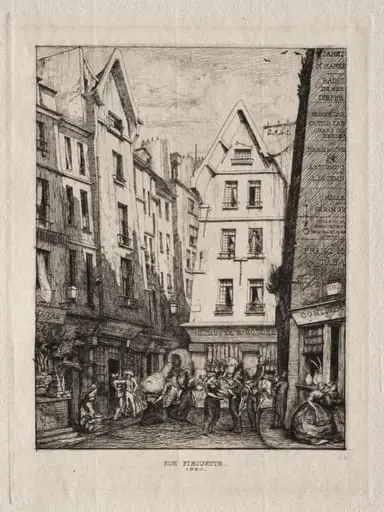 Pirouette Street, near the Markets, Paris
 La rue de l'Ecole à Troyes