Artwork
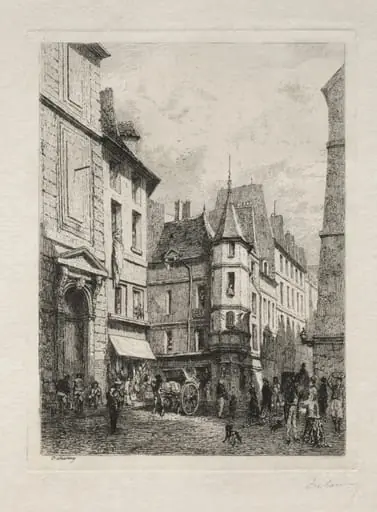
Maison dite de la Reine Blanche, Rue St. Hippolyte
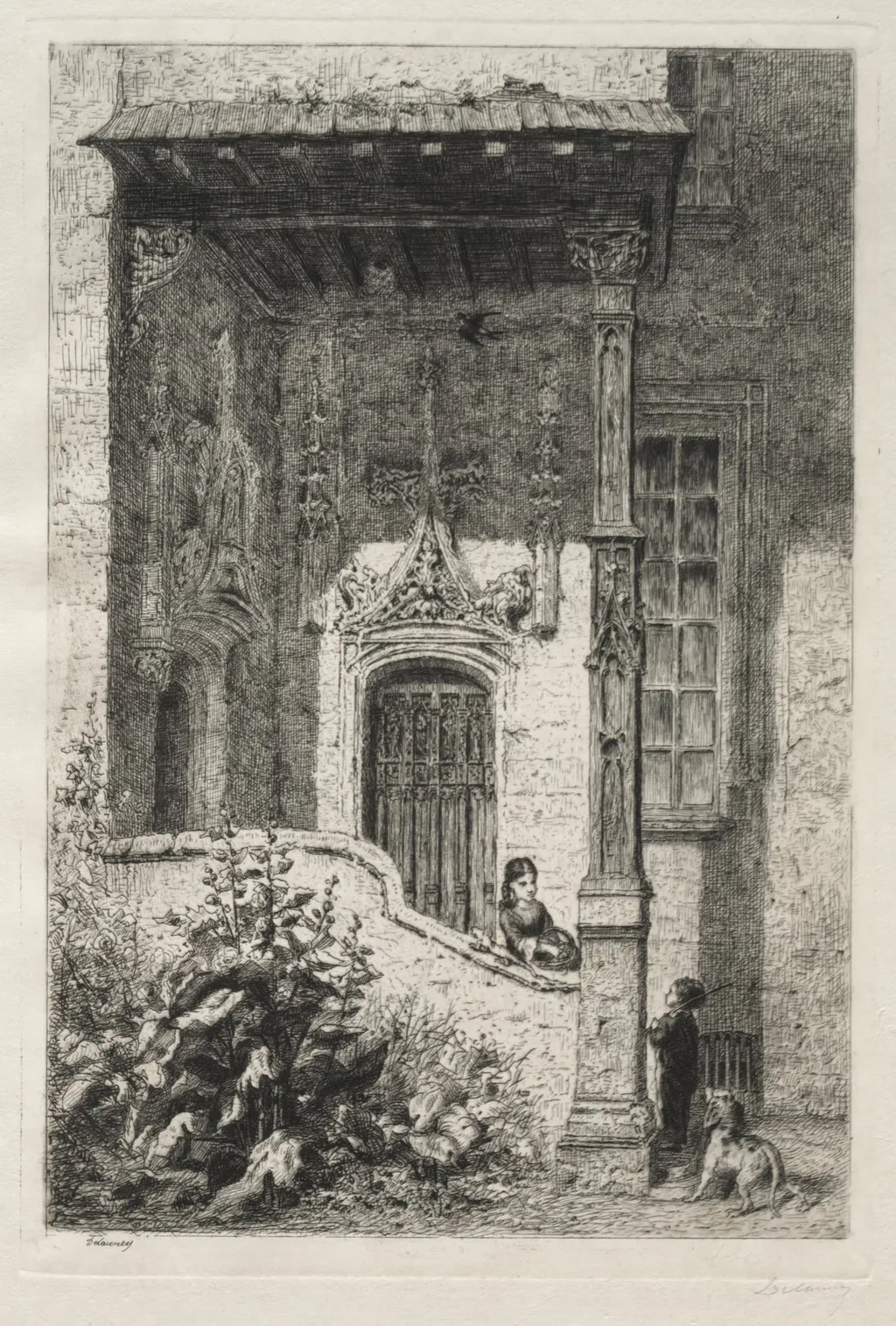
Maison dite de la Reine Blanche, Rue St. Hippolyte is a print by the Impressionist artist Alfred-Alexandre Delauney. It dates from 1882 and is held in the collection of the Cleveland Museum of Art. Created around 1882 by Alfred Alexandre Delauney, this drawing depicts a modest urban street in Paris, specifically Rue St.
About this work
Overview
Created around 1882 by Alfred Alexandre Delauney, this drawing depicts a modest urban street in Paris, specifically Rue St.
Created around 1882 by Alfred Alexandre Delauney, this drawing depicts a modest urban street in Paris, specifically Rue St. Hippolyte. The work is rendered in a quiet, observational style typical of late 19th-century French draftsmanship. It is part of the collection at The Cleveland Museum of Art, where it serves as a record of everyday architectural detail and street life during a period of rapid urban change.
Subject & Meaning
The scene captures unremarkable moments of daily life: a figure seated within a narrow arched doorway, another standing near a window with a dog at their feet. A bush presses against a stone wall, adding organic texture to the rigid masonry. These elements convey no narrative drama but instead emphasize the quiet rhythm of neighborhood existence, reflecting a focus on ordinary environments over grand themes.
Technique & Style
Delauney employs precise linear draftsmanship and subtle tonal gradations to define the play of light across stone surfaces and architectural recesses. The rendering avoids theatrical contrast, favoring a restrained chiaroscuro that enhances the sense of realism. The composition is deliberately uncluttered, with attention given to the textures of weathered walls and the natural growth of vegetation against built forms.
History & Provenance
The drawing entered the Cleveland Museum of Art’s collection as part of its broader acquisition of 19th-century French drawings. While specific ownership history prior to the museum’s acquisition is not widely documented, its inclusion reflects institutional interest in documenting the work of lesser-known realist artists who captured Parisian street life during the post-Haussmann era.
Context
Produced during a time when Paris was undergoing extensive modernization, the drawing offers a counterpoint to grand urban projects by focusing on intimate, unchanged corners of the city. It aligns with the Realist movement’s interest in depicting unidealized, contemporary life, contrasting with academic history painting and anticipating the observational focus of later Impressionist works.
Legacy
Though Delauney is not among the most widely recognized artists of his time, this work contributes to a broader archive of late 19th-century urban documentation. It exemplifies how minor artists preserved the character of disappearing neighborhoods, offering visual evidence of domestic architecture and street culture that often escaped the attention of major historical records.
Artist & collection
Artist
Alfred-Alexandre Delauney (1830–1894) was a French artist, born in Gouville-sur-Mer.

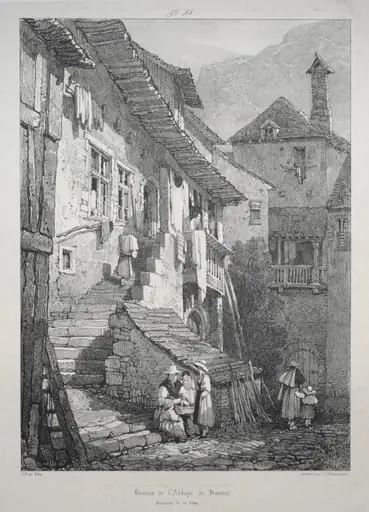 Ruins of the Abbey of Baume. Interior of the Court
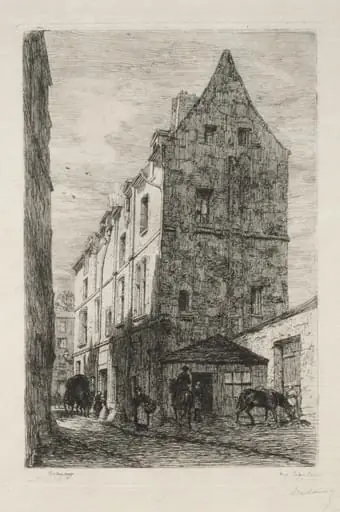
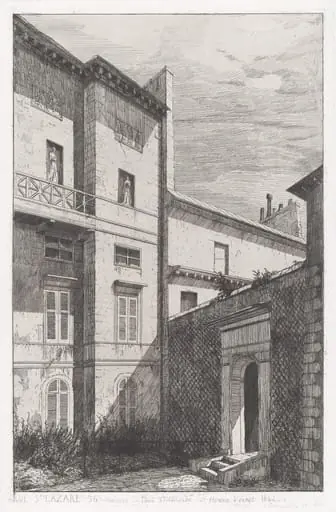 Rue St. Lazare 56, Maison de Paul Delaroche et Horace Vernet
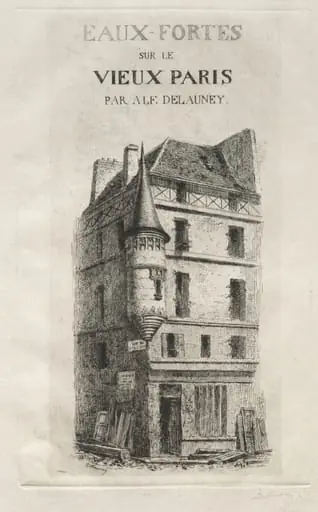
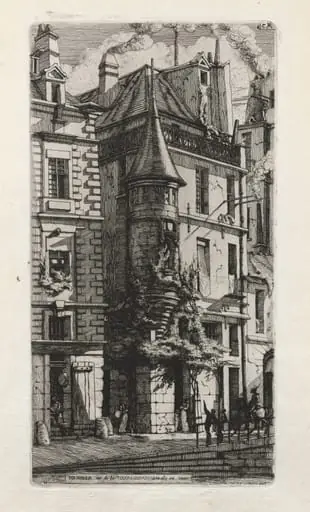 House with a Turret, rue de la Tixéranderie, Paris
![Nel Villaggio [In the Village], by Domenico Casella](https://artifactworldgallery.com/img/domenico-casella--nel-villaggio-in-the-village--10a7e8daffe9adf4-w320.webp) Nel Villaggio [In the Village]
Nel Villaggio [In the Village]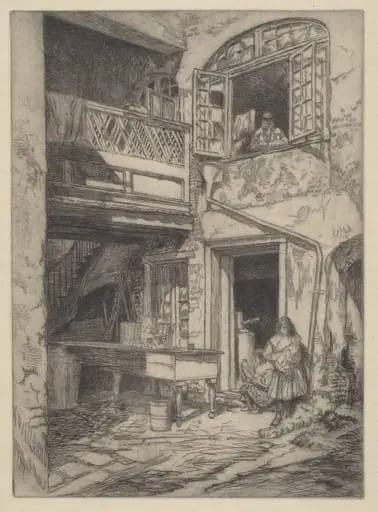 An Old Courtyard (New Orleans)
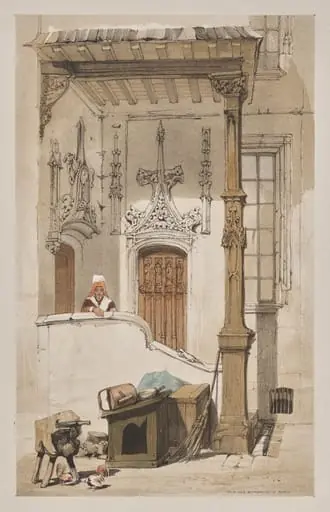 Picturesque Architecture in Paris, Ghent, Antwerp, Rouen: Rue des Marmousets, Paris
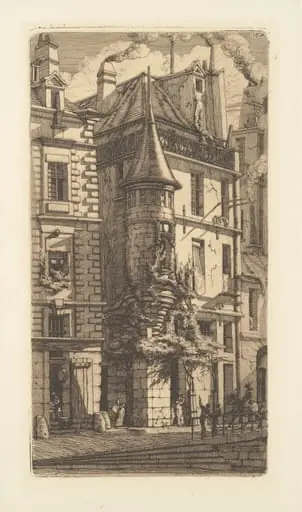 Tourelle, Rue de la Tixeranderie
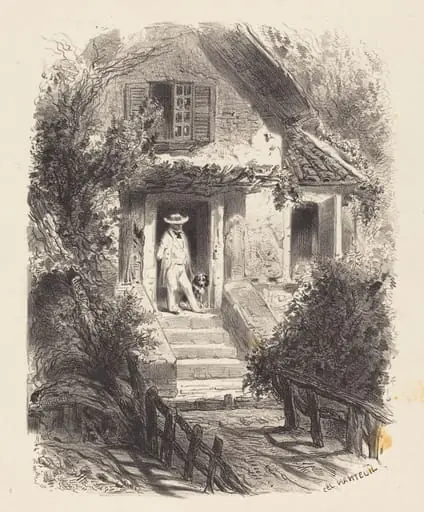 Music Title
![The Bishop's Tomb [center], by Canaletto](https://artifactworldgallery.com/img/canaletto--the-bishop-s-tomb-center--d27fef1dd2f2d61a-w320.webp) The Bishop's Tomb [center]
The Bishop's Tomb [center]