Artwork
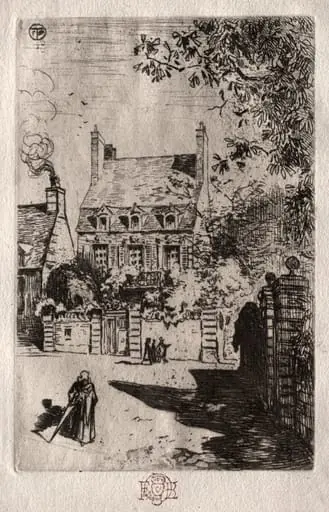
House with a Turret, rue de la Tixéranderie, Paris
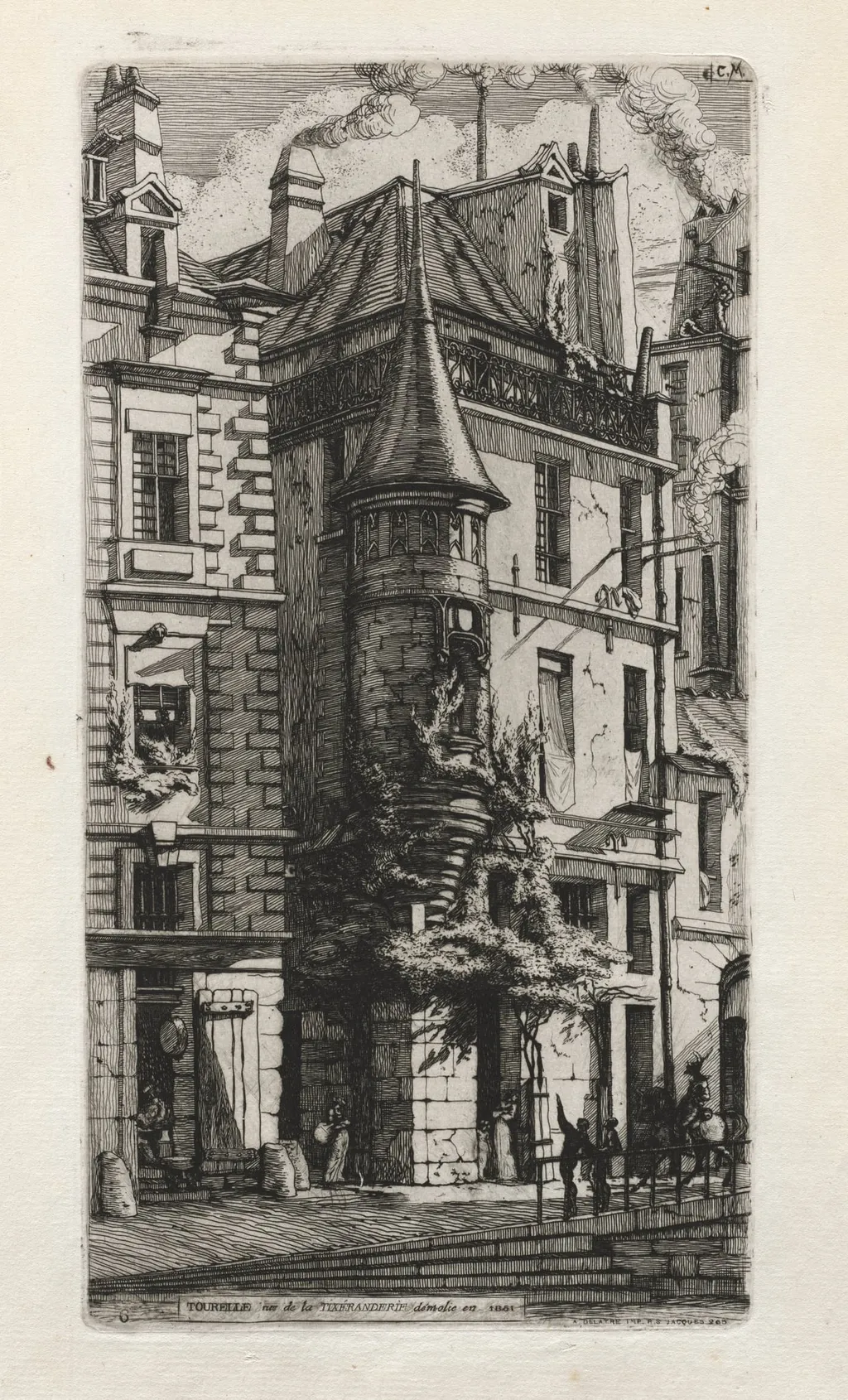
House with a Turret, rue de la Tixéranderie, Paris is a print by the Impressionist artist Charles Meryon. It dates from 1852 and is held in the collection of the Cleveland Museum of Art.
About this work
Overview
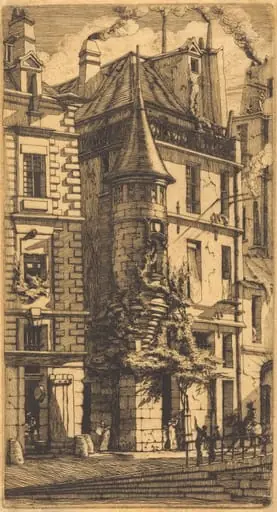
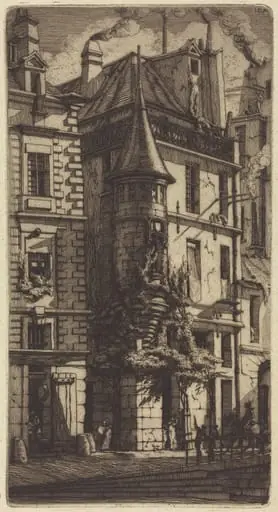
Created in 1852, this etching by Charles Meryon captures a modest street in central Paris, emphasizing the verticality and density of its architecture.
Created in 1852, this etching by Charles Meryon captures a modest street in central Paris, emphasizing the verticality and density of its architecture. Meryon, who worked almost exclusively in etching due to his color blindness, focused on the interplay of light and shadow to convey mood rather than topographical accuracy. The work belongs to a larger body of urban scenes that reflect his intimate, often brooding engagement with the city’s forgotten corners.
Subject & Meaning
The composition centers on a narrow lane dominated by a prominent turret rising from a clustered row of buildings. Figures move along the cobblestones, underscoring the street’s daily life, while the towering structures loom overhead, suggesting both intimacy and confinement. Meryon’s choice of subject—unremarkable urban fabric—elevates the ordinary into something haunting, revealing his fascination with the psychological weight of architecture.
Technique & Style
Meryon employed fine, incised lines to model the rough textures of stone, brick, and slate, using deep shadows to enhance the sense of depth and atmosphere. His etching technique emphasized contrast over detail, allowing the play of light and dark to define form. The cluttered rooftops and irregular chimneys reflect his attention to architectural eccentricity, avoiding idealization in favor of observed truth.
History & Provenance
This print is one of many produced during Meryon’s most productive period, when he systematically documented Parisian streets before large-scale renovations transformed the city. Though he gained recognition among French collectors and artists, his work remained largely unknown in English-speaking circles during his lifetime. The etching was likely issued as part of a private or limited publication, consistent with his modest commercial reach.
Context
Meryon’s work emerged alongside the rise of Realism, yet his approach diverged by prioritizing emotional tone over social commentary. While contemporaries depicted labor and urban poverty directly, he conveyed the city’s character through mood and structure. His etchings resonated with a growing interest in the psychological dimensions of place, aligning him more closely with Romantic sensibilities than with documentary realism.
Legacy
Though overshadowed in his time, Meryon’s etchings influenced later generations of printmakers drawn to atmospheric urban scenes. His ability to transform mundane architecture into evocative compositions redefined the potential of etching as a medium for personal expression. Today, his Parisian views are held in major collections as vital records of a city in transition, valued for their quiet intensity rather than their popularity.
Artist & collection
Artist
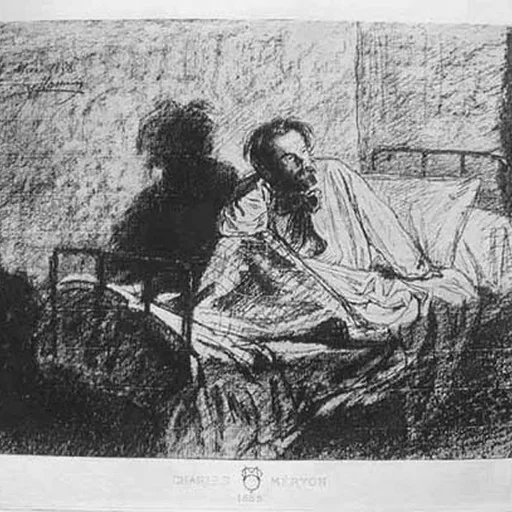
Charles Meryon (sometimes Méryon, 23 November 1821 – 14 February 1868) was a French artist who worked almost entirely in etching, as he had colour blindness.

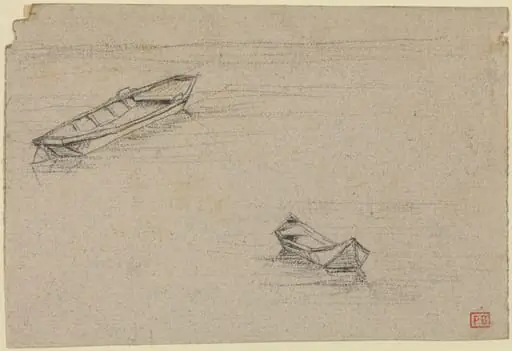
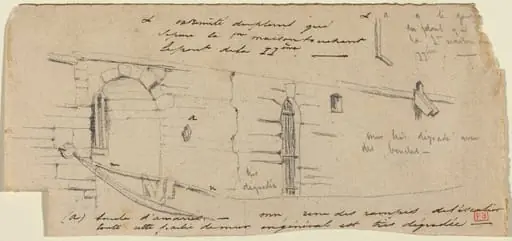
 Tourelle de la Rue de la Tixéranderie, Paris (House with a Turret, Weavers' Street, Paris)
 Tourelle de la Rue de la Tixéranderie, Paris (House with a Turret, Weavers' Street, Paris)
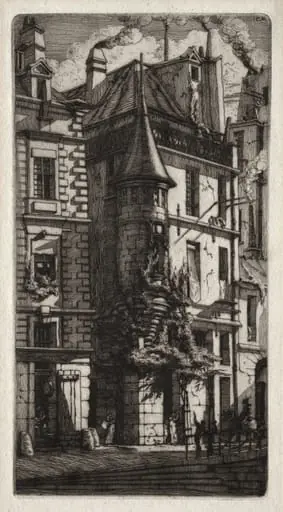 Etchings of Paris: House with a Turret, Weavers' Street
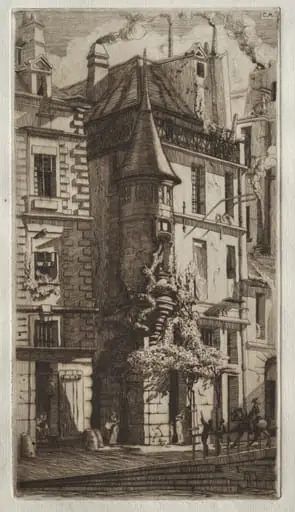 Tourelle de la rue de la Tixéranderie
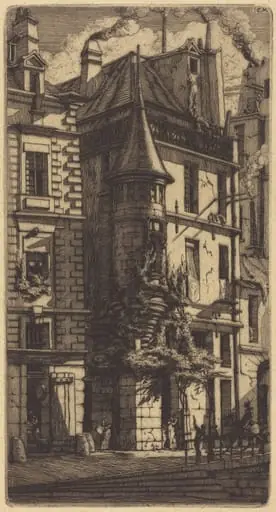 Tourelle de la Rue de la Tixéranderie, Paris (House with a Turret, Weavers' Street, Paris)
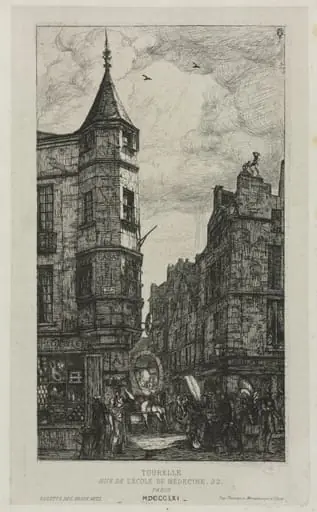 House with a Turret, No. 22, rue de L'Ecole de Médecine, Paris, (called the Turret of Marat)
 In Province: The House at Orléans