Artwork
Illustrations and descriptions of...the Natural Order Camellieae: No. 44
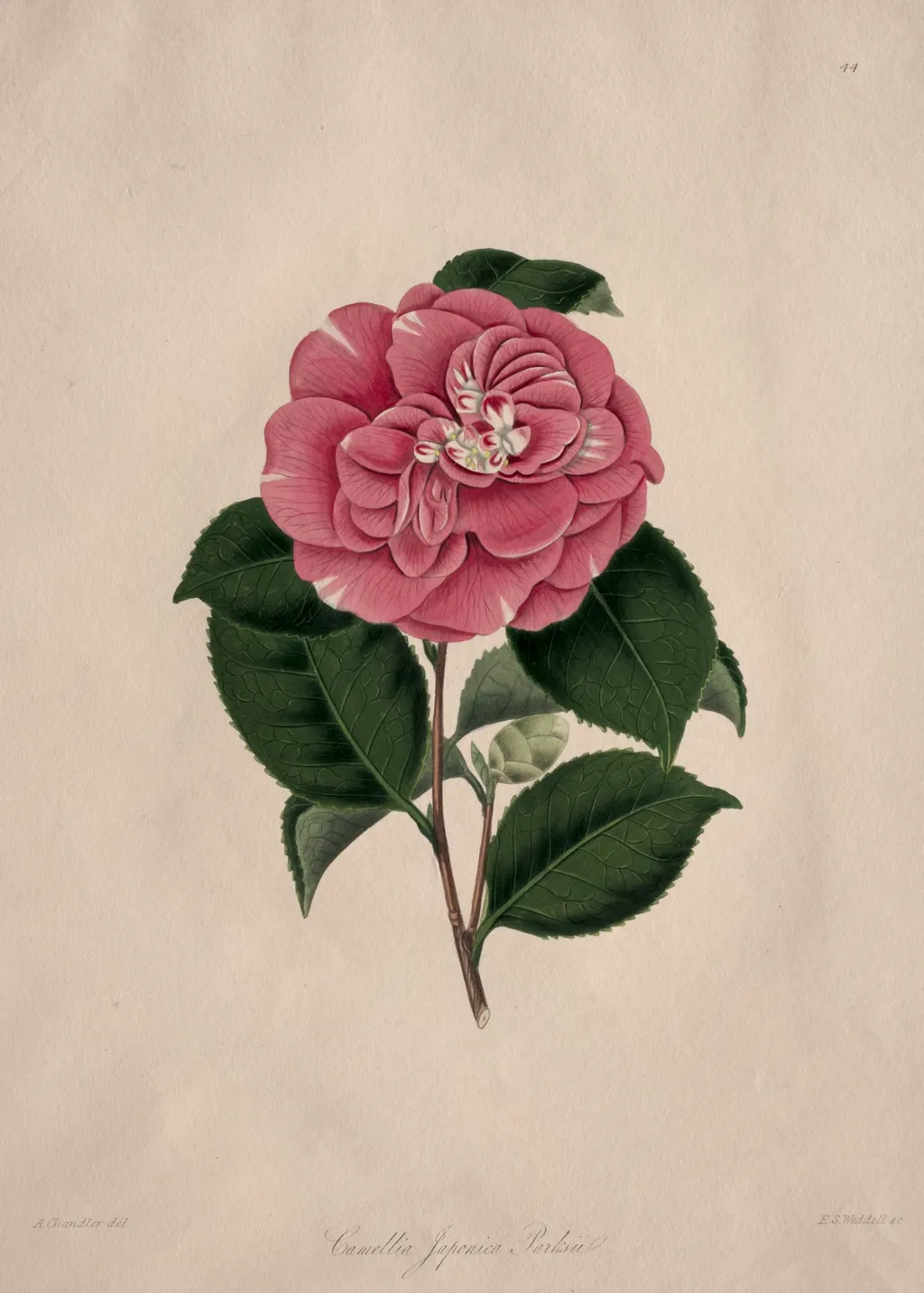
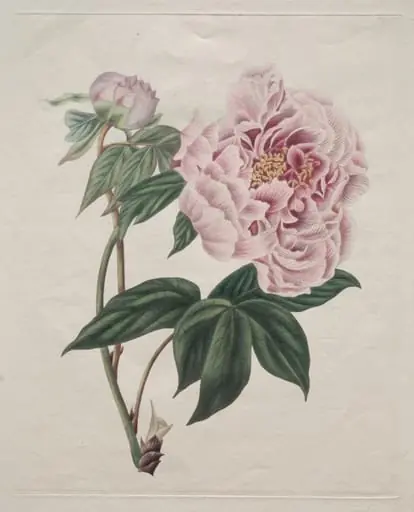
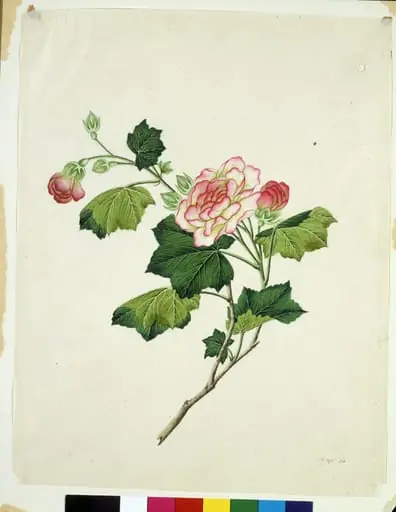
Illustrations and descriptions of...the Natural Order Camellieae: No. 44 is a print by the Romanticist artist Alfred Chandler. It dates from 1858 and is held in the collection of the Cleveland Museum of Art.
About this work
Overview
Created in 1858 by Alfred Chandler, this print is part of a scientific series documenting the Camellieae plant family.
Created in 1858 by Alfred Chandler, this print is part of a scientific series documenting the Camellieae plant family. It presents a single specimen with meticulous detail, blending botanical accuracy with aesthetic presentation. The work was produced during a period when illustrated botanical texts served both scholarly and horticultural audiences, reflecting the era’s fascination with plant classification and exotic flora.
Subject & Meaning
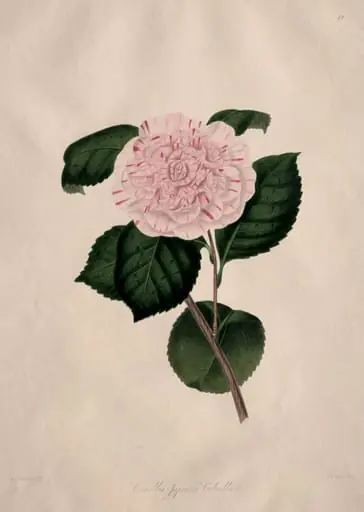
The print depicts *Camellia japonica*, a species prized in 19th-century horticulture for its elegant blooms. The composition highlights the flower’s layered petals, transitioning from pink to white at the margins, alongside two glossy leaves and a closed bud. This focus on developmental stages suggests an interest in the plant’s life cycle, reinforcing its role as a subject of scientific observation rather than mere ornamentation.
Technique & Style
Rendered in fine line and subtle wash, the illustration employs precise draftsmanship to capture the texture of petals and the sheen of leaves. The absence of background or decorative elements directs attention solely to the botanical form. The style aligns with scientific illustration traditions of the time, prioritizing clarity and diagnostic detail over artistic flourish.
History & Provenance
The print is held by The Cleveland Museum of Art, where it is preserved as part of a larger collection of 19th-century botanical works. Its origin lies in a published series intended for distribution to botanical institutions and private collectors. The inclusion of the scientific name and structured layout indicates its use in academic and horticultural circles during the mid-1800s.
Context
In the mid-19th century, camellias were symbols of exotic refinement in Europe and America, cultivated in conservatories and documented in illustrated journals. Chandler’s work emerged amid growing interest in systematic botany, as collectors and scientists sought to classify and disseminate knowledge of newly introduced Asian plants. This print reflects the intersection of science, commerce, and aesthetic curiosity of the period.
Legacy
Though not widely known today, such illustrations contributed to the standardization of botanical representation in scientific literature. They provided reference models for horticulturists and helped shape public understanding of plant morphology. Chandler’s work remains a quiet testament to the role of visual documentation in the advancement of botanical science during the Victorian era.
Artist & collection