Artwork
Iconographie du genre camellia: No. 194
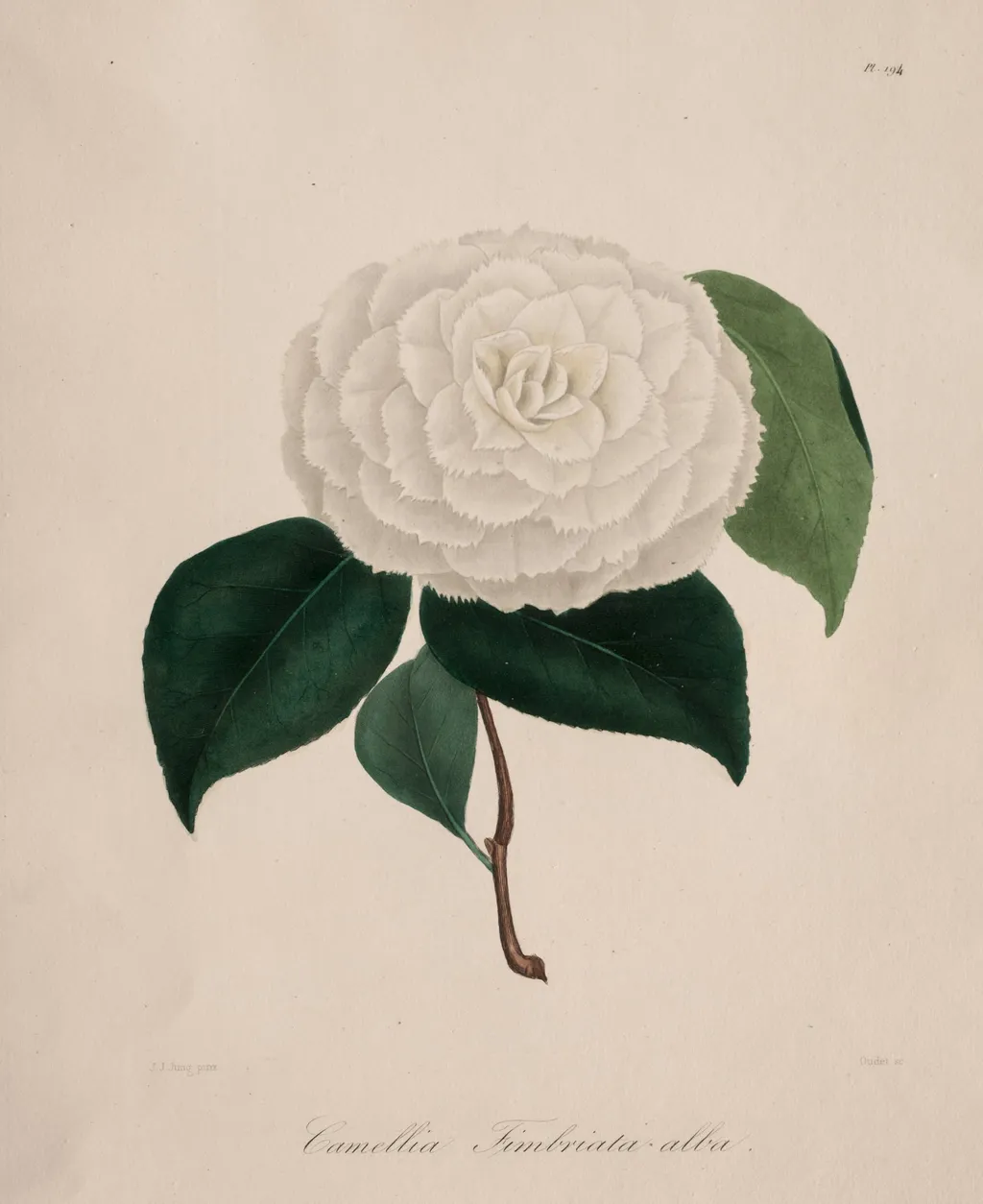
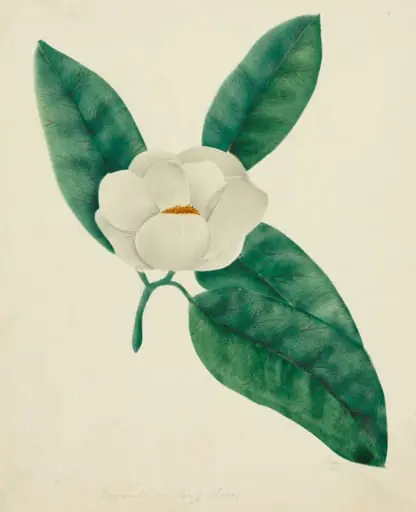
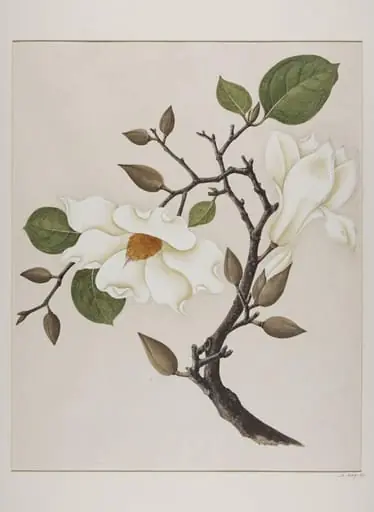
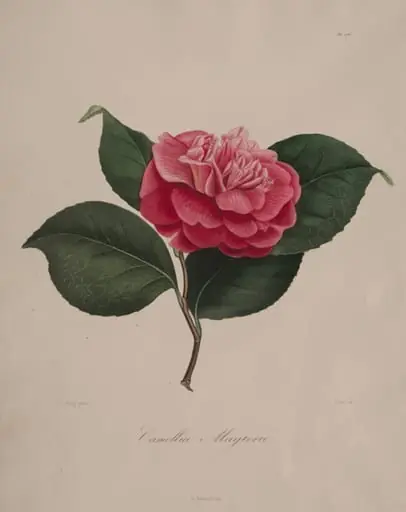
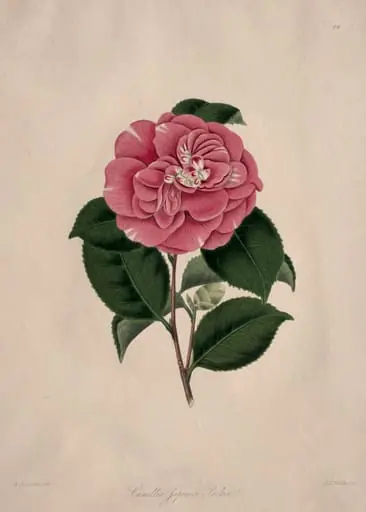
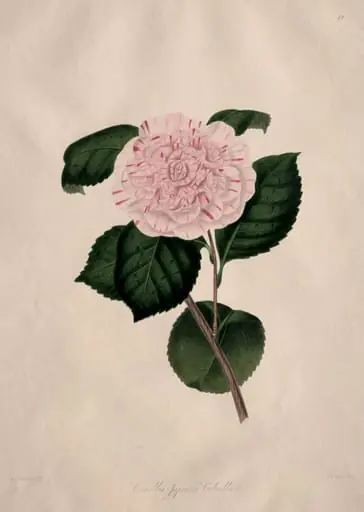
Iconographie du genre camellia: No. 194 is a print by the Romanticist artist Abbé Laurent Berlèse. It dates from 1841 and is held in the collection of the Cleveland Museum of Art. Created in 1841 by the French cleric and botanist Abbé Laurent Berlès, this botanical print depicts a solitary white camellia.
About this work
Overview
Created in 1841 by the French cleric and botanist Abbé Laurent Berlès, this botanical print depicts a solitary white camellia. The image is rendered on a plain background, emphasizing the flower’s form and its accompanying foliage. It is part of the collection of the Cleveland Museum of Art, where it is catalogued as item No. 194 in the series "Iconographie du genre Camellia."
Subject & Meaning
The illustration presents a single Camellia timbrata alba, showing the flower’s thick, layered petals and two glossy green leaves arranged oppositely on the stem. The precise labeling below the image identifies the species, indicating the work’s function as a scientific study rather than a decorative piece, intended to aid identification and classification of camellias.
Technique & Style
Executed with fine line work and subtle shading, the print captures delicate folds of the petals and the intricate venation of the leaves. The artist employed a restrained palette, relying on contrast between the white flower, green foliage, and the neutral background to highlight structural details essential for botanical documentation.
History & Provenance
The print was produced as part of Berlès’s larger project documenting camellia varieties, a popular horticultural pursuit in the 19th century. After changing hands among private collectors, it entered the Cleveland Museum of Art’s holdings, where it now serves as an example of period scientific illustration.
Context
During the early 1800s, European interest in exotic plants grew, prompting detailed visual records for gardeners and scholars. Berlès’s work reflects this trend, combining artistic skill with taxonomic precision, and contributes to the broader corpus of botanical prints that supported the exchange of horticultural knowledge across continents.
Artist & collection