Artwork
Chinese Tree Peony (Paeonia suffruticosa)
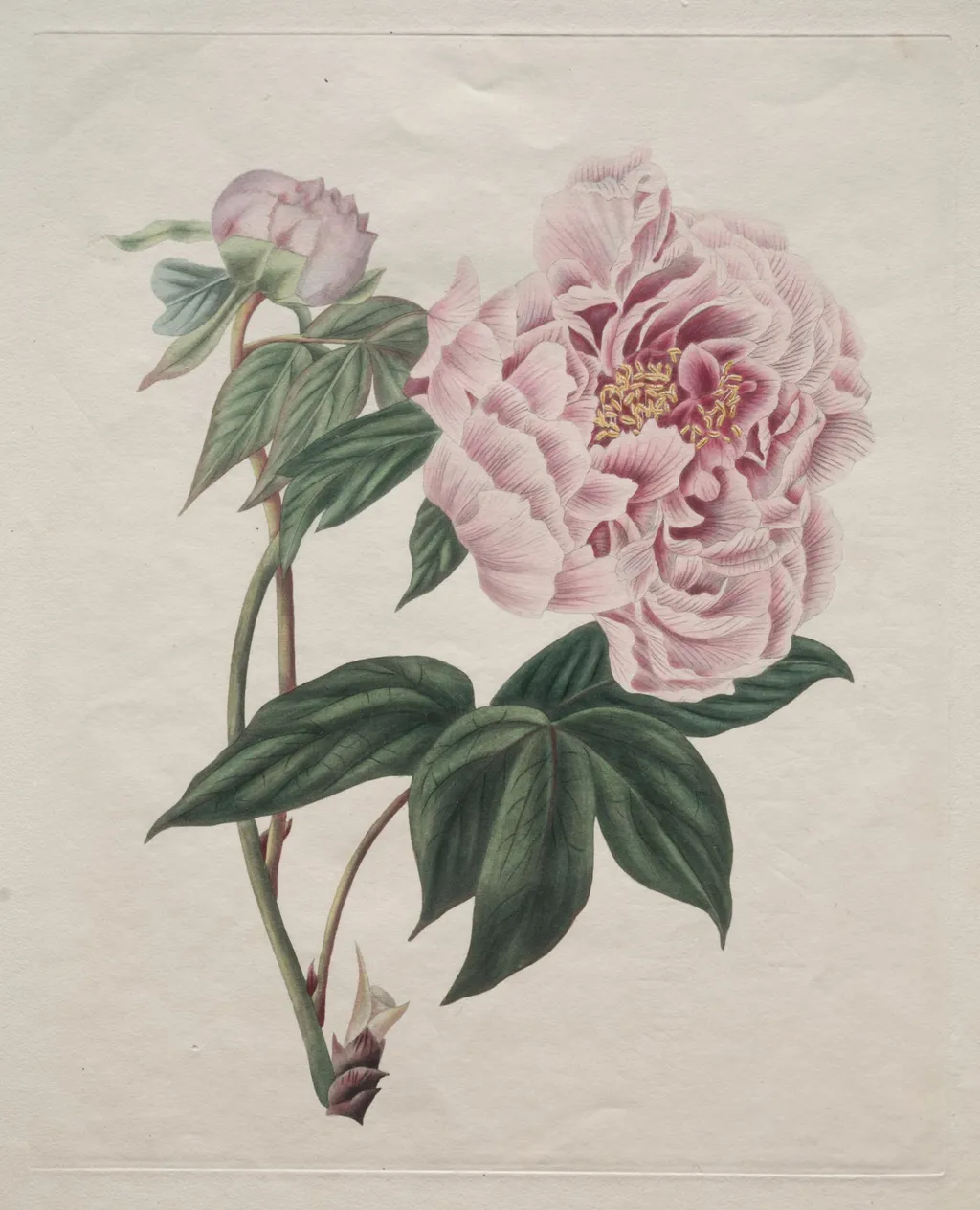
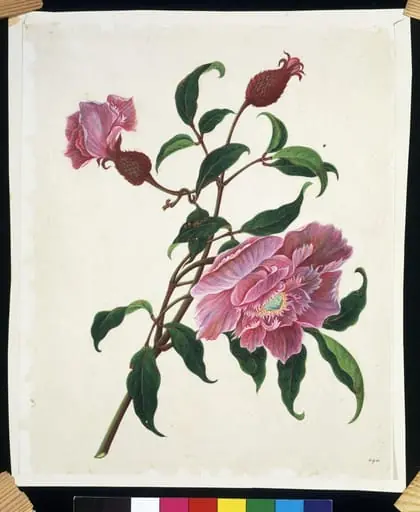
Chinese Tree Peony (Paeonia suffruticosa) is a print by the Romanticist artist Smith. It dates from 1820 and is held in the collection of the Cleveland Museum of Art.
About this work
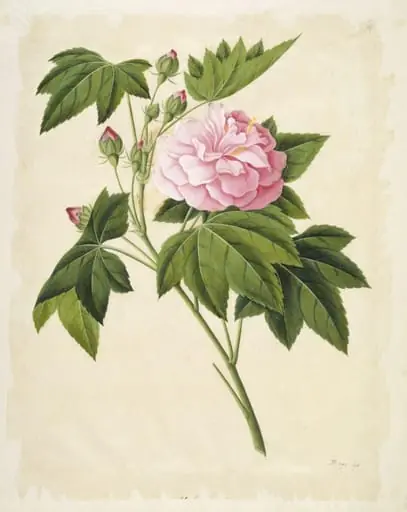
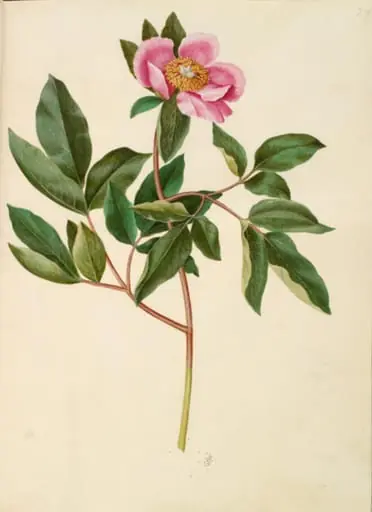
The painting shows a single pink peony flower on a dark background. Its petals look soft and real, with delicate shading. The leaves have sharp, bright edges.
This isn’t a Chinese artist’s work, but a British painter copied the flower. It was made around 1820, when British artists loved copying exotic plants.
Look for more like it at The Cleveland Museum of Art.
Overview
Created around 1820 by a British artist known only as Smith, this botanical print depicts the tree peony, a flowering shrub native to East Asia.
Created around 1820 by a British artist known only as Smith, this botanical print depicts the tree peony, a flowering shrub native to East Asia. It belongs to a broader tradition of European plant illustration that emerged during the early 19th century, when exotic flora from Asia and beyond were being systematically recorded for scientific and horticultural interest. The work reflects the era’s fascination with global botanical specimens and their careful visual documentation.
Subject & Meaning
The subject is a single bloom of Paeonia suffruticosa, rendered in soft pink tones against a dark, neutral background. The flower is presented without context—no soil, pot, or surrounding vegetation—emphasizing its form and structure. This isolation underscores its role as a specimen for study rather than a decorative composition, aligning with the goals of botanical science at the time: accurate representation over artistic embellishment.
Technique & Style
The artist employed fine, controlled brushwork to capture the delicate texture of the petals and the crisp edges of the leaves. Subtle gradations of tone model the flower’s volume, while the dark backdrop heightens contrast and focus. The style is meticulous and restrained, avoiding romanticized flourishes. This approach reflects the influence of scientific illustration, where clarity and precision took precedence over expressive interpretation.
History & Provenance
The print’s origins lie in Britain’s growing engagement with Asian flora during the early 1800s, fueled by colonial trade and botanical exchange. Though the artist’s full identity remains unknown, the work was likely produced for private collectors or institutions interested in exotic plants. Its current location at The Cleveland Museum of Art suggests it entered Western collections through 19th-century acquisitions of botanical art.
Context
During this period, European artists frequently reproduced Asian plants brought back by traders and explorers. The tree peony, prized in Chinese horticulture for centuries, became a symbol of exotic beauty in Western gardens and illustrated volumes. Such images served dual purposes: advancing botanical knowledge and satisfying public curiosity about distant lands, often without acknowledging their original cultural significance.
Legacy
This print stands as one of many examples of how non-European flora were visually appropriated into European scientific frameworks. While it preserves a detailed record of the tree peony’s form, it also reflects the era’s tendency to detach plants from their cultural origins. Today, such works are valued as historical artifacts, offering insight into the intersection of science, empire, and visual culture in the early 19th century.
Own this work as a print
Artist & collection