Artwork
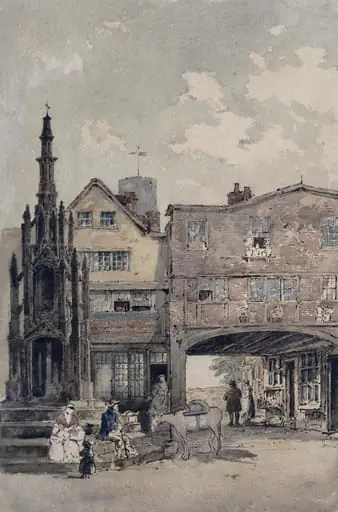
A street in Bristol with the tower of the Church of St. Mary Redcliffe
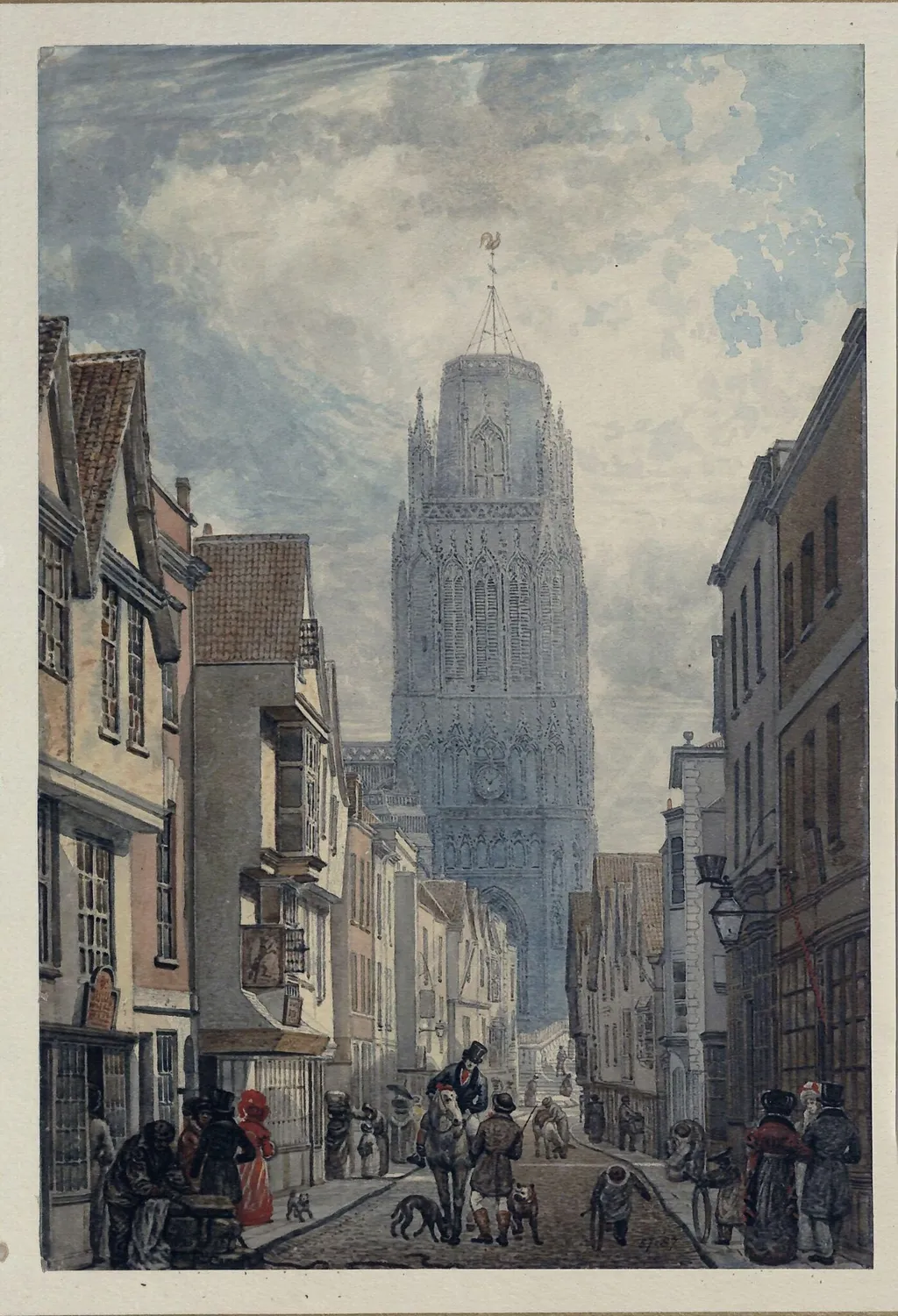
A street in Bristol with the tower of the Church of St. Mary Redcliffe is a watercolor work on paper by the British Romanticist artist Edward Cashin. It dates from 1825 and is held in the collection of the Victoria and Albert Museum.
About this work
Overview
Signed and dated by the artist, it belongs to a series of fifty topographical drawings commissioned by the antiquary G.
This watercolour, created by Edward Cashin in 1825, captures a quiet urban street in Bristol with the tower of St. Mary Redcliffe rising in the distance. Signed and dated by the artist, it belongs to a series of fifty topographical drawings commissioned by the antiquary G. W. Braikenridge between 1823 and 1826. The work was produced as a documentary record rather than a public exhibition piece, reflecting the antiquarian interest in preserving local architectural heritage.
Subject & Meaning
The scene presents an ordinary Bristol thoroughfare, framed by modest buildings and anchored by the prominent church tower. The focus on a local landmark, rather than a grand or dramatic subject, underscores the antiquarian aim of documenting everyday urban fabric. The composition avoids idealization, instead offering a quiet observation of place, aligning with early 19th-century efforts to preserve regional identity through visual record.
Technique & Style
Cashin employed transparent watercolour washes to suggest atmospheric depth and subtle shifts in light. The church tower, rendered with slightly sharper detail and cooler tones, stands out against the softer, muted hues of surrounding structures. The technique is restrained and precise, prioritizing clarity over expressive brushwork, consistent with topographical drawing conventions of the period rather than the emotive style often associated with Romanticism.
History & Provenance
The watercolour was part of a private collection assembled by G. W. Braikenridge and remained within Bristol’s antiquarian circles for much of the 19th century. It did not enter public view until later acquisition by the Victoria and Albert Museum. Its limited circulation reflects the niche audience for such topographical works, which were valued more for historical reference than artistic innovation.
Context
Produced during a period of rapid urban change in Bristol, Cashin’s drawings served as a visual archive of buildings and streetscapes at risk of alteration or demolition. While Romanticism emphasized emotion and nature, this work aligns more closely with the antiquarian movement’s commitment to factual documentation. The focus on architecture, not landscape or human drama, situates it within a scholarly tradition of regional preservation.
Legacy
Cashin’s series, including this watercolour, now serves as a valuable historical resource for scholars studying Bristol’s architectural evolution. Though not widely known in art history, the drawings offer an unembellished record of early 19th-century urban life. Their preservation in the V&A ensures continued access for researchers and those interested in the city’s material past.
Artist & collection
Artist
Edward J. Cashin was an American historian. He was Professor emeritus of History and Director of the Center for the Study of Georgia History at Augusta State University in Augusta, Georgia. Cashin was the author of many…

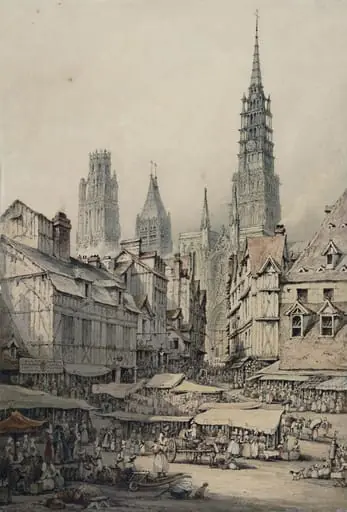 The Market Place at Rouen
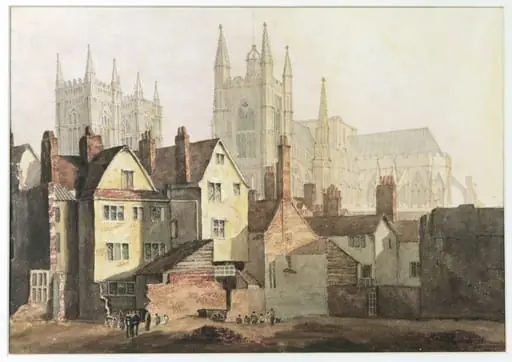 St. Margaret's, Westminster, and the abbey with old buildings in the foreground
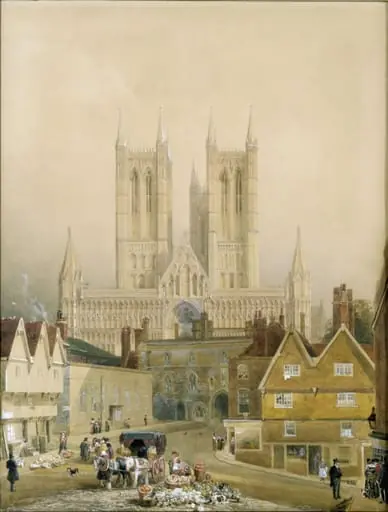 Lincoln Cathedral
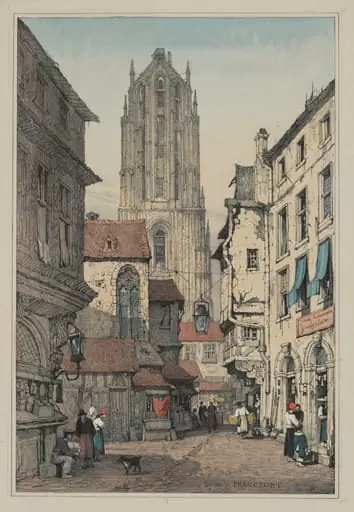 Facisimilies of Sketches made in Flanders and Germany: Dome, Francfort
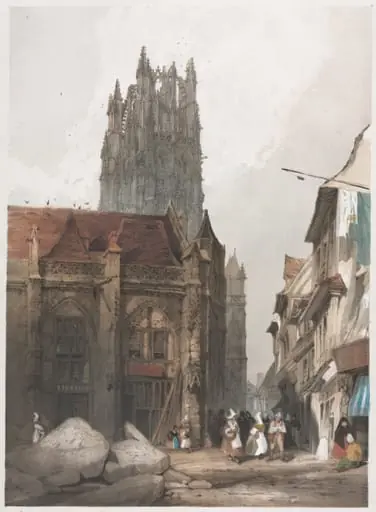 Picturesque Architecture in Paris, Ghent, Antwerp, Rouen: St. Laurent, Rouen, France
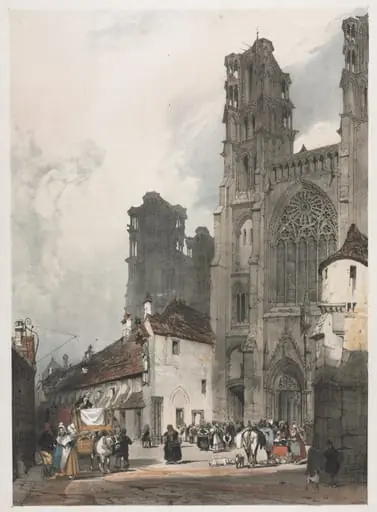 Picturesque Architecture in Paris, Ghent, Antwerp, Rouen: Laon, France
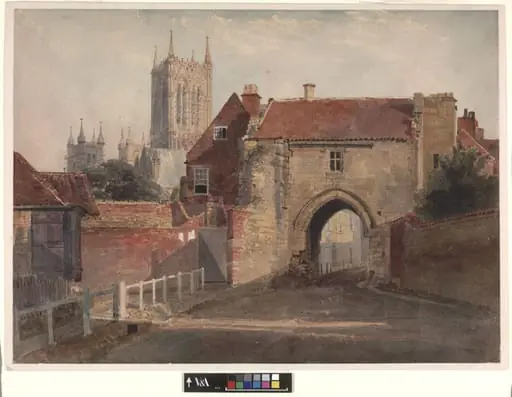 Potter Gate, Lincoln
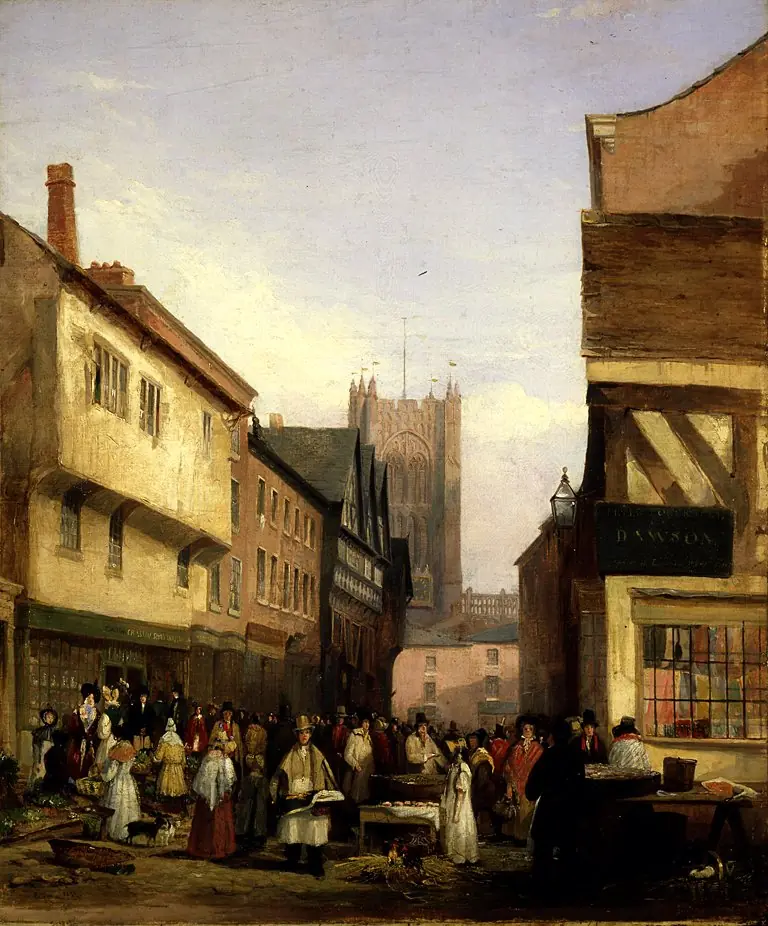 Market Scene
 The Butter-Cross, Winchester