Artwork
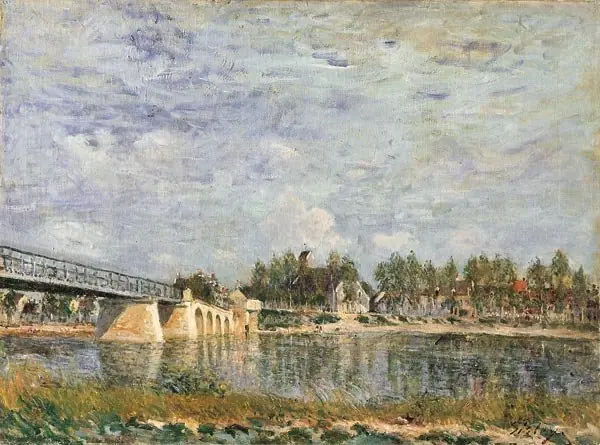
Bridge at Moret-sur-Loing
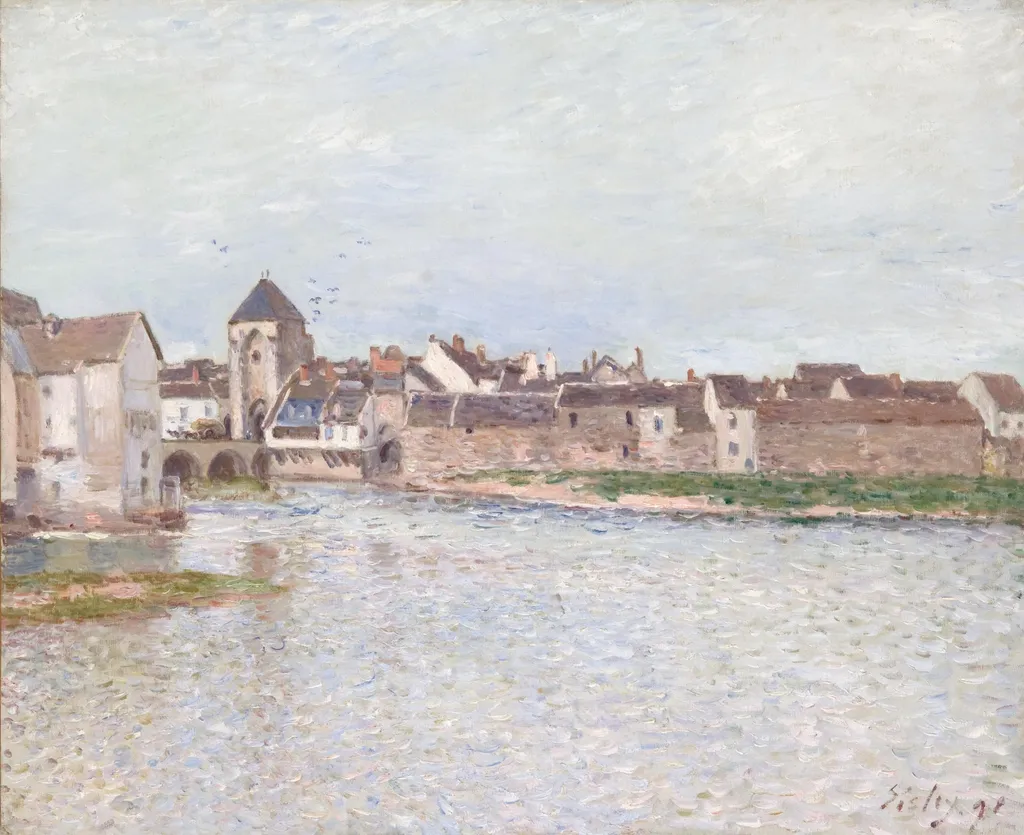
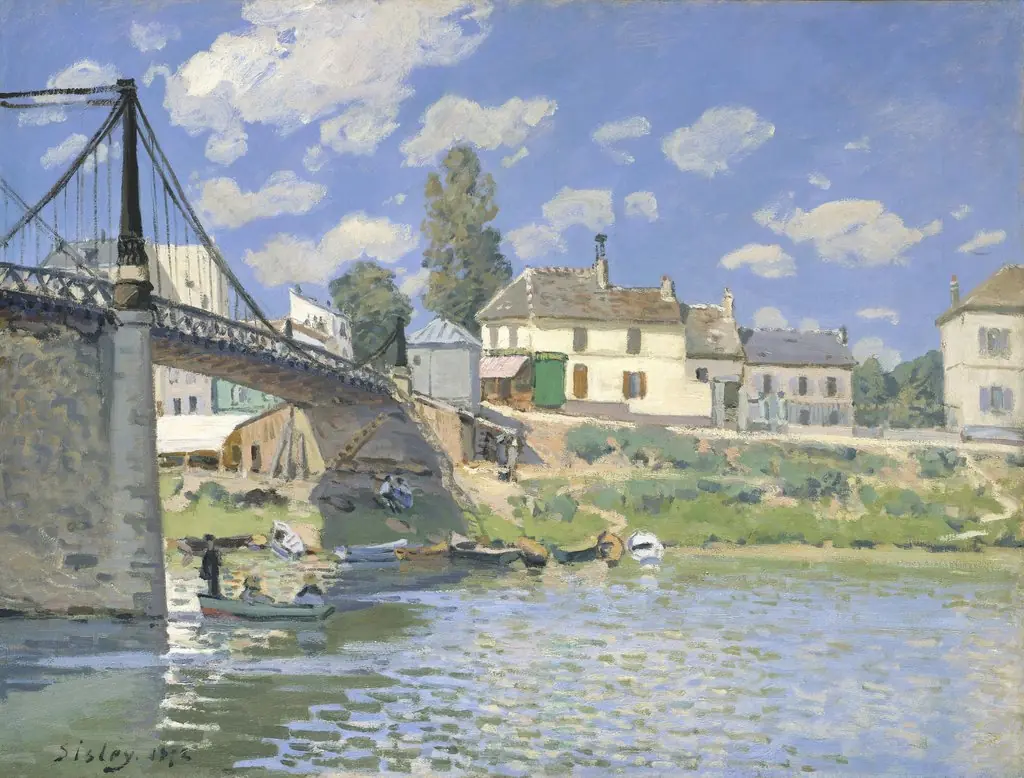
Bridge at Moret-sur-Loing is an oil painting by the Impressionist artist Alfred Sisley. It dates from 1896 and is held in the collection of the Philadelphia Museum of Art.
About this work
Overview
Painted in 1896, *Bridge at Moret-sur-Loing* is an oil on canvas landscape by Alfred Sisley, a British-born artist who lived and worked primarily in France.
Painted in 1896, *Bridge at Moret-sur-Loing* is an oil on canvas landscape by Alfred Sisley, a British-born artist who lived and worked primarily in France. The work exemplifies his lifelong commitment to capturing the subtleties of natural light and atmosphere through direct observation outdoors. It is part of a series of views Sisley made of the town of Moret-sur-Loing during the final years of his life, reflecting his enduring focus on quiet, unidealized rural scenes.
Subject & Meaning
The painting depicts a stone bridge with a pointed arch spanning the Loing River, with the town of Moret-sur-Loing rising gently behind it. Buildings with steeply pitched roofs and chimneys are arranged along the riverbank, their forms softened by distance and atmospheric haze. No human figures appear, emphasizing the stillness of the environment. The scene conveys a sense of quiet continuity, where architecture and nature coexist without drama or intervention.
Technique & Style
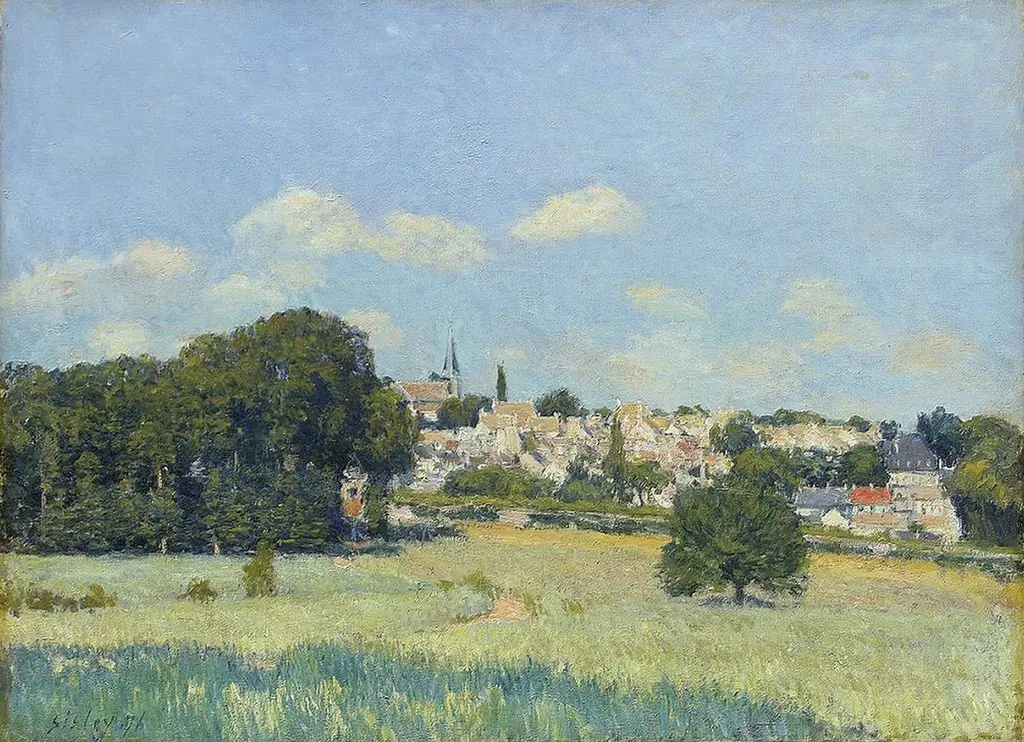
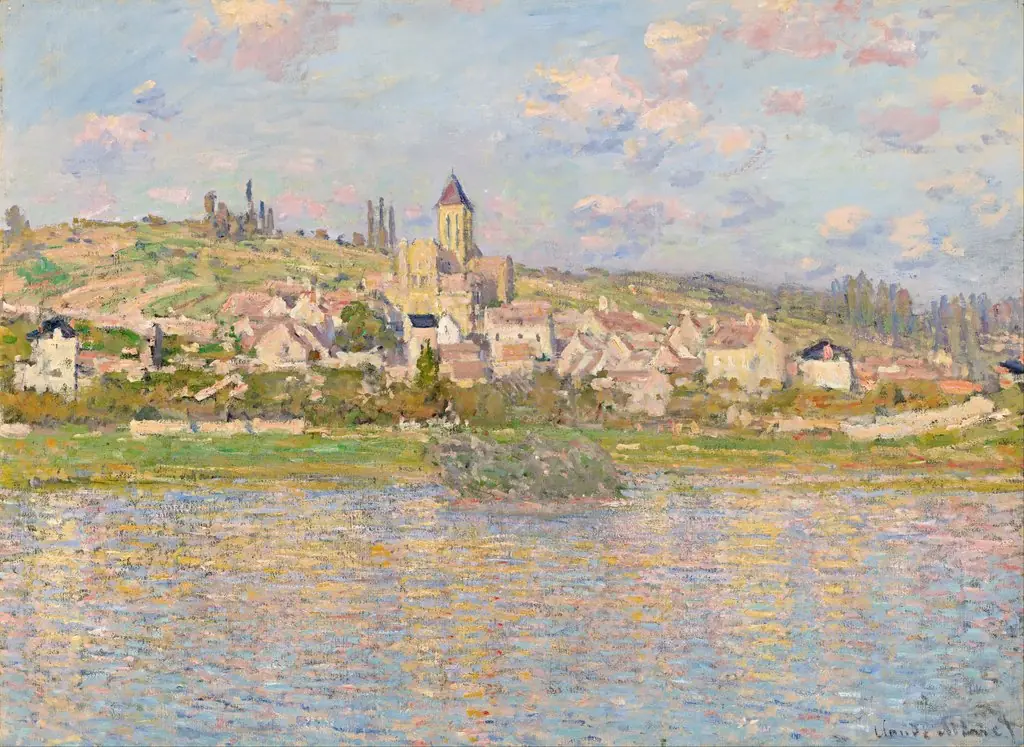
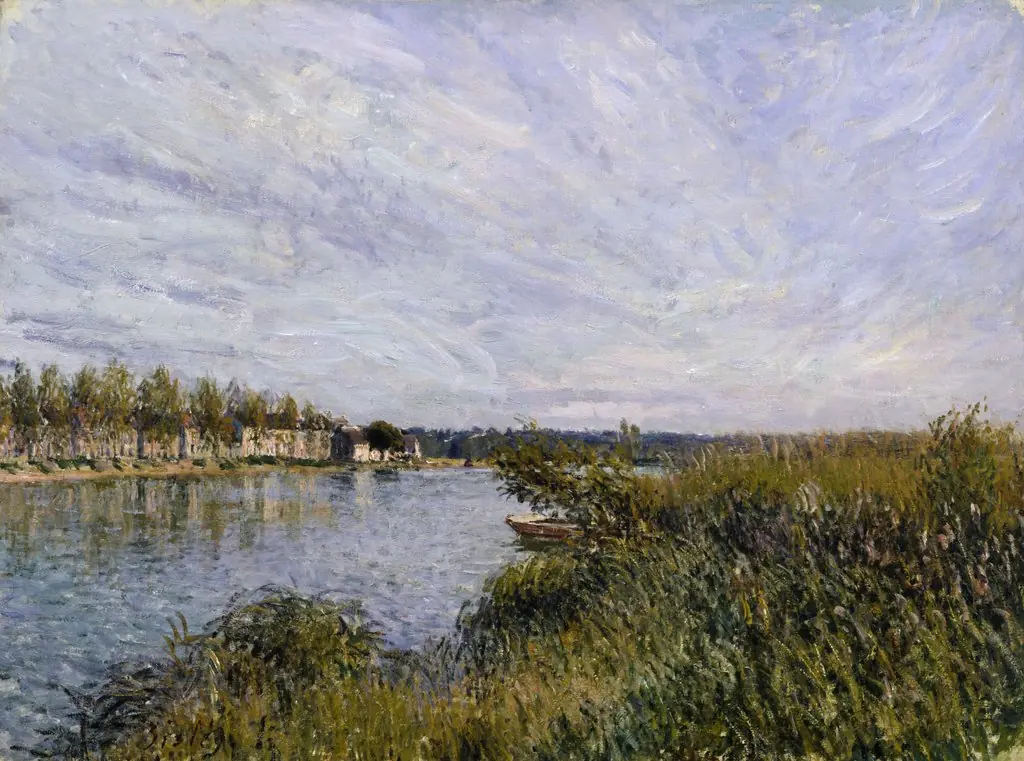
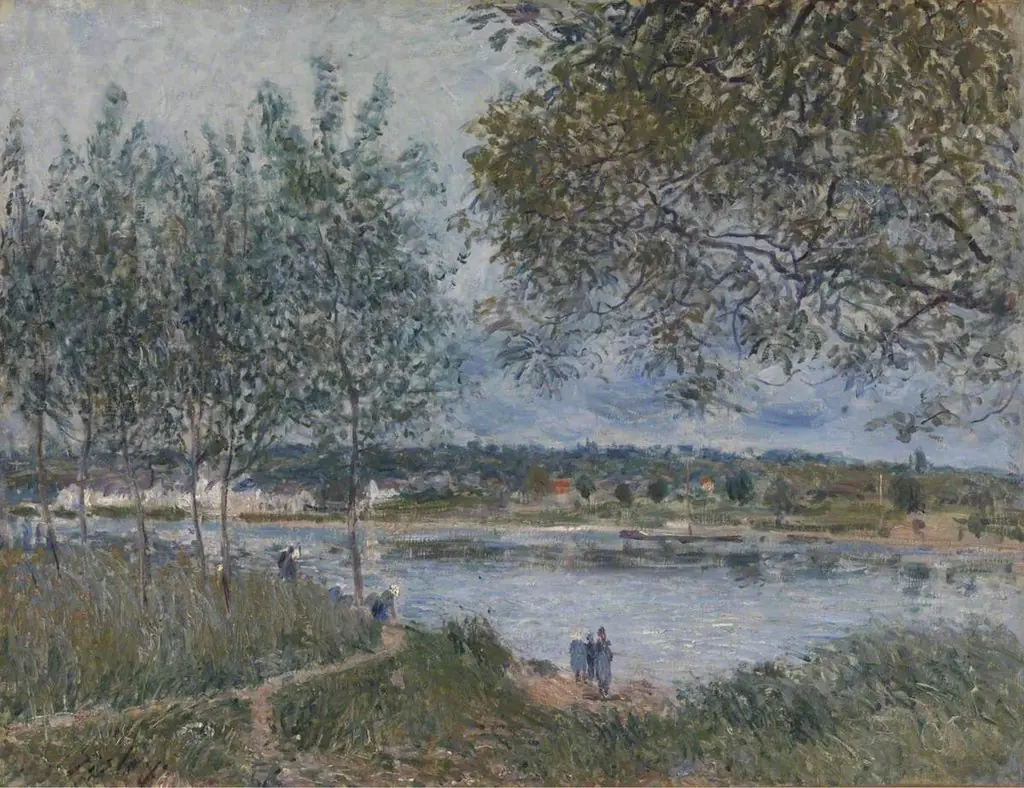
Sisley applied thin, broken brushstrokes to render the water’s surface and the diffused sky, creating a shimmering effect through layered hues of pale blue, gray, and muted green. The palette remains restrained, favoring soft pastels over bold contrasts. His method avoids sharp definition, instead allowing tones to blend optically, a hallmark of Impressionist technique. The brushwork suggests movement in the air and water without literal detail, prioritizing sensory impression over precision.
History & Provenance
Sisley painted this work during his final years, when he lived in Moret-sur-Loing and produced numerous views of its bridges and riversides. After his death in 1899, the painting remained in private hands until it entered the collection of the Philadelphia Museum of Art in 1953. It is one of several Sisley works in American institutions, reflecting early 20th-century interest in French Impressionism outside Europe.
Context
In the 1890s, Sisley was one of the few remaining artists who steadfastly adhered to Impressionist principles, even as younger painters moved toward Post-Impressionism. While others explored urban life or symbolic content, Sisley continued to focus on rural landscapes under changing weather and light. His work at Moret represents a quiet culmination of his career, situated between the fading ideals of Impressionism and the emerging modernist shifts in French art.
Legacy
Though less widely known than his contemporaries, Sisley’s dedication to landscape painting under natural conditions left a lasting imprint on the development of modern landscape art. *Bridge at Moret-sur-Loing* exemplifies his ability to convey tranquility through subtle tonal shifts and restrained composition. Today, it stands as a testament to the enduring power of observation over spectacle in the Impressionist tradition.
Own this work as a print
Artist & collection
Artist
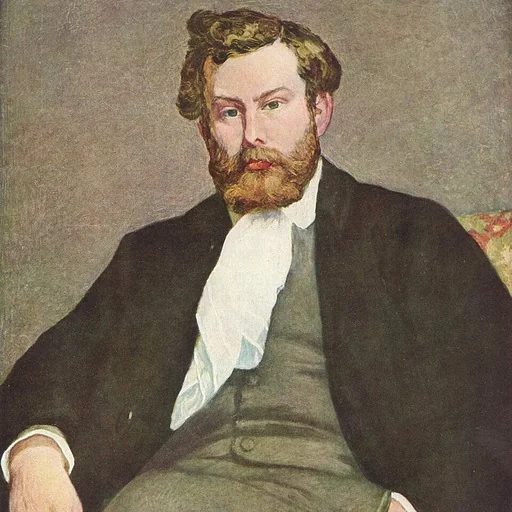
Alfred Sisley (; French: ; 30 October 1839–29 January 1899) was a French-Born British Impressionist landscape painter who was born to British parents, but spent most of his life in France.