Artwork
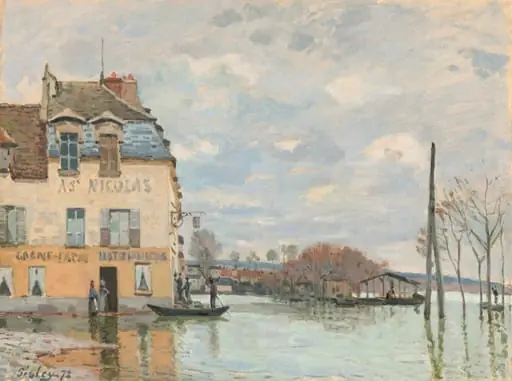
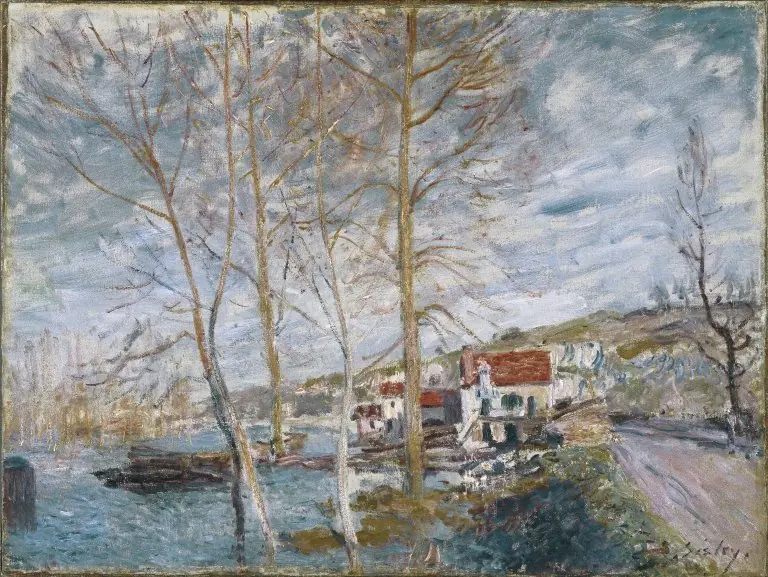
The Flood at Port Marly
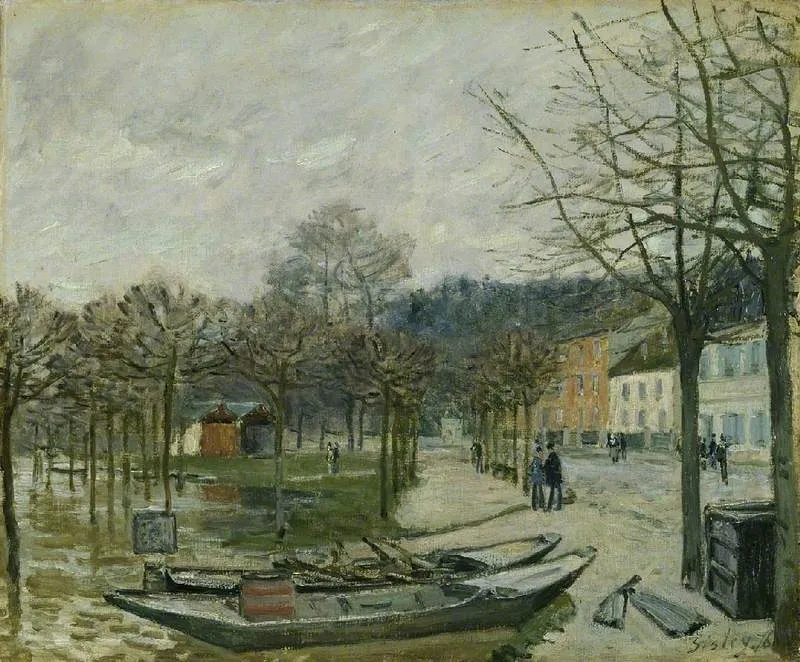
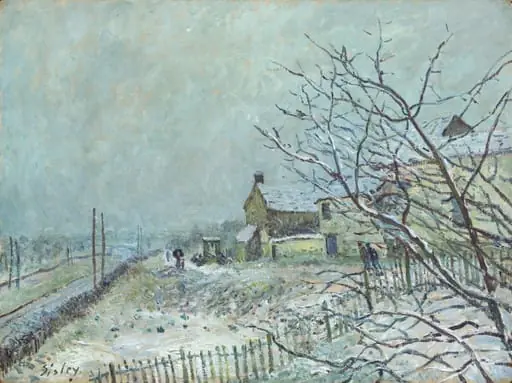
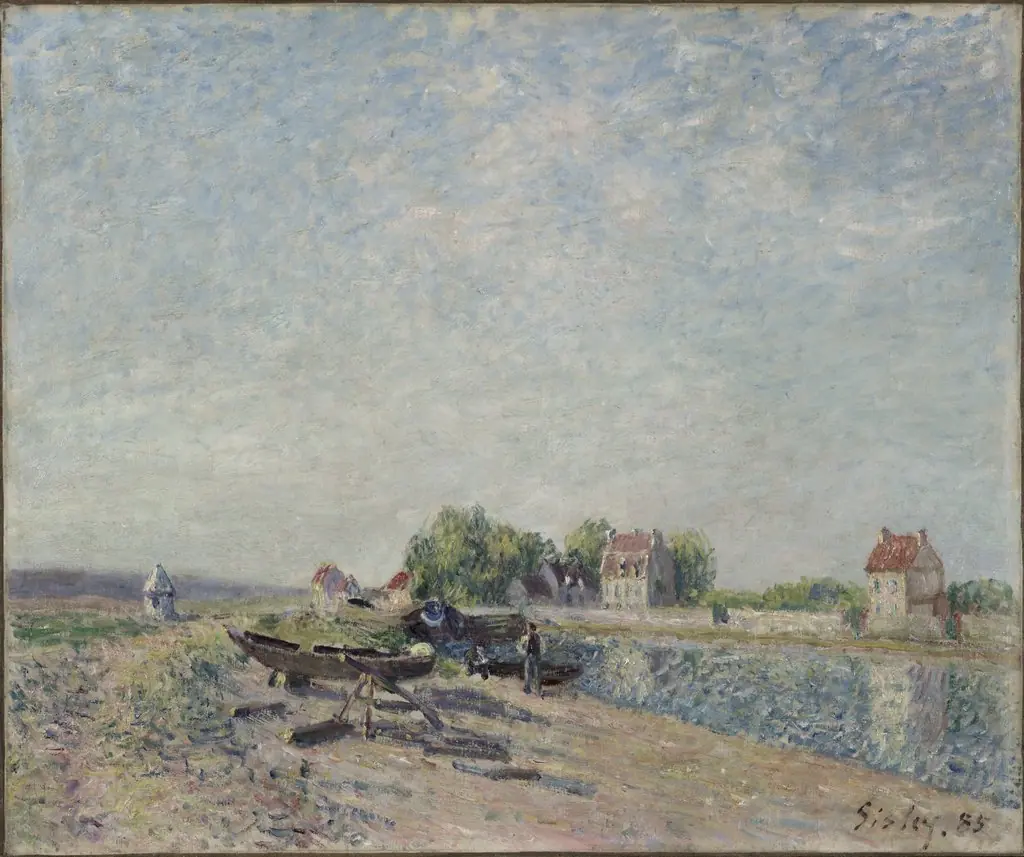
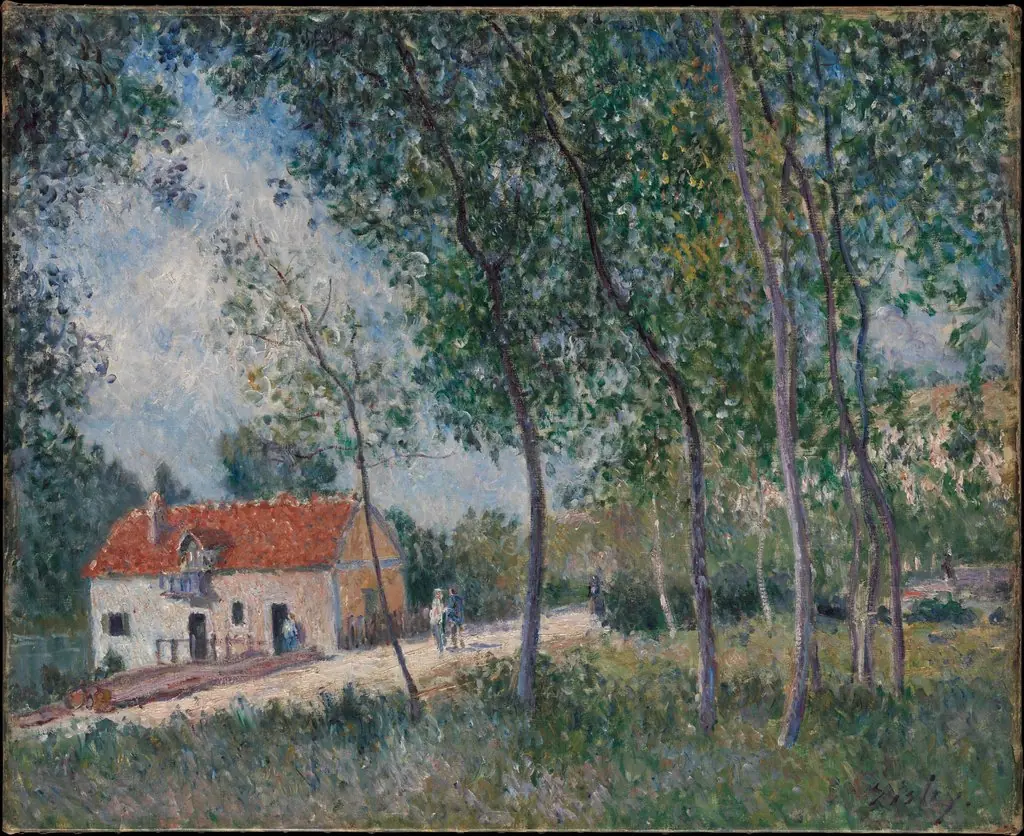
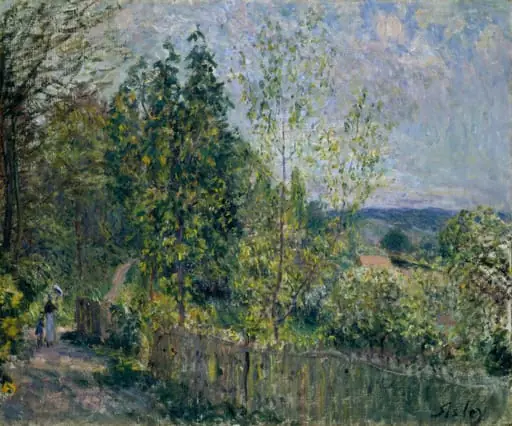
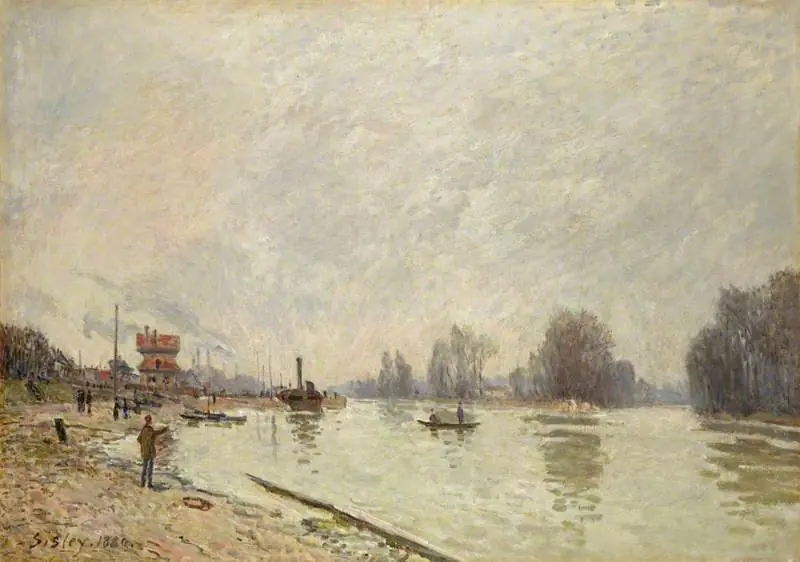
The Flood at Port Marly is an oil painting by the Impressionist artist Alfred Sisley. It dates from 1888 and is held in the collection of the Fitzwilliam Museum.
About this work
Overview
Painted in 1888, *The Flood at Port Marly* is an oil-on-canvas landscape by Alfred Sisley, a key figure in the Impressionist movement.
Painted in 1888, *The Flood at Port Marly* is an oil-on-canvas landscape by Alfred Sisley, a key figure in the Impressionist movement. Though born in Paris to British parents, Sisley lived and worked primarily in France, dedicating his career to capturing the subtle shifts of light and weather in rural settings. This work exemplifies his sustained commitment to painting outdoors, observing nature directly rather than composing in the studio.
Subject & Meaning
The painting portrays a quiet, submerged countryside near Port Marly, where rising waters have enveloped low-lying land. A single boat, tethered to a tree, suggests temporary abandonment rather than disaster. Distant buildings hint at human habitation, but no figures appear. The absence of drama or movement conveys a meditative stillness, emphasizing nature’s quiet dominance over the built environment during seasonal inundation.
Technique & Style
Sisley applied thin, layered strokes of oil paint to capture the diffuse light of an overcast day. His palette favors muted grays, soft greens, and pale blues, avoiding sharp contrasts. Brushwork is loose yet deliberate, rendering water, foliage, and sky with equal sensitivity. The composition directs attention to the horizontal plane of the flood, with the sky occupying nearly half the canvas to reinforce the atmosphere’s weight and stillness.
History & Provenance
Created during the final decade of Sisley’s life, the painting remained in private hands until it entered the Fitzwilliam Museum’s collection in 1917. It was acquired through the bequest of Sir Richard Wallace, a noted collector of Impressionist works. The painting’s provenance reflects its modest reception during Sisley’s lifetime, as he rarely achieved commercial success despite his consistent participation in Impressionist exhibitions.
Context
In the late 1880s, Sisley increasingly turned to scenes of the Seine valley, where seasonal floods transformed familiar landscapes. While other Impressionists explored urban life or figure studies, Sisley remained focused on rural tranquility. *The Flood at Port Marly* aligns with his lifelong interest in atmospheric conditions and the quiet rhythms of nature, distinguishing him from contemporaries who embraced modernity more overtly.
Legacy
Though less celebrated than Monet or Renoir during his lifetime, Sisley’s dedication to landscape and light has earned him recognition as a quiet but essential voice in Impressionism. *The Flood at Port Marly* exemplifies his ability to convey emotional resonance through restraint. Today, it stands as a testament to his unwavering focus on nature’s subtleties, influencing later generations of landscape painters seeking serenity over spectacle.
Artist & collection

Artist
Alfred Sisley (; French: ; 30 October 1839–29 January 1899) was a French-Born British Impressionist landscape painter who was born to British parents, but spent most of his life in France.