Artwork
The Seine at Port-Marly, Piles of Sand
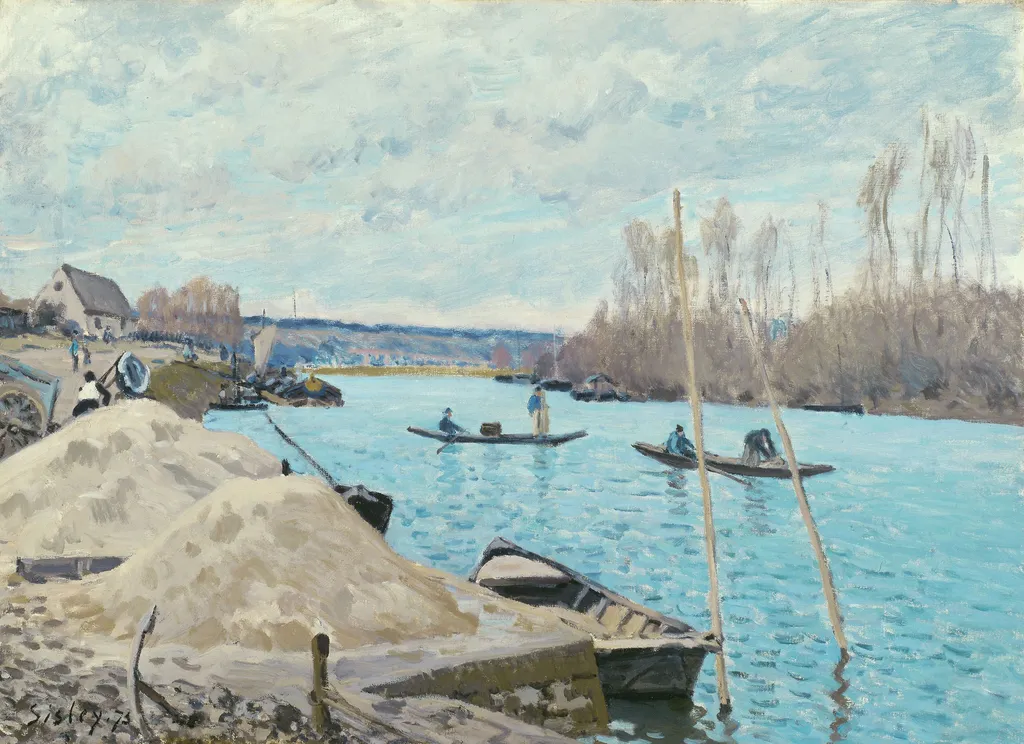
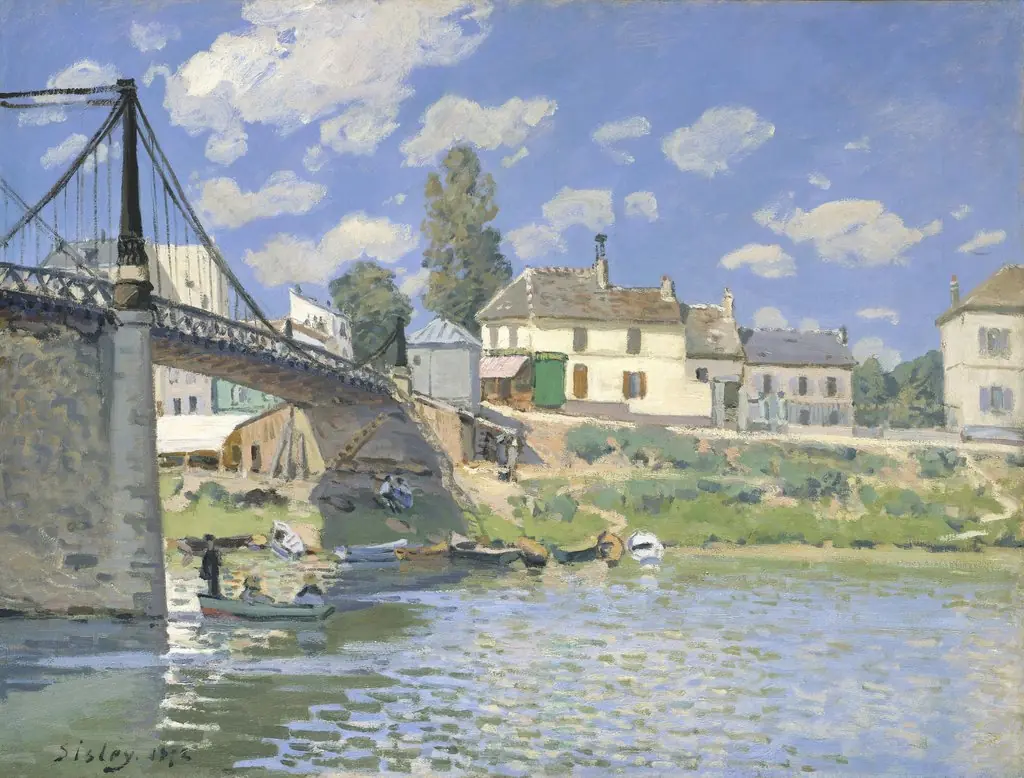
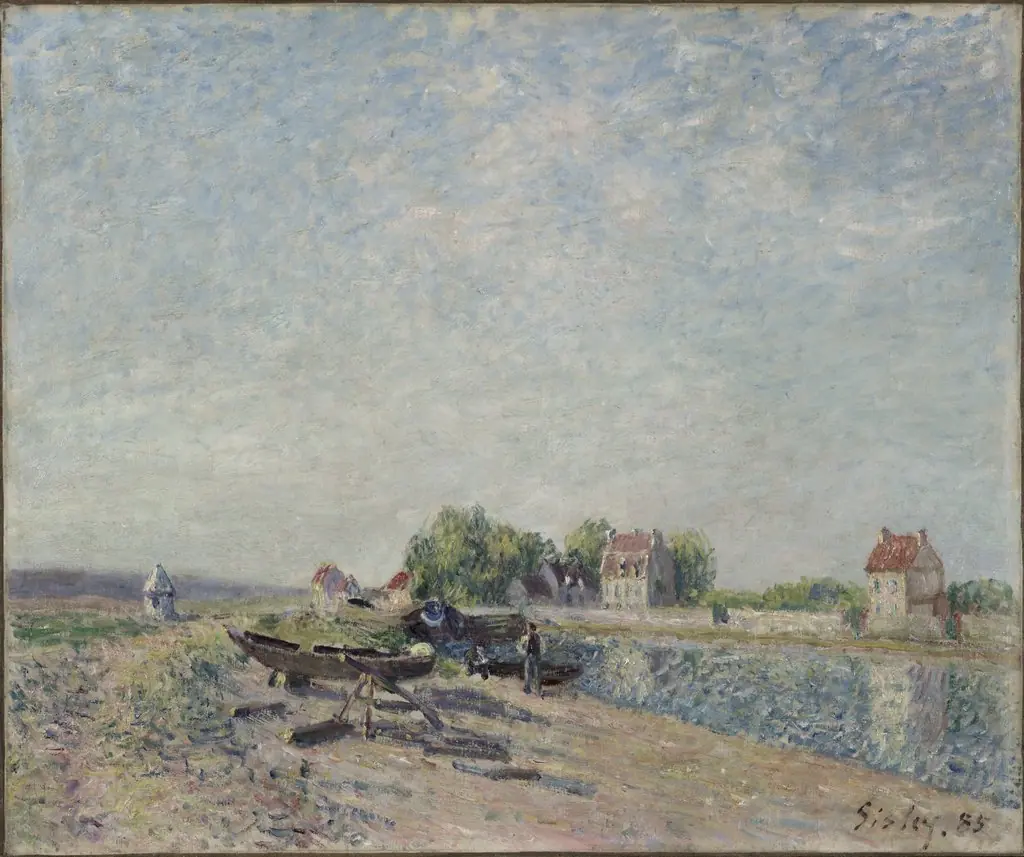
The Seine at Port-Marly, Piles of Sand is an oil painting by the Impressionist artist Alfred Sisley. It dates from 1875 and is held in the collection of the Art Institute of Chicago.
About this work
Overview
The work captures workers on a barge dredging sediment to maintain shipping channels, a practical function rarely emphasized in contemporary art.
Painted in 1875 by Alfred Sisley, this oil on canvas depicts a quiet stretch of the Seine near Port-Marly, focusing on the industrial activity of sand extraction rather than the leisurely scenes typical of Impressionist river views. The work captures workers on a barge dredging sediment to maintain shipping channels, a practical function rarely emphasized in contemporary art. Sisley’s attention to labor and landscape reflects his interest in the river’s economic role.
Subject & Meaning
The painting centers on two laborers operating a flat-bottomed barge, removing sand to keep the Seine navigable for freight barges linking Paris and Le Havre. Unlike the recreational depictions favored by many of his peers, Sisley highlights the river as a working artery. The presence of the paper factory, with its smoke vented through the gable rather than a chimney, underscores the quiet integration of industry into the rural riverscape, suggesting a nuanced view of modernization.
Technique & Style
Sisley employs loose, rapid brushwork to convey the texture of water and the softness of light, characteristic of Impressionist practice. The ochre tones of the sand piles contrast deliberately with the cool turquoise of the river, enhancing spatial depth. Thin, broken strokes define the sky and distant trees, while the water’s surface is rendered with flickering highlights. The absence of heavy impasto keeps the focus on atmosphere rather than tactile surface.
History & Provenance
The painting was held by Dr. Georges Viau, a Parisian dentist and collector, before being acquired by the Durand-Ruel gallery in 1907, which attempted but failed to sell it. In 1920, Galerie Bernheim-Jeune purchased it, and by the early 1930s, it entered the collection of Martin A. Ryerson. Upon his death in 1933, Ryerson bequeathed the work to the Art Institute of Chicago, where it has remained in the Impressionist galleries since.
Context
Sisley painted multiple works at Port-Marly during the mid-1870s, drawn to the sand-quarrying industry that supported regional commerce. This series diverged from the dominant Impressionist focus on leisure, instead documenting the river’s utilitarian function. The removal of the factory’s chimney in this version, compared to his earlier Sand Quay, suggests a deliberate compositional choice to soften industrial intrusion while preserving its presence.
Legacy
The painting stands as a quiet testament to Sisley’s commitment to capturing the everyday rhythms of the French countryside, even when they involved labor rather than recreation. While less celebrated than the works of Monet or Renoir, it contributes to a broader understanding of Impressionism’s engagement with economic and environmental change. Its presence in a major American museum underscores its role in shaping international appreciation for Sisley’s nuanced vision.
Own this work as a print
Artist & collection

Artist
Alfred Sisley (; French: ; 30 October 1839–29 January 1899) was a French-Born British Impressionist landscape painter who was born to British parents, but spent most of his life in France.