Artwork
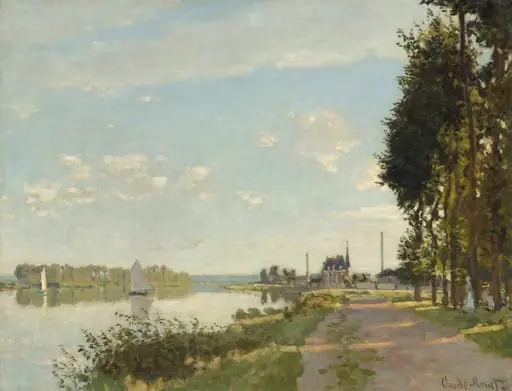
Landscape. Seine at Asnieres
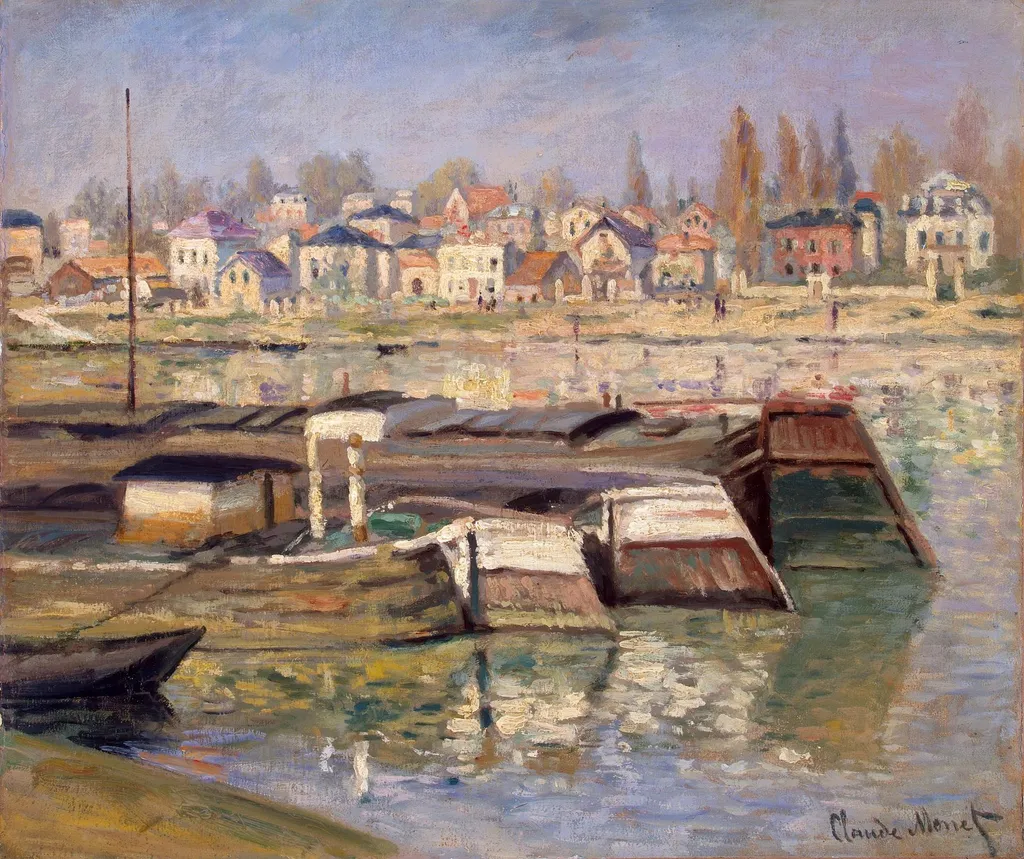
Landscape. Seine at Asnieres is an oil painting by the Impressionist artist Claude Monet. It dates from 1873 and is held in the collection of the Hermitage Museum. Painted in 1873, Landscape.
About this work
Overview
Seine at Asnières is an oil on canvas work by Claude Monet depicting a quiet stretch of the Seine near the town of Asnières, northwest of Paris.
Painted in 1873, Landscape. Seine at Asnières is an oil on canvas work by Claude Monet depicting a quiet stretch of the Seine near the town of Asnières, northwest of Paris. The painting entered the Hermitage Museum’s collection after being taken from a private German-owned collection following World War II, and it has been publicly exhibited since 1995. Created shortly after Impression, Sunrise, it reflects Monet’s early exploration of light and modern landscape.
Subject & Meaning
The scene captures the Seine at dusk, with moored barges, modest brick and gritstone homes along the opposite bank, and sparse trees marking the edge of a developing suburb. Asnières, recently connected to Paris by rail, was transitioning from rural to industrial, and Monet’s depiction avoids idealization, instead recording the quiet presence of working-class life and the subtle encroachment of urbanization on the riverbank.
Technique & Style
Monet applied thick, visible brushstrokes to convey the texture of water, sky, and foliage, using a restrained palette of soft pinks, blues, and grays. The light appears diffused, suggesting a hazy afternoon. The impasto technique lends a tactile quality to the surface, particularly in the reflections on the river, while the composition remains open and unstructured, emphasizing atmosphere over detail.
History & Provenance
The painting was owned by Alice Meyer, widow of Hamburg merchant Eduard Lorenz-Meyer, before being seized by Soviet forces after World War II as part of war reparations. It remained in Soviet state collections until its public display in 1995. Its journey from private German ownership to a Russian museum reflects the turbulent redistribution of art following the war.
Context
Monet painted this scene while living in Argenteuil, a neighboring riverside town that became a hub for Impressionist artists. Asnières, newly accessible by train, attracted workers and lower-middle-class residents building homes along the Seine. The painting documents this shift, capturing the quiet integration of industry and domestic life within a natural setting.
Legacy
Though less widely known than Monet’s later works, this painting exemplifies his early commitment to painting modern life outdoors. Its restrained tones and focus on everyday riverside activity helped shape the Impressionist approach to landscape, emphasizing transient light and contemporary subject matter over traditional historical or romantic themes.
Own this work as a print
Artist & collection
Artist
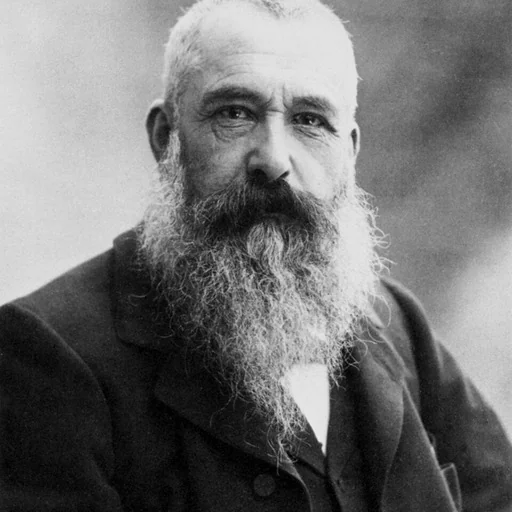
Oscar-Claude Monet was born in Paris on November 14, 1840, and raised from the age of five in Le Havre, where he began selling charcoal caricatures as a teenager.

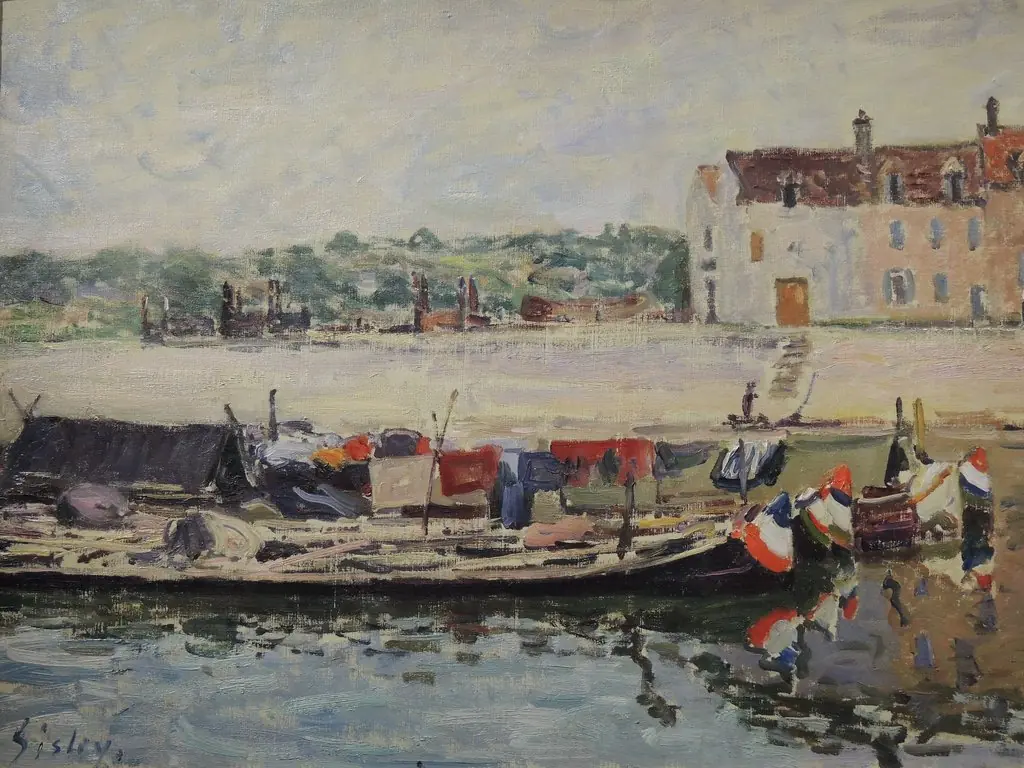 Barges at Saint Mammès
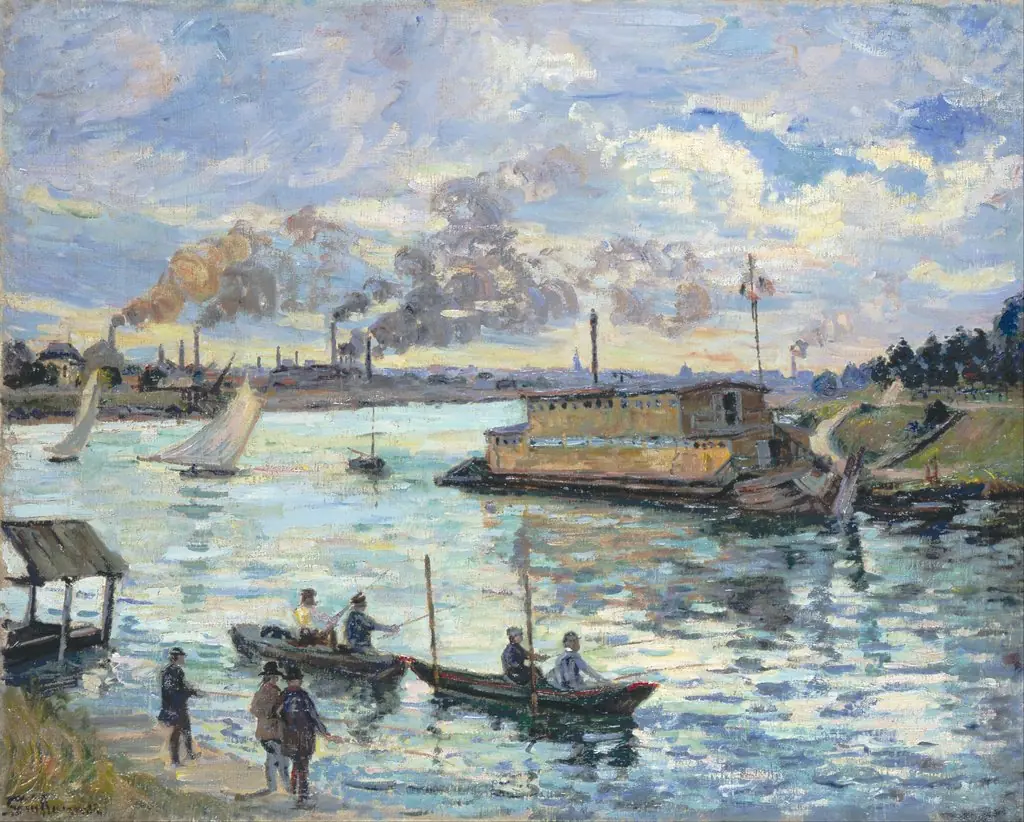 River Scene
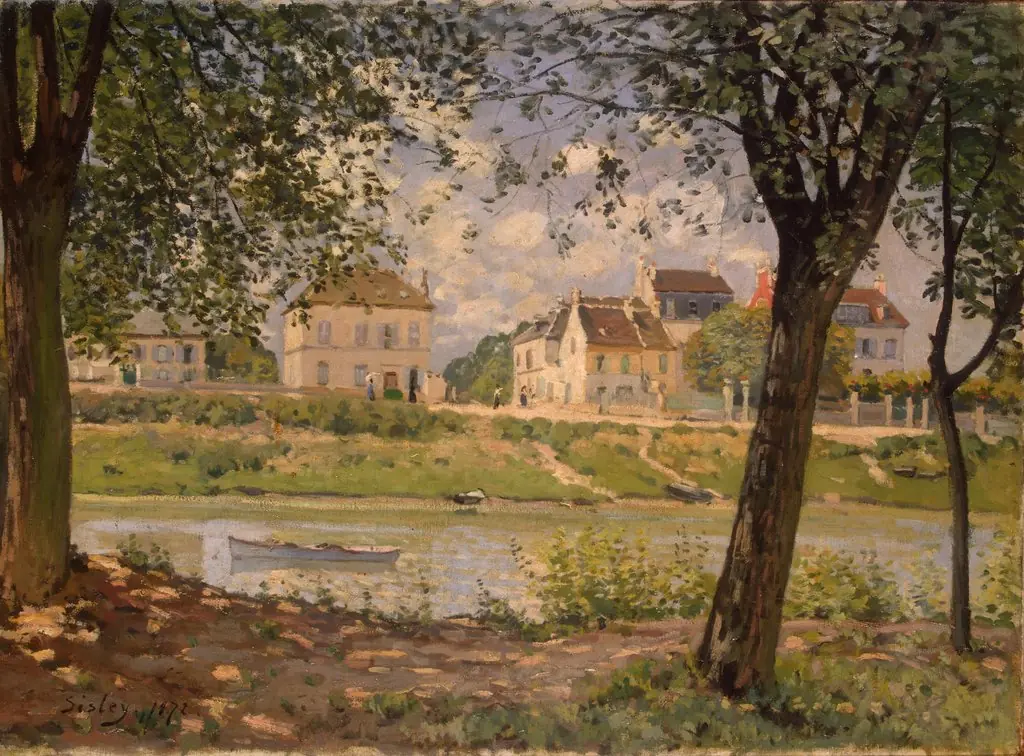 Village on the Banks of the Seine
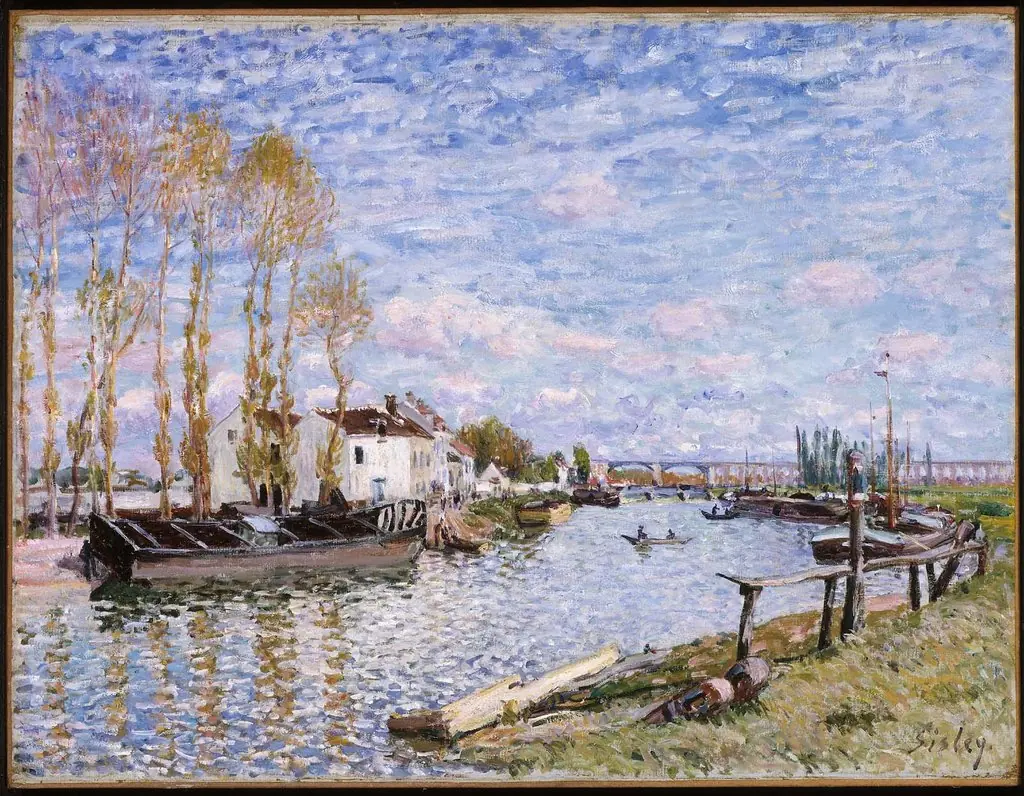 The Loing at Saint-Mammès
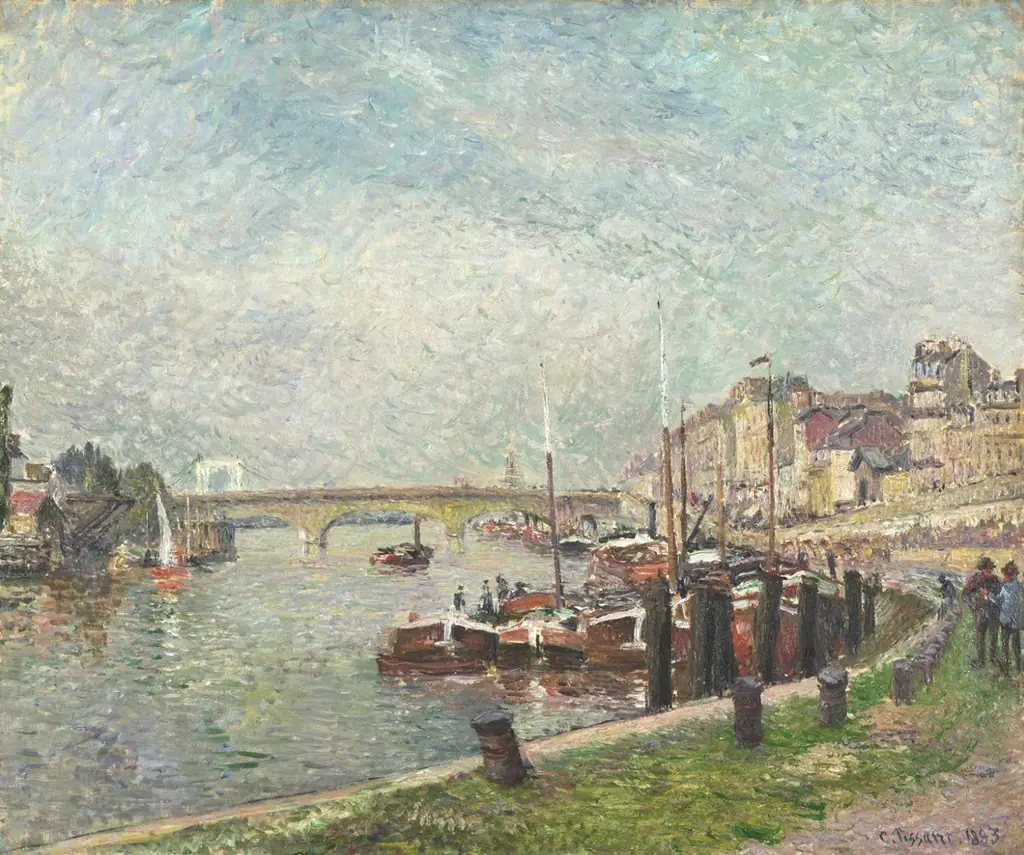 Quai Napoléon, Rouen
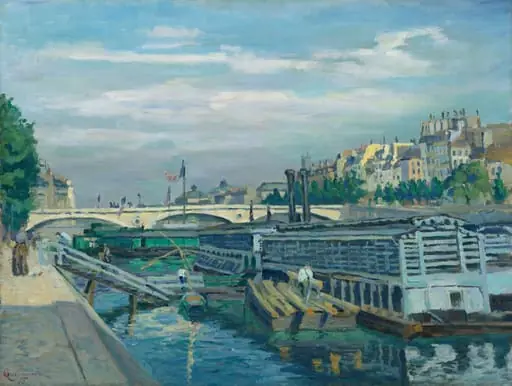 The Bridge of Louis Philippe
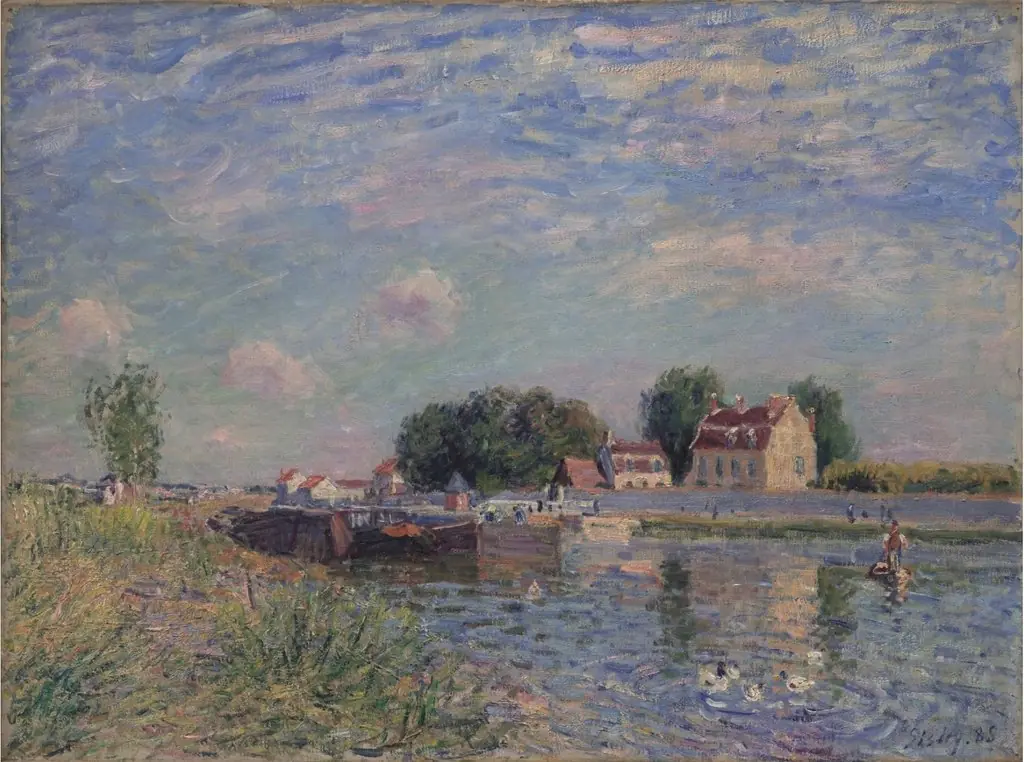 The Canal at Saint-Mammes
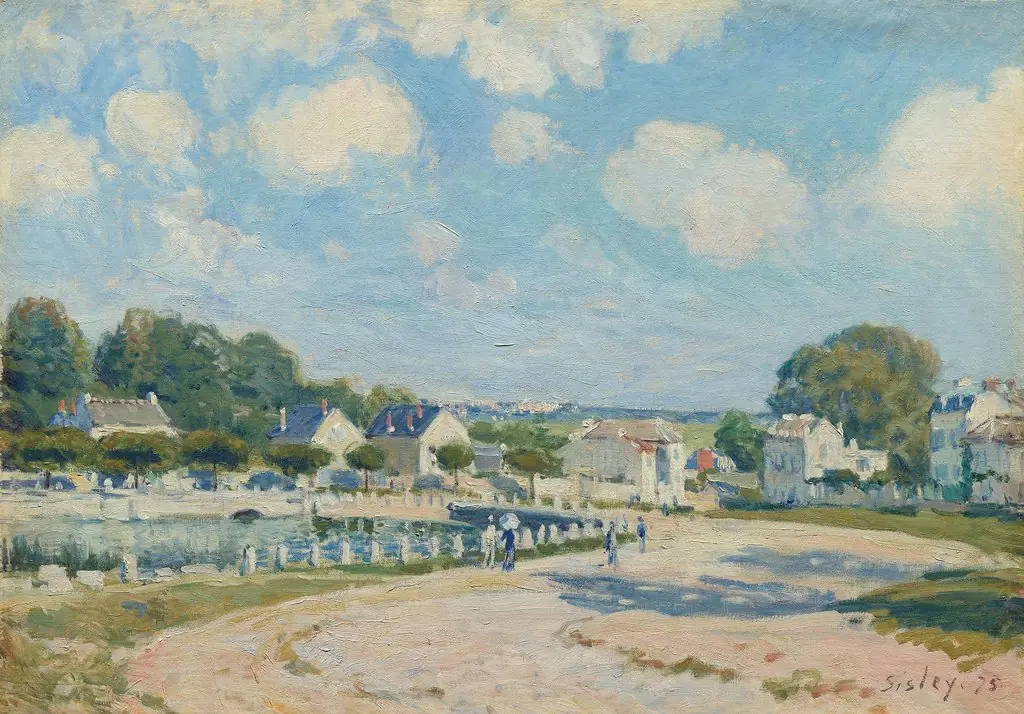 Watering Place at Marly
 Watering Place at Marly
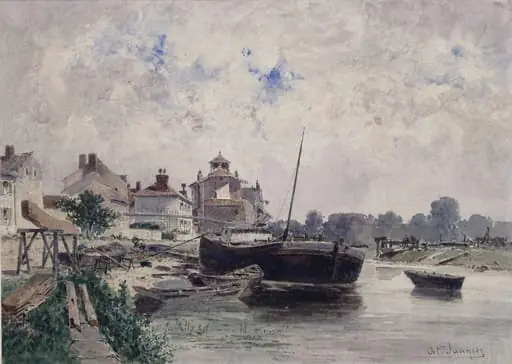 Landscape with river
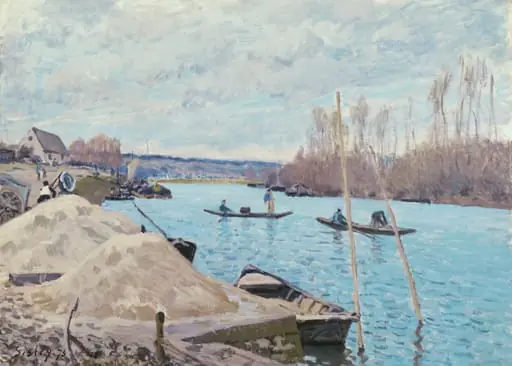 The Seine at Port-Marly, Piles of Sand
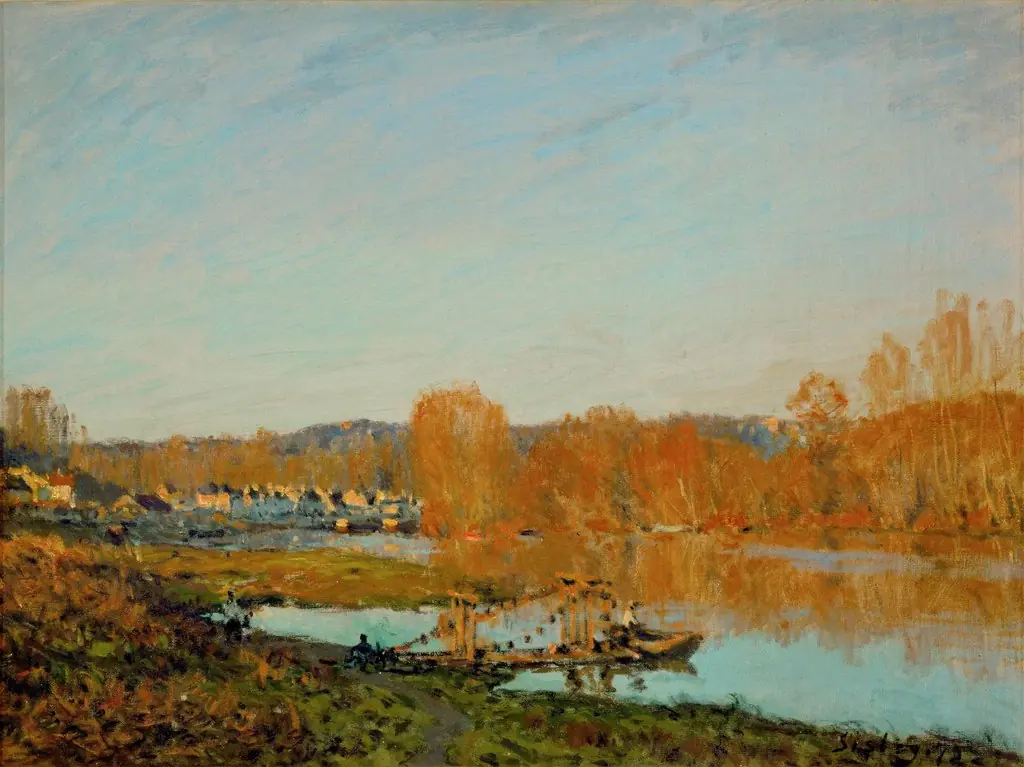 Autumn: Banks of the Seine near Bougival