Artwork
Reynard the Fox: Reynard Continues His Story
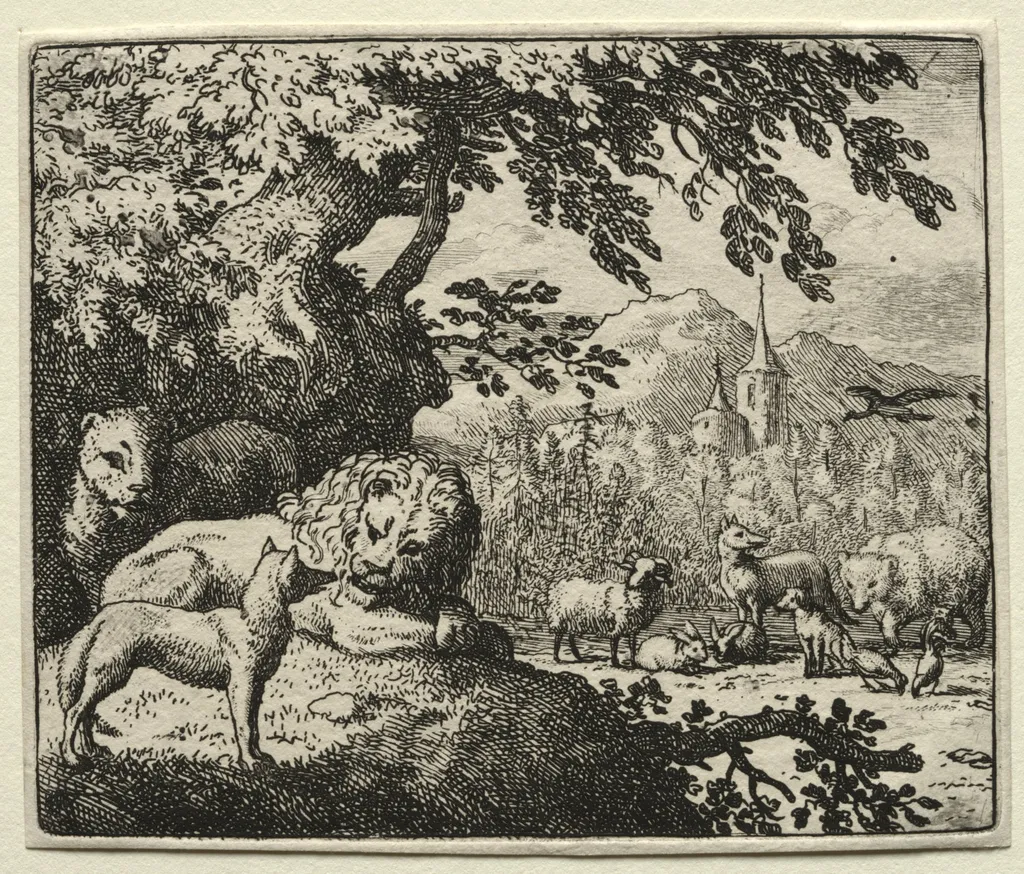
Reynard the Fox: Reynard Continues His Story is a print by the Baroque artist Allart van Everdingen. It dates from 1662 and is held in the collection of the Cleveland Museum of Art.
About this work
Overview
Created in 1662 by Dutch artist Allart van Everdingen, this print illustrates a scene from the medieval Reynard the Fox cycle, a series of animal fables with satirical undertones. Executed in etching and mezzotint, the work belongs to The Cleveland Museum of Art’s collection and exemplifies van Everdingen’s interest in narrative-driven subjects drawn from popular literature and folklore rather than religious or mythological traditions.
Subject & Meaning
The scene depicts Reynard, the cunning fox, addressing a circle of woodland animals, each reacting with varied expressions of attention or skepticism.
The scene depicts Reynard, the cunning fox, addressing a circle of woodland animals, each reacting with varied expressions of attention or skepticism. The narrative likely captures a moment of persuasion or deception, central to Reynard’s role as a trickster figure. The gathering of diverse species reflects the fable’s allegorical structure, using animal behavior to critique human society, particularly its hierarchies and moral hypocrisy.
Technique & Style
Van Everdingen employed fine-line etching and richly textured mezzotint to render fur, feathers, and foliage with remarkable precision. The dark, atmospheric background enhances the figures’ three-dimensionality, while subtle tonal gradations give depth without relying on bright color. His technique prioritizes chiaroscuro and tactile realism over theatricality, aligning with Northern European printmaking traditions of the period.
History & Provenance
The print was produced during van Everdingen’s mature period, following his travels to Scandinavia and his growing reputation for landscape and narrative prints. It entered The Cleveland Museum of Art’s collection in the 20th century, likely through a broader acquisition of Dutch graphic works. Its survival in good condition reflects its appeal to collectors interested in illustrated literature and early modern print culture.
Context
In 17th-century Europe, Reynard tales remained widely circulated in printed chapbooks and illustrated editions, especially in the Low Countries. Van Everdingen’s version responds to this popular tradition, blending literary familiarity with artistic innovation. His choice of print medium allowed wider dissemination, making the fable accessible beyond elite audiences and reinforcing its role as social commentary.
Legacy
Though less known than his landscapes, van Everdingen’s Reynard prints contributed to the persistence of animal fable imagery in Dutch visual culture. The work stands as an example of how literary narratives were visually adapted in the print medium, influencing later illustrators of folk tales. Its preservation offers insight into the intersection of popular storytelling and artistic practice in early modern Europe.
Artist & collection
Artist
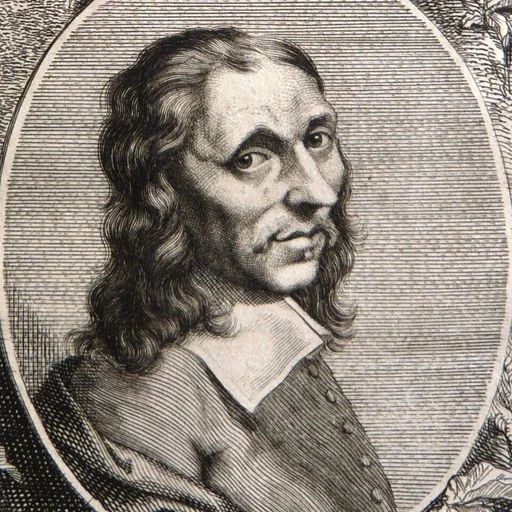
Allaert van Everdingen (Dutch pronunciation: ; bapt. 18 June 1621 – 8 November 1675 (buried)), was a Dutch Golden Age painter and printmaker in etching and mezzotint.

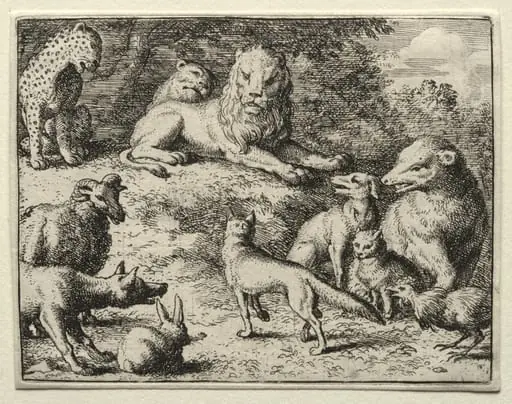 Reynard the Fox: Reynard Appears at Court
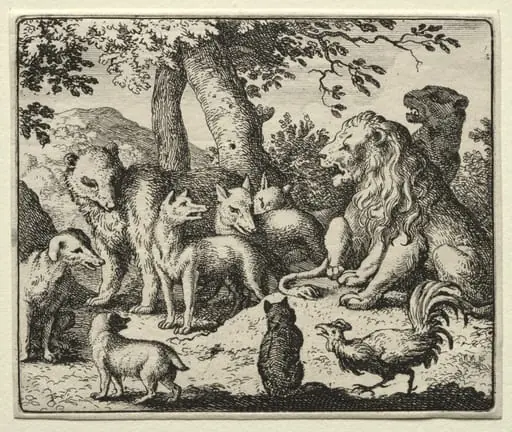 Reynard the Fox: Reynard Exonerates Himself
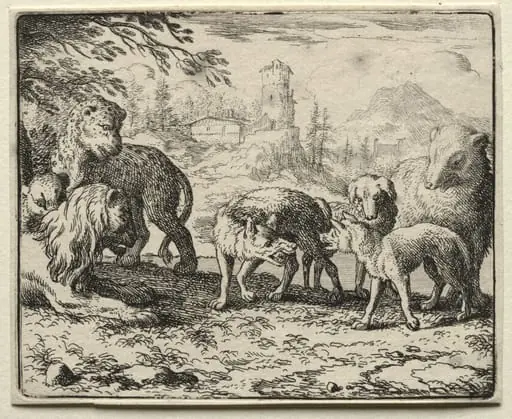 Reynard the Fox: The Condemnation of Reynard
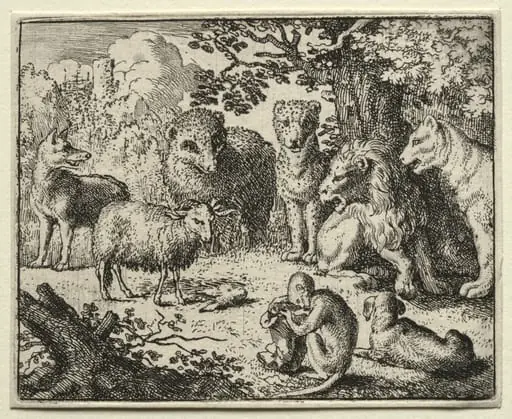 Reynard the Fox: The Arrival of the Packet
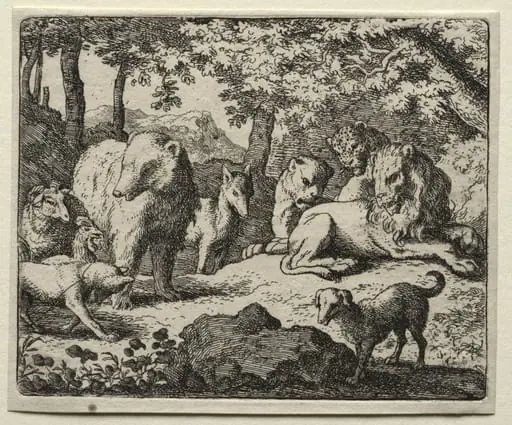 Reynard the Fox: The Suspension of the Sentence
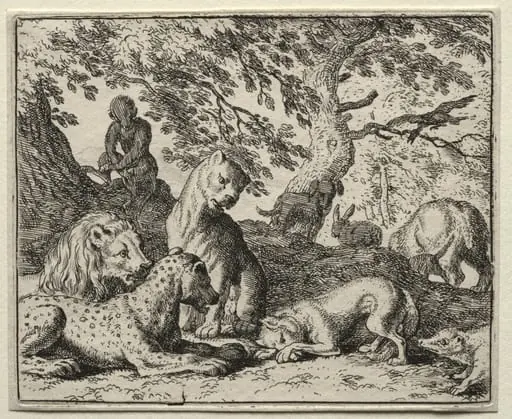 Reynard the Fox: Reynard Describes a False Plot Against the Lion
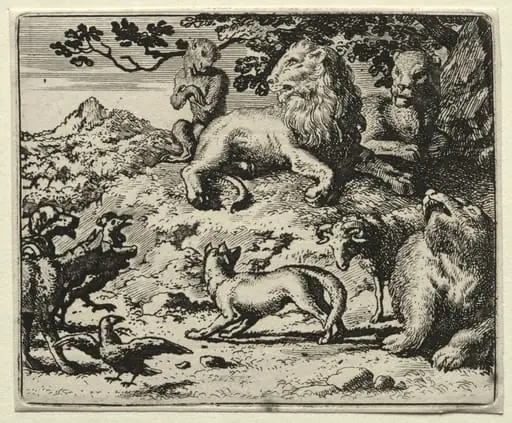 Reynard the Fox: The Animals Complain of Reynard's Pardon
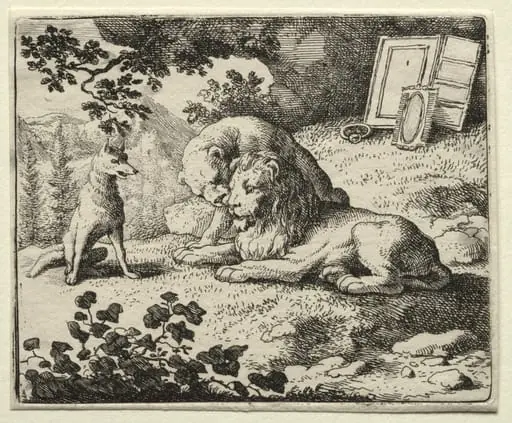 Reynard the Fox: Reynard Promises Gifts to the Lion
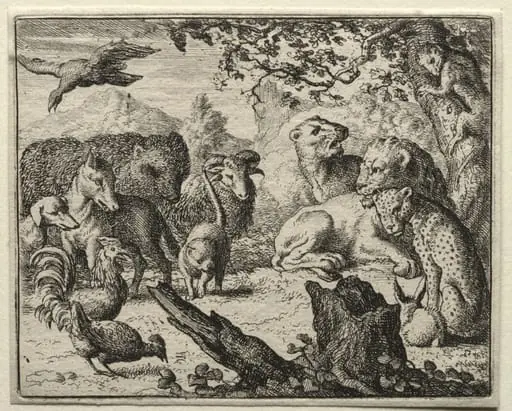 Reynard the Fox: The Lion's Court