Artwork
Virgin and Child; Man of Sorrows
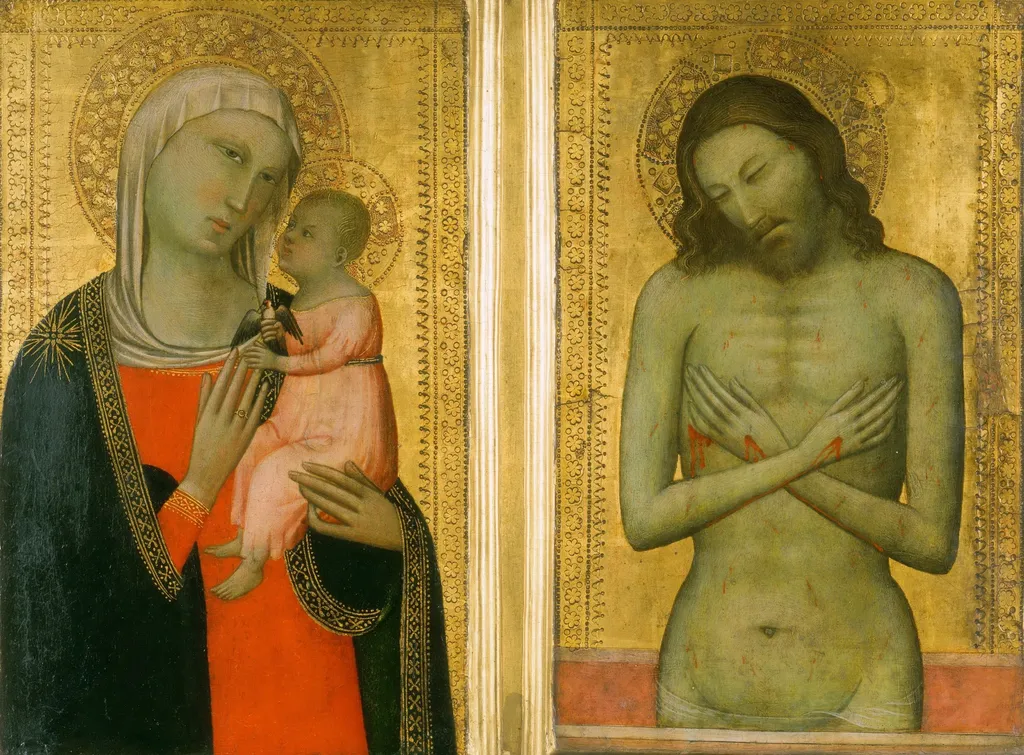
Virgin and Child; Man of Sorrows is an unspecified painting by Allegretto Nuzi. It dates from 1354 and is held in the collection of the Philadelphia Museum of Art.
About this work
Overview
It consists of two hinged panels, each presenting a distinct sacred figure: the Virgin and Child on the left, and the Man of Sorrows on the right.
Painted around 1354 by Allegretto Nuzi, this diptych originates from the Gothic tradition of central Italy, specifically the Fabriano region. It consists of two hinged panels, each presenting a distinct sacred figure: the Virgin and Child on the left, and the Man of Sorrows on the right. The work was likely intended for private devotion, combining two common devotional themes into a single, portable object. Its gold-ground background and formal composition reflect the liturgical aesthetics of the period.
Subject & Meaning
The left panel portrays the Virgin Mary seated with the Christ Child, symbolizing divine maternity and tender care. The child holds a small bird, possibly a goldfinch, traditionally associated with Christ’s future Passion. The right panel depicts the wounded Christ, bare-chested and bleeding, arms crossed over his chest—an image of suffering meant to evoke contemplation of sacrifice. Together, the panels juxtapose innocence and agony, linking the Incarnation with the Crucifixion in a single devotional act.
Technique & Style
Nuzi employed tempera on wood, a standard medium of the era, with meticulous detail in the gold leaf backgrounds and fine linear patterns. Figures are rendered with elongated proportions and rigid postures typical of Gothic conventions. Facial expressions are serene yet solemn, emphasizing spiritual gravity over naturalism. The use of red and blue pigments for the Virgin’s garments signals her status, while the stark nudity of the Man of Sorrows heightens the emotional impact through vulnerability.
History & Provenance
The diptych was created in the mid-14th century in the Marche region of Italy, where Nuzi was active as a painter of religious panels. It entered the Philadelphia Museum of Art’s collection in the 20th century, though its earlier ownership history remains undocumented. Its survival in relatively intact condition suggests it was preserved in a devotional context, possibly within a private chapel or family altar, before being acquired by the museum.
Context
In mid-14th-century Italy, devotional diptychs like this one were common among the devout, especially in urban centers where personal piety was growing. The pairing of the Virgin and Child with the Man of Sorrows responded to theological emphasis on Christ’s dual nature—human and divine—and the role of Mary as intercessor. Such works often accompanied prayer and meditation, reinforcing the emotional and doctrinal themes of redemption and compassion.
Legacy
Nuzi’s diptych exemplifies the regional Gothic style of central Italy, preserving the visual language of pre-Renaissance religious art. While not widely known outside scholarly circles, it contributes to the understanding of how local workshops adapted broader devotional trends. Its preservation allows modern viewers to encounter the quiet intensity of medieval private worship, offering insight into the spiritual priorities of its time.
Own this work as a print
Artist & collection
Artist
Allegretto Nuzi or Allegretto di Nuzio (1315–1373) was an Italian painter, active in a Gothic style mainly around Fabriano, in the Province of Ancona.

 Christ in the tomb
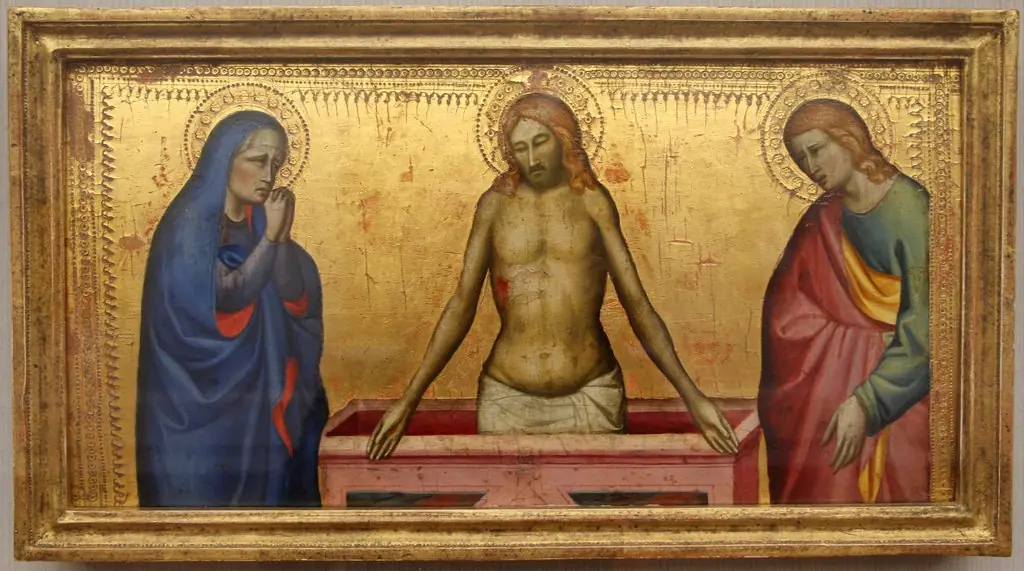
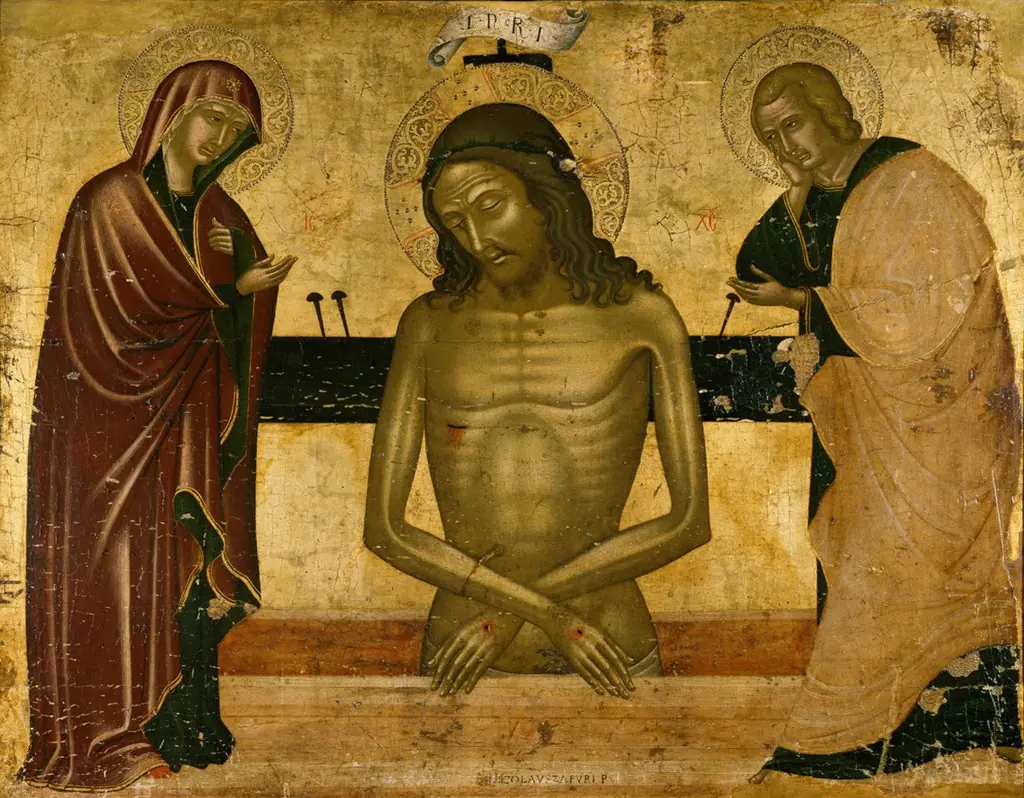 Entombment of Christ with John and Mary
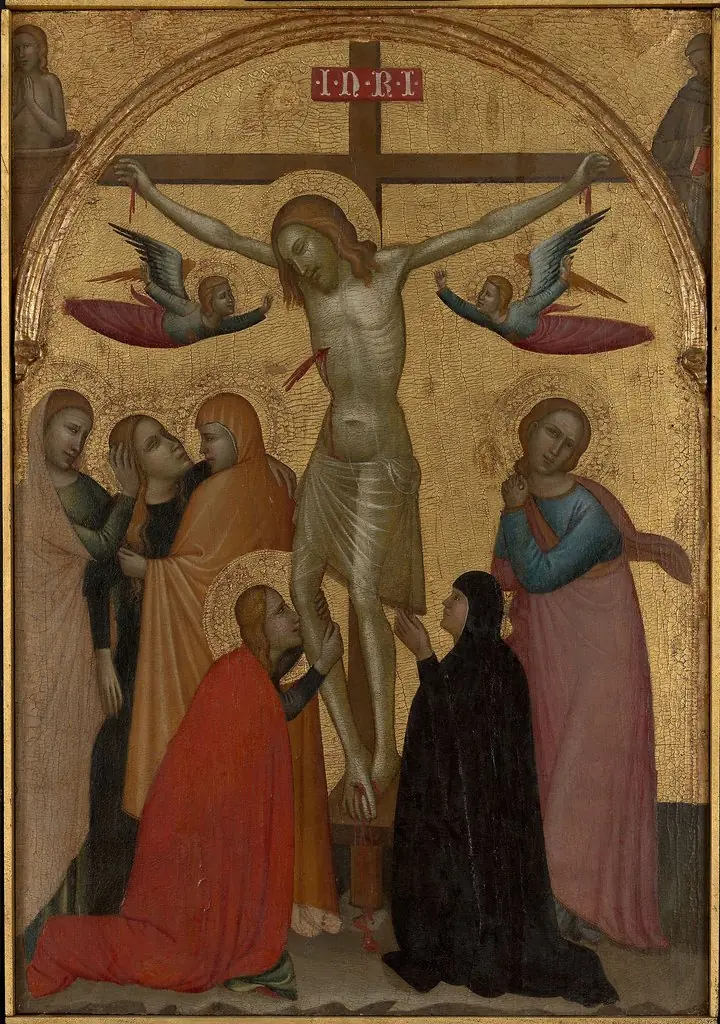 The Crucifixion
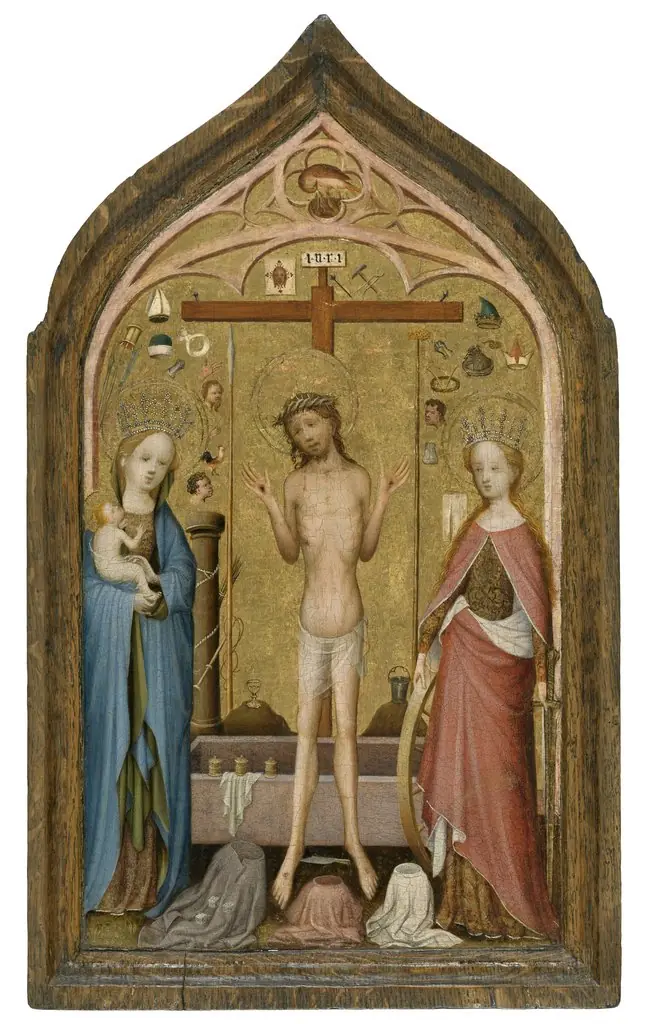 Man of Sorrows with Madonna and Saint Catherine of Alexandria
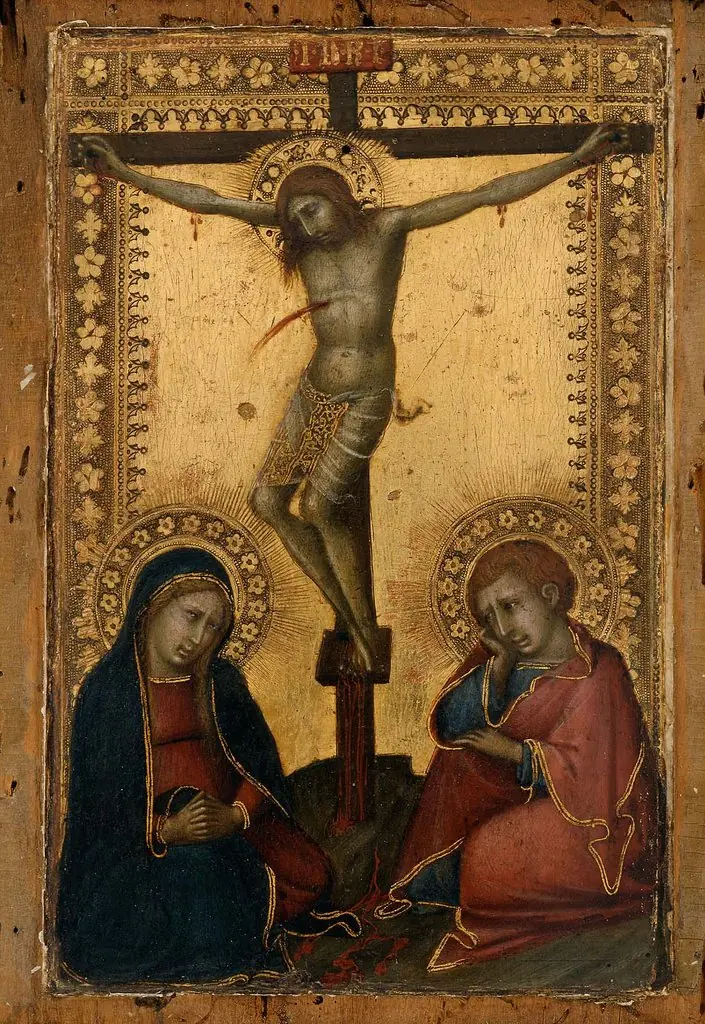 Crucified Christ with the Virgin and Saint John the Evangelist
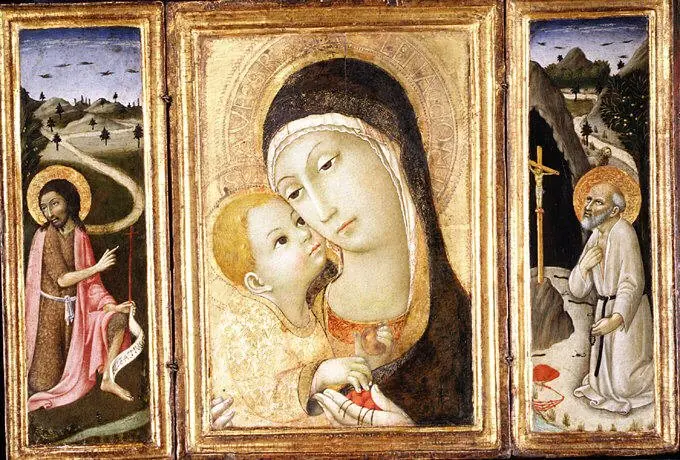 Madonna and Child; Saint John the Baptist; Saint Jerome
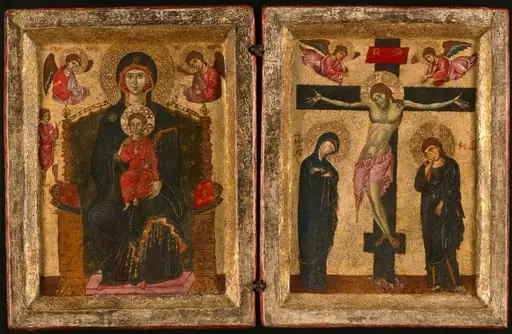 Diptych of the Virgin and Child Enthroned and the Crucifixion
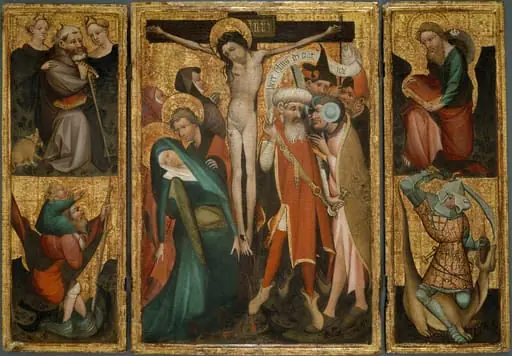 Triptych of the Crucifixion with Saints Anthony, Christopher, James and George
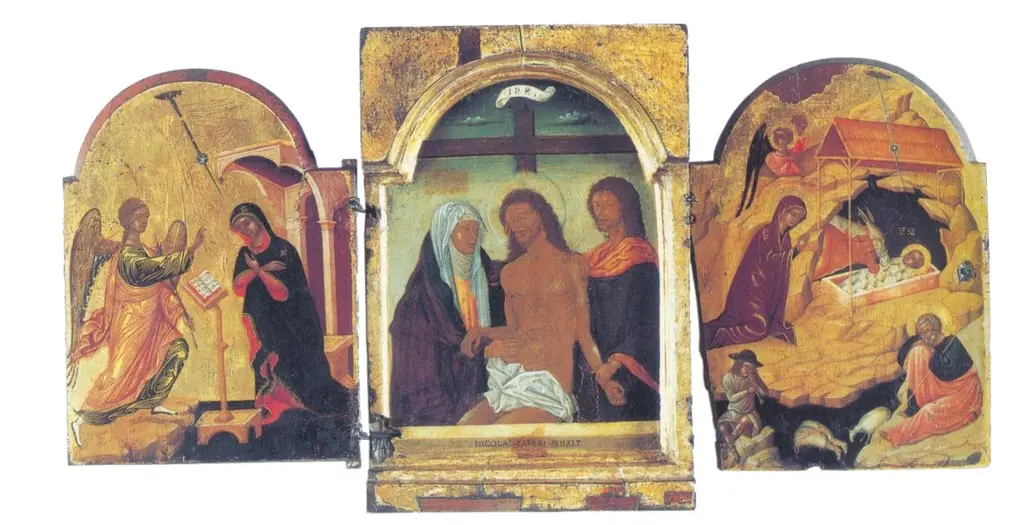 Triptych Pieta (Tzafouris)
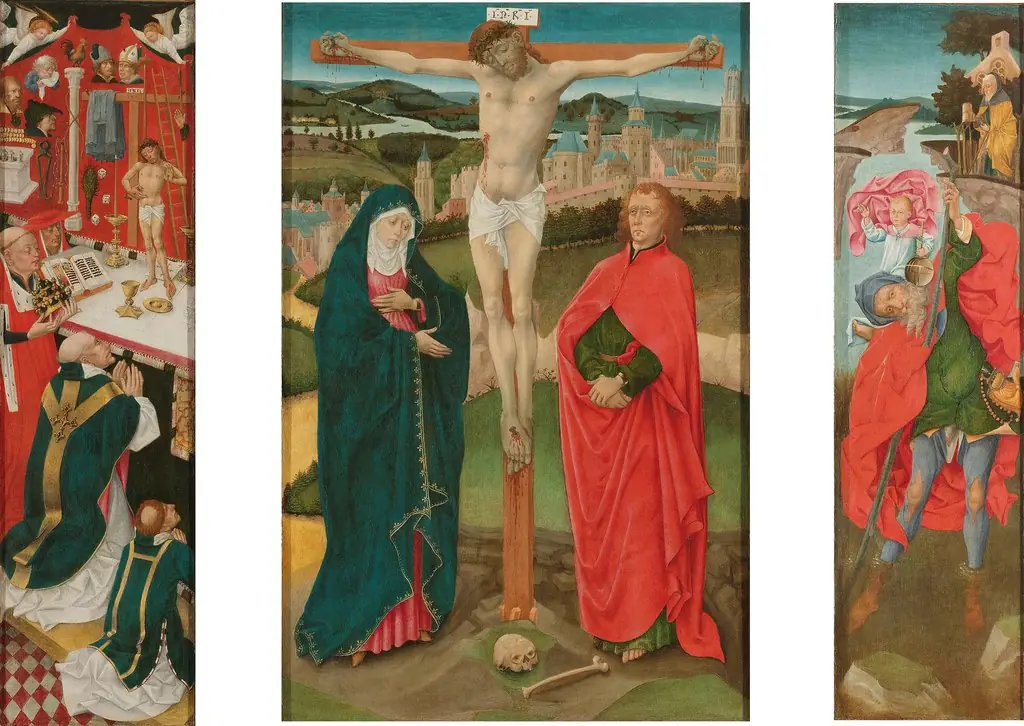 Triptych with the Crucifixion
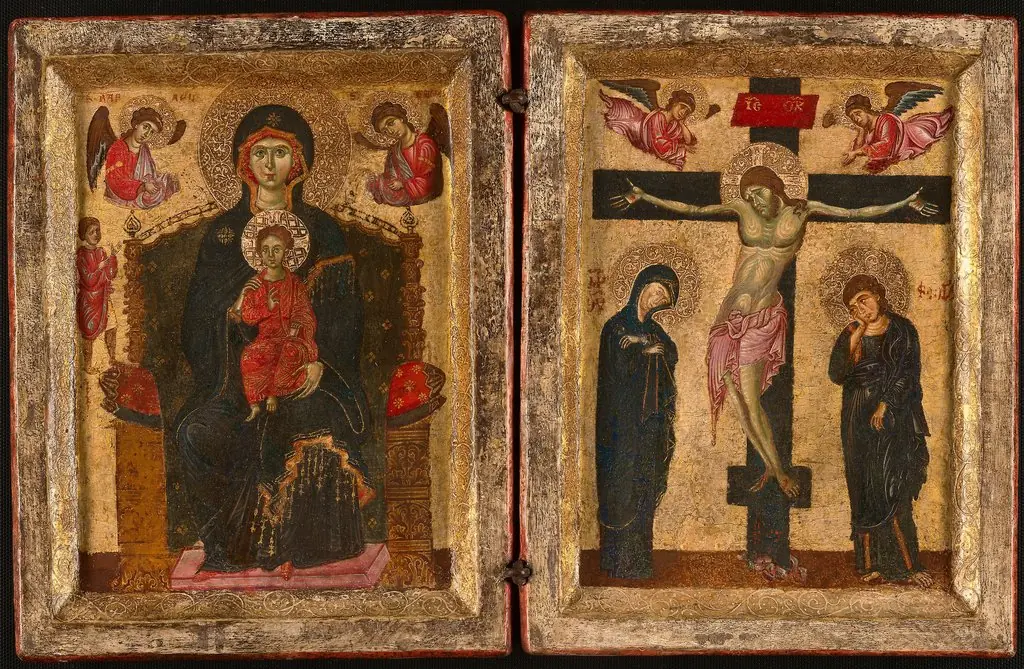 Diptych with the Virgin and Child Enthroned and the Crucifixion
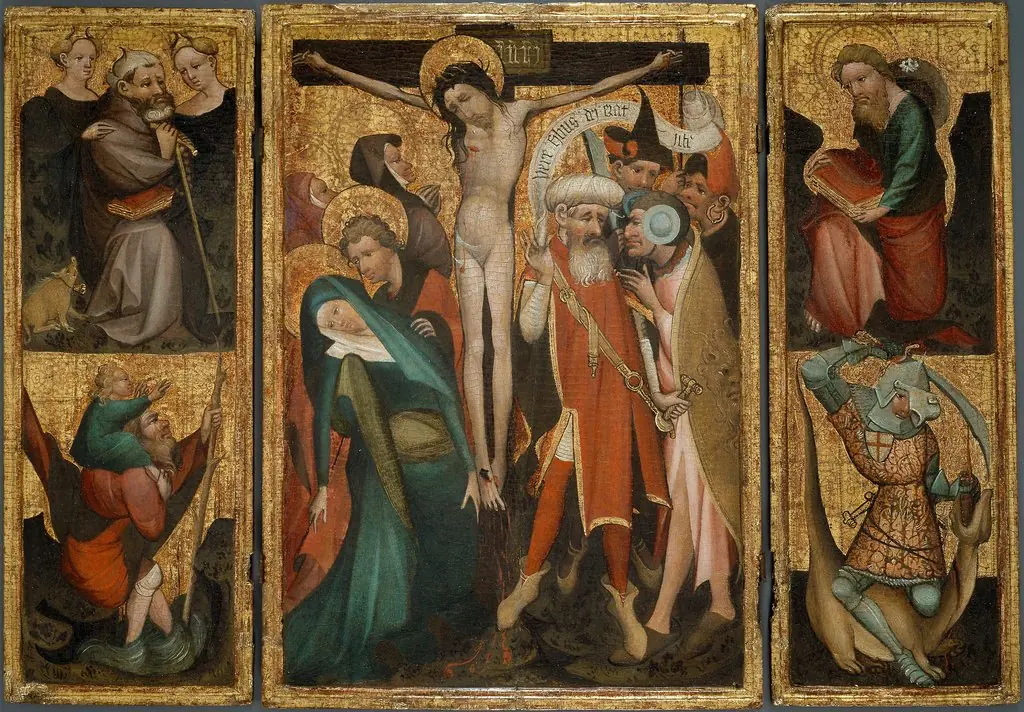 Triptych of the Crucifixion with Saints Anthony, Christopher, James and George