Artwork
Triptych of the Crucifixion with Saints Anthony, Christopher, James and George
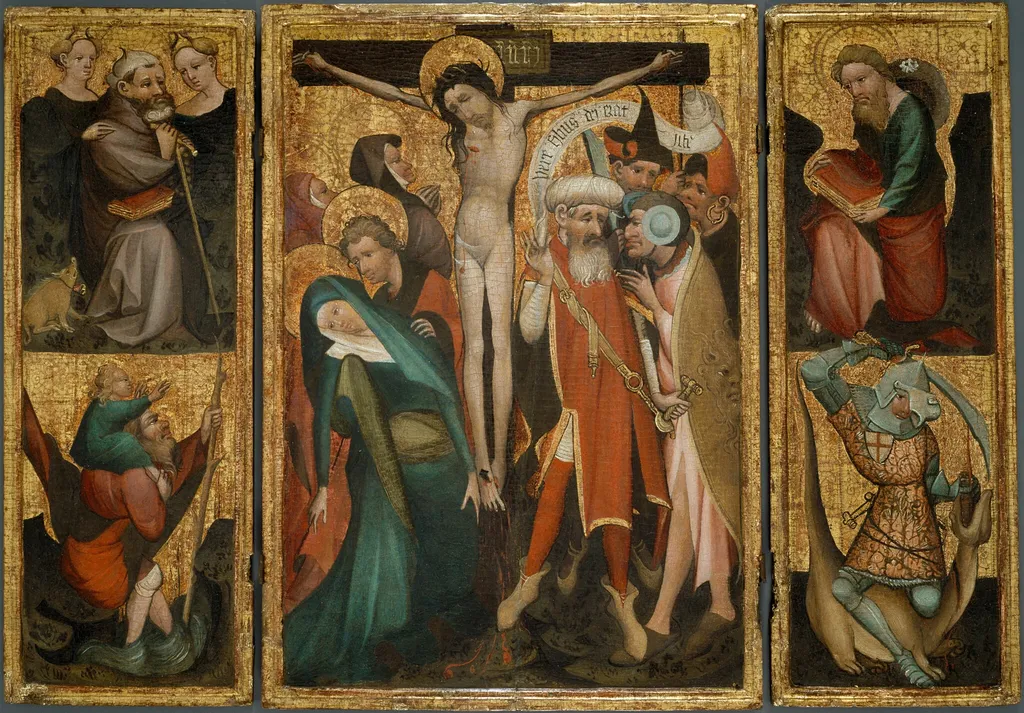
Triptych of the Crucifixion with Saints Anthony, Christopher, James and George is an oil painting by the Northern Renaissance artist Unknown. It dates from 1400 and is held in the collection of the Art Institute of Chicago. Created around 1400 in the Netherlandish tradition, this small triptych presents a crucifixion scene flanked by four saints.
About this work
If you like this, check out the Art Institute of Chicago where it hangs today.
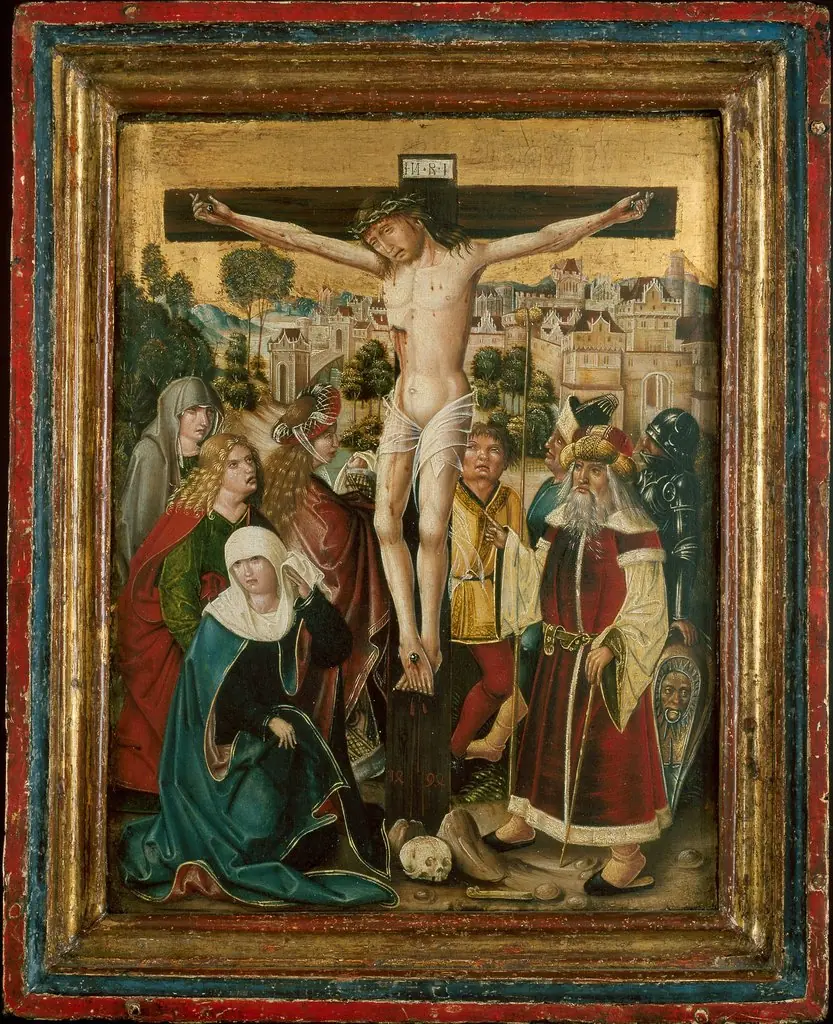
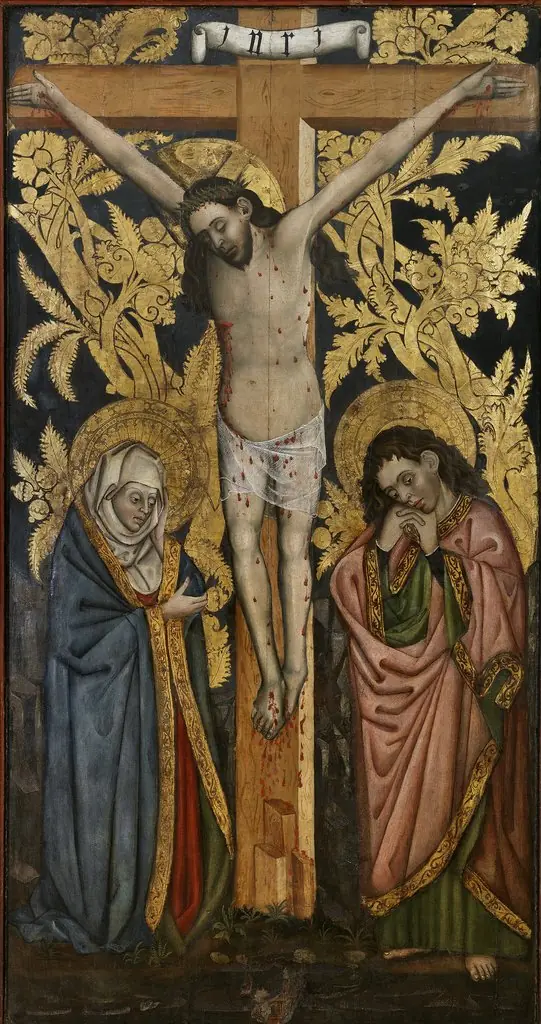
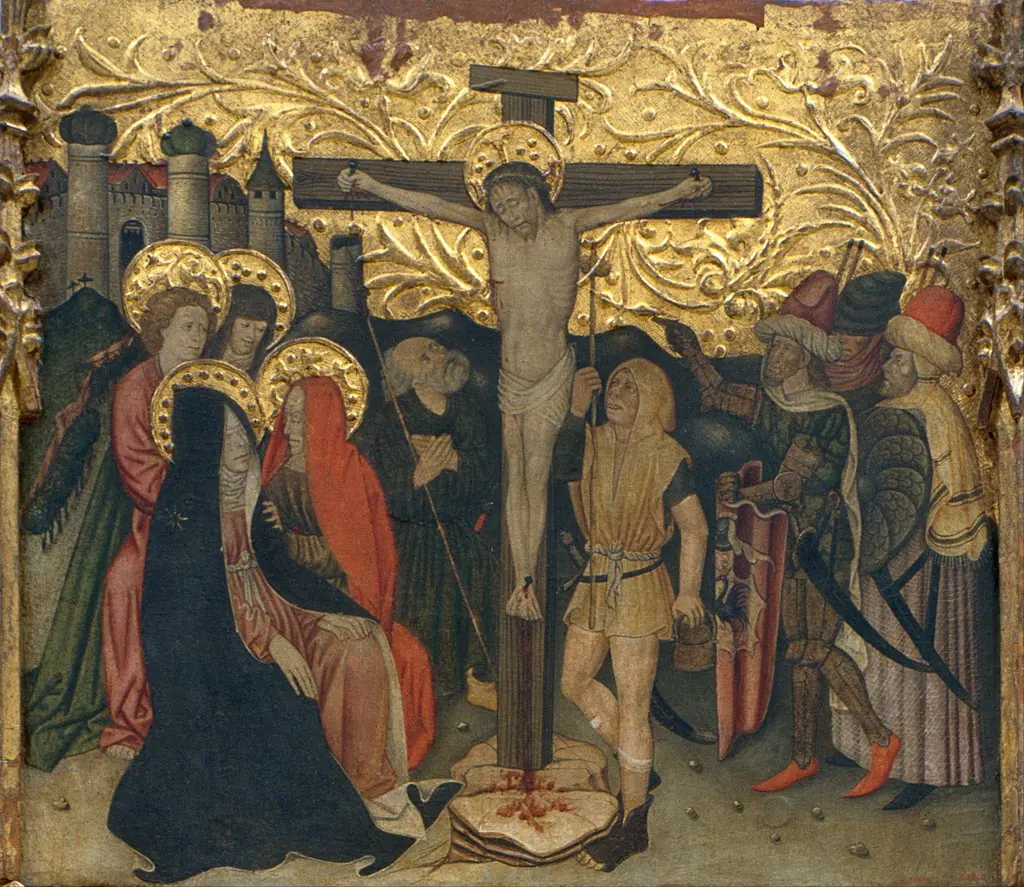
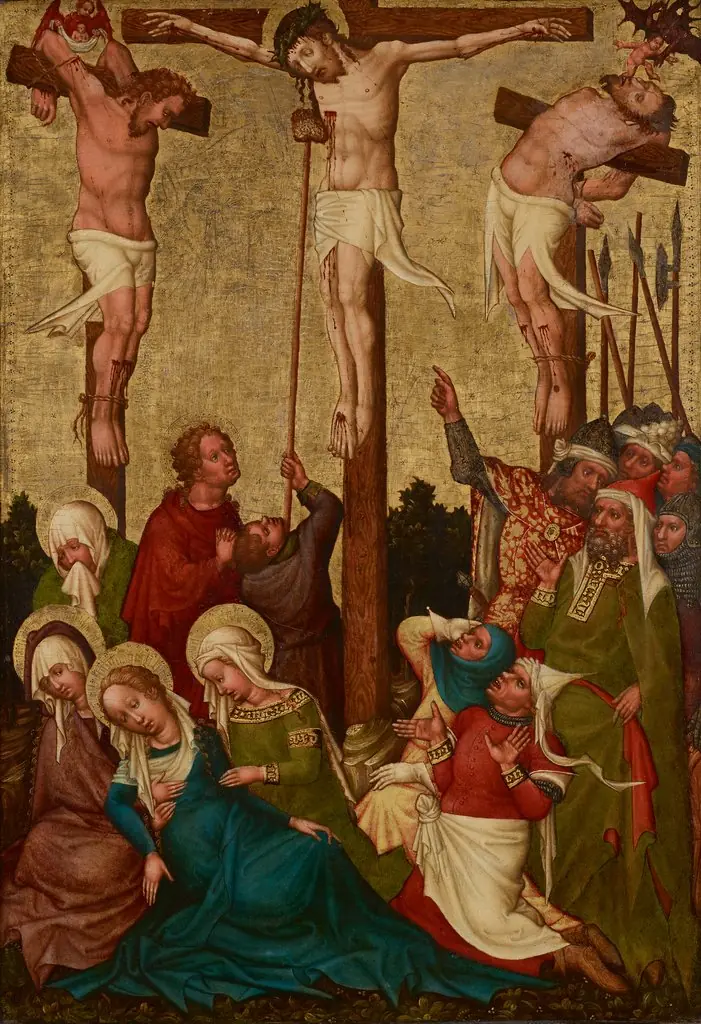
This triptych shows three panels with a central Christ on the cross. Saints Anthony, Christopher, James and George stand around him. The side panels fold in to close the piece.
The work mixes tempera and oil, a rare combo in 1400. Its small size suggests it was for private prayer. The stiff, doll-like saints look heavy in their robes.
If you like this, check out the Art Institute of Chicago where it hangs today.
Overview
Created around 1400 in the Netherlandish tradition, this small triptych presents a crucifixion scene flanked by four saints. The central panel depicts Christ on the cross, while the hinged side panels contain figures of Saints Anthony, Christopher, James and George. The work is part of the collection of the Art Institute of Chicago.
Subject & Meaning
The central focus on the crucified Christ underscores the devotional purpose of the piece, inviting contemplation of the Passion. The accompanying saints, each a recognized intercessor, serve to personalize the prayer experience, linking the viewer’s concerns with the broader narrative of salvation.
Technique & Style
The painting combines tempera with oil, an uncommon mixture for the early 15th century, resulting in a distinct surface quality. Figures are rendered with a rigid, almost sculptural posture, and their heavy garments emphasize volume, giving the saints a solid, doll-like presence.
History & Provenance
Originating in the early 1400s, the work has remained relatively obscure until its acquisition by the Art Institute of Chicago, where it is now displayed. Its modest dimensions suggest it was intended for private devotional use rather than public liturgical display.
Context
During the period, Netherlandish artists began experimenting with oil as a medium, yet the combination with tempera in this piece reflects a transitional phase. The inclusion of multiple saints alongside the crucifixion aligns with contemporary devotional practices that favored personalized intercession.
Artist & collection

 Domestic Scene
 Giacomo and Cardinal Marco, investing Andrea, Abbot of San Zeno, with his Benefice
 The Nymph of Fontainebleau
 Portrait of a Woman
 Madonna and Child with Saints in the Enclosed Garden
 Venus and Minerva
 Family Group of Four on Sofa
 Wall painting from Room H of the Villa of P. Fannius Synistor at Boscoreale