Artwork
Arabesque with a Boat
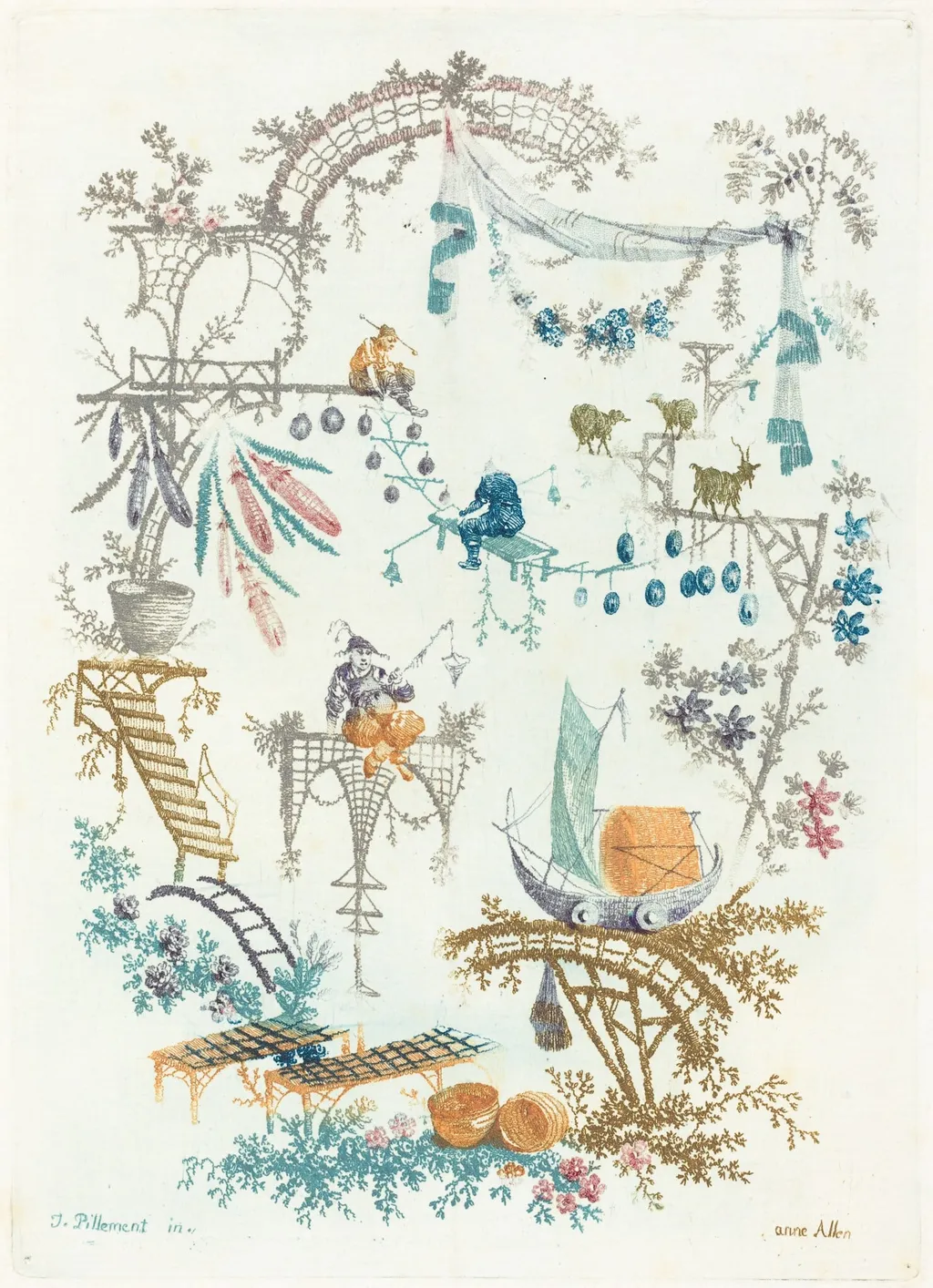
Arabesque with a Boat is an ink print by the Romanticist artist Anne Allen. It dates from 1764 and is held in the collection of the National Gallery of Art.
About this work
Overview
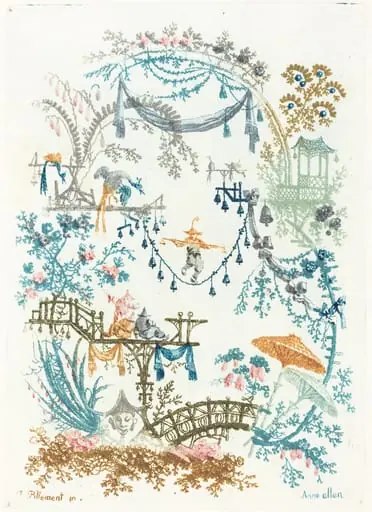
Arabesque with a Boat is a colour print executed by Anne Allen around 1764. The work is an etching on laid paper, coloured by the à la poupée method, which applies multiple pigments directly to the plate before a single impression. The composition presents a dense network of miniature scenes that interlock across the surface.
Subject & Meaning
The image unfolds as a bustling tableau: figures recline beneath trees, a solitary boat drifts on water, and livestock graze in the distance. The multitude of tiny vignettes creates a decorative, almost ornamental rhythm, suggesting a celebration of pastoral leisure and the harmonious coexistence of human and nature.
Technique & Style
Allen combined fine etched lines with soft, tonal washes, employing the à la poupée technique to achieve blended hues of blue, gold, and green in a single pull. This approach allows subtle colour transitions and a dreamlike atmosphere, while the intricate line work forms a web‑like lattice that unifies the disparate elements.
History & Provenance
The print dates to the mid‑18th century, a period when British printmakers were experimenting with multi‑coloured etching. Although specific ownership records are scarce, the work is attributed to Anne Allen, a relatively obscure female artist whose surviving prints are few, making this piece a valuable example of her practice.
Context
During the 1760s, the à la poupée method was gaining popularity as an economical alternative to hand‑coloured prints. Arabesque with a Boat reflects contemporary tastes for elaborate, decorative compositions that could be reproduced for a growing market of collectors interested in both aesthetic intricacy and affordable art.
Artist & collection


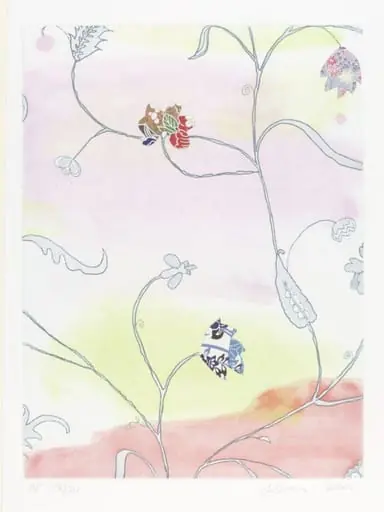 Untitled
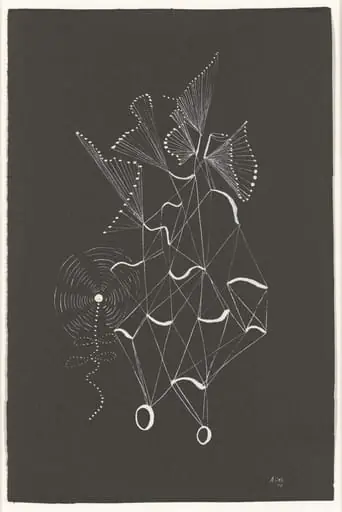 Untitled
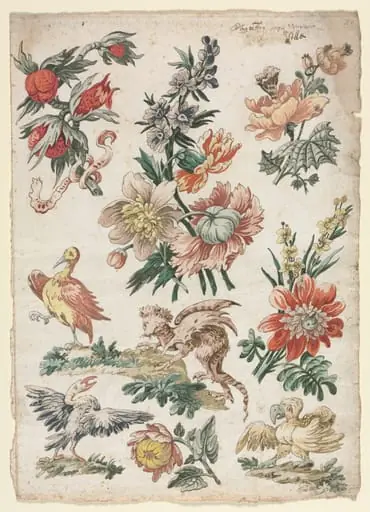 Floral Designs with Birds and Griffon
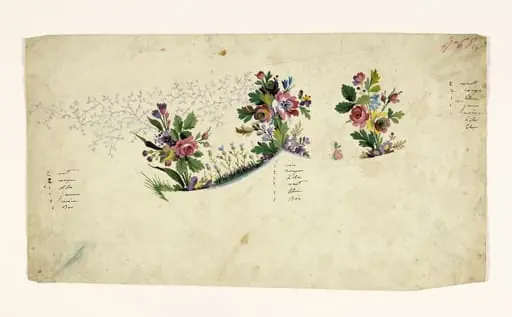 Composition florale en bouquets et bandes de gazon, projets de broderies de gilet, XVIIIème siècle
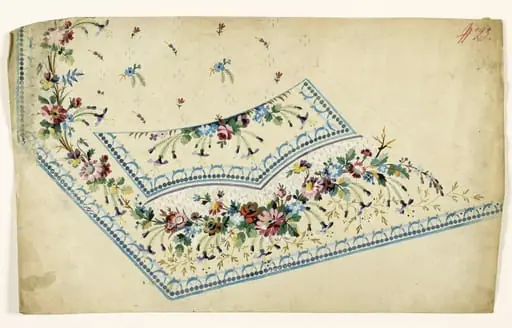 Composition de fleurs en guirlandes et en semis et frises de perles bleues, projets de broderies de gilet, XVIIIème siècle
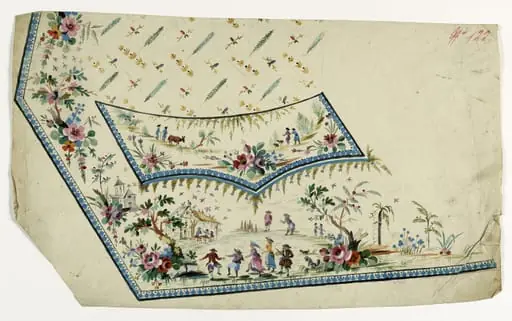 Gilet décor fête paysanne, projets de broderies de gilet, XVIIIème siècle
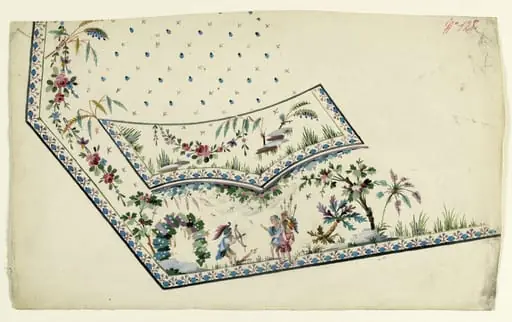 Gilet décor de paysage avec guerriers, projets de broderies de gilet, XVIIIème siècle