Artwork
Arabesque with a Monkey
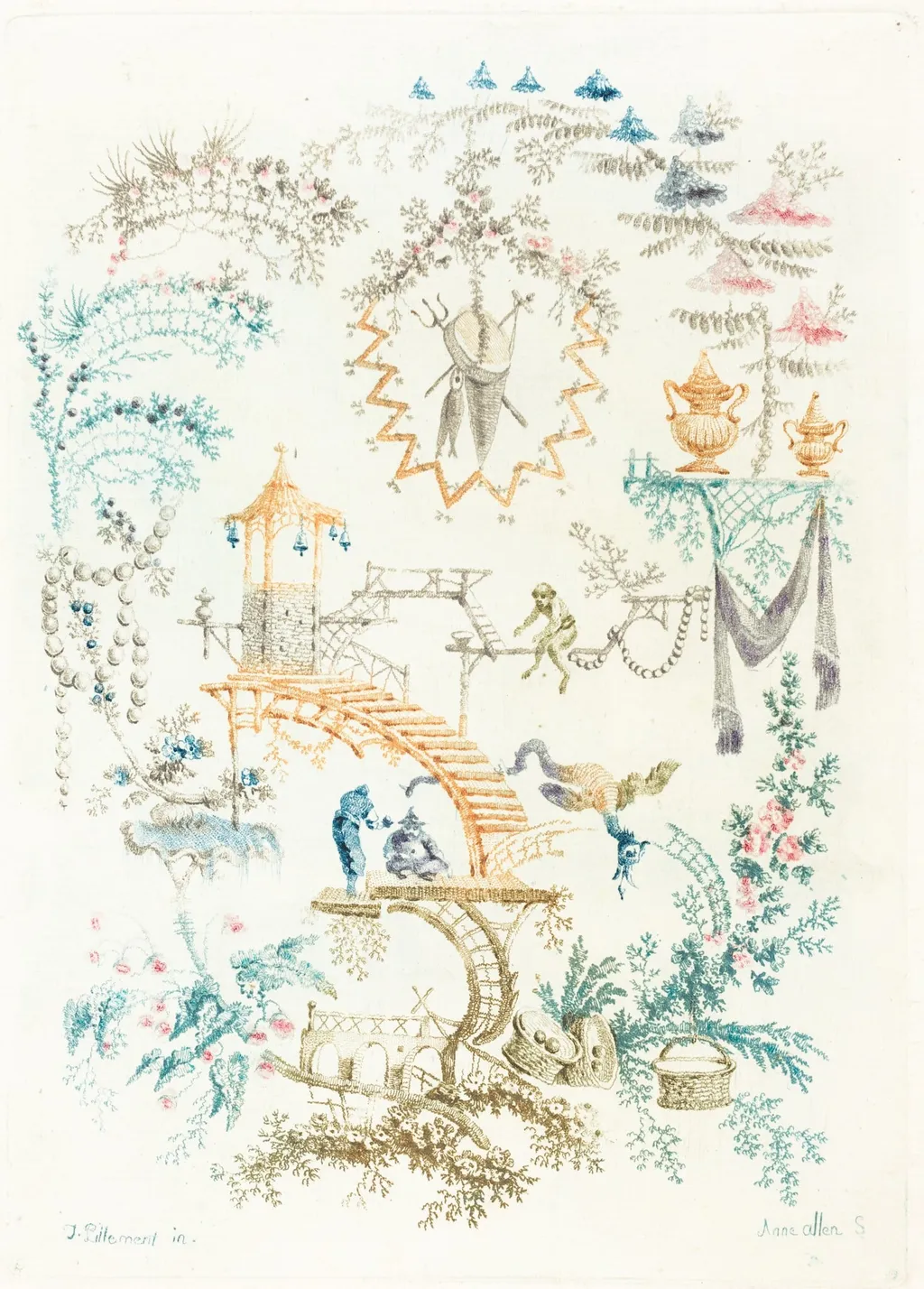
Arabesque with a Monkey is an ink print by the Romanticist artist Anne Allen. It dates from 1764 and is held in the collection of the National Gallery of Art.
About this work
Overview
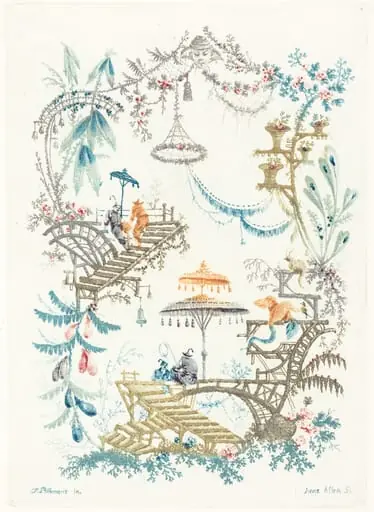
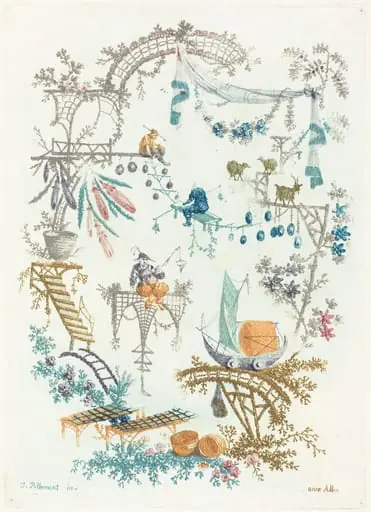
Anne Allen’s print Arabesque with a Monkey, executed around 1764, is a color etching on laid paper. The work combines multiple ink colors applied à la poupée, a method that allows several hues to be printed in a single pass. Its composition is densely populated, featuring a monkey, a pavilion, and a profusion of ornamental motifs that interweave across the surface.
Subject & Meaning
The central figure—a monkey suspended from a vine—anchors a whimsical scene that includes a small pavilion beneath a contorted tree, gold‑toned vases, and assorted birds. The surrounding arabesques and swirling patterns suggest an imagined, almost fantastical garden, inviting viewers to contemplate the interplay between the natural and the decorative.
Technique & Style
Allen employed the à la poupée technique, hand‑applying different colored inks to the same plate before a single impression. This approach yields soft blues, greens, and golds that blend subtly, while the etched lines remain fine and precise, reminiscent of lacework. The result is a delicate yet intricate surface where color and line coexist harmoniously.
History & Provenance
Created in the mid‑eighteenth century, the print reflects the period’s fascination with exotic subjects and ornamental design. While specific ownership records are scarce, the work is documented in several catalogues of British printmaking, confirming Anne Allen’s activity as a female etcher during a time when few women were recognized in the medium.
Artist & collection


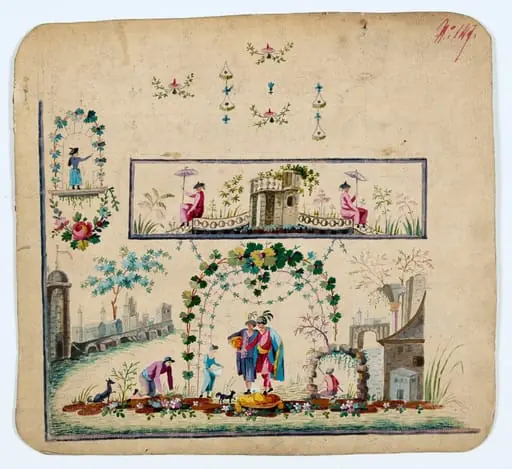 Gilet avec personnages traversant la rivière, projets de broderies de gilet, XVIIIème siècle
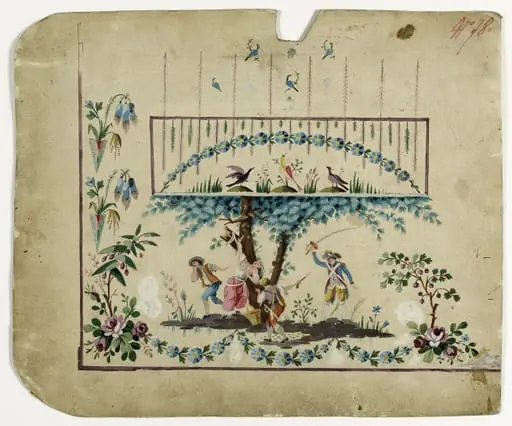 Gilet décor Louis Gillet délivrant une paysanne, projets de broderies de gilet, XVIIIème siècle
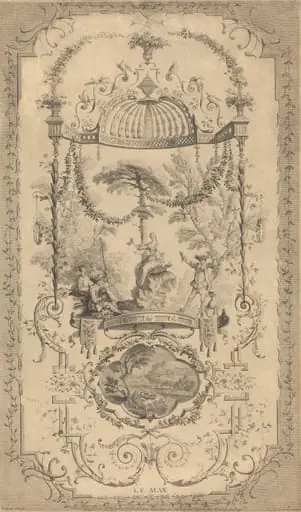 LeMay
LeMay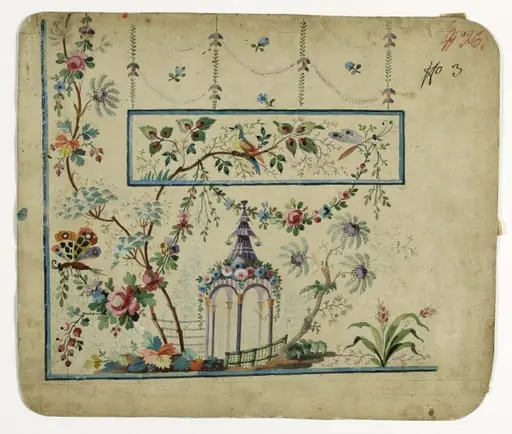 Gilet décor pagode, projets de broderies de gilet, XVIIIème siècle
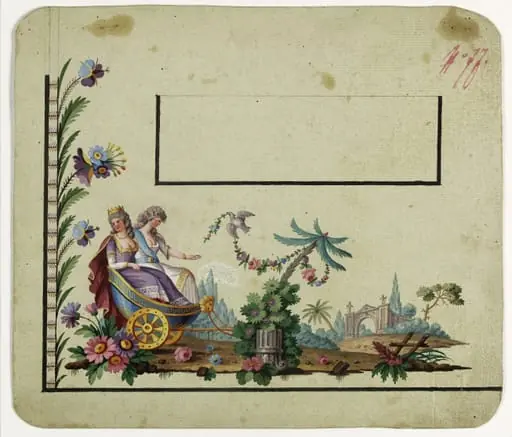 Gilet décor Didon en promenade sur un char, projets de broderies de gilet, XVIIIème siècle
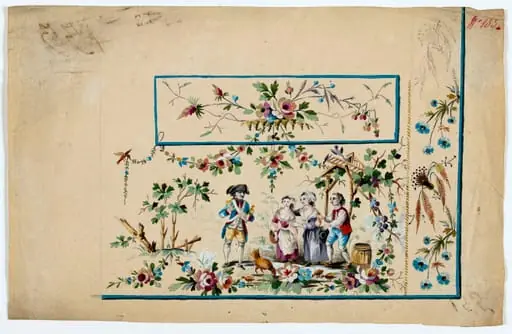 Gilet décor Louis Gillet parlant avec 2 paysans et leur fille, projets de broderies de gilet, XVIIIème siècle
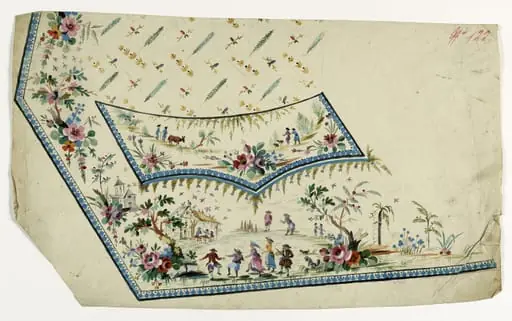 Gilet décor fête paysanne, projets de broderies de gilet, XVIIIème siècle
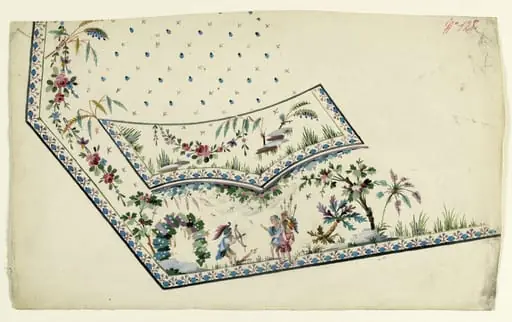 Gilet décor de paysage avec guerriers, projets de broderies de gilet, XVIIIème siècle