Artwork
Composition de fleurs en guirlandes et en semis et frises de perles bleues, projets de broderies de gilet, XVIIIème siècle
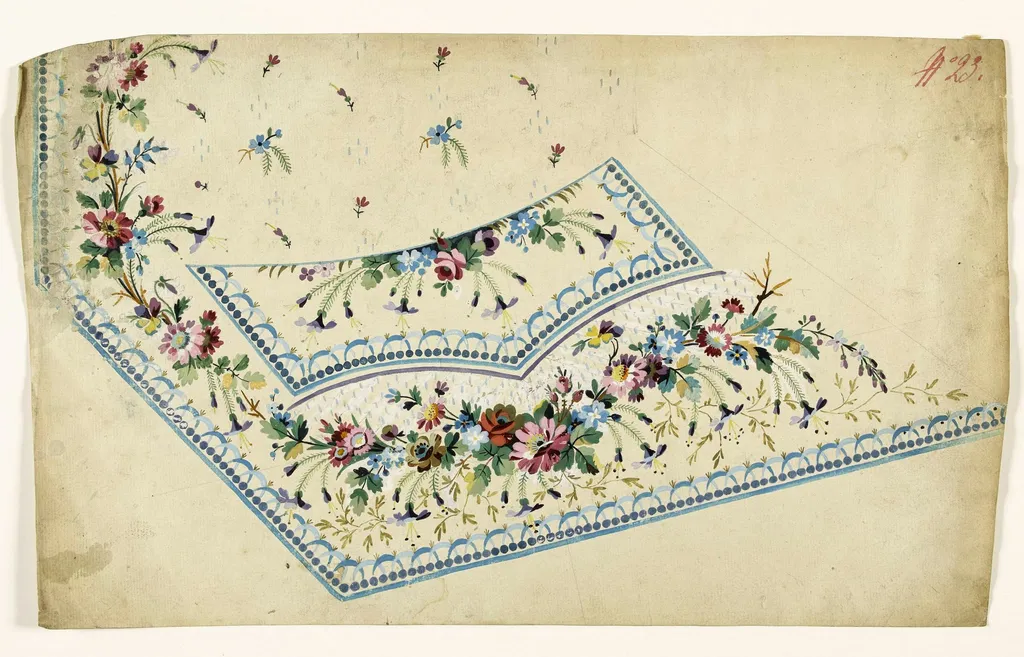
Composition de fleurs en guirlandes et en semis et frises de perles bleues, projets de broderies de gilet, XVIIIème siècle is a drawing by Anonyme. It dates from 1750 and is held in the collection of the Palais Galliera - Musée de la Mode de la Ville de Paris. This anonymous 18th-century design, dated around 1750, serves as a preparatory sketch for embroidered waistcoats.
About this work
Overview
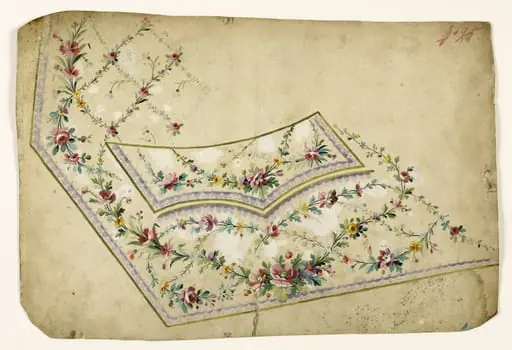
Executed on a light beige surface, it presents floral motifs arranged in flowing bands and scattered clusters, framed by delicate blue dotted lines.
This anonymous 18th-century design, dated around 1750, serves as a preparatory sketch for embroidered waistcoats. Executed on a light beige surface, it presents floral motifs arranged in flowing bands and scattered clusters, framed by delicate blue dotted lines. The work reflects the precision and ornamental priorities of textile design in pre-industrial France, intended as a guide for artisans rather than a finished piece.
Subject & Meaning
The composition centers on stylized flowers in pink, red, and purple, accompanied by slender green stems and leaves. These elements are organized into garland-like curves and random scatterings, evoking natural abundance without literal representation. The blue pearl-like borders suggest luxury and refinement, aligning with aristocratic fashion trends that prized intricate, handcrafted decoration on men's garments.
Technique & Style
The artist employed fine stippling to define contours and texture, using tiny hand-placed dots to outline floral forms and create subtle gradations. Blue dotted lines, resembling beadwork, frame the motifs with rhythmic precision. This method allowed for reproducibility in embroidery, translating two-dimensional design into three-dimensional threadwork while maintaining visual harmony and structural clarity.
History & Provenance
The drawing resides in the Museum of Ethnography, where it is preserved as part of a broader collection of textile design sources. Its origin is undocumented, but its style and technique are consistent with workshop practices in 18th-century France. Likely produced by a professional designer, it was used to communicate patterns to embroiderers, reflecting the division of labor in luxury garment production.
Context
In mid-18th-century France, embroidered waistcoats were essential elements of elite male attire, signaling status through labor-intensive decoration. Designers created templates like this one to standardize motifs across workshops. The use of floral patterns and pearl-like borders echoed prevailing tastes in Rococo ornamentation, where nature-inspired forms were abstracted into elegant, repeatable units for textile application.
Legacy
This drawing exemplifies the quiet craftsmanship behind fashionable dress of the period. Though unsigned and unremarkable as a standalone artwork, it reveals the systematic methods used to translate aesthetic ideals into wearable form. Today, it offers insight into the collaborative, often invisible labor that sustained the textile industries of early modern Europe.
Artist & collection
Artist
A French designer from the 1700s made delicate flower drawings meant to decorate vests.
Museum
Palais Galliera - Musée de la Mode de la Ville de Paris
Continue through works from the same source collection.
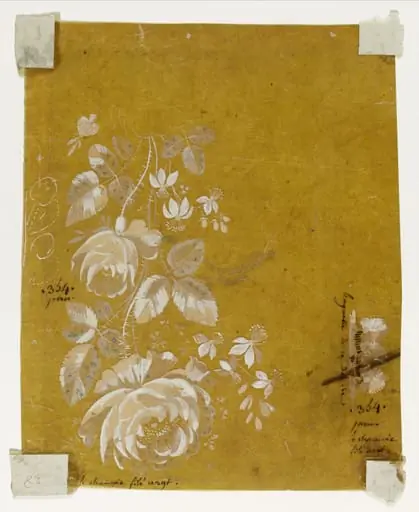 Bouquet de roses blanches pour étoffe, projets de broderies de gilet, XVIIIème siècle
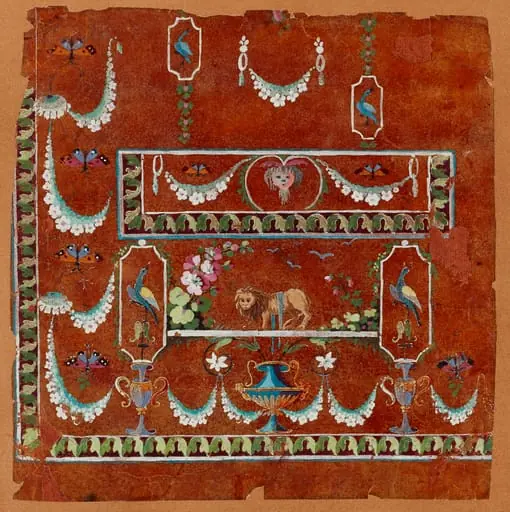 Gilet décor à grotesques, projets de broderies de gilet, XVIIIeme siècle
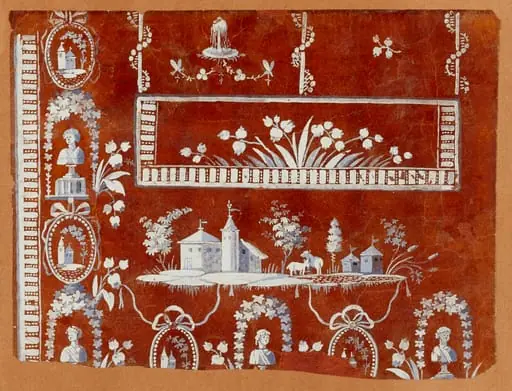 Gilet décor architectures rurales, projets de broderies de gilet, XVIIIème siècle
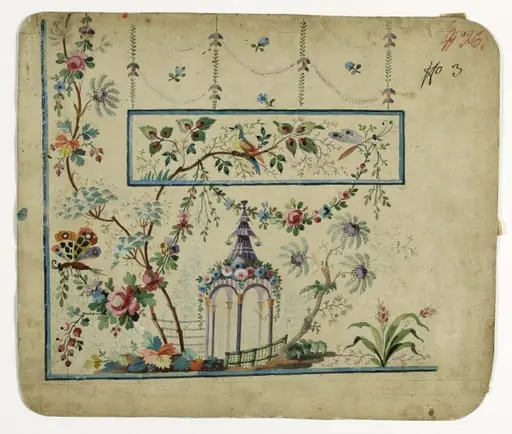 Gilet décor pagode, projets de broderies de gilet, XVIIIème siècle
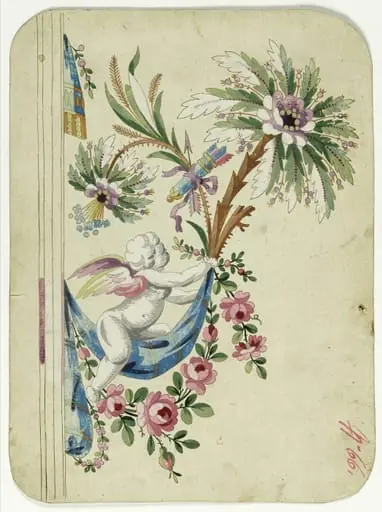 Décor de putti sur palmier, projets de broderies de gilet, XVIIIème siècle
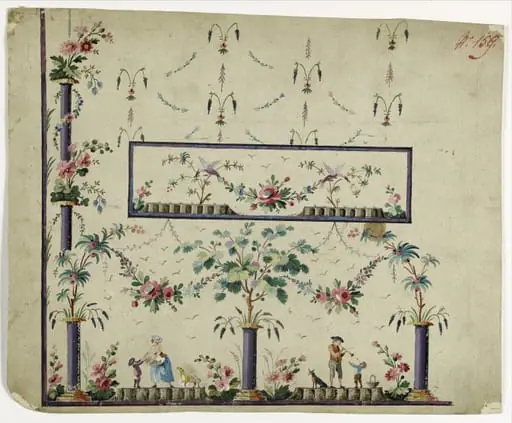 Gilet décor couple avec enfants, projets de broderies de gilet, XVIIIème siècle
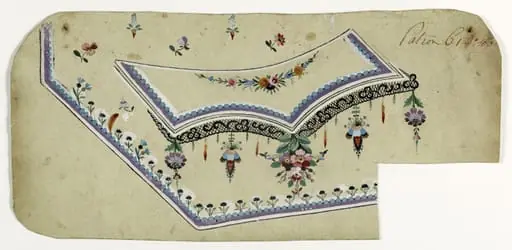 Gilet à la dentelle noire, projets de broderies de gilet, XVIIIème siècle
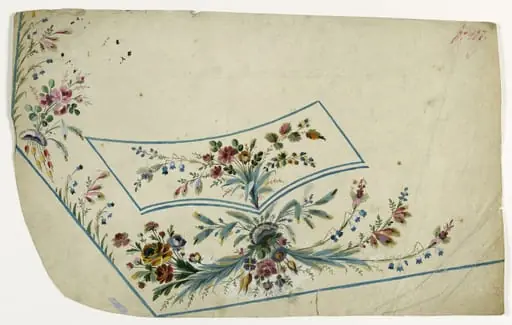 Gilet aux feuilles bleu-gris, projets de broderies de gilet, XVIIIème siècle
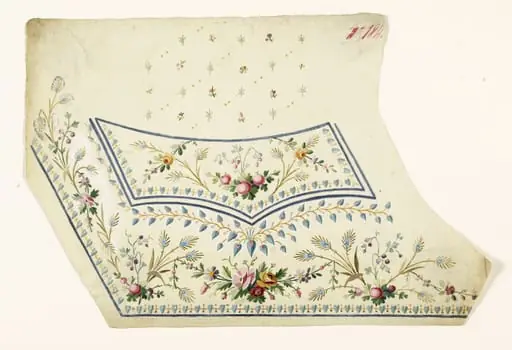 Composition de bouquets de fleurs et de baies et semis de fleurs, projets de broderies de gilet, XVIIIème siècle
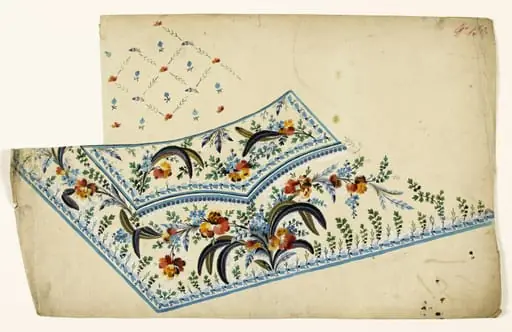 Composition de fleurs et de plumes en bouquets, frises de perles et de fleurs bleues, croisillons de plumes et de fleurs à semis de fleurs, projets de broderies de gilet, XVIIIème siècle
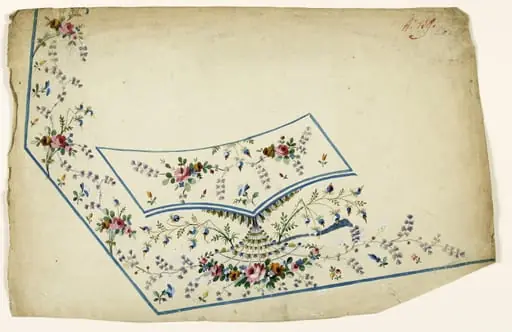 Composition à bouquet de fleurs en éventail et guirlandes de fleurs mauves, projets de broderies de gilet, XVIIIème siècle
 Composition de fleurs sauvages, projets de broderies de gilet, XVIIIème siècle
 Composition de guirlandes de fleurs et branches de feuilles, projets de broderies de gilet, XVIIIème siècle
 Composition avec guirlandes de fleurs et feuilles en grappes, projets de broderies de gilet, XVIIIème siècle
 Composition avec guirlandes de fleurs, frises de perles lavande, projets de broderies de gilet, XVIIIème siècle
 Composition avec guirlandes et croisillons de fleurs et frises d'oves mauves, projets de broderies de gilet, XVIIIème siècle
 Composition de bouquets de fleurs multicolores et guirlandes de fleurs mauves, projets de broderies de gilet, XVIIIème siècle