Artwork
Entrance to the Church of the Holy Sepulchre
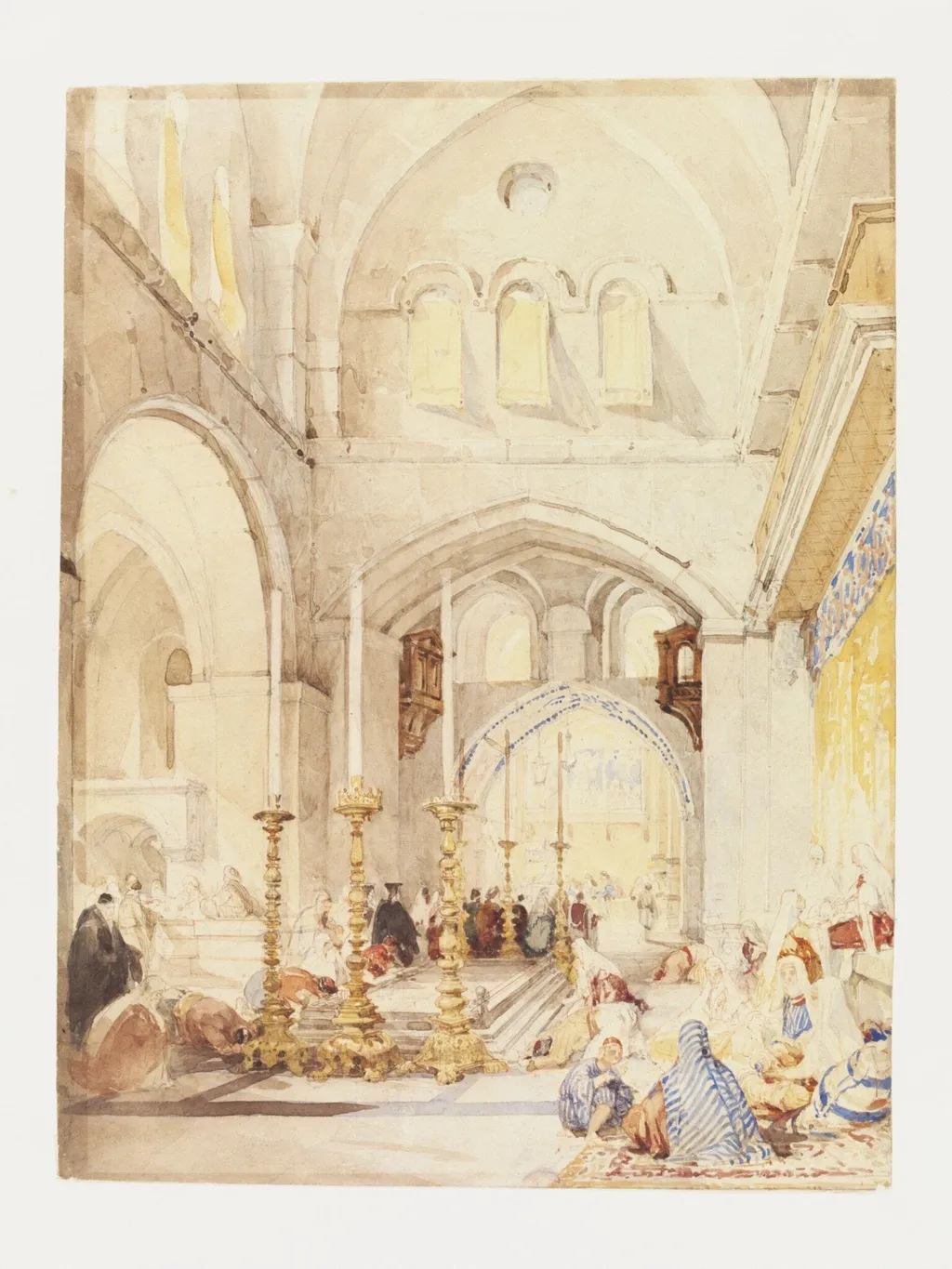
Entrance to the Church of the Holy Sepulchre is a watercolor work on paper by the British Romanticist artist Thomas Allom. It dates from 1838 and is held in the collection of the Victoria and Albert Museum.
About this work
Overview
Thomas Allom created this watercolour in 1838 during his travels in Jerusalem, capturing the interior of the Church of the Holy Sepulchre.
Thomas Allom created this watercolour in 1838 during his travels in Jerusalem, capturing the interior of the Church of the Holy Sepulchre. The work was later reproduced as an engraving by J. Redaway for inclusion in Lewis Carne’s published volume that same year. Allom produced multiple sketches of the city during his visit, with two others dated May 5 and July 19. The original watercolour entered a private collection in 1969 after being acquired from Appleby for £45.
Subject & Meaning
The scene portrays the church’s interior as a space of quiet devotion, filled with worshippers in traditional garments. Figures kneel, stand, or recline in silent prayer, suggesting a lived religious atmosphere rather than a ceremonial event. The presence of three large golden candlesticks draws attention to the altar area, reinforcing the site’s spiritual significance without overt symbolism. The composition emphasizes stillness and reverence over spectacle.
Technique & Style
Allom employed transparent watercolour washes to render the stone architecture and the play of light across vaulted arches. Delicate tonal gradations create a sense of height and openness, while precise linework defines the contours of figures and structural elements. The palette favors pale ochres, soft greys, and muted golds, enhancing the airy, luminous quality of the interior without artificial brightness or dramatic contrast.
History & Provenance
The watercolour was made during Allom’s 1838 journey to the Holy Land, part of a broader project to document sacred sites for Western audiences. It was reproduced as an engraving for Carne’s publication, ensuring wider circulation. The original remained in private hands until its purchase in July 1969 from the dealer Appleby. No earlier ownership records are documented, and its path from 1838 to 1969 remains untraced.
Context
Allom’s work emerged during a period of growing European interest in biblical geography, fueled by travel literature and archaeological curiosity. His drawings served both documentary and devotional purposes, offering viewers a visual record of sites considered sacred. Though not part of the Romantic movement’s emotional landscapes, his precise, observational style aligned with the era’s broader trend of topographical accuracy in travel art.
Legacy
Allom’s watercolours of Jerusalem contributed to 19th-century visual narratives of the Holy Land, influencing public perception through reproduction in illustrated books. While not widely studied as fine art today, his works remain valuable as historical records of architectural and social conditions in mid-1800s Jerusalem. The survival of this original watercolour offers a direct link to the artist’s firsthand observation of the site.
Artist & collection

Artist
Thomas Allom (13 March 1804 – 21 October 1872) was an English architect, artist, and topographical illustrator.

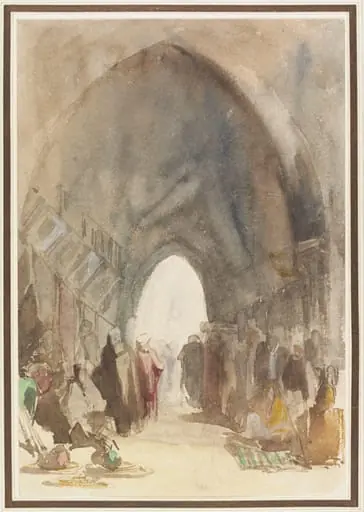 An Eastern Market.
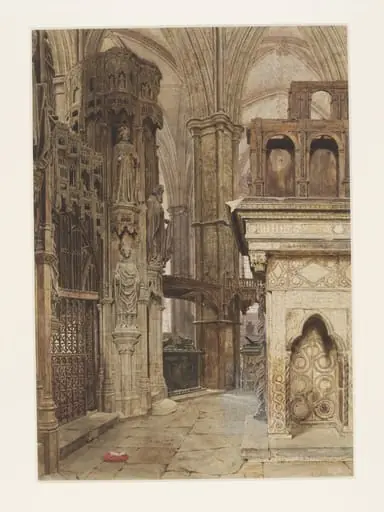 The East End of Edward the Confessor's Chapel and Tomb, As They Now Stand
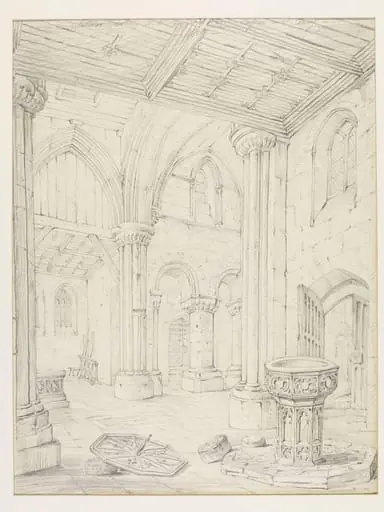 Priory church at Boxgrove
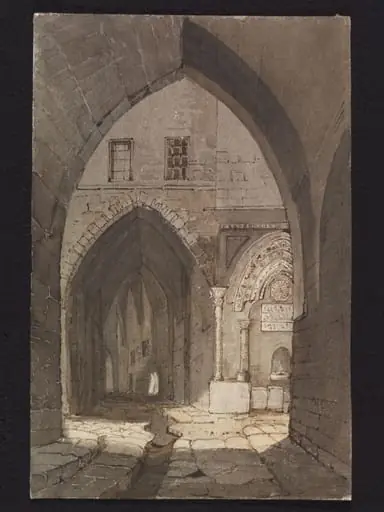 Fountain at Jerusalem near the House of Dives
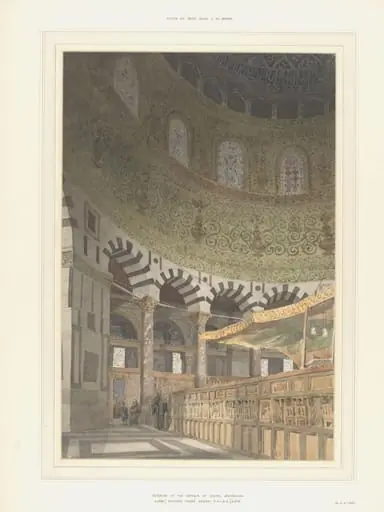 The Mosque of Omar
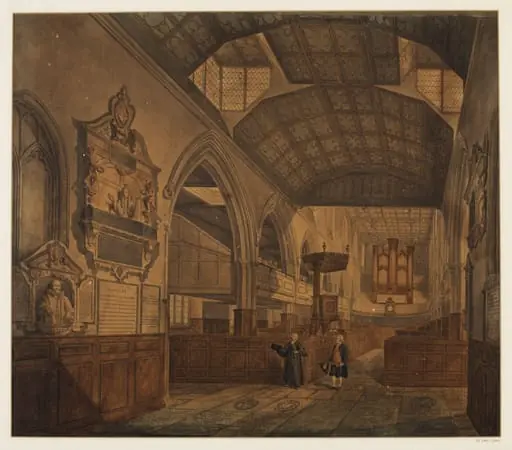 Interior view of the Church of St. Giles, Cripplegate
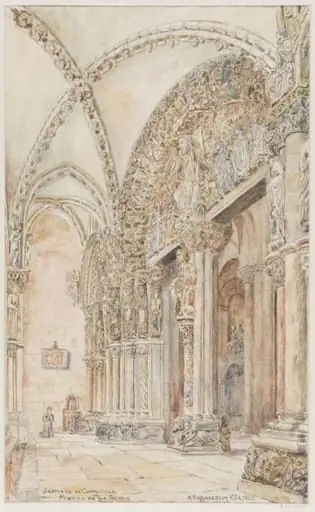 The Portico de la Gloria in the Cathedral at Santiago de Compostella, Spain
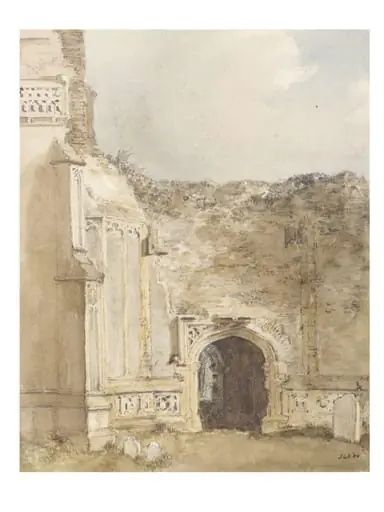 East Bergholt Church: north archway of the ruined tower
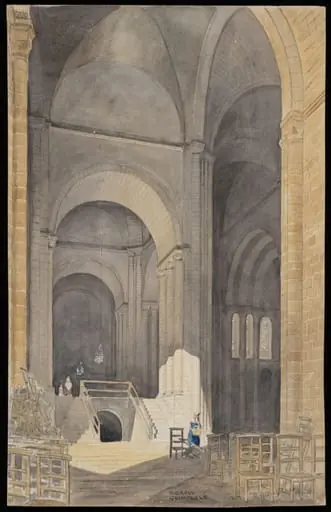 Interior of church at St. Croix, Quimperle