Artwork
The Mosque of Omar
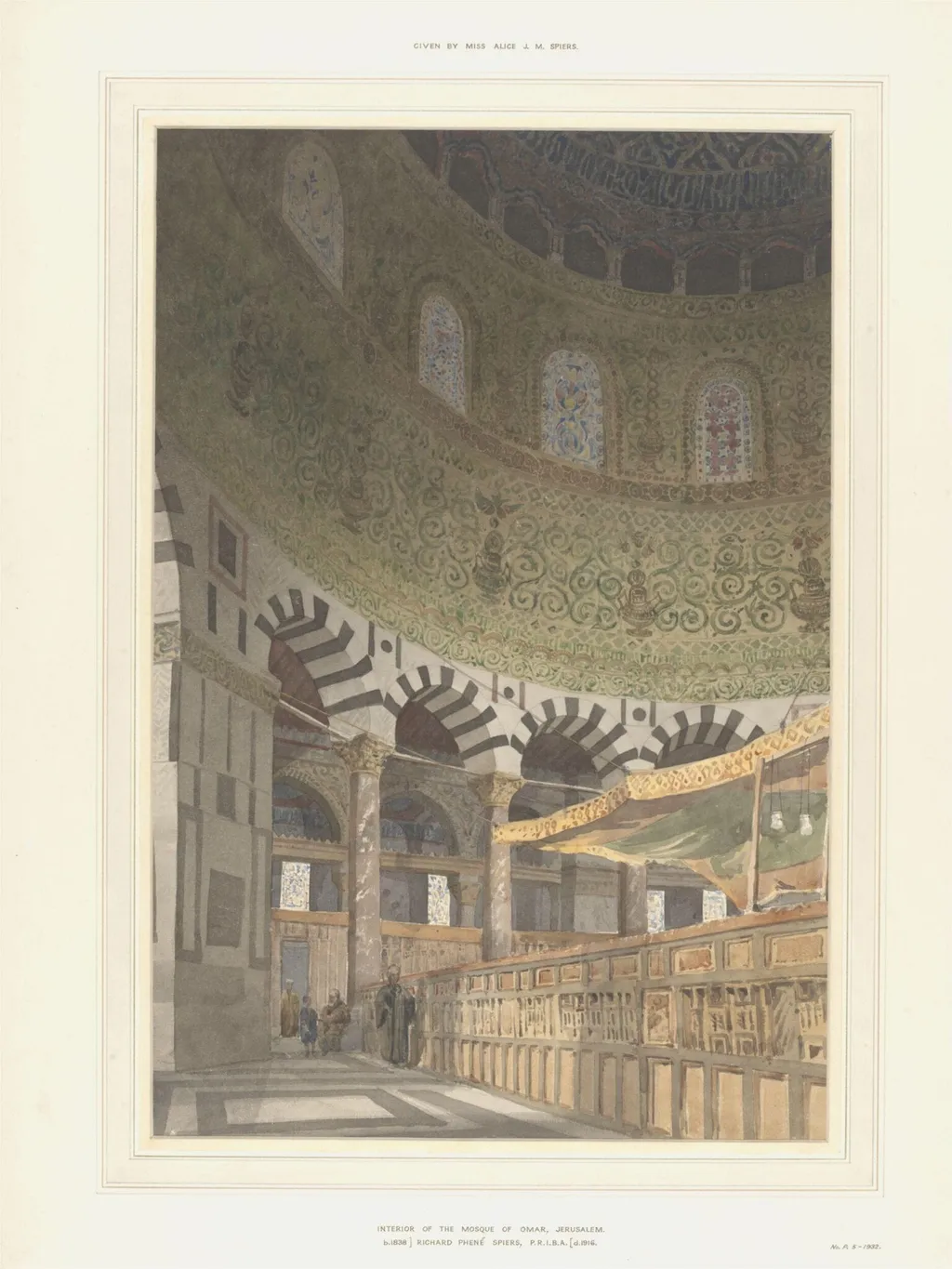
The Mosque of Omar is a watercolor work on paper by the Orientalist artist Richard Phené Spiers. It dates from 1850 and is held in the collection of the Victoria and Albert Museum.
About this work
Overview
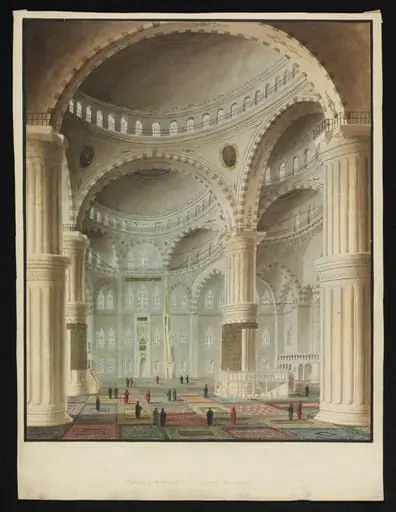
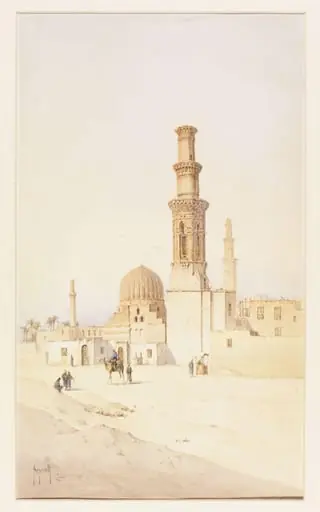
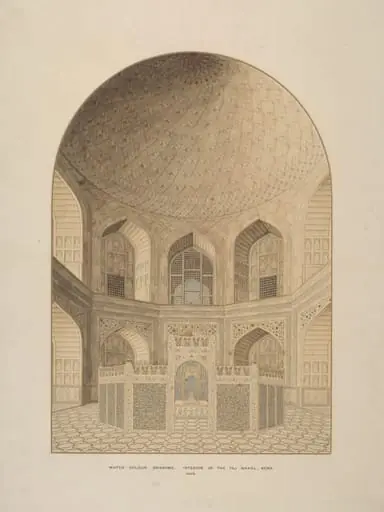
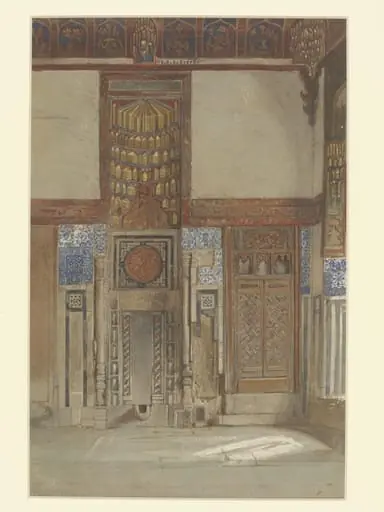
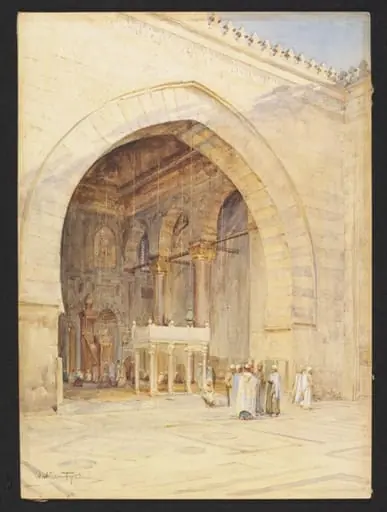
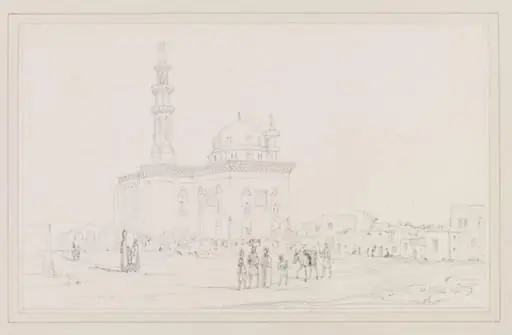
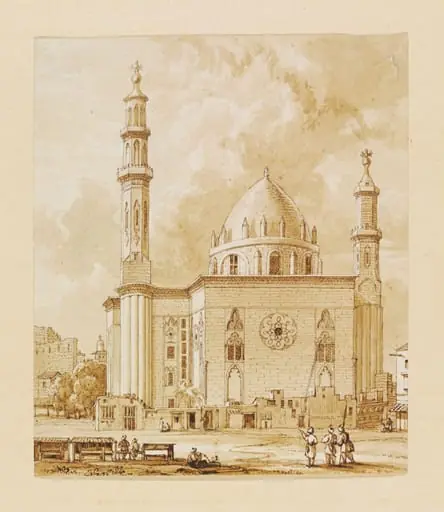
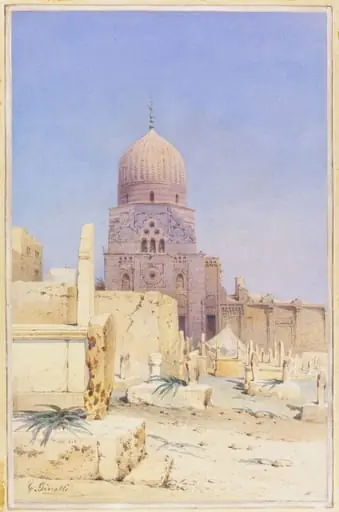
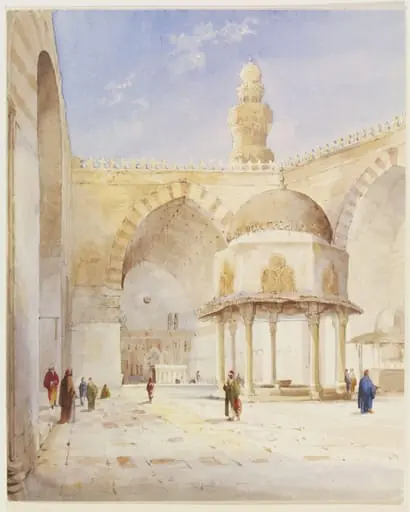
Richard Phené Spiers’ 1850 watercolour, titled The Mosque of Omar, presents a detailed interior view of the historic mosque. The work is mounted in a framed, glazed setting and bears the artist’s signature, indicating its provenance as a mid‑nineteenth‑century study of Islamic architecture.
Subject & Meaning
The composition captures the spacious prayer hall, emphasizing the soaring domed ceiling and richly patterned walls. Decorative arabesques dominate the surfaces, conveying the visual splendor of the space while the sparse figures placed within suggest a contemplative, communal atmosphere rather than narrative focus.
Technique & Style
Executed in transparent watercolour, Spiers employs fine washes to render the intricate tilework and the subtle play of light across the vaulted interior. The delicate line work defining the railing on the right side demonstrates the artist’s attention to architectural detail within a fluid, atmospheric medium.
History & Provenance
Signed and dated 1850, the piece reflects Spiers’ interest in Oriental subjects during the Victorian era’s fascination with the East. The framed, glazed presentation indicates it was intended for display as a finished work, likely circulated among collectors of travel and architectural studies.
Context
The Mosque of Omar, an important religious structure, was a frequent subject for European artists documenting exotic locales. Spiers’ rendering aligns with contemporary travel literature, offering a visual record that complements written descriptions of Islamic interiors popular in the mid‑1800s.
Legacy
While not widely reproduced, the watercolour contributes to the corpus of Victorian Orientalist art, illustrating the period’s blend of scholarly observation and aesthetic appreciation of non‑Western architecture.
Artist & collection
Artist
Richard Phené Spiers specialized in delicate watercolors of European landmarks in the late 1800s.