Artwork
Saint Peter liberated by an Angel
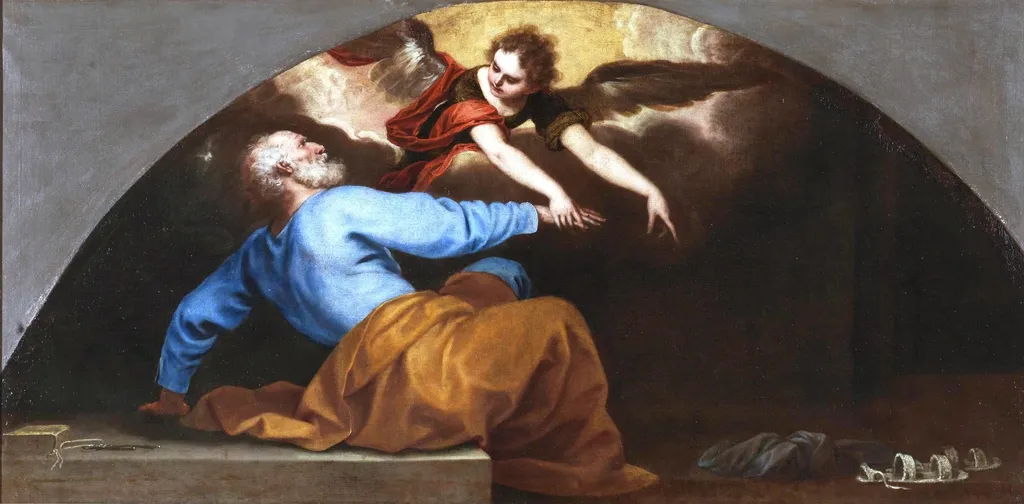
Saint Peter liberated by an Angel is an oil painting by the Early Baroque Italian artist Alonso Cano. It dates from 1652 and is held in the collection of the Museo del Prado.
About this work
Overview
Alonso Cano’s oil painting Saint Peter Liberated by an Angel, executed in 1652, portrays the apostle being assisted by a celestial messenger. The composition is set within a dimly lit interior, where the figure of Peter, dressed in blue and orange, is seated on a stone bench while an angel in a red robe extends a hand to lift him. The work is part of the Museo del Prado’s collection.
Subject & Meaning
Cano emphasizes the physical support offered by the angel, underscoring the theme of spiritual liberation through heavenly aid.
The scene references the biblical episode in which an angel frees the imprisoned Peter from the Mamertine Prison, symbolizing divine intervention and redemption. Cano emphasizes the physical support offered by the angel, underscoring the theme of spiritual liberation through heavenly aid. The juxtaposition of earthly confinement and ethereal assistance conveys the triumph of faith over oppression.
Technique & Style
Cano employs a pronounced chiaroscuro, contrasting the illuminated figures with the surrounding darkness to model volume and create depth. The rendering of flesh, drapery, and feathered wings is highly naturalistic, reflecting the influence of Baroque realism. Subtle gradations of light highlight the angel’s wings and the texture of the stone floor, while the overall palette remains restrained.
History & Provenance
Completed in the mid‑seventeenth century, the painting entered the Spanish royal collection before being transferred to the Museo del Prado, where it remains on display. Documentation traces its ownership through the crown’s inventories, confirming its attribution to Cano and its continuous presence in state holdings since the 18th century.
Context
Created during Spain’s Golden Age, the work aligns with the Counter‑Reformation’s emphasis on vivid, emotionally resonant religious imagery. Cano, both a painter and architect, was active in Seville and Granada, and his treatment of light and narrative reflects contemporary influences from Caravaggio and the Spanish Baroque tradition.
Artist & collection