Artwork
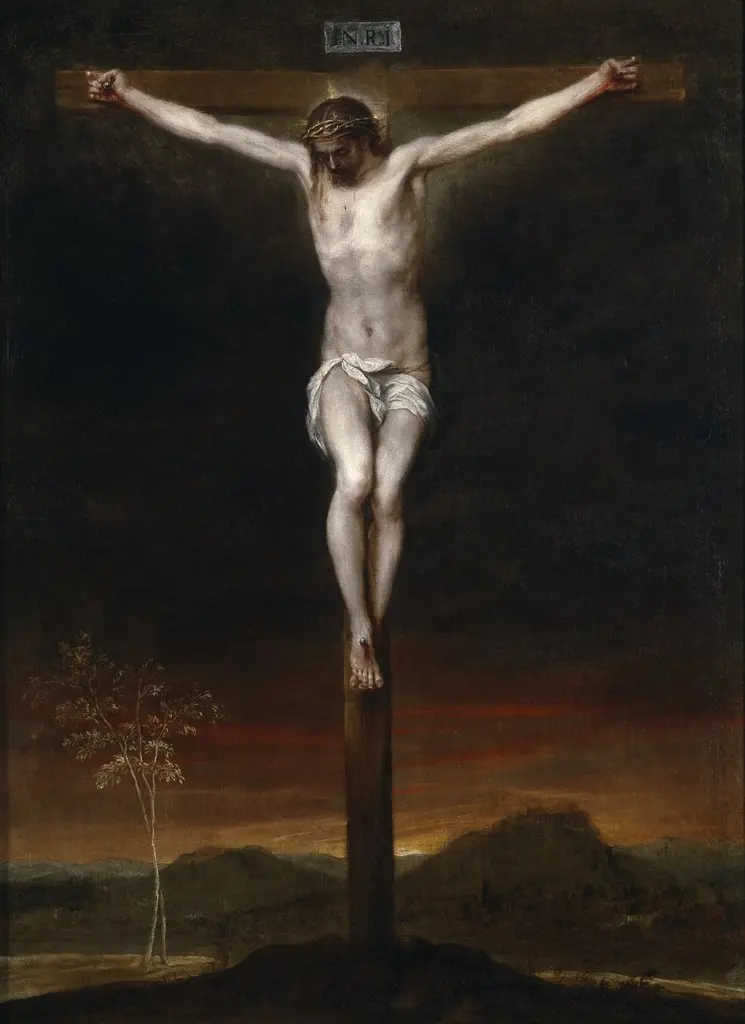
The crucified Christ appears to Saint Teresa of Avila
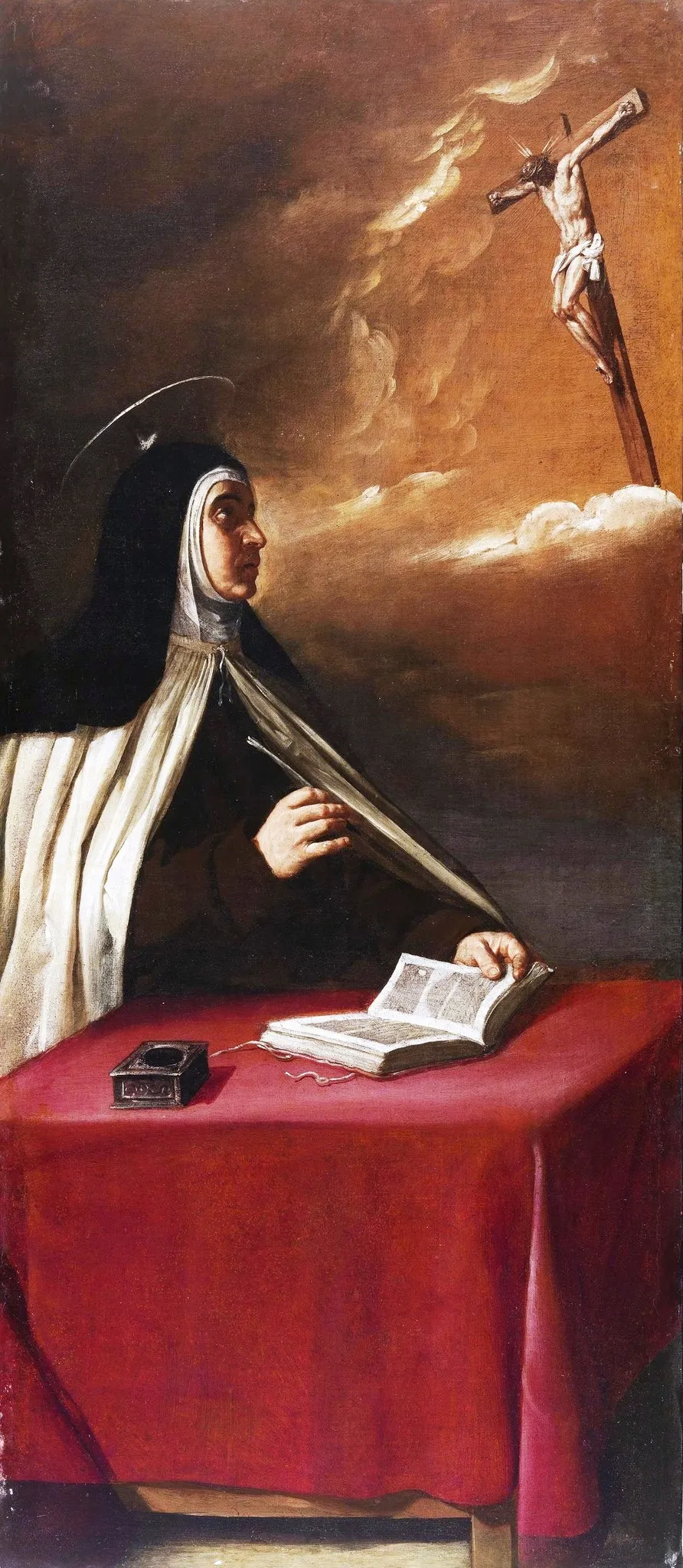
The crucified Christ appears to Saint Teresa of Avila is an oil painting by the Early Baroque Italian artist Alonso Cano. It dates from 1629 and is held in the collection of the Museo del Prado.
About this work
Overview
The oil painting "The crucified Christ appears to Saint Teresa of Avila" was created by Alonso Cano in 1629. This religious work depicts a pivotal moment in the life of the Spanish mystic, Saint Teresa of Avila, as she experiences a divine vision. The artwork is currently housed in the collection of the Museo del Prado, offering a glimpse into Baroque spiritual art.
Subject & Meaning
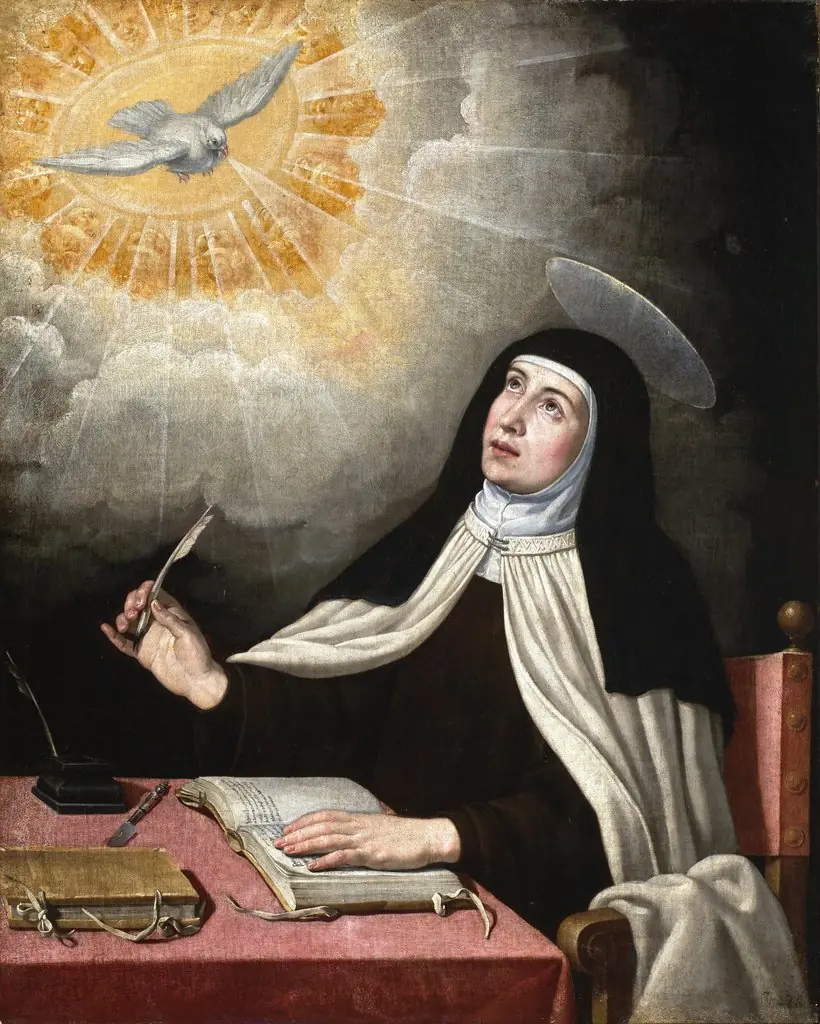
Her fingers rest on an open book, accompanied by an inkwell and a scroll, alluding to her prolific writings on mystical theology.
The painting centers on Saint Teresa of Avila, depicted kneeling at a red table, clad in a white robe and black veil. Her gaze is directed upward, conveying a sense of serene concentration as she encounters a vision of the crucified Christ, who appears luminous against a turbulent, darkened sky. Her fingers rest on an open book, accompanied by an inkwell and a scroll, alluding to her prolific writings on mystical theology.
Technique & Style
Cano employs a dramatic use of light and shadow, known as chiaroscuro, to heighten the spiritual intensity of the scene. Bright illumination sharply defines Saint Teresa's face and the figure of Christ on the cross, making them emerge prominently from the surrounding darkness. This stark contrast draws the viewer's attention to the central figures, emphasizing the profound and otherworldly nature of the saint's vision.
History & Provenance
Completed in 1629, this oil painting by Alonso Cano has been preserved as a significant example of Spanish Baroque art. It is currently held within the esteemed collection of the Museo del Prado, where it continues to be exhibited as a testament to the period's religious fervor and artistic innovation.
Artist & collection