Artwork
The penitent Saint Jerome
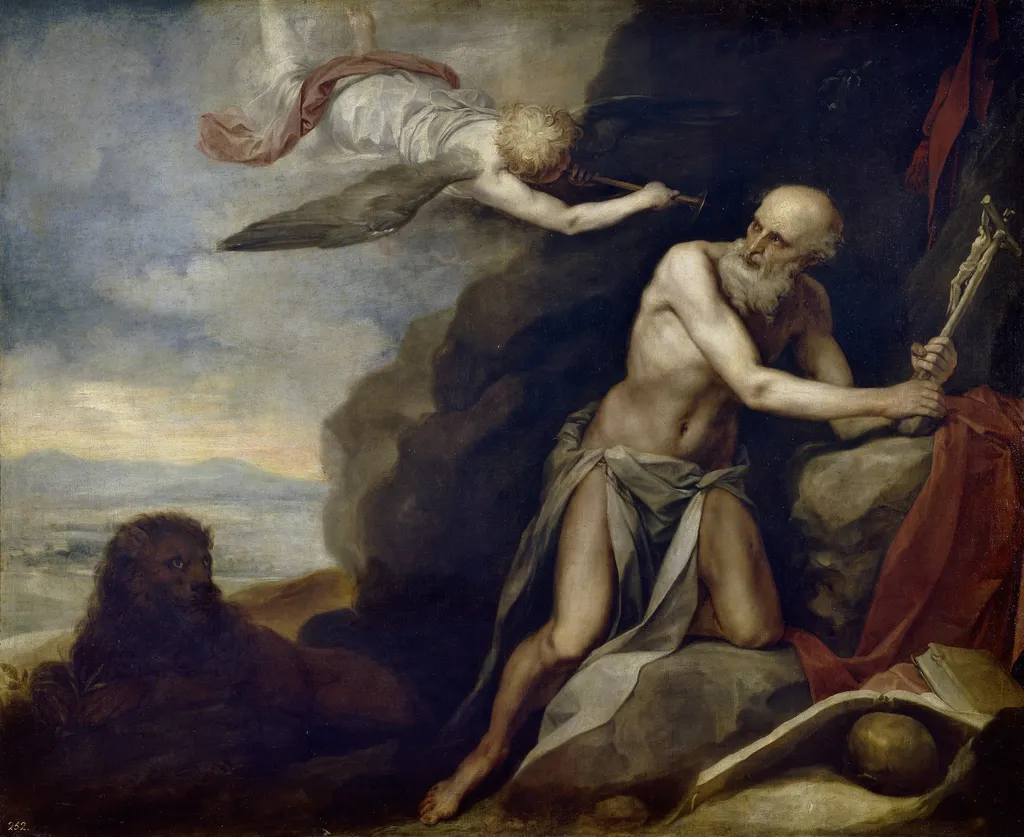
The penitent Saint Jerome is an oil painting by the Early Baroque Italian artist Alonso Cano. It dates from 1660 and is held in the collection of the Museo del Prado.
About this work
Overview
Alonso Cano’s oil on canvas, dated 1660, presents a solitary, aged figure kneeling on a rugged surface. The composition centers on the saint, his weathered skin and simple cloth emphasizing humility, while a crucifix rests nearby. A small creature peeks from the stones, adding a touch of naturalism to the devotional scene.
Subject & Meaning
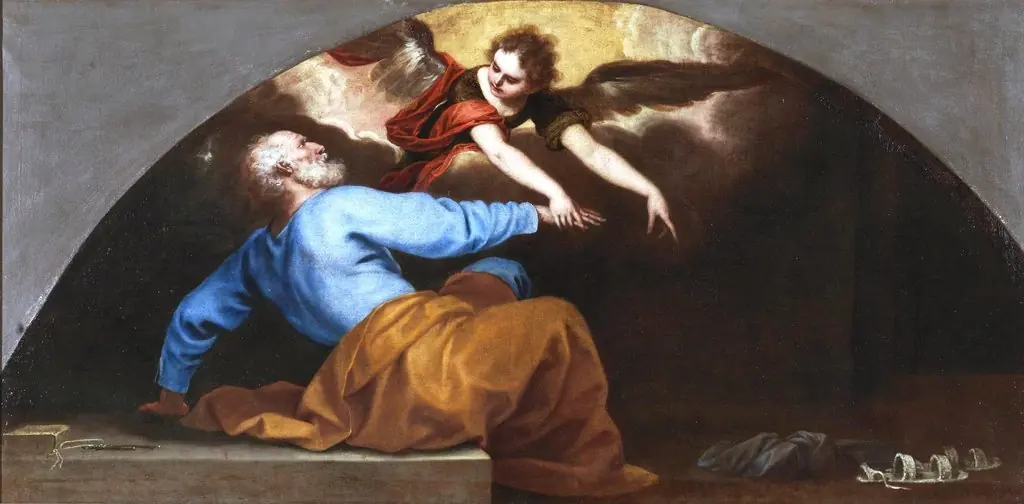
The kneeling figure is Saint Jerome, portrayed in a moment of penitence. He clutches a cross and a scroll—symbols of his biblical scholarship and spiritual devotion. Above him, a winged being, likely an angel, gestures downward with an elongated object, perhaps a trumpet, suggesting divine revelation or the call to repentance.
Technique & Style
Cano employs pronounced chiaroscuro, contrasting deep shadows with bright illumination to heighten the drama of the encounter. The rendering of flesh, stone, and drapery demonstrates a meticulous handling of oil paint, while the subtle modeling of the angel’s wings adds a luminous counterpoint to the somber ground.
History & Provenance
Created in the mid‑seventeenth century, the work entered the collection of the Museo del Prado, where it remains on display. Its attribution to Cano is supported by stylistic parallels with his other religious commissions from the Spanish Baroque period.
Own this work as a print
Artist & collection