Artwork
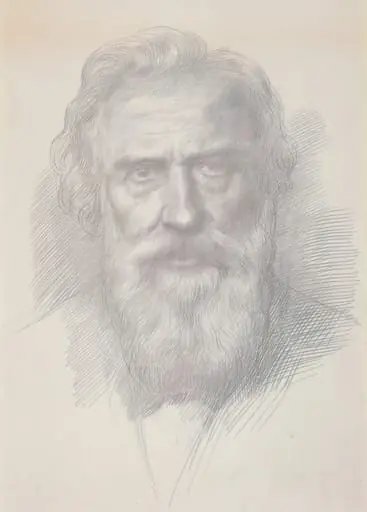
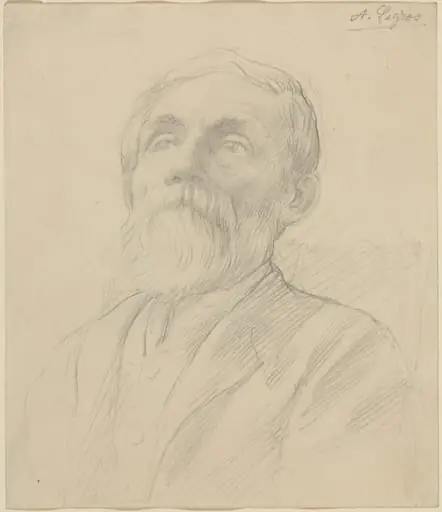
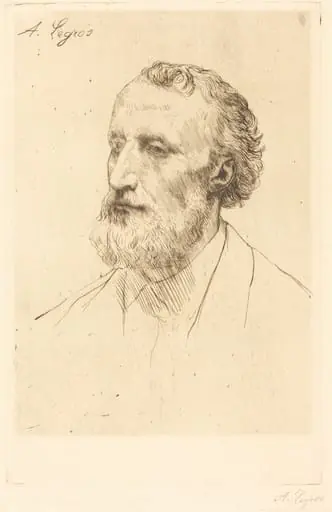
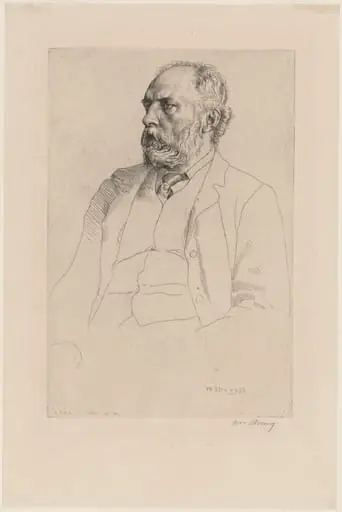
Portrait of Sir Frederick W. Burton, Director of the National Gallery, London
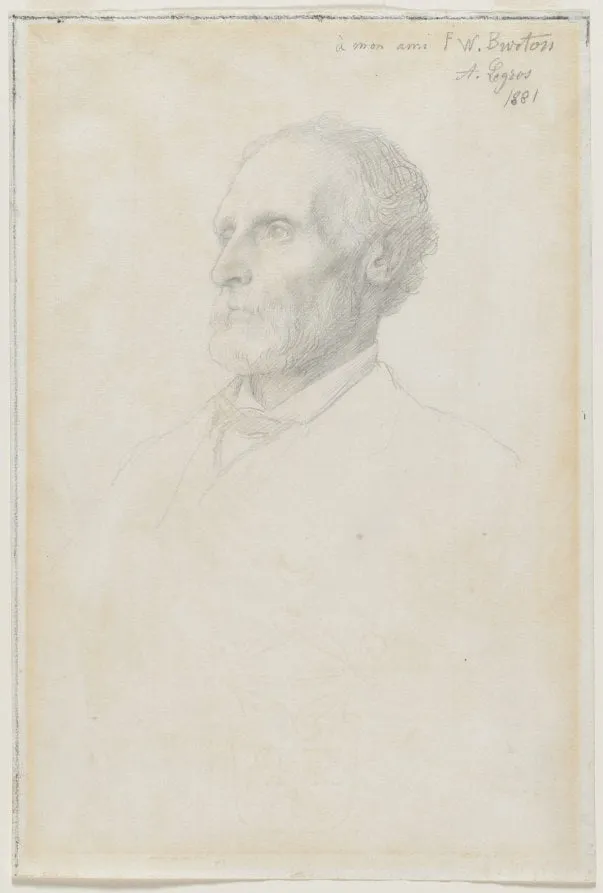
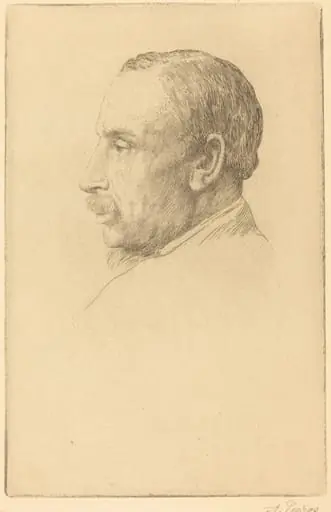
Portrait of Sir Frederick W. Burton, Director of the National Gallery, London is a drawing by the Impressionist artist Alphonse Legros. It dates from 1881 and is held in the collection of the Cleveland Museum of Art.
About this work
Overview
The medium’s softness enhances the quiet intimacy of the portrait, avoiding theatricality in favor of restrained observation.
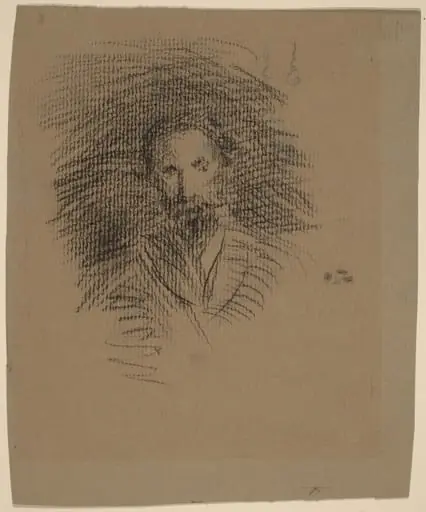
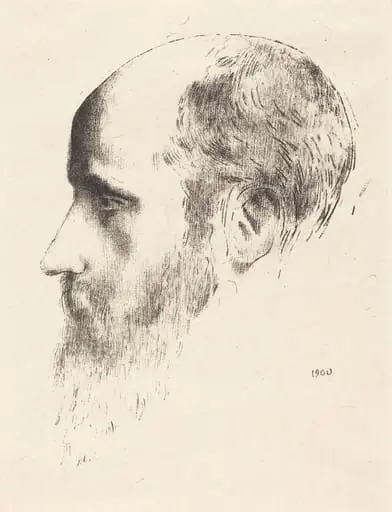
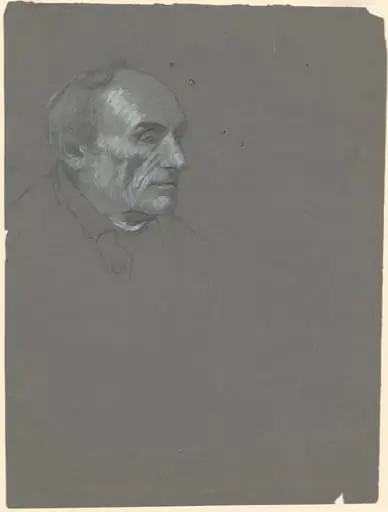
This 1881 pencil drawing by Alphonse Legros portrays Sir Frederick W. Burton, then director of the National Gallery in London. Executed with careful attention to tonal variation, the work captures Burton from the chest upward, facing left. The background is a muted beige, framed by a darker edge that draws focus to the figure. The medium’s softness enhances the quiet intimacy of the portrait, avoiding theatricality in favor of restrained observation.
Subject & Meaning
Sir Frederick W. Burton was a respected administrator and art scholar who shaped the National Gallery’s collection during his tenure. The portrait presents him not as a public figure but as a composed individual, his mustache and neat attire suggesting professionalism and restraint. The direct gaze and neutral expression convey dignity without grandeur, reflecting the values of institutional leadership in late 19th-century Britain.
Technique & Style
Legros employed fine pencil strokes to model form through subtle gradations of light and shadow. The texture of Burton’s shirt and the softness of his facial features are rendered with precision, avoiding harsh lines. The background remains unobtrusive, allowing the figure to emerge through tonal contrast rather than outline. This approach aligns with Realist principles, prioritizing truthful representation over idealization.
History & Provenance
The drawing was created in 1881 during Legros’s time in London, where he taught at the Slade School and was active in artistic circles. It remained in private hands until acquired by The Cleveland Museum of Art, which now holds it as part of its collection of 19th-century European drawings. Its journey reflects the transatlantic circulation of British art and the growing American interest in European academic portraiture.
Context
In the 1880s, British art institutions valued scholarly rigor over romantic expression. Legros, a French-born artist working in England, bridged continental Realism with British portraiture traditions. His approach to Burton’s likeness reflects a broader cultural preference for understated representation—where character was revealed through nuance, not symbolism or embellishment.
Legacy
The portrait endures as a quiet testament to Legros’s skill in capturing presence through minimal means. It stands apart from the more dramatic portraiture of the era, offering instead a model of restrained observation. Its preservation in a major American museum underscores its role as an example of transnational artistic exchange and the enduring appeal of disciplined draftsmanship.
Artist & collection

Artist
Alphonse Legros (French pronunciation: ; 8 May 1837 – 8 December 1911) was a French, later British, painter, etcher, sculptor, and medallist.