Artwork
Cosmo Monkhouse
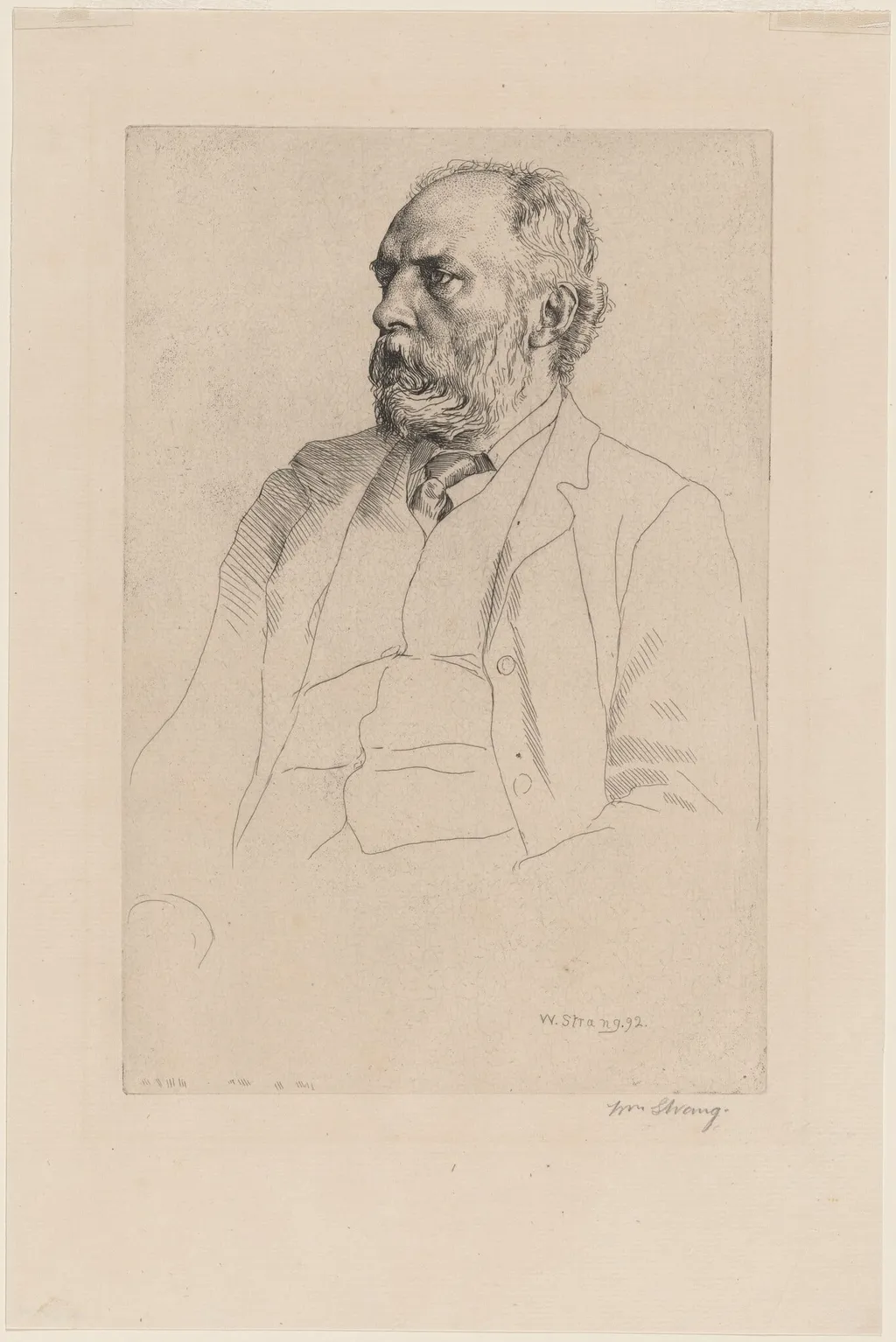
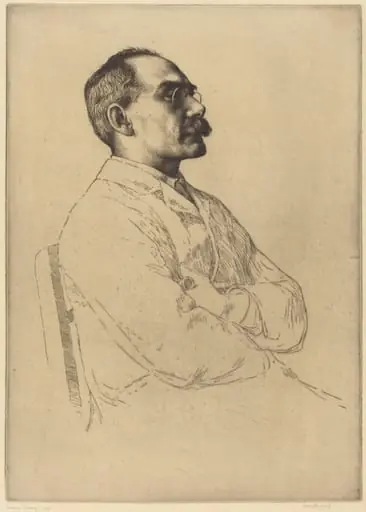
Cosmo Monkhouse is an ink print by the Impressionist artist William Strang. It dates from 1892 and is held in the collection of the National Gallery of Art.
About this work
The level of detail in the etching, particularly in the subject's facial features and clothing, indicates that the artist was skilled in the medium.
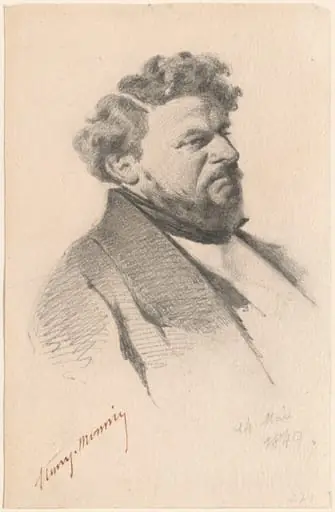
This portrait etching depicts a man with a beard and mustache, wearing a suit jacket, vest, and tie. His hair is thinning on top, and he has a serious expression. The background of the etching is a light color, which helps the subject stand out.
The man's attire and hairstyle suggest that the etching was created in the late 19th century. The level of detail in the etching, particularly in the subject's facial features and clothing, indicates that the artist was skilled in the medium.
If you're interested in learning more about the artist who created this etching, you might want to look up William Strang.
Overview
William Strang’s 1892 etching portrays the Victorian‑era critic and poet Cosmas Monkhouse. Executed on laid paper, the print captures the sitter in a formal pose, his beard and trimmed moustache rendered with precise line work. The light background provides contrast, allowing the figure’s attire and expression to dominate the composition.
Subject & Meaning
The work depicts Cosmas Monkhouse, a prominent literary commentator of the late nineteenth century. His sober expression and dignified dress reflect the seriousness associated with his critical writings, while the intimate scale of the portrait suggests a personal appreciation by the artist for his intellectual stature.
Technique & Style
Strang employed traditional etching methods, incising fine lines into a copper plate before printing onto laid paper. The rendering shows meticulous attention to facial texture and fabric folds, characteristic of Strang’s skillful handling of tonal variation. The light tonal field behind the figure serves to isolate the subject, a common device in portrait etchings of the period.
History & Provenance
Created in 1892, the print belongs to Strang’s series of etched portraits of contemporary cultural figures. Strang, a Scottish painter and printmaker, frequently illustrated books and produced likenesses of writers, artists, and scholars, situating this work within his broader output of literary portraiture.
Context
The etching aligns with a late‑nineteenth‑century tradition of commemorating intellectuals through print. During this era, etching experienced a revival as a medium for detailed, reproducible portraiture, allowing artists like Strang to document the faces of the period’s literary and artistic elite.
Artist & collection

Artist
William Strang (13 February 1859 – 12 April 1921) was a Scottish painter and printmaker, notable for illustrating the works of Bunyan, Cervantes, Coleridge, Kipling, and others.

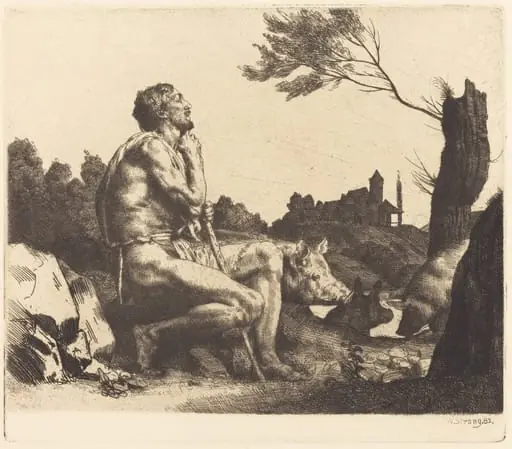
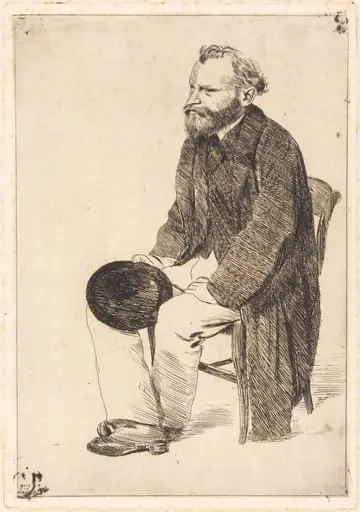 Manet Seated, Turned to the Left (Manet assis, tourné à gauche)
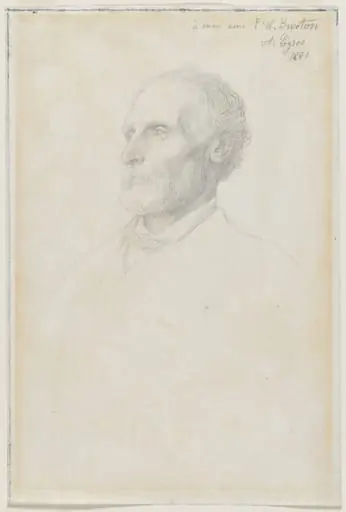 Portrait of Sir Frederick W. Burton, Director of the National Gallery, London
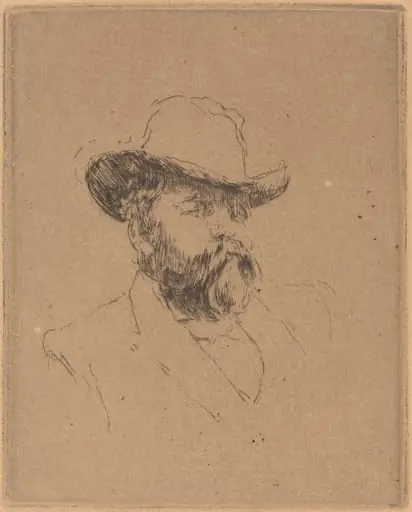 Robert Barr
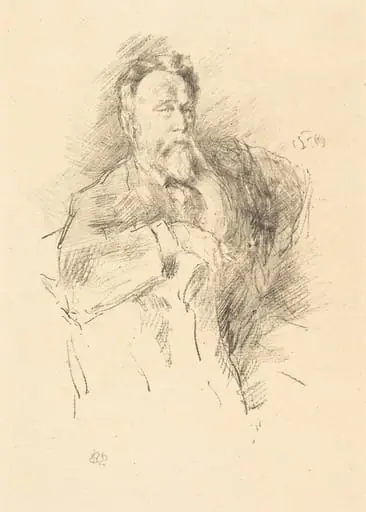 Sketch of William E. Henley
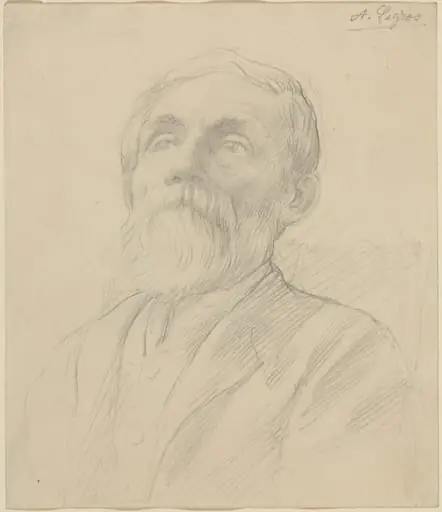 Portrait of an Old Man
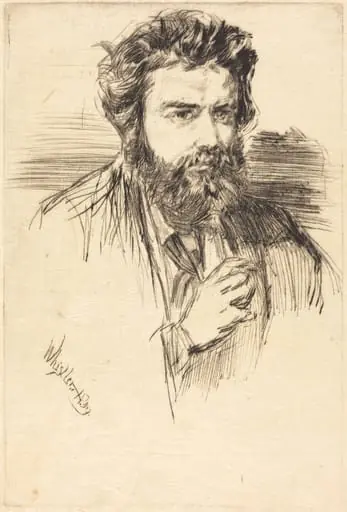 Z. Astruc, Editor of _L'Artiste_
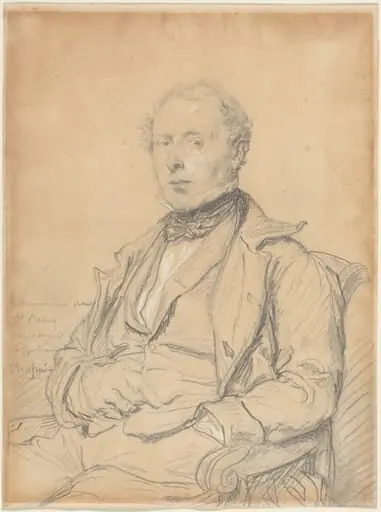 Victor-Auguste de Saint-Rémy
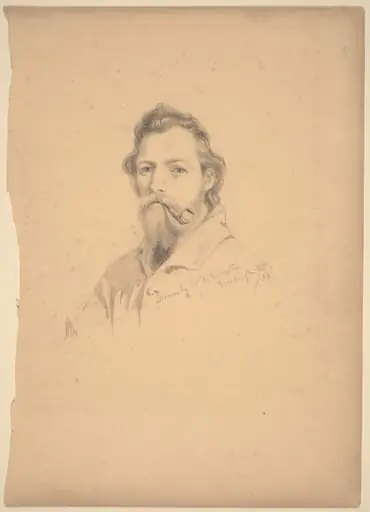 J.Q.A. Ward
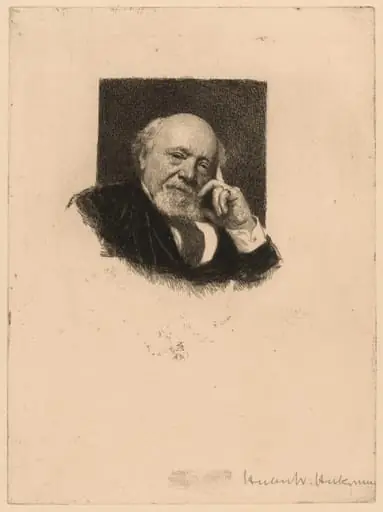 Portrait of a Man
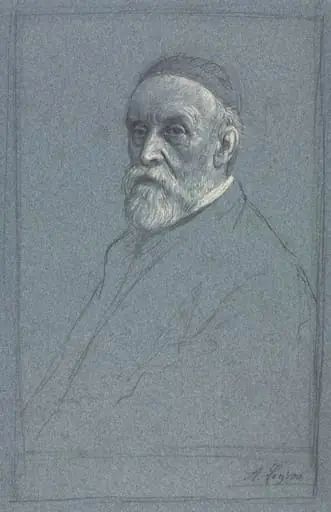 George Frederic Watts, R.A.
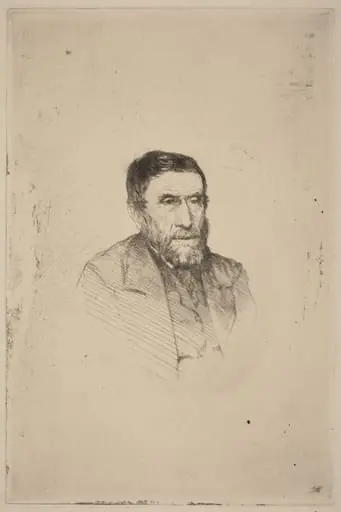 Portrait of a Man
 Portrait of a Man