Artwork
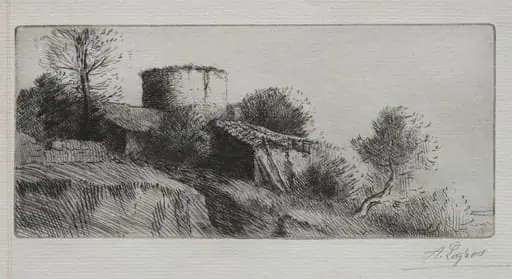
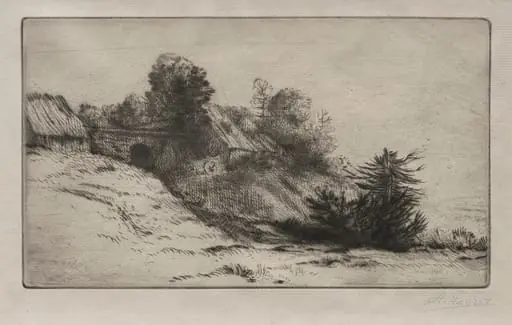
Ruins of a Monastery
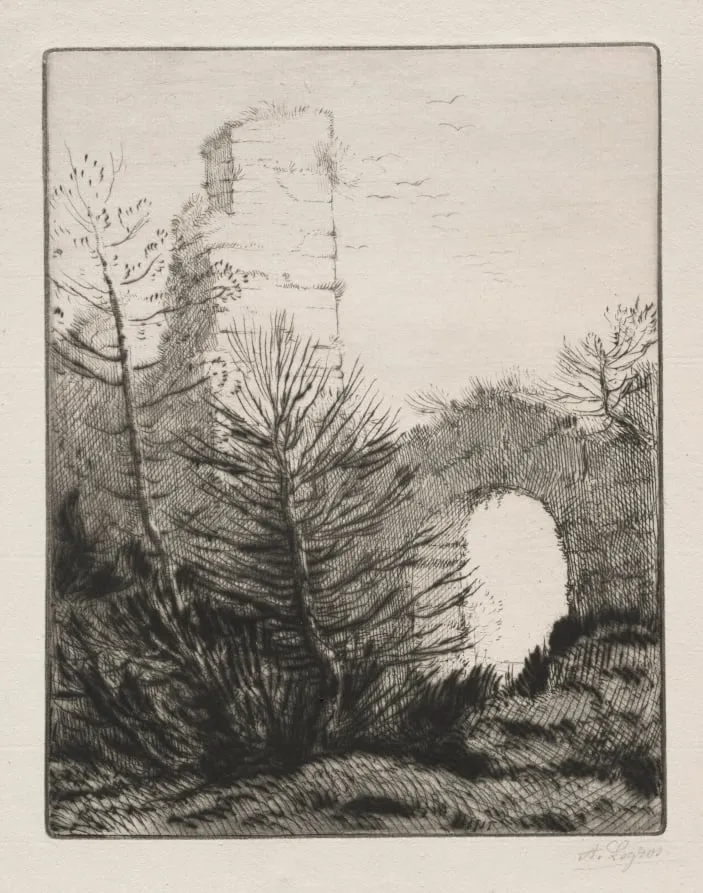
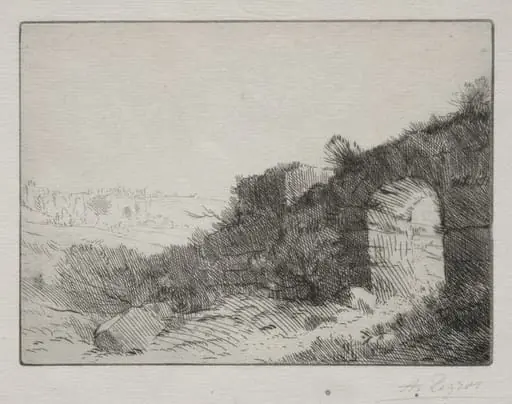
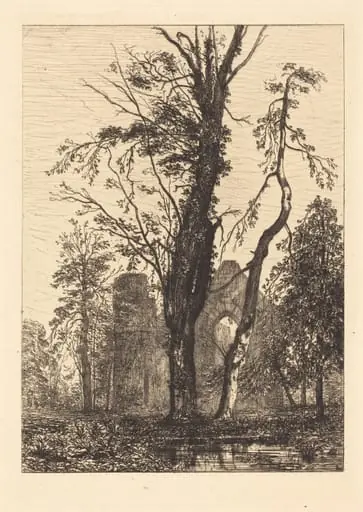
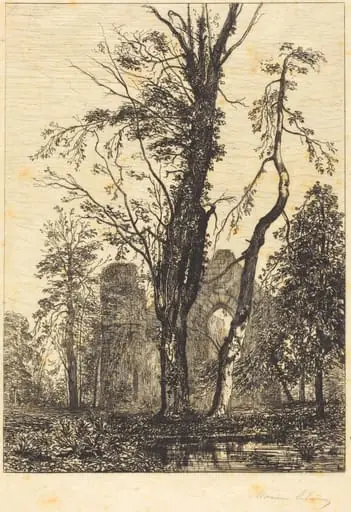
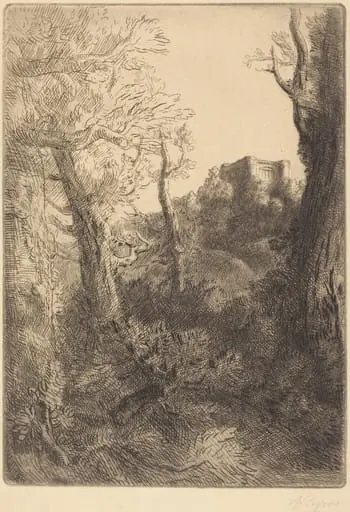
Ruins of a Monastery is a print by the Impressionist artist Alphonse Legros. It dates from 1884 and is held in the collection of the Cleveland Museum of Art.
About this work
Overview
The work is part of the collection at The Cleveland Museum of Art, where it is held as an example of late 19th-century draftsmanship.
Ruins of a Monastery is a charcoal or graphite drawing by Alphonse Legros, dated 1884. It depicts the fragmented remains of a religious structure, with a broken arch and weathered stonework. The composition is dominated by vertical and horizontal textures, emphasizing decay and stillness. The work is part of the collection at The Cleveland Museum of Art, where it is held as an example of late 19th-century draftsmanship.
Subject & Meaning
The image presents the silent remnants of monastic life, stripped of human presence. The crumbling arch and overgrown pine suggest the passage of time and the erosion of institutional authority. The lone tree, sharply rendered, stands as both witness and symbol—its resilience contrasting with the ruin’s fragility. There is no narrative, only atmosphere: solitude, memory, and the quiet persistence of nature.
Technique & Style
Legros employed dense, hatched lines to build texture in the stone and foliage, giving the surface a tactile quality. The pine needles are individually suggested with fine, angular strokes, creating a sense of depth without detail. The sky is rendered with minimal, smudged strokes, allowing the ruins to dominate. This approach aligns with Realist principles, prioritizing observed form over idealization, using line to convey weight and decay.
History & Provenance
Created in 1884, the drawing entered The Cleveland Museum of Art’s collection through documented acquisition, though its earlier ownership is not publicly detailed. It reflects Legros’s interest in architectural decay during his later years, following his move to England and his engagement with British artistic circles. The work was likely made as a study, not a finished exhibition piece, underscoring its intimate, observational character.
Context
In the 1880s, Legros was part of a generation of artists rejecting romanticized history painting in favor of quiet, unembellished subjects. His focus on ruins aligned with broader European trends that found poetic value in neglected structures. Unlike the luminous landscapes of Impressionism, his work favored somber tones and tactile surfaces, reflecting a more introspective, almost melancholic realism.
Legacy
Ruins of a Monastery exemplifies Legros’s influence on the transition from academic tradition to modern draftsmanship. Though not widely known today, his emphasis on materiality and mood informed later generations of figurative and landscape draftsmen. The work remains a quiet testament to the aesthetic power of restraint, where absence speaks as loudly as presence.
Artist & collection

Artist
Alphonse Legros (French pronunciation: ; 8 May 1837 – 8 December 1911) was a French, later British, painter, etcher, sculptor, and medallist.