Artwork
Landscape (Paysage)
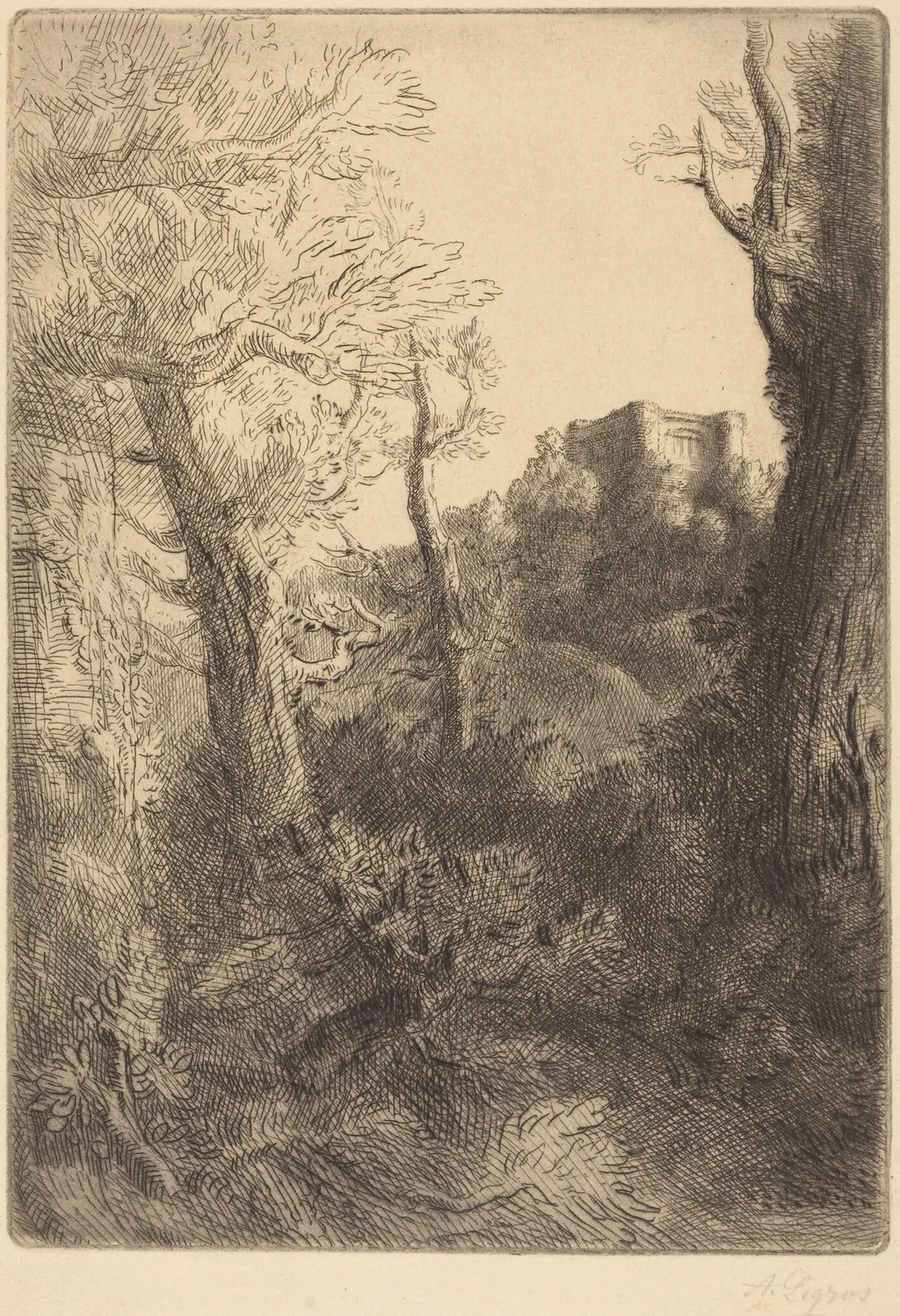
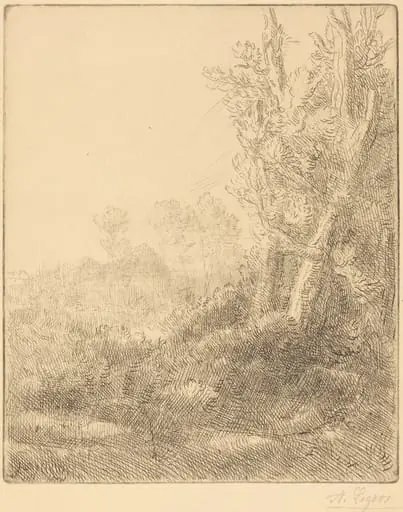
Landscape (Paysage) is an ink print by the Romanticist artist Alphonse Legros. It dates from 1874 and is held in the collection of the National Gallery of Art.
About this work
Overview
Landscape (Paysage) is an 1874 etching and drypoint print by Alphonse Legros, a French-born British artist. The work exemplifies Legros's contribution to the revival of etching in Britain through his multifaceted practice in painting, sculpture, and printmaking.
Subject & Meaning
The print depicts a dense, dark forest with thick, gnarled trees and branches, alongside a faint, distant building partially obscured by foliage. This juxtaposition subtly contrasts natural density with hints of human presence.
Technique & Style
Legros employed intaglio techniques, characterized by sharp, busy lines resembling scratches. The use of layered ink, allowing for varied darkness, achieves depth without color, emphasizing texture and tonal contrast.
History & Provenance
Created in 1874, the piece reflects Legros's influence on British etching, particularly through his teaching. Provenance details are not specified in available information.
Context
Landscape (Paysage) sits within the broader landscape genre, while its execution aligns with the technical innovations and aesthetic preferences of late 19th-century printmaking in Europe.
Legacy
As part of Legros's etched work, Landscape (Paysage) contributes to his legacy in revitalizing British etching, though its individual impact within his broader oeuvre is not distinctly highlighted in provided sources.
Own this work as a print
Artist & collection

Artist
Alphonse Legros (French pronunciation: ; 8 May 1837 – 8 December 1911) was a French, later British, painter, etcher, sculptor, and medallist.

 Old Village (Ville vieille)
 Old Village (Ville vieille)
 Little Shepherd, 1st Plate (Le Petit Berger)
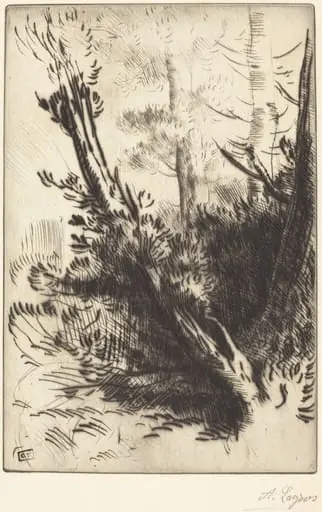 In the Woods (Dans les bois)
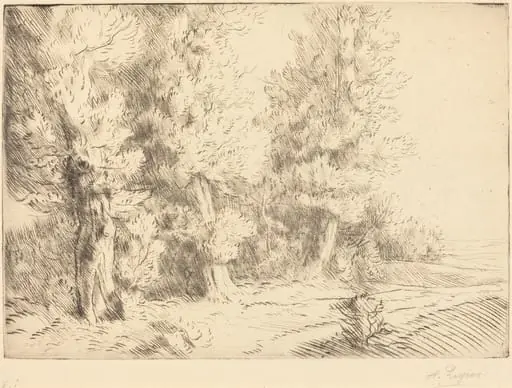 In the Forest of Fontainebleau (Dans la foret de Fontainebleau)
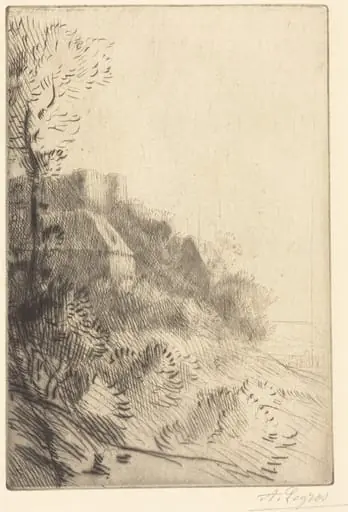 Farm on a Hillside in Sunlight (La ferme du coteau; Effet de soleil sur le coteau)
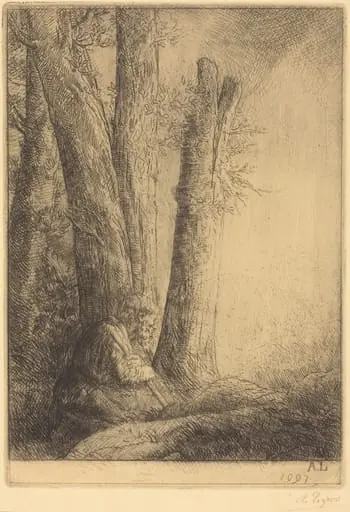 Study for the Prodigal Son (Etude pour L'enfant prodigue)
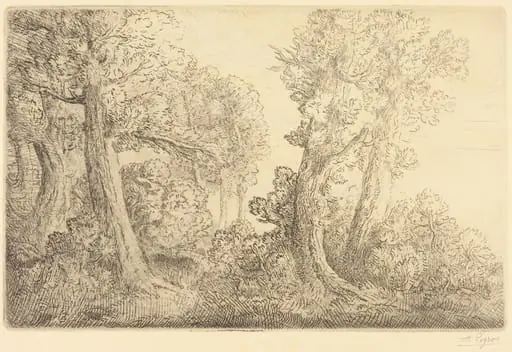 Near the Woods, Veronne (Pres du bois, Veronne)
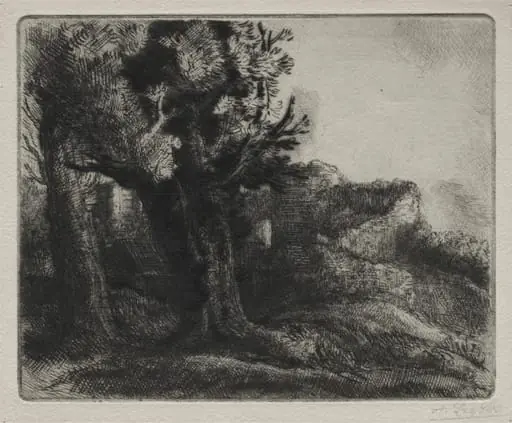 In the Ruins